15 Food Facts That Sound Fake But Are Completely True
Some of the most useful things to know about food also happen to be the hardest to believe. These 15 facts sound like the kind of things people make up to sound clever at dinner - but every one of them is real, verified, and surprisingly relevant to how you cook and eat every day. Prepare to question everything you thought you knew about your kitchen.

The Kitchen Is Full of Things That Shouldn't Be Possible
Food is stranger than most people realize. The ingredients you cook with every day are doing things that seem impossible - defying spoilage, changing color, tricking your brain, and behaving in ways that contradict common sense entirely.
Every fact on this list has a real scientific explanation. And most of them have a practical cooking application you can use immediately.
The 15 Facts
1. Honey Never Spoils - Ever
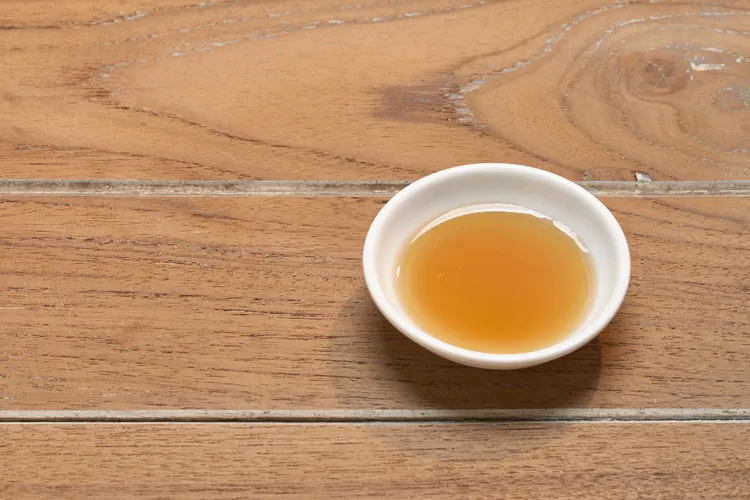
Archaeologists have found 3,000-year-old honey in Egyptian tombs that was still perfectly edible.
This isn't luck. Honey is chemically hostile to bacterial life. It has extremely low water content (below 20%), which means bacteria can't survive in it - they dehydrate and die on contact. It's also naturally acidic (pH around 3.9) and contains small amounts of hydrogen peroxide produced by an enzyme bees add during production.
Together, these properties make honey one of the only foods that is genuinely shelf-stable forever, as long as it stays dry and sealed.
Kitchen application: Never throw out crystallized honey. It hasn't spoiled - it's just undergone a natural physical change. Warm the jar gently in hot water and it liquefies completely. Crystallized honey is chemically identical to liquid honey.
2. Carrots Were Originally Purple
The orange carrot is a relatively recent human invention. Wild carrots - and most cultivated carrots until the 17th century - were purple, yellow, white, and red. Orange carrots were selectively bred in the Netherlands, likely in the 1600s, possibly (though debated by historians) as a tribute to the Dutch royal House of Orange.
The orange color comes from beta-carotene, a pigment that the original purple varieties had in much smaller quantities.
Kitchen application: Purple, yellow, and white heritage carrots are widely available at farmers markets and specialty stores. They taste slightly different from orange carrots - purple varieties are earthier, yellow ones are milder and sweeter. They're not novelties; they're closer to the original.
3. Apples Wake You Up Better Than Coffee
This one sounds like a wellness myth, but there's real physiology behind it. Apples contain about 13 grams of natural fructose sugar per medium fruit, along with fiber that slows sugar absorption - delivering steady, sustained energy without the caffeine spike-and-crash cycle.
Coffee works primarily through adenosine receptor blockade - it doesn't give you energy, it temporarily masks tiredness signals. The energy feeling from caffeine is borrowed; when it wears off, the blocked adenosine floods back.
Apples genuinely deliver fuel. Coffee delays the feeling of needing it.
Kitchen application: If you're cooking early in the morning and need sustained focus, an apple with something containing protein or fat (nut butter, cheese) is physiologically more sustaining than a solo cup of coffee.
4. Pineapple Digests You Back
Fresh pineapple contains bromelain, a protease enzyme - meaning an enzyme that breaks down protein. When you eat fresh pineapple, it's actively breaking down the proteins in your mouth, tongue, and lips. That tingly, slightly raw feeling you get from eating a lot of fresh pineapple? That's mild enzymatic digestion happening in real time.
Canned pineapple doesn't do this - the canning process uses heat that denatures bromelain and deactivates it entirely.
Kitchen application: This is why fresh pineapple cannot be used in gelatin desserts - bromelain breaks down the gelatin proteins and prevents the dessert from setting. Always use canned (cooked) pineapple in Jell-O or panna cotta applications. The same logic applies to fresh kiwi, papaya, and figs, which contain similar proteases.
5. Cashews Are Never Sold Raw
Every "raw cashew" you've ever bought has been processed with heat. Cashews grow inside a caustic shell that contains urushiol - the same compound responsible for the rash-causing reaction in poison ivy. The shell must be carefully roasted or steamed to neutralize the urushiol before the nut can be safely handled or eaten.
The nuts sold as "raw" are simply unroasted after that initial heat processing - but they've all been through a thermal step that makes them safe.
Kitchen application: True raw (unprocessed) cashews are not sold commercially and would be dangerous to eat. The "raw" label on cashews refers to their flavor profile (unsalted, unroasted in the culinary sense), not their processing status.
6. There Are More Possible Flavor Combinations in Food Than Atoms in the Universe
The human nose can detect roughly 1 trillion different odor combinations, and flavor is primarily smell. The number of theoretically distinct flavor profiles created by combining even a small number of aromatic compounds vastly exceeds the number of atoms in the observable universe (estimated at around 10⁸⁰).
This is why flavor science, recipe development, and cuisine evolution will never run out of new territory.
Kitchen application: This is also why small variations in technique, ingredient sourcing, or finishing touch make more difference to flavor than most people expect. The flavor space is enormous - small changes in aromatic compounds translate to distinctly different experiences.
7. Chocolate Was a Drink for 3,000 Years Before It Was Food
Solid eating chocolate was invented in 1847. Before that - for roughly three millennia - all chocolate was consumed as a liquid, primarily in Mesoamerican cultures as a cold or warm drink mixed with water, spices, and chili. The cacao bean was so valuable it was used as currency.
The concept of chocolate as something you bite into is younger than the American Civil War.
Kitchen application: Hot chocolate made the traditional way - with high-percentage dark chocolate melted into warm water or milk, without added cocoa powder - tastes completely different from modern instant hot chocolate. The full-fat, unemulsified version is richer, more complex, and closer to the original.
8. Pound Cake Got Its Name From the Recipe
The original pound cake recipe contained exactly one pound each of flour, butter, eggs, and sugar. That's it - four ingredients, equal weights, no leavening. The name is the recipe.
Modern pound cake recipes have been adjusted for texture, leavening, and flavor - but the name survives from the original proportions.
Kitchen application: The equal-weight principle still works as a base ratio and is useful for scaling pound cake to any size. Weigh your eggs first, then use that same weight for each of the other three ingredients. You'll get a reliably correct result regardless of the total quantity.
9. Fruit-Flavored Candy Almost Never Tastes Like Real Fruit
The "strawberry" flavor in candy, drinks, and processed foods is typically a synthetic compound called ethyl methylphenylglycidate - which doesn't exist in actual strawberries. Artificial fruit flavors were developed in the 19th and early 20th centuries from isolated aroma compounds, often before chemists had fully analyzed what real fruit actually contained.
The result: generations of people grew up with artificial fruit flavors that don't match the real thing. Many people now find real strawberries "less strawberry-flavored" than strawberry candy - because the candy flavor is what their brains expect.
Kitchen application: This explains why freeze-dried fruit, which concentrates real fruit aromatics dramatically, often tastes "more intensely like the fruit" than the fresh version - it's delivering the actual aromatic compounds at high concentration, which our brains recognize as fruit more strongly than the diluted fresh version.
10. Eggs Can Be Aged Like Wine - and Often Are
Century eggs (皮蛋), a Chinese delicacy, are preserved for weeks to months in an alkaline mixture of clay, ash, salt, and rice husks. The high pH slowly denatures and transforms the egg proteins - the white turns dark translucent brown or black, the yolk turns grey-green - and the flavor becomes deeply savory, creamy, and complex.
Less dramatically: refrigerated unwashed eggs in the U.S. age continuously, and slightly older eggs (1-2 weeks) actually produce better meringues and angel food cakes than very fresh eggs because the proteins have relaxed and whip more easily.
Kitchen application: Use older eggs for whipping (meringues, soufflés, angel food cake) where volume matters. Use the freshest eggs possible for poaching, where a tight, cohesive white is important.
11. Coconut Water Can Be - and Has Been - Used as Emergency IV Fluid
Coconut water is sterile when sealed inside the coconut and has an electrolyte profile (particularly potassium) close enough to human blood plasma that it has been used in emergency medical situations as an improvised IV drip when commercial saline was unavailable - documented in field medicine during World War II and in isolated locations since.
It is not a perfect substitute for clinical IV fluids, and it isn't recommended for routine medical use. But the biochemical similarity is real and documented.
Kitchen application: The electrolyte content of coconut water makes it genuinely more rehydrating than plain water for exercise recovery - this isn't marketing, it's chemistry. Using it in smoothies, popsicles, or post-workout drinks delivers functional electrolyte replacement.
12. Vanilla Is One of the Most Labor-Intensive Crops on Earth
Real vanilla - from the vanilla orchid - must be hand-pollinated because the natural pollinator (a specific Mexican bee) doesn't exist in the countries where most vanilla is now grown (primarily Madagascar and Indonesia). Every single vanilla flower has a lifespan of about 12 hours in which it can be pollinated. Workers move through orchid fields with small sticks, hand-pollinating each flower individually during that window.
After pollination, the pods take 9 months to mature, then must be cured for 3-6 months. The entire process takes roughly 18 months from flower to finished vanilla bean.
Kitchen application: This is why real vanilla extract (using actual beans) is expensive, and why imitation vanilla extract (which uses a synthetic compound called vanillin, derived from wood pulp or petroleum) costs a fraction of the price. For baked goods where vanilla is a background note, imitation works. For anything where vanilla is a featured flavor - ice cream, custard, simple butter cake - the difference is clearly perceptible.
13. The Hottest Part of a Chili Pepper Is Not the Seeds
Most people believe the seeds are the hottest part of a chili pepper. They're wrong. The heat - from capsaicin - is concentrated in the white pithy membrane (the placenta) that the seeds are attached to. The seeds themselves have very little capsaicin. They taste hot primarily because they've been in contact with the capsaicin-rich membrane.
Kitchen application: To reduce the heat in a chili dish without removing the seeds entirely, cut the chili open and scrape out the white membrane with a small spoon. This removes the majority of the capsaicin. Removing seeds alone has minimal effect on heat level.
14. Cooking Tomatoes Makes Them More Nutritious in One Key Way
Raw tomatoes have the edge in some vitamins (particularly vitamin C, which degrades with heat). But cooking tomatoes significantly increases the bioavailability of lycopene - a powerful antioxidant carotenoid - because heat breaks down the cell walls that lock lycopene inside the tomato's structure, making it far easier for the body to absorb.
Cooked tomatoes with added fat (olive oil, butter) further increase lycopene absorption because lycopene is fat-soluble.
Kitchen application: A slow-cooked tomato sauce with olive oil delivers dramatically more bioavailable lycopene than a fresh tomato salad. This doesn't make fresh tomatoes less valuable - but it does mean that cooking tomatoes isn't nutritionally inferior. It depends entirely on which nutrient you're prioritizing.
15. Some Cheeses Are Legally Required to Contain Specific Bacteria
Protected designation of origin (PDO) cheeses - like authentic Parmigiano-Reggiano, Roquefort, and Gruyère - are regulated not just by region and method but by specific microbial cultures. The bacteria and molds used to produce these cheeses are controlled, documented, and in some cases, specific strains are maintained by regional dairies and regulatory bodies.
Roquefort, for example, must be aged in the specific caves of Combalou, France, where the natural Penicillium roqueforti mold from the cave environment is what gives the cheese its distinctive character. No other location produces the same microbial environment.
Kitchen application: This is why genuine PDO cheeses taste different from domestic imitations - it's not just technique or milk quality, it's the specific microbial community involved in production. When a recipe calls for Parmigiano-Reggiano and you substitute domestic "Parmesan," you're using a product made by a different biological process. The flavor difference is real.
Strange Is the Default in Food Science
Food is not simple. The ingredients that sit in your pantry and refrigerator are doing things that took scientists decades to understand - defying spoilage, performing live chemistry in your mouth, encoding flavors through one of the most sensitive biological detection systems on earth.
The practical payoff of knowing these facts isn't just conversational leverage at dinner parties. It's better cooking decisions: knowing why to use canned pineapple in gelatin, when to use older eggs, how to control chili heat precisely, and why slow-cooking tomatoes in olive oil is nutritionally logical.
The kitchen makes more sense - and gets more interesting - when you understand what's actually happening in it.
Key Takeaways
- Honey never spoils due to low water content, acidity, and hydrogen peroxide - crystallized honey is still perfectly good; just warm it gently.
- Carrots were originally purple. Orange was selectively bred in 17th-century Netherlands.
- Fresh pineapple contains bromelain, a protein-digesting enzyme - use canned pineapple in gelatin desserts or they won't set.
- "Raw" cashews have always been heat-processed to neutralize the caustic urushiol compound in their shells.
- The hottest part of a chili is the white membrane (placenta), not the seeds. Remove the membrane to reduce heat without removing seeds.
- Cooking tomatoes in fat increases lycopene bioavailability - slow-cooked tomato sauce in olive oil delivers more absorbable antioxidants than raw tomato.
- Older eggs whip better; fresh eggs poach better. Age affects protein structure in ways that matter for different techniques.
- Artificial strawberry flavor doesn't come from strawberries - it's a synthetic compound developed before chemists fully analyzed real fruit.
- Real vanilla takes 18 months from flower to bean and requires hand-pollination - the price is entirely justified by the process.
- PDO cheeses are legally tied to specific bacteria and locations - the flavor difference between Parmigiano-Reggiano and domestic Parmesan is biological, not just geographic.
Latest