Butternut Squash and Coconut Soup
Roasted squash, coconut cream, ginger, lemongrass. Silky, naturally sweet, deeply warming - and the crispy chickpea topping that makes it a complete dinner.
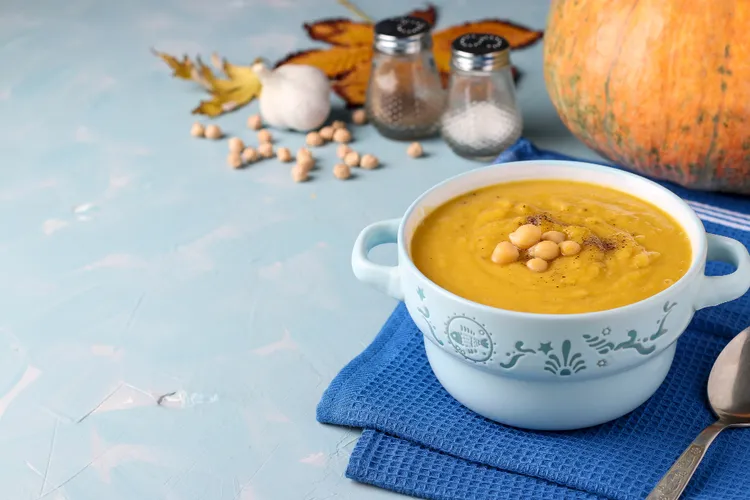
There is a particular satisfaction in a soup that does not require stock. A soup where the roasting of the main ingredient produces enough caramelised, concentrated flavour that water - water and coconut cream and a few aromatics - is all the liquid it needs. Butternut squash, roasted at high heat until deeply golden at the edges, produces this kind of soup: naturally sweet, slightly complex from the caramelisation, rich from the coconut cream, aromatic from the ginger and lemongrass.
This is the most elegant one-pot dinner in the plant-based collection. It is also one of the simplest - the technique is roasting, the method is blending, and the entire active process takes 15 minutes spread across 40 minutes of mostly hands-off cooking. The crispy chickpea topping adds protein, crunch, and a spiced contrast to the smooth, sweet soup that transforms it from a first course into a complete dinner.
Why Roasting Changes Everything
Most butternut squash soups are made by sautéing the squash in butter or oil and then simmering it in stock. This works. It is fast and straightforward and produces a good soup.
Roasting produces a great one.
The difference is the Maillard reaction - the same chemistry that caramelises onions, sears steak, and toasts bread. At the high temperatures of roasting (200°C+), the sugars in the butternut squash caramelise and the proteins undergo Maillard browning. The resulting flavour compounds - dozens of new molecules created by the heat - have a depth and complexity that neither raw nor sautéed squash has.
The practical result: roasted squash soup tastes significantly deeper and more complex than an equivalent soup made from squash that has not been roasted. The slight bitterness of the caramelised edges, dissolved into the sweet flesh during blending, produces a rounded flavour that a plain squash soup lacks.
The yield improvement from roasting: Roasting drives off moisture from the squash, concentrating the flavour and the sweetness. The same weight of roasted squash produces a more intensely flavoured soup than raw squash - which means less squash needed for the same depth.
Ingredients
Serves 4-6 | Active time: 15 minutes | Total time: 55 minutes
The Soup
- 1 large butternut squash (approximately 1.2kg), peeled, deseeded, and cut into 3cm cubes
- 2 tbsp olive oil
- 1 large onion, roughly chopped
- 4 cloves garlic, unpeeled (roasted alongside the squash)
- 1 stalk lemongrass, outer layers removed, inner stalk finely sliced
- 2cm piece fresh ginger, peeled and roughly chopped
- 1 × 400ml tin full-fat coconut cream (not coconut milk - the higher fat content of coconut cream produces a richer, more silky soup)
- 500ml water (or very light vegetable stock)
- Juice of 1 lime
- 1 tsp ground turmeric - adds warmth and amplifies the squash's golden colour
- ½ tsp ground coriander
- Salt and white pepper
The Crispy Chickpea Topping
- 400g canned chickpeas, drained, rinsed, and completely dried (30 minutes air-drying)
- 1.5 tbsp olive oil
- 1 tsp smoked paprika
- 1 tsp ground cumin
- ½ tsp garlic powder
- ½ tsp salt
- Pinch of cayenne
To Finish
- Fresh coriander leaves
- Coconut cream - an additional drizzle over the finished soup
- Chili oil or toasted pumpkin seeds
- Lime wedges
Method
Step 1: Roast the squash and garlic (35 minutes)
Preheat the oven to 200°C (fan). Toss the cubed squash with 2 tbsp of olive oil, the turmeric, ground coriander, salt, and pepper. Spread on a large sheet pan in a single layer.
Nestle the unpeeled garlic cloves among the squash pieces - they will roast and caramelise in their skins, producing sweet, spreadable roasted garlic.
Roast for 30–35 minutes, turning once at 20 minutes, until the squash is deeply golden at the edges and completely tender. The pieces should collapse slightly when pressed and have visible caramelisation on the cut surfaces.
Step 2: Crispy chickpeas (concurrent with the squash)
While the squash roasts, prepare the chickpeas. Dry thoroughly - this is the critical step. See Sheet Pan Chickpeas for the full technique.
Toss the dried chickpeas with olive oil, smoked paprika, cumin, garlic powder, salt, and cayenne. Spread on a second sheet pan (or on one side of the squash pan if there is room - they need their own space).
Roast for 25-30 minutes alongside the squash, shaking the pan once at 15 minutes, until golden and crispy. They should rattle when the pan is shaken.
Remove and set aside. They crisp further as they cool.
Step 3: Soften the aromatics (5 minutes)
While the squash is in its final minutes: heat 1 tbsp of oil in a large saucepan over medium heat. Add the onion and cook for 4-5 minutes until softened. Add the lemongrass and ginger and cook for 2 minutes until fragrant.
Step 4: Blend the soup (5 minutes)
Add the roasted squash to the saucepan. Squeeze the roasted garlic from its skins into the pan - discard the skins.
Add the coconut cream and water. Bring to a gentle simmer for 3 minutes to meld the flavours.
Using an immersion blender, blend completely smooth - 2-3 minutes of blending, moving the blender through the entire pan. Or transfer in batches to a standing blender (be careful with hot liquid - fill only halfway, hold the lid firmly, start on low speed).
The soup should be completely smooth and a vivid, deep golden colour. Strain through a fine-mesh sieve for the silkiest texture - this is optional but produces a noticeably more refined result.
Step 5: Season and finish
Add the lime juice. Taste and adjust:
- Too sweet: more lime juice, a pinch more salt
- Needs more depth: a small piece of lemongrass simmered for 2 more minutes, then removed
- Too thick: add water or stock in 50ml increments
- Too thin: simmer uncovered for 5 minutes to reduce
The final soup should be: thick enough to coat a spoon heavily, vivid golden-orange, and deeply flavoured - sweet from the squash, rich from the coconut cream, aromatic from the ginger and lemongrass, with the lime's acidity lifting everything.
Reheat gently if needed before serving.
Step 6: Serve
Ladle into warm bowls. Finish with:
- A drizzle of coconut cream swirled across the surface
- A generous pile of crispy chickpeas in the centre - they should stay above the soup surface, not sink in
- Fresh coriander leaves
- Chili oil or toasted pumpkin seeds
- A lime wedge on the side
Variations
Thai-Inspired (With Red Curry Paste)
Add 2 tbsp of red curry paste to the saucepan with the onion - cook for 2 minutes before adding the roasted squash. The curry paste's complex spice profile (lemongrass, galangal, kaffir lime, chili) amplifies the Southeast Asian character of the soup into something bolder and more assertive. Add a handful of fresh basil at the end.
Moroccan-Spiced
Replace lemongrass with 1 tsp of ground cumin, 1 tsp of smoked paprika, ½ tsp of cinnamon, and ¼ tsp of ground ginger. Omit the lime and finish with lemon juice instead. Top with toasted pine nuts and a drizzle of harissa oil (harissa stirred into olive oil). The warm Moroccan spice profile is a completely different direction from the Southeast Asian original.
Apple and Butternut
Add 2 peeled, cored eating apples (Granny Smith or Cox) to the squash for the final 15 minutes of roasting. The apple's acidity and sweetness adds a brightness and complexity that complements the squash. This version needs less lime - the apple provides the acidity.
With Coconut Milk Instead of Cream
Using coconut milk (lower fat than coconut cream) produces a lighter, less rich soup. Good for those who find the full-cream version too heavy. Compensate with an extra 100ml less water to maintain the soup's body.
Make-Ahead and Storage
The soup (without toppings): Keeps refrigerated for 4-5 days. Reheats perfectly on the hob over medium-low heat, stirring occasionally. It thickens in the fridge - add a splash of water when reheating and stir until smooth.
Freezing: Freezes excellently for up to 3 months. Freeze without the chickpea topping - make the chickpeas fresh. Thaw overnight in the refrigerator, reheat gently, adjust consistency with water.
The crispy chickpeas: Store separately in an airtight container at room temperature for up to 2 days. They lose their crispiness in the fridge (moisture from the refrigerator softens them). Restore crispiness: spread on a sheet pan and reheat at 200°C for 8 minutes.
Pro Tips
- Cut the squash evenly. Pieces of similar size roast evenly - some pieces will be perfectly golden at the same time others are still pale. Even cutting means uniform caramelisation, which means even depth of flavour throughout the soup.
- Don't skip the roasted garlic. Roasted garlic in a squash soup provides a sweetness and complexity that raw or sautéed garlic doesn't. The 35 minutes of oven time for both the squash and the garlic produces two transformations simultaneously - the oven does the work.
- Blend for longer than you think necessary. Butternut squash blends to a remarkably smooth consistency, but lemongrass fibres and ginger pieces can remain. Blend for a full 3 minutes and strain if serving to guests.
- Warm the bowls. Soup in a cold bowl loses half its intended character within minutes. Fill each bowl with boiling water for 30 seconds, tip out, and serve immediately.
Common Mistake: Using Coconut Milk Instead of Coconut Cream Coconut milk and coconut cream appear similar but have significantly different fat contents - coconut milk is approximately 17% fat, coconut cream is 20-30%. In a blended soup, the fat difference produces a noticeably different texture: coconut milk produces a thinner, slightly less rich soup; coconut cream produces the silky, body-forward result that makes this soup exceptional. Check the label before buying. When in doubt: the version sold in a smaller, more concentrated can is usually the cream; the larger can with higher water content is usually the milk.
FAQ
Q: Do I need to peel the butternut squash?
Yes - butternut squash skin is too tough to blend smoothly, even after roasting. Peel before cutting. The quickest method: cut the squash in half lengthways first, then use a sharp peeler on the flat surface. Alternatively, roast the squash whole in halves (cut-side down, 45 minutes at 200°C) and scoop the flesh out with a spoon - no peeling required.
Q: My soup tastes too sweet. How do I balance it?
More lime juice is the primary fix - acidity directly counterbalances sweetness. Additional salt also helps, as does a small amount of apple cider vinegar. If the sweetness is overwhelming, adding a pinch of cayenne creates enough heat distraction to balance. For the next batch: choose a less ripe squash (firmer, paler flesh = less sweet) or reduce the roasting time slightly.
Q: Can I make this without a blender?
A food mill (mouli) produces a slightly textured but acceptable result. A potato ricer works for a more rustic, chunky version. A fork produces a thick, partially mashed soup that is very different in character - comfort food in a different register but still good. For the silky, smooth result described, a blender is required.
🔗 Continue Cooking
Latest