Za'atar: The Herb-and-Spice Blend That Belongs on Every Table
The aromatic blend of dried herbs, sumac, sesame, and salt - and twelve ways it improves everything it touches
Za'atar is two things simultaneously, and the confusion between them is the first thing worth clarifying.
Za'atar the herb: A wild thyme-like plant (Origanum syriacum or Thymbra spicata, depending on the region) native to the Levant, with a flavour that sits between thyme, oregano, and marjoram. In the wild, za'atar herb grows across hillsides in Lebanon, Palestine, Israel, Jordan, and Syria. It is so culturally significant in some of these regions that its wild harvesting is legally restricted - the plant is considered part of the common heritage.
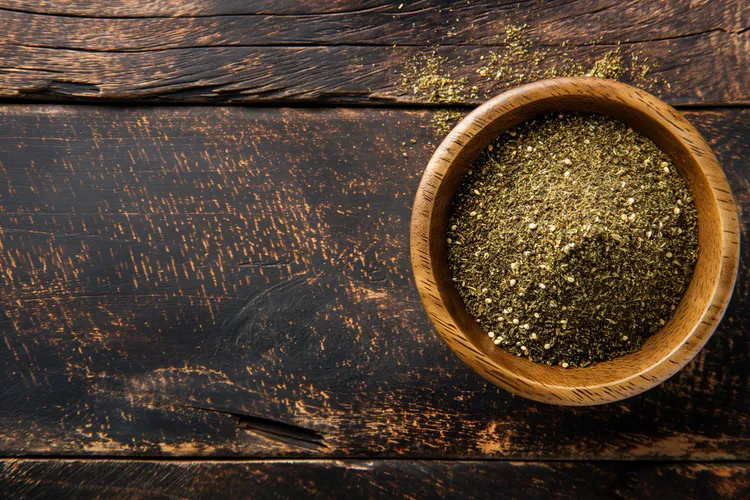
Za'atar the blend: The spice mixture made from dried za'atar herb (or substituted thyme and oregano), ground sumac, toasted sesame seeds, and salt. This is the za'atar most of the world encounters - the ochre-green powder with a distinctive aroma and a flavour that is simultaneously herbal, tangy, nutty, and deeply aromatic.
When this post refers to za'atar - and when most recipes refer to za'atar - it means the blend. This is the ingredient that sits on tables across the Levant as naturally as salt and pepper, that is dipped into with olive oil and warm bread at every meal, and that improves most things it is added to with a speed and reliability that no other spice blend quite matches.
What Za'atar Blend Contains: The Variations
Every family and every region has its own za'atar ratio. There is no single canonical recipe. But the core components are consistent:
Dried herbs - dried za'atar herb (where available), or dried thyme, dried oregano, and sometimes dried marjoram. The herb base provides the primary aromatic character.
Sumac - the dried, ground berry that provides the tartness and the characteristic reddish tinge. See Sumac: The Tangy Red Spice That Replaces Lemon in Middle Eastern Cooking for the complete guide.
Toasted sesame seeds - the nutty element that adds texture, fat, and a roasted warmth. The sesame seeds connect za'atar to tahini - both are sesame-based Levantine ingredients that pair naturally.
Salt - integrated into the blend, which means za'atar is already seasoned. Account for this when cooking.
Optional additions by region and family: Ground cumin (in some Syrian versions), dried marjoram (in some Lebanese versions), fennel seeds, coriander seeds, roasted ground almonds or pistachios.
The Regional Character of Za'atar
Lebanese za'atar: Usually the highest sumac content - most tart, most recognisably sour-herbal.
Palestinian za'atar: Often includes more thyme and a more herbal, less tart character. The Palestinian za'atar tradition is the most legally protected - wild za'atar harvesting is restricted to preserve the plant.
Syrian za'atar: Can include cumin and additional spices, producing a more complex, warmer blend.
Jordanian za'atar: Generally similar to Palestinian in character.
Shop-bought vs. homemade: Commercial za'atar varies enormously. The best is made from freshly dried wild za'atar herb - fragrant, complex, clearly herbal. The worst is flat and dusty, made from old herbs and insufficient sumac. Making your own from good dried thyme, fresh sumac, and freshly toasted sesame takes 5 minutes and produces a superior result.
How to Make Za'atar at Home
Makes approximately 80g | Takes 5 minutes
- 30g dried thyme (good quality - fragrant, not dusty)
- 15g dried oregano
- 20g ground sumac
- 15g sesame seeds, toasted in a dry pan for 2-3 minutes until golden and smelling nutty
- 1 tsp fine sea salt
- Optional: ½ tsp ground cumin
Toast the sesame seeds in a dry pan over medium heat, stirring constantly, for 2-3 minutes until golden. Allow to cool. Combine all ingredients and mix thoroughly. Store in a sealed jar away from heat and light. Keeps for 3-4 months.
The toasting step matters: Raw sesame seeds in za'atar taste flat. Toasted sesame seeds add a warmth and nuttiness that is essential to the blend's character.
12 Applications
1. Za'atar with Olive Oil and Bread (Man'oushe)
The foundational use - and the one that explains why za'atar occupies such a central place at the Levantine table. Mix za'atar with olive oil (2 tbsp za'atar + 3 tbsp good olive oil) until it forms a thick paste. Spread on warm flatbread, pitta, or good sourdough. This is za'atar at its most elemental - the herb blend, the olive oil, and bread, in proportions that need nothing else.
Man'oushe - the Lebanese flatbread spread with za'atar and olive oil and baked - is one of the great street foods of Beirut, eaten for breakfast or as a snack at any time of day. The olive oil carries the aromatic compounds from the za'atar into the bread as it bakes; the sumac provides the tartness; the sesame adds crunch. It is complete.
2. Za'atar Crusted Chicken
Coat chicken pieces (thighs and drumsticks work best) in a mixture of 3 tbsp za'atar + 2 tbsp olive oil + juice of ½ lemon + 1 minced garlic clove. Marinate for 2 hours or overnight. Roast at 200°C (fan) for 35-40 minutes until the za'atar crust is deeply fragrant and the chicken is cooked through.
The lemon in the marinade and the sumac in the za'atar provide complementary acidity; the dried herbs form a fragrant crust; the sesame adds a subtle crunch. One of the simplest and most effective chicken preparations in this collection.
3. Za'atar and Labneh
The combination that appears at virtually every Levantine breakfast table - labneh (strained yogurt, from the Labneh recipe in the Fermentation collection), drizzled with olive oil and scattered generously with za'atar.
The tangy labneh, the fruity-tart sumac in the za'atar, and the richness of the olive oil form a triangle of flavour that works at breakfast, as a meze element, as a spread, or as a dip. Za'atar rolled labneh balls - coating the balls of strained yogurt in za'atar - is one of the most elegant preparations in this collection.
4. Za'atar Roasted Vegetables
Toss any root vegetables or dense vegetables (cauliflower, carrots, sweet potato, aubergine) with olive oil and 2 tbsp za'atar before roasting. The herbs toast in the oven heat; the sumac deepens; the sesame adds crunch at the edges. This is the simplest vegetable upgrade in this collection - the same vegetable, roasted with za'atar instead of plain herbs and salt, produces a significantly more interesting result.
5. Za'atar Vinaigrette
Whisk together: 1 tbsp za'atar + 3 tbsp olive oil + 2 tbsp lemon juice + 1 tsp honey + salt. The za'atar's herbs and sumac provide both the herb and acid components of a standard vinaigrette simultaneously - this is a dressing that needs fewer additional flavourings than most because the blend already contains complexity.
Use on: Grain salads, roasted vegetable salads, simple green salads, chickpea salads, cucumber and tomato salads.
6. Za'atar Flatbread (Quick Version)
Using shop-bought flatbread, pitta, or even good sliced bread: brush with olive oil, scatter za'atar generously, place under a hot grill for 2-3 minutes until slightly toasted and fragrant. The fastest impressive bread in this collection - 3 minutes from the idea to the table.
7. Za'atar Over Eggs
A teaspoon of za'atar scattered over fried eggs, scrambled eggs, or a shakshuka immediately before serving. The herbs and sumac provide freshness and acidity that cuts through the richness of the egg fat. This is a morning habit worth establishing - za'atar over eggs is quicker than making toast and more interesting.
8. Za'atar Popcorn
Toss freshly popped popcorn (while still warm) with 1 tbsp of melted butter or olive oil and 1 tsp of za'atar per 100g of popcorn. The za'atar's herbs and sesame provide a savoury, aromatic coating that is significantly more complex than plain salt.
9. Za'atar in Pasta
1 tbsp of za'atar tossed through a simple garlic and olive oil pasta (aglio e olio style) at the end of cooking, with a squeeze of lemon. The herbs and the sumac transform a simple pasta into something with a Middle Eastern inflection - not traditional to any specific cuisine, but genuinely excellent.
10. Za'atar Pizza or Flatbread Topping
Za'atar and olive oil as a pizza sauce alternative - spread on pizza dough before baking and topped with labneh (added after baking, cold), cherry tomatoes, and fresh herbs. The za'atar base provides enough flavour complexity that the pizza needs few additional toppings.
11. Za'atar in Hummus
Stir 1 tbsp of za'atar into finished hummus for an herbal, slightly tangy version of the dip. The sesame in the za'atar connects to the tahini; the sumac adds tartness; the herbs add complexity. Finish with additional za'atar on top for texture and visual contrast.
12. Za'atar Spiced Nuts
Toss mixed nuts (cashews, almonds, walnuts) with 1 egg white + 2 tbsp za'atar + 1 tbsp olive oil + pinch of salt. Spread on a sheet pan and bake at 170°C for 15-18 minutes until golden and aromatic. The egg white forms a crispy coating; the za'atar seasons it throughout. The most compelling cocktail snack in this collection.
The Olive Oil Pairing Principle
Za'atar and olive oil are inseparable in Levantine tradition - and the reason is chemical. The aromatic compounds in za'atar's herbs are fat-soluble: they dissolve and carry more completely in fat than in water. Mixing za'atar with olive oil releases and carries these compounds much more effectively than mixing with water-based preparations. This is why za'atar always appears alongside olive oil at the table - the fat is not decoration, it is function.
The implication for cooking: Always mix za'atar with a fat (olive oil, butter, tahini, yogurt) before adding to a dish. Za'atar added dry to a wet preparation distributes unevenly and the aromatic compounds don't fully release.
Buying Za'atar
At specialty stores: Middle Eastern and Turkish grocery stores carry the best za'atar - often made by local producers from regional herbs and sumac, with higher quality and freshness than supermarket versions.
At supermarkets: Most large UK and US supermarkets now stock za'atar (Waitrose, M&S, Whole Foods, Trader Joe's). Quality varies; check the ingredients for actual herb content vs. filler.
Online: Sous Chef (UK), Burlap & Barrel (US), and other specialty spice retailers stock za'atar made from specific regional herbs, with clear ingredient lists.
Quality indicator: Good za'atar is fragrant immediately on opening the jar - distinctly herbal, slightly tangy. Flat, dusty, or faintly musty za'atar has aged past its best. The herbs should be visible and green-ish, not uniformly brown.
Pro Tips
- Make your own. Five minutes and better quality than most shop-bought versions. See the recipe above.
- It is already salted. Account for the salt in za'atar when seasoning the rest of the dish. A tablespoon of za'atar adds a meaningful amount of salt alongside its other flavours.
- The olive oil ratio matters. 1 tbsp za'atar to 1.5 tbsp olive oil produces a thick, spreadable paste (for bread dipping). 1 tbsp za'atar to 2 tbsp olive oil produces a more liquid, drizzleable mixture (for finishing over dishes). Adjust the ratio to the application.
- Refresh old za'atar: A dry pan over medium heat for 60 seconds - just enough to warm the herbs and toast the sesame slightly - revives za'atar that has lost some of its aromatic punch. This is particularly effective for shop-bought za'atar that has been in the cupboard for a while.
Common Mistake: Using Za'atar as a Late Addition to Long-Cooked Dishes Za'atar's herbal aromatics - the volatile compounds that make it smell and taste so good - are fragile. Long cooking destroys them. Za'atar is a finishing ingredient and a short-roasting ingredient, not a base spice for slow braises or soups. Add it at the end, sprinkle it over the finished dish, or use it in preparations where it is exposed to heat briefly (pizza, roasted vegetables, crusted chicken). Adding it early to a slow-cooked dish produces a flat, slightly bitter result that bears no resemblance to what za'atar at its best tastes like.
FAQ
Q: Is za'atar the same as thyme?
No - though za'atar herb is in the same family as thyme and has a similar aromatic character, they are different plants. More importantly, za'atar the blend contains four ingredients (herb, sumac, sesame, salt) of which thyme is only one. Using plain thyme in place of za'atar produces a dish seasoned with thyme, not a dish seasoned with za'atar.
Q: Can I buy za'atar herb in the UK or US?
Fresh za'atar herb (Origanum syriacum) is rarely available outside the Middle East. Some specialist herb growers sell plants or seeds for growing at home. Dried za'atar herb is available from Middle Eastern grocery stores and online - it is worth seeking out if you want to make an authentic za'atar blend. Dried thyme and dried oregano combined (2:1 ratio) is a reasonable substitute.
Q: How long does za'atar keep?
Homemade za'atar: 3-4 months in a sealed jar away from heat and light. Commercial za'atar: check the best-before date, but generally 12-18 months. After this, the herbs lose their potency and the sumac's tartness fades. Refresh or replace.
🔗 Related Ingredient Deep Dives
- Sumac: The Tangy Red Spice That Replaces Lemon in Middle Eastern Cooking
- Tahini: The Sesame Paste That Makes Everything Better
- Preserved Lemons: The Fermented Citrus That Transforms North African Cooking
- Pomegranate Molasses: The Middle Eastern Syrup That Belongs in Every Kitchen
- From the Fermentation collection: Labneh: The Strained Yogurt That Becomes Cheese
- World Cuisines in Your Pantry: The Ingredient Deep Dives
Latest