What Is Black Garlic and How Is It Made?
Black garlic is raw garlic that has been slowly fermented at low heat for weeks, transforming sharp pungency into something sweet, jammy, and deeply savory. Here's what actually happens inside those bulbs - and why it matters for how you cook with it.
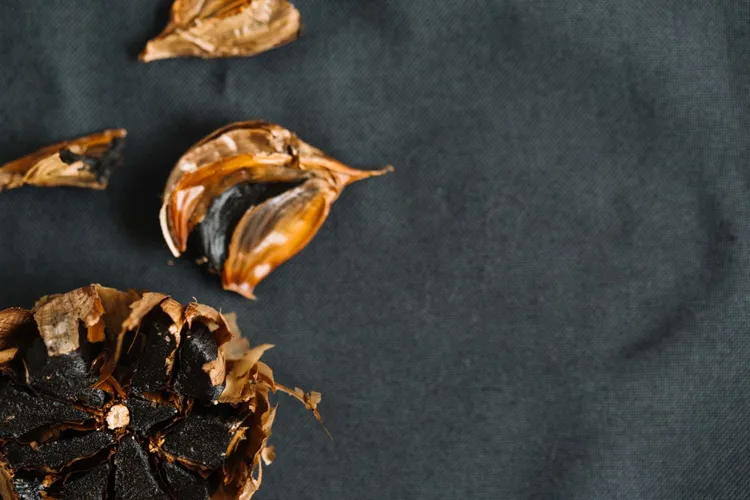
The transformation is more chemistry than cooking. No mold, no bacteria, no brine - just heat, moisture, and time doing something remarkable to an ordinary ingredient.
The Short Version
Whole garlic bulbs are held at 60-90°C (140-195°F) in a humid environment for 3-6 weeks. During that time, two chemical reactions reshape the ingredient completely: the Maillard reaction and enzymatic browning. The result is black cloves that are soft, sticky, sweet, and complex in a way raw garlic never is.
The Maillard Reaction
The Maillard reaction is the same process responsible for the crust on a seared steak, the color of toasted bread, and the aroma of roasting coffee. It happens when amino acids and reducing sugars react under heat, producing hundreds of new flavor and aroma compounds. In black garlic, this reaction runs slowly over weeks rather than seconds, creating a far more layered result - sweet, earthy, slightly smoky notes that build on each other.
Enzymatic Browning
Enzymes naturally present in garlic - the same ones responsible for that sharp bite when you cut a raw clove - break down and convert during the fermentation process. This is what reduces the allicin content. Allicin is the compound responsible for raw garlic's pungency and most of its antimicrobial properties. In black garlic, it converts primarily to S-allylcysteine (SAC), a more stable, water-soluble compound that's easier for the body to absorb. This is one reason black garlic is gentler on digestion and doesn't cause garlic breath.
What Changes During Fermentation
- Color: Ivory to jet black, caused by melanoidins formed during Maillard browning
- Texture: Firm and crisp to soft, sticky, almost gel-like
- Flavor: Sharp, sulfurous, pungent to sweet, tangy, umami-rich
- Moisture: Significant water loss (roughly 40-50%) concentrates sugars and flavor
- Odor: Dramatically reduced - fermented black garlic barely smells like garlic at all
The Role of Temperature and Humidity
Temperature is the critical variable. Too low (below 55°C) and the process stalls or produces uneven results. Too high (above 95°C) and the garlic cooks rather than ferments, producing a softer texture but less complex flavor. Most commercial producers target 70-80°C throughout. Humidity control prevents the outer skins from drying too quickly and insulates the inner cloves - the garlic is typically wrapped or enclosed during the process.
Commercial vs Home Production
Commercial black garlic is produced in controlled fermentation chambers with precise temperature and humidity regulation. Home production is less precise but achievable - a rice cooker on "keep warm" or a slow cooker on its lowest setting can produce good results, though it takes closer to 4-6 weeks versus the 3-4 weeks of commercial operations. The full process is covered in our guide to making black garlic at home.
Where Black Garlic Comes From
Black garlic is believed to have originated in Korea, where it's called heuk maul. South Korea remains one of the largest producers and consumers. Japan, Spain, and China also have significant production. The technique has spread to artisan producers in the US, UK, and Europe over the past two decades. Korean black garlic tends to be milder and slightly sweeter; Spanish varieties often have a more pronounced acidity.
What to Look for When Buying
Good black garlic should be uniformly dark (not patchy), soft but not wet, and should smell faintly sweet and earthy - not sulfurous. Cloves that are hard in the center haven't fully fermented. Wet or slimy cloves have been stored poorly. More on sourcing and selecting in our article on where to buy black garlic.
Nutrition per 100g (estimates)
- Calories: ~150 kcal
- Carbohydrates: ~33g
- Protein: ~6g
- Fat: ~0.5g
- S-allylcysteine (SAC): Significantly higher than raw garlic
Why This Matters for Cooking
Understanding the chemistry explains the cooking behavior. Because the cell walls have broken down over weeks, black garlic mashes effortlessly, blends completely smooth, and disperses evenly into sauces and dressings. It won't overwhelm other flavors the way raw garlic can - instead it adds a quiet bass note of umami and sweetness. That's why it works well in dishes where raw garlic would be too aggressive: vinaigrettes, compound butters, mayonnaise, and slow braises. For a full picture of where to apply it, the complete black garlic guide covers every major application.
Meal Prep Notes
Black garlic doesn't require any prep beyond peeling (and even that is easy - the skins slip off with minimal effort). A batch of black garlic paste made from a full bulb takes 5 minutes and keeps refrigerated for 2-3 weeks, making it far more practical to cook with than reaching for individual cloves each time.
Latest