Curry Leaves: The Fresh Herb That Defines South Indian Cooking
The leaf that cannot be dried, cannot be substituted, and cannot be adequately described - only tasted
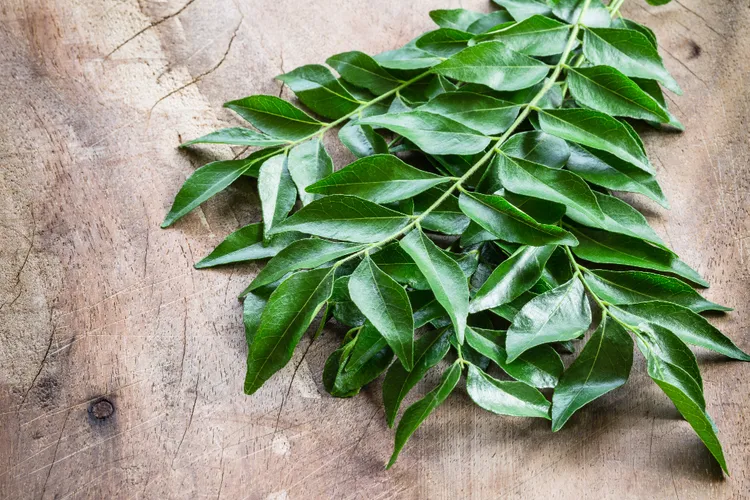
Curry leaves have the most unfair name in any ingredient collection. The name implies a generic curry flavour - the sort of catch-all warmth suggested by the word "curry" in its Western usage. The reality is entirely different. Curry leaves (Murraya koenigii) have a specific, distinctive aroma that is unlike any other herb: simultaneously citrusy (a lime-like brightness), slightly anise-like, slightly camphor-forward, deeply aromatic, and entirely their own. They smell like South India in the same way that basil smells like Italy and coriander smells like Mexico - the specific aromatics are the region encoded in a leaf.
They also have, uniquely among the herbs in this collection, a non-negotiable freshness requirement. Dried curry leaves are not a substitute for fresh curry leaves. They are a different and functionally inferior product. The volatile aromatic compounds (linalool, citronellal, and over 60 other identified compounds) that give fresh curry leaves their specific character evaporate almost completely during drying. Dried curry leaves smell very faintly of curry leaves and impart very faint curry leaf character to cooking. Fresh curry leaves sizzle explosively in hot oil and fill the kitchen with an aroma that is one of the great sensory experiences of cooking.
This is the herb that requires sourcing effort. And the effort is worth it.
What Curry Leaves Are: The Plant
Curry leaf tree (Murraya koenigii) is a small tropical tree native to India and Sri Lanka. It is not related to curry powder or to the herb sometimes called "curry plant" (Helichrysum italicum) in Western garden centres - the latter is a silvery Mediterranean shrub with a faint curry-like smell that is used decoratively but not culinarily.
Real curry leaves are the small, slightly glossy, ovate leaves of the Murraya koenigii tree, sold on their stem in bunches. They are used fresh or very fresh-frozen. They are a staple of South Indian, Sri Lankan, Keralan, and Tamil cooking, and appear in Malaysian, Indonesian, and some Southeast Asian preparations.
Sourcing and Storage
Where to buy:
- South Asian grocery stores (Indian, Sri Lankan, Pakistani) are the most reliable source. Most carry fresh curry leaf bunches, usually sold in 30-50g bunches at very low prices.
- Some Caribbean grocery stores carry them (they are used in Trinidad and Tobago cooking).
- Specialist online retailers ship fresh curry leaves; freezing on arrival is recommended.
- Growing your own: A curry leaf tree grown in a pot produces a year-round supply. The plant is increasingly available from nurseries specialising in tropical herbs.
What mainstream supermarkets carry: Some UK supermarkets (occasionally Sainsbury's, Waitrose) carry dried or freeze-dried curry leaves in the spice aisle. These are not the same as fresh. They are usable in a limited sense - they provide a faint curry leaf flavour - but they do not replicate fresh.
Storage of fresh curry leaves:
- Refrigerator: Wrap unwashed in slightly damp kitchen paper, then in a plastic bag. Keeps 1-2 weeks.
- Freezer (the most practical approach): Freeze the entire bunch in a sealed bag immediately on purchase. Use directly from frozen - no thawing required. Frozen curry leaves retain approximately 80% of fresh flavour and are significantly better than dried. They keep frozen for 3-4 months.
The Technique: Tempering (Tarka)
The most important technique for curry leaves is the same as for asafoetida: add to hot fat and allow to sizzle. Fresh curry leaves dropped into very hot oil or ghee produce an immediate, vigorous sizzle and an explosive release of their aromatic compounds. The leaves crisp slightly at the edges. The hot fat carries the released aromatic compounds throughout the dish.
Safety note: Fresh curry leaves contain significant moisture. When they hit very hot fat, they spit aggressively. Have a splatter screen or lid ready. Stand back for the first 3-5 seconds.
The tempered curry leaf technique:
- Heat oil or ghee over medium-high heat until shimmering
- Add the curry leaves (10-15 leaves per dish)
- They will spit and sizzle - tilt the pan away from you and cover partially if needed
- Cook for 20-30 seconds until the sizzling subsides and the leaves are slightly crisp
- Add the next ingredients immediately
10 Applications
1. Dal Tarka
The most fundamental application. Every properly seasoned dal in South Indian and Sri Lankan cooking uses curry leaves in the finishing tarka - the spiced oil poured over the cooked lentils.
Standard tarka with curry leaves: Heat 2 tbsp ghee. Add ¼ tsp asafoetida (from the Asafoetida post), then ½ tsp mustard seeds. When the mustard seeds pop, add 10-12 curry leaves. They will spit. Cook 20 seconds. Add 2 dried red chilies and 1 clove sliced garlic. Cook 30 seconds. Pour sizzling over the dal.
The curry leaf aroma in the tarka is what makes the dal smell complete - the combination of mustard seeds, curry leaves, and asafoetida is the South Indian flavour signature.
2. Curry Leaf Rice (Karivedapaku Annam)
One of the simplest and most satisfying applications - cooked rice seasoned with a curry leaf tarka.
Method: Heat 3 tbsp oil. Add ½ tsp mustard seeds (wait for them to pop), then 15-20 curry leaves, 2 dried red chilies, ¼ tsp asafoetida, 2 tbsp roasted peanuts, 1 tsp turmeric. Toss with 400g cooked white rice. Season with salt.
The rice absorbs the curry leaf oil and is fragrant with the herb throughout. Serve with yogurt and papad.
3. South Indian Chicken Curry
Curry leaves appear at multiple stages in South Indian chicken curry - in the initial tempering, alongside the onions, and sometimes added again with the coconut milk at the end. The layered addition produces a more fully flavoured curry than a single addition.
Basic tempering for South Indian chicken curry: Heat oil. Add mustard seeds, then curry leaves, then onion. Cook until onion is golden. Then add garlic, ginger, tomato, and spices. The curry leaves in the onion-cooking stage give the base a depth that distinguishes South Indian curry from North Indian curry.
4. Prawn or Shrimp Fry
A South Indian classic - prawns tossed in a dry spice mix and cooked quickly with curry leaves until fragrant and slightly caramelised at the edges.
Method: Heat oil over very high heat. Add curry leaves and let them sizzle for 20 seconds. Add the spiced prawns (coated in turmeric, chili powder, salt) and cook without stirring for 2 minutes to allow them to char. Toss once and cook 1-2 more minutes.
The curry leaves caramelise with the prawns and become crispy - excellent eaten alongside the prawns as part of the dish.
5. Sambar
The South Indian lentil-and-vegetable soup that accompanies dosa, idli, and rice. Curry leaves appear in the sambar powder (the spice blend) and in the final tempering. See the application in the Asafoetida post for the tarka technique.
6. Raita Seasoning
A small tarka of mustard seeds and curry leaves poured over a plain yogurt raita transforms it from seasoned yogurt into something with a specific South Indian character. 5 curry leaves + ½ tsp mustard seeds in hot oil, poured sizzling over the raita, produces the flavour that distinguishes South Indian raita from its Northern equivalent.
7. Crispy Curry Leaf Oil (The Most Versatile Preparation)
The preparation that makes curry leaves useful beyond South Indian cooking. Heat 100ml of neutral oil to very hot. Drop in 20-25 curry leaves - they will spit dramatically. Cook 20-30 seconds until completely crisp and the oil is intensely fragrant. Strain the oil into a jar, reserving both the crispy leaves and the oil.
The curry leaf oil: Drizzle over soups, dals, grilled fish, rice, pasta (yes, pasta - it works), roasted cauliflower, or any dish that benefits from an aromatic finishing oil.
The crispy leaves: Use as a garnish - their texture is extraordinary (intensely flavoured, crispy, slightly nutty) and they remain crisp for several hours if stored uncovered at room temperature.
8. Coconut Chutney (The Classic Accompaniment)
Coconut chutney - blended fresh coconut, green chili, and roasted chickpeas - is finished with a mustard seed and curry leaf tarka. The tarka is what distinguishes authentic coconut chutney from fresh coconut paste - the toasted mustard seeds and crisp curry leaves add a specific cooked warmth to the fresh coconut.
9. Kadala Curry (Kerala Black Chickpea Curry)
The coconut-based black chickpea curry of Kerala uses curry leaves at two stages - in the coconut paste (blended with the coconut) and in the final tarka. The result is a curry where curry leaf is one of the defining flavours rather than a background note.
10. Curry Leaf Infused Butter
The Western application: 15 curry leaves sizzled in 100g of hot butter until fragrant, then strained. The resulting butter has a specific, exotic aromatic character - use it on grilled fish, corn, roasted vegetables, or as a pasta finishing butter.
This is the curry-leaf equivalent of the miso butter and chipotle butter preparations elsewhere in this collection - a compound fat that carries the ingredient's flavour into any application.
The Herb's Role in Regional Cooking
Curry leaves are most prominent in:
Tamil Nadu and Andhra Pradesh cooking: Used in almost every preparation - sambar, rasam, rice dishes, chutneys, fries.
Kerala cooking: Heavily used in coconut-based curries and seafood preparations.
Sri Lankan cooking: A defining flavour, appearing in curries, rice dishes, and as a fresh garnish.
Karnataka cooking: Used in dal preparations and rice dishes.
Less prominent (but present) in: Maharashtrian cooking, some Pakistani preparations, Malaysian and Singaporean Indian cooking.
Absent from: Most North Indian cooking (where other aromatics dominate), most Chinese, Japanese, Korean, Southeast Asian (non-Indian-influenced), and Western culinary traditions.
Pro Tips
- Freeze immediately on purchase. The most important storage advice. Fresh curry leaves at peak flavour, frozen the day you buy them, are significantly better than curry leaves that have been in the fridge for a week. Buy a large bunch, freeze everything you won't use in 3 days.
- Use more than you think. Fresh curry leaves in a dish serving 4 typically requires 10-20 leaves - which looks like a lot when you're holding the bunch. The flavour is present but not aggressive at this quantity. Too few leaves produces an underwhelming result.
- The spit is unavoidable. All recipes that involve sizzling curry leaves in hot fat produce vigorous spattering. This is not a technique error - it is the moisture in the leaves releasing as steam. A partial cover or splatter screen makes it manageable.
- Eat the leaves. Unlike bay leaves, curry leaves are edible and should be eaten - they become slightly crispy from the cooking fat and their texture, when properly sizzled, is pleasant. The leaves in a tarka poured over dal are part of the dish.
The Most Important Curry Leaf Note: Dried Are Not a Substitute Dried curry leaves do not replicate fresh or frozen curry leaves in cooking. The volatile aromatic compounds that give curry leaves their distinctive character evaporate during drying - what remains in a jar of dried curry leaves is a faint, shadow flavour that neither perfumes the oil properly nor fills the kitchen with the specific aroma of the fresh herb. If fresh curry leaves are not available, omit them entirely rather than using dried - the dish will taste of its other components rather than of an imitation of curry leaves. Find fresh ones or grow your own.
FAQ
Q: Can I use curry leaves in non-Indian cooking?
Yes - the curry leaf oil (Application 7) is the most versatile preparation for non-Indian uses. Drizzled over pasta, grilled fish, or roasted vegetables, it adds an exotic, aromatic quality that is interesting without being strongly Indian in character. The flavour is aromatic and citrusy rather than "curry."
Q: Can I grow my own curry leaf tree?
Yes - in the UK and US, a curry leaf tree can be grown in a pot indoors or in a conservatory. The tree requires warmth (above 10°C in winter), good light, and regular watering. It will produce a year-round supply of fresh leaves. Available from specialist nurseries and some South Asian grocery stores that sell plants.
Q: Are curry leaves related to curry powder?
No - curry powder is a blend of dried spices (cumin, coriander, turmeric, chili, fenugreek, etc.) with no relationship to the curry leaf plant. The word "curry" in both cases derives from the Tamil kari (meaning sauce or relish) but the ingredients are unrelated.
🔗 Related Ingredient Deep Dives
- Asafoetida (Hing): The Strange Spice That Smells Terrible and Tastes Extraordinary
- Tamarind: The Sour Backbone of Indian and Southeast Asian Cooking
- Fish Sauce: The Fermented Condiment That Makes Everything Savourier
- From the Street Food collection: South Asian Street Food Pantry
- From the One-Pan collection: One-Pot Lentil Soup: The Most Nourishing 30-Minute Dinner
- World Cuisines in Your Pantry: The Ingredient Deep Dives
Latest