South Asian Street Food Pantry: The Ingredients Behind the Flavor
Stock these once. Every Indian and Pakistani street food recipe in this collection becomes possible - and everything else you cook gets more interesting.
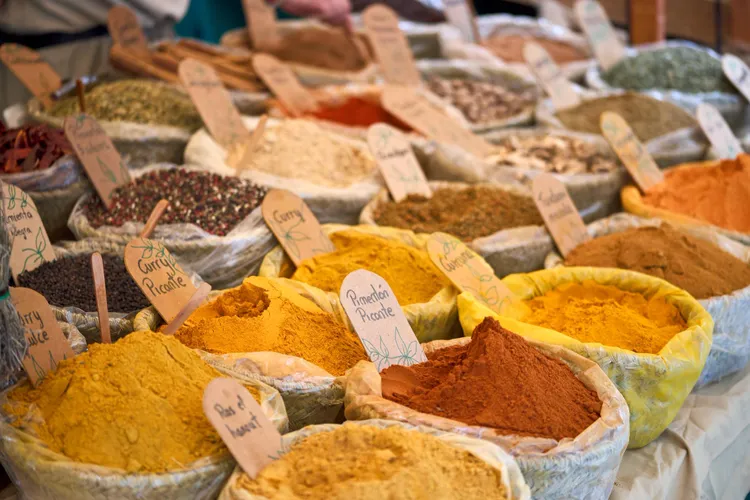
South Asian street food has a flavor profile unlike anything else in the world.
It is not just spicy. It is not just aromatic. It is a specific combination of heat, tang, earthiness, and a sulfurous depth - provided by black salt - that arrives in layers rather than all at once, that lingers rather than fades, and that produces a visceral, immediate recognition in anyone who has eaten chaat from a Mumbai street stall or pani puri from a Delhi vendor at dusk.
That flavor profile comes from a pantry. A specific, largely unfamiliar (to most Western kitchens) collection of ingredients - dried and fresh spices, fermented condiments, specialty flours, and a few key items that cannot be substituted without fundamentally changing the character of the dish. These are not obscure ingredients. They are the everyday staples of hundreds of millions of households across India, Pakistan, and Sri Lanka. They are increasingly available in the West - in South Asian grocery stores, online, and in the growing international sections of large supermarkets.
This guide covers every ingredient in the South Asian street food recipes of this collection - what each one does, why it matters, where to find it, and how to store it. Read it once before your first shopping trip and it will serve as a reference for years.
📖 Companion guide: If you're also cooking Korean, Japanese, Vietnamese, or Thai street food, see The Essential Asian Street Food Pantry for the parallel guide covering East and Southeast Asian ingredients. Several ingredients - sesame oil, tamarind, fresh ginger - appear in both.
Part 1: The Spice Foundation
South Asian cooking is built on whole and ground spices in a way that no other global cuisine quite matches. Understanding what each spice does - and crucially, how to handle it - is the foundation of everything else.
The Principle of Blooming Spices
Before the individual ingredients: the technique that makes South Asian cooking taste the way it does.
Dry-toasting whole spices in a dry pan over medium heat for 60-90 seconds - until aromatic - transforms them completely. The heat causes Maillard browning and volatilises aromatic compounds that don't fully express themselves in raw spice. Toasted and ground cumin tastes more present, more complex, and significantly more interesting than untoasted ground cumin. The same is true for coriander, fennel, and mustard seeds.
Blooming ground spices in hot oil or ghee for 30-60 seconds before adding liquid is the technique behind every tarka (tempering) in South Asian cooking. The fat extracts fat-soluble flavor compounds from the spices and distributes them through the dish. Ground spices added directly to liquid without this step taste raw and muted.
Both techniques appear throughout the recipes in this collection. They take seconds and make an extraordinary difference.
Cumin (Jeera)
Used in: Almost everything - pani puri filling, chaat masala, raita, marinades
The most fundamental spice in South Asian cooking. Available as whole seeds (use for tempering in hot oil - they pop and release aroma) and ground (use in spice blends and dry rubs). Always buy both forms.
A critical note: Pre-ground cumin from a supermarket that has been sitting on a shelf for a year is a different ingredient from freshly toasted and ground cumin seeds. The difference in flavor is dramatic. For the chaat masala recipe and any sauce where cumin is prominent, toast whole seeds and grind them yourself.
Where to find it: Every supermarket, every South Asian grocery store. Buy whole seeds at a South Asian grocery store for significantly better value and freshness.
Storage: Whole seeds: sealed, cool, dark, 2 years. Ground: 6 months maximum - after that the flavor fades significantly.
Coriander Seeds (Dhania)
Used in: Chaat masala, spice blends, marinades
The seed of the coriander plant - completely different in flavor from fresh coriander leaves (cilantro). Citrusy, slightly floral, warm. Used whole for tempering, or toasted and ground for spice blends. Often paired with cumin in the ratio 2:1 (coriander:cumin) in South Asian cooking.
Storage: Same as cumin - whole seeds last much longer than ground. Buy whole and grind as needed.
Turmeric (Haldi)
Used in: Pani puri filling, spice blends, marinades, as a coloring agent
Bright yellow, earthy, faintly bitter. Used in small quantities as both a flavoring and a natural colorant. Fresh turmeric root (increasingly available in supermarkets) has a more vivid, less dusty flavor than dried powder - use it grated in preparations where turmeric is a prominent flavor.
Important: Turmeric stains permanently - wooden spoons, cutting boards, clothing, counters. Use a dedicated spoon and work carefully.
Storage: Ground: cool, dark, 6 months. Fresh root: refrigerated, 2 weeks; frozen, 3 months.
Mustard Seeds (Rai / Sarson)
Used in: Tempering (tarka), pickles, some chutneys
Black or brown mustard seeds - used almost exclusively by frying briefly in hot oil until they pop and release their nutty, sharp aroma. This is the tarka technique: the seeds pop within seconds in hot oil, signaling that they are ready. Do not walk away from the pan - they go from unpopped to burnt in moments.
Where to find it: South Asian grocery stores, some large supermarkets (world food aisle).
Storage: Sealed, cool, dark, 2 years.
Asafoetida (Hing)
Used in: Tempering, pani puri, chaat, lentil dishes
Asafoetida is the most unfamiliar ingredient on this list for most Western cooks - and one of the most important. It is a dried resin with an intensely pungent raw smell (sulfurous, almost like very strong garlic) that transforms completely when added to hot oil: the smell mellows into a deep, onion-garlic depth that enriches everything it touches.
It is used in very small quantities - a pinch, literally ⅛ tsp or less. More is not better; a large amount of asafoetida produces a medicinal, unpleasant flavor.
Compound vs. pure asafoetida: Most commercially available asafoetida (Vandevi and LG brands are common) is "compound" - mixed with wheat flour as a stabilizer. This means it is not gluten-free. Pure asafoetida (hing) without wheat flour is available from specialist retailers and is gluten-free.
Where to find it: South Asian grocery stores. Small yellow tins of Vandevi or LG brand are the most common form.
Storage: Sealed tightly - the smell permeates everything. Cool, dark, indefinitely.
Dried Mango Powder (Amchur)
Used in: Chaat masala, chaat preparations, marinades
Amchur is made from unripe green mangoes - dried and ground to a fine powder. Its flavor is intensely sour and slightly fruity - it provides the specific tart quality of chaat masala that tamarind or citrus cannot replicate. It is the key souring agent in dry spice preparations where a liquid acid (tamarind, lemon) would change the texture.
Where to find it: South Asian grocery stores, some large supermarkets (world food aisle), online.
Storage: Sealed, cool, dark, 1 year.
Black Salt (Kala Namak)
Used in: Chaat masala, raita, pani puri water, virtually all South Asian street food
Kala namak is volcanic black salt - a sodium chloride compound with high sulfur content that gives it a distinctive egg-like, sulfurous smell and flavor. It sounds unappetising. It is, in practice, one of the most transformative ingredients in this entire collection.
That sulfurous quality is exactly what makes South Asian street food taste the way it does. A dish made with kala namak tastes authentic. The same dish made with regular sea salt tastes flat and generic. No other ingredient produces this effect.
It smells strongly in the packet. Use it anyway. In a prepared dish, the sulfurous edge mellows into a savory, complex depth that is simply present - not identifiable as "egg" or "sulfur" in the final preparation.
Where to find it: South Asian grocery stores (very widely available and inexpensive), health food stores (marketed as a supplement), online.
Storage: Sealed container - the smell is strong and will permeate other spices if stored open. Indefinitely.
Garam Masala
Used in: Pani puri filling, marinades, finishing spice for many preparations
Garam masala is a spice blend - not a single spice - that varies enormously by region and by household. The name means "warm spice mixture" and typically includes cardamom, cinnamon, cloves, black pepper, cumin, coriander, and sometimes bay leaf, nutmeg, and star anise.
Make your own vs. buy: Pre-made garam masala varies enormously in quality. The freshest, most complex version is made at home from whole toasted spices - the Chaat Masala guide covers the spice-blending process that can be applied to garam masala too. A good shop-bought garam masala (MDH and Shan are reliable brands) is perfectly acceptable.
Where to find it: Every supermarket, every South Asian grocery store. Buy at a South Asian grocery store for better freshness and value.
Storage: Ground blend: sealed, cool, dark, 6 months.
Cardamom (Elaichi)
Used in: Garam masala, sweet preparations, chai, some marinades
Green cardamom - the aromatic pods used in both sweet and savory South Asian cooking. Used whole (for infusing into liquids), cracked (to release the seeds, then discard the pod), or ground (the seeds only, not the pod, for spice blends).
A common mistake: Grinding the entire pod - husk and seeds - produces a woody, papery flavor. For spice blends, crack the pod and use only the small black seeds inside.
Storage: Whole pods: sealed, cool, dark, 1 year. Ground seeds: 3 months.
Part 2: The Flour Pantry
Besan (Chickpea Flour / Gram Flour)
Used in: Pani puri (in some versions), pakoras, bhajis, chilla, as a binding agent
Besan is flour made from dried chickpeas - naturally gluten-free, high in protein, with a slightly nutty, earthy flavor. It is the flour behind pakoras, bhajis, and countless South Asian fritters. When mixed with water and spices, it produces a batter that crisps beautifully and holds its shape.
It is not the same as other chickpea products: Besan is made from dried raw chickpeas (chana dal), not from the same chickpea variety as European canned chickpeas. The result is a denser, more flavorful flour. French chickpea flour (used in socca - see Socca recipe) is similar but not identical.
Where to find it: South Asian grocery stores (cheapest and best quality), health food stores (marketed as "gram flour"), large supermarkets, online.
Storage: Sealed container, cool, dry, 6 months.
Semolina (Sooji / Rava)
Used in: Pani puri shells - the most critical ingredient for hollow, crispy shells
Semolina is coarsely ground durum wheat - the same base ingredient as Italian pasta but in a different form. In pani puri, fine semolina mixed with a small amount of flour and water produces the specific dough that puffs up into hollow shells when fried at the right temperature.
Fine vs. coarse semolina: Pani puri requires fine semolina (also called fine sooji or fine rava). Coarse semolina produces shells that don't puff as cleanly.
Where to find it: South Asian grocery stores (look for "fine sooji"), most large supermarkets (fine semolina or durum semolina), Italian delis (same ingredient, different name).
Storage: Sealed, cool, dry, 1 year.
Atta (Whole Wheat Flour)
Used in: Roti, paratha, some bread preparations
Atta is finely milled whole wheat flour - softer, more finely ground than Western whole wheat flour, with a lower bran content that produces softer, more pliable flatbreads. Standard Western whole wheat flour can be used as a substitute but produces a slightly coarser, denser result.
Where to find it: South Asian grocery stores (most reliable, many brands and grades available), large supermarkets.
Storage: Sealed, cool, dry, 3 months; refrigerated, 6 months; frozen, 1 year.
Part 3: The Wet Pantry
Tamarind
Already covered in detail in The Essential Asian Street Food Pantry. In South Asian cooking it appears as:
- Tamarind block - most common in South Asian grocery stores, cheapest
- Tamarind paste - convenient, from a jar
- Tamarind concentrate - use in half the quantity
Used in: Pani puri water, tamarind chutney, imli chutney, marinades. See the Tamarind Chutney recipe in the Sauce Bible.
Ghee
Used in: Cooking fat for tempering, flatbreads, finishing
Ghee is clarified butter - butter that has been slowly melted until the milk solids separate and are removed, leaving pure golden fat with a smoke point of around 250°C (much higher than butter) and an intensely nutty, caramelised flavor.
It is the traditional cooking fat of South Asian cooking and one of the most flavorful fats available. A tablespoon of ghee in the tempering step transforms a dal or a spice blend in a way that vegetable oil cannot.
Where to find it: South Asian grocery stores (large tins, very good value), large supermarkets (smaller jars, higher price), health food stores (marketed as a premium product at premium prices - the South Asian grocery store version is identical quality for a fraction of the price).
Vegan substitute: Coconut oil has a similar high smoke point and adds a faint sweetness; it is the closest vegan substitute for high-heat tempering.
Storage: Room temperature in a sealed jar, 3 months. Refrigerated, 1 year. Does not require refrigeration unless your kitchen is very warm.
Rose Water
Used in: Some sweet preparations, lassi variations
Distilled rose petal water - used in very small quantities as a flavoring for sweet South Asian preparations. A few drops is enough; more becomes soapy.
Where to find it: South Asian grocery stores, Middle Eastern grocery stores, some large supermarkets (baking aisle), online.
Storage: Cool, dark, 1 year.
Part 4: Fresh Ingredients That Matter
Curry Leaves (Kadi Patta)
Used in: Tempering, chutneys, South Indian preparations
Fresh curry leaves - not dried, which have almost no flavor - are one of the most distinctive aromatics in South Asian cooking, particularly South Indian and Sri Lankan preparations. When added to hot oil, they pop and release an intensely aromatic, slightly citrusy, herbal fragrance that infuses the oil and everything cooked in it.
Dried curry leaves are not a substitute. The volatile aromatic compounds that make curry leaves distinctive evaporate almost entirely during drying. If you cannot find fresh curry leaves, omit them rather than substituting dried.
Where to find it: South Asian grocery stores (almost always have them fresh). Some large supermarkets in areas with significant South Asian communities. Increasingly available at farmers markets.
Storage: Refrigerated in a damp paper towel inside a sealed bag, 1-2 weeks. Freeze on the stem - use directly from frozen in hot oil. Frozen curry leaves are nearly as good as fresh.
Fresh Green Chilies
Used in: Pani puri water, chutneys, tempering, garnishes
South Asian cooking uses green chilies - specifically varieties like serrano, Indian finger chilies, or bird's eye chilies - as a fresh aromatic rather than simply a heat source. The flavor of a fresh green chili is grassy, bright, and vegetal; the heat is separate from and secondary to that flavor.
The heat varies enormously between chili varieties and even between individual chilies of the same variety. Taste before using. Indian finger chilies (available at South Asian grocery stores) are the most authentic for these recipes.
Storage: Refrigerated in a paper bag, 1-2 weeks.
Fresh Coriander (Cilantro)
Used in: Pani puri water, chutneys, garnishes - universally
Fresh coriander (the leaves and tender stems - not the roots or thick stems) is the single most important fresh herb in South Asian cooking. It appears as garnish, as a primary ingredient in green chutney, and as a finishing herb in countless preparations.
The stems have more flavor than the leaves. Don't discard them - include the tender stems (the thin ones attached to the leaves) in any preparation. The thick lower stems are woody and should be discarded.
Storage: Refrigerated with stems in a glass of water (like flowers), covered with a plastic bag, up to 1 week. Or wrapped in a damp paper towel in a sealed bag, 3-4 days.
Part 5: The Chaat Pantry
Chaat - the broad category of Indian street food snacks - has its own specific pantry within the South Asian pantry. These are the ingredients that appear specifically in chaat preparations, pani puri, and bhel puri.
Sev
Used in: Bhel puri, chaat garnishes, as a topping for pani puri
Sev are thin, crispy chickpea flour noodles - fried and salted, used as a textural garnish on chaat. They provide crunch, salt, and a neutral chickpea flavor that contrasts with the wet ingredients in chaat preparations.
Where to find it: South Asian grocery stores (sold loose by weight or in bags), online.
Storage: Sealed bag, room temperature, 2 months.
Puffed Rice (Murmura / Kurmura)
Used in: Bhel puri, some chaat preparations
Puffed rice - light, crispy, virtually flavorless - is the base of bhel puri. It absorbs the sauces and chutneys of chaat while providing volume and crunch.
Where to find it: South Asian grocery stores, health food stores (sold as puffed rice or rice cakes in bulk), large supermarkets.
Storage: Sealed, room temperature, 2 months.
Papdi (Crispy Flour Crisps)
Used in: Papdi chaat, some pani puri preparations
Small, round, crispy crackers made from atta or maida flour - the edible vessel for papdi chaat. Available ready-made from South Asian grocery stores; can also be made at home (the process is similar to making crackers).
Where to find it: South Asian grocery stores.
Storage: Sealed bag, room temperature, 1 month.
Where to Shop
South Asian Grocery Stores
The essential first destination. In the UK: large South Asian grocery stores such as Patel Brothers, Spices of India, and local independent stores in areas with South Asian communities (particularly in Birmingham, Leicester, London, and Bradford) carry everything in this guide at excellent prices. A full pantry shop costs approximately £30–50.
In the US: Patel Brothers (national chain), India Bazaar, and local South Asian groceries in most mid-sized cities. In Canada: South Asian grocery stores are widely distributed in Toronto, Vancouver, and Calgary.
Online
For readers without local South Asian grocery access: Spices of India (UK), iShopIndian (US), Amazon (for pantry staples in sealed packaging). Search by ingredient name - most of this guide's contents are available with next-day delivery.
Large Supermarkets
Increasingly carry: cumin (whole and ground), coriander seeds, turmeric, garam masala, tamarind paste, besan flour, ghee. Less reliably: kala namak, amchur, asafoetida, curry leaves, gochugaru. For specialist items, South Asian grocery stores or online are more reliable.
Quick Reference Table
| Ingredient | Used In | Substitute? | Find It | Keeps |
|---|---|---|---|---|
| Cumin seeds | Everything | Ground cumin* | Supermarket | 2 years |
| Coriander seeds | Spice blends | Ground coriander* | Supermarket | 2 years |
| Turmeric | Blends, color | None for color | Supermarket | 6 months |
| Mustard seeds | Tempering | None | Asian grocery | 2 years |
| Asafoetida (hing) | Tempering, chaat | Garlic/onion** | South Asian grocery | Indefinitely |
| Amchur (dried mango) | Chaat masala | Citric acid* | South Asian grocery | 1 year |
| Kala namak | Everything | Regular salt** | South Asian grocery | Indefinitely |
| Garam masala | Blends, finishing | Make your own | Supermarket | 6 months |
| Cardamom pods | Spice blends | None for quality | Supermarket | 1 year |
| Besan (chickpea flour) | Batters, binding | Plain flour** | South Asian grocery | 6 months |
| Fine semolina | Pani puri shells | None | South Asian grocery | 1 year |
| Atta (whole wheat) | Flatbreads | Whole wheat flour* | South Asian grocery | 3 months |
| Tamarind paste | Sauces, water | Lime + brown sugar** | Asian grocery | 3 months |
| Ghee | Cooking fat | Coconut oil (V)* | South Asian grocery | 1 year |
| Curry leaves (fresh) | Tempering | Omit - don't sub | South Asian grocery | Freeze |
| Fresh green chilies | Everywhere | Serrano chili* | Supermarket | 2 weeks |
| Fresh coriander | Everywhere | Omit or parsley** | Supermarket | 1 week |
| Sev | Chaat | Omit | South Asian grocery | 2 months |
| Puffed rice | Bhel puri | Omit | South Asian grocery | 2 months |
*Functional substitute - flavor will differ **Significant flavor difference - sourcing recommended
FAQ
Q: What are the five most important ingredients to buy first from this list?
In order of impact across the most recipes: (1) Kala namak - transforms every South Asian dish; (2) Amchur - the souring agent behind chaat masala; (3) Besan - needed for pani puri and pakoras; (4) Fine semolina - essential for pani puri shells; (5) Fresh curry leaves - freeze them immediately so you always have them. These five ingredients, combined with supermarket cumin, coriander, and turmeric, cover most of this collection.
Q: Is asafoetida (hing) worth buying if I'm only making one or two recipes?
Yes - it is inexpensive (a small tin costs £1-3 and lasts a year), it keeps indefinitely, and even a small amount adds the specific savory depth that distinguishes authentic South Asian cooking from approximations. Once you have it, you'll find yourself adding a pinch to dals and soups well beyond this collection.
Q: Can I make pani puri without semolina?
The shells require fine semolina for the correct texture - it is what causes them to puff into hollow spheres when fried. Plain flour alone produces shells that don't puff properly. This is the one ingredient in the pani puri recipe where substitution genuinely doesn't work. See Pani Puri for the full technique.
Q: My local supermarket only has pre-ground spices. Is it worth buying whole?
For the recipes in this collection: yes, for cumin and coriander specifically. Toasting whole seeds and grinding them immediately before use produces a flavor difference that is clearly perceptible in the chaat masala and pani puri preparations where these spices are prominent. Pre-ground spices from a large South Asian grocery store (where turnover is high and stock is fresh) are a reasonable compromise. Pre-ground spices from a supermarket that has been sitting in a spice rack for months are noticeably inferior.
Q: What's the difference between curry powder and garam masala?
Curry powder is a British invention - a colonial approximation of South Asian spice blends designed for export. It typically contains turmeric as a dominant ingredient, giving it a yellow color, along with various other spices. It is not used in authentic South Asian street food preparations. Garam masala is a genuine South Asian spice blend with regional variations, typically without turmeric, and is used as a finishing spice rather than a primary seasoning. The two are not interchangeable.
🔗 Use This Pantry For
- Indian Pani Puri: The Street Food That Explodes in Your Mouth
- Pakistani Chaat Masala: The Spice Blend That Makes Everything Better
- The Street Food Sauce Bible: 15 Sauces from 15 Countries - Tamarind Chutney, Raita
- The Essential Asian Street Food Pantry
- How to Fry Like a Street Food Vendor: The Complete Home Guide
- How to Make Socca: The Chickpea Flatbread of the French Riviera - besan connection
- Matcha Tahini Bliss Balls - the tahini and sesame thread
- Global Street Food at Home: The Ultimate Guide
Latest