One-Pot Lentil Soup: The Most Nourishing 30-Minute Dinner
The technique that makes red lentils taste extraordinary - and three versions to prove it works across three continents
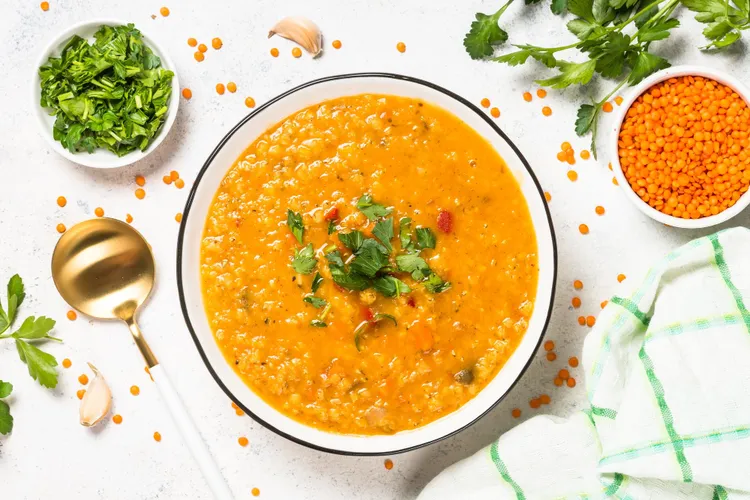
Red lentil soup is the most democratic dinner in the world. A bag of dried red lentils costs less than almost any other protein source. They require no soaking. They cook in 20 minutes. They have the structural property of dissolving into a naturally thick, creamy soup without any cream or blending. And when treated with the right technique - specifically, the tarka (or tadka) of hot spiced oil poured into the soup at the final moment - they produce something that tastes deeply, warmly complex in a way that their humble ingredient list gives no indication of.
The tarka is the technique. It is borrowed from South Asian and Middle Eastern cooking and it works because fat is a flavour carrier: when spices are briefly fried in hot oil or butter, their fat-soluble aromatic compounds bloom into the fat and become available to distribute through the soup. A teaspoon of cumin stirred cold into a lentil soup produces a soup that smells of cumin. A teaspoon of cumin sizzled in hot oil for 45 seconds and then poured sizzling into the soup produces a soup where the cumin has been fully released and is present in every spoonful. The difference is dramatic.
This guide covers the base method and three complete versions: Moroccan spiced, Indian dal-style, and Turkish mercimek çorbası. Each is a genuinely distinct dish in its own right. Each takes the same 30 minutes.
Why Red Lentils Need No Soaking and No Blending
Red lentils are split lentils - the hull has been removed and each lentil is split into two halves. This means they cook much faster than whole lentils (which need soaking and 45+ minutes of cooking) and they naturally break down during cooking into a smooth, thick consistency. No blending equipment required.
The starch explains the texture. As red lentils cook, their starch granules absorb liquid and swell, eventually bursting and releasing starch into the soup. This starch thickens the liquid naturally - the same mechanism that makes potato soup thick without cream, or congee thick without thickeners. The result is a soup that is naturally rich and creamy from the lentils themselves.
The colour shift is a doneness indicator. Raw red lentils are indeed red-orange. As they cook, they turn from red to yellow - the heat degrades the carotenoid pigments. When the soup is uniformly pale yellow, the lentils are cooked through. This colour change is the most reliable visual indicator of doneness.
The Base Recipe
Serves 4-6 | Active time: 10 minutes | Total time: 30 minutes
The Soup Base
- 300g red split lentils, rinsed in cold water until the water runs clear
- 1 medium onion, finely diced
- 3 cloves garlic, minced
- 1 tbsp olive oil or neutral oil
- 1 litre hot vegetable or chicken stock (or water - see the water vs. stock debate below)
- 1 tsp ground turmeric
- Salt to taste
The Tarka (The Finishing Technique)
- 3 tbsp olive oil, neutral oil, or butter
- 1 tsp whole cumin seeds
- ½ tsp chili flakes
- 2 cloves garlic, thinly sliced
- Optional: 1 tsp smoked paprika - added off the heat after the oil is removed from the flame
To Finish
- Juice of 1 lemon - the most important finishing ingredient
- Fresh coriander or parsley
- Good olive oil for drizzling
- Crusty bread or warm pitta
The Water vs. Stock Debate
Many lentil soup recipes call for stock. Many excellent lentil soups are made with water. The debate is worth resolving.
With stock: The soup has more depth from the start. Less work is required from the spices and the tarka to build flavour. A good-quality homemade stock produces a noticeably richer soup.
With water: The lentils must carry more of the flavour themselves - which they can, if the spicing is assertive and the tarka is done properly. In Indian dal preparation, water is almost always used. The lentil flavour is actually cleaner and more present when water is used.
The verdict: For the Moroccan version, stock adds useful depth. For the Indian dal version, water is correct - the spicing carries everything. For the Turkish version, a light vegetable stock is the best choice. Use your judgement based on what you have.
Method: The Base
Step 1: Build the aromatics (5 minutes)
Heat 1 tbsp of oil in a large saucepan over medium heat. Add the onion and cook for 5 minutes, stirring occasionally, until very soft. Add the garlic and turmeric. Cook for 1 minute - the turmeric blooms in the fat and stains everything a vivid yellow.
Step 2: Add lentils and liquid (20 minutes)
Add the rinsed lentils and stir to coat in the spiced oil. Add the hot stock or water. Bring to a boil, skim any foam that rises to the surface in the first 2-3 minutes, then reduce to a steady simmer. Cook for 18-20 minutes, stirring occasionally, until the lentils have completely dissolved into the soup and the colour has shifted from orange-red to uniformly pale gold.
Season with salt. The soup should be thick enough to coat a spoon - if too thick, add a splash of hot water. If too thin, simmer for a further 5 minutes.
Step 3: The tarka (3 minutes - done at the very end)
This is the step that transforms the soup. Have the soup in bowls or ready to serve before you make the tarka - it should be applied immediately.
Heat 3 tbsp of oil in a small frying pan over medium-high heat until shimmering. Add the cumin seeds - they should sizzle immediately and pop within 10-15 seconds. Add the sliced garlic and cook for 30-45 seconds until golden at the edges (not brown - watch carefully, it happens fast). Add the chili flakes and cook for 15 seconds.
Remove from heat. If using smoked paprika, add it now (off the heat - paprika burns if added to the hot oil on the flame and turns bitter).
Pour the sizzling oil directly into the soup. It will bubble dramatically. Stir briefly. The colour shifts as the red paprika oil swirls through the yellow soup. Serve immediately.
Step 4: Finish
Squeeze lemon generously over each bowl immediately before serving. The lemon is not optional - it lifts the entire soup, sharpens the spices, and adds a brightness that is absent from the soup without it. Finish with fresh coriander or parsley and a drizzle of olive oil.
Version 1: Moroccan Spiced Lentil Soup
The warmest, most aromatic version - built on the North African spice vocabulary of cumin, coriander, cinnamon, and ginger.
Additional Spices (add with the garlic in the base)
- 1 tsp ground cumin
- 1 tsp ground coriander
- ½ tsp ground cinnamon
- ½ tsp ground ginger
- Pinch of cayenne
- 1 tbsp tomato purée - stirred in with the spices, cooked for 1 minute
The Tarka: Moroccan Style
Replace the plain tarka with:
- 3 tbsp olive oil
- 1 tsp cumin seeds
- 1 tsp smoked paprika (added off the heat)
- Pinch of cinnamon
To Finish
- Preserved lemon (1 tbsp finely chopped preserved lemon rind) - adds a specific, complex citrus saltiness. Available at Middle Eastern grocers and good supermarkets. If unavailable, double the lemon juice.
- Fresh coriander, toasted sesame seeds, a drizzle of argan oil if available
Character: Warm, deeply aromatic, with the characteristic roundness of North African spicing. Particularly good with warm flatbread and a spoonful of harissa (see The Street Food Sauce Bible) swirled through.
Version 2: Indian Dal Style (Masoor Dal)
The most widely eaten lentil preparation in the world. This is masoor dal - red lentil dal with a tarka of mustard seeds, curry leaves, and dried chilies. The tarka here is more complex than the Moroccan version and produces a more assertive, more aromatic result.
Additional Spices (add with the garlic)
- 1 tsp ground cumin
- 1 tsp ground coriander
- ¼ tsp asafoetida (hing) - essential for authentic flavor; see South Asian Street Food Pantry
The Tarka: Indian Style
- 3 tbsp neutral oil or ghee (ghee is superior here - its nutty, clarified character is fundamental to dal)
- 1 tsp black mustard seeds - stand back when they go in; they pop immediately and spit
- 1 tsp cumin seeds
- 10–12 fresh curry leaves (available at South Asian grocery stores; dried are ineffective)
- 2 dried red chilies
- 3 cloves garlic, thinly sliced
- ¼ tsp asafoetida
Method for the Indian Tarka
Heat the ghee in a small pan over high heat. Add mustard seeds and immediately cover with a lid - they pop within seconds and will scatter. Once the popping slows, add cumin seeds, curry leaves (they spit dramatically in the hot fat - stand back), dried chilies, and garlic. Cook for 30-45 seconds until the garlic is golden. Add asafoetida for 5 seconds. Pour immediately into the dal.
To Finish
Lemon juice. Fresh coriander. Serve with warm roti, naan, or rice. A spoonful of plain yogurt on the side.
Character: The most complex and aromatic version - the curry leaves and mustard seeds produce a distinctly South Asian character that is unmistakable and deeply satisfying.
Version 3: Turkish Mercimek Çorbası
Turkish red lentil soup - mercimek çorbası - is one of the most beloved soups in Turkish cuisine, eaten for breakfast, lunch, and dinner, served everywhere from humble lokantalar (small neighbourhood restaurants) to fine dining establishments. It is smoother and more refined than the Indian or Moroccan versions, typically finished with a swirl of butter and a squeeze of lemon.
Additional Ingredients
- 1 medium carrot, diced - cooked with the onion and lentils, then blended into the soup
- 1 stalk celery, diced - same
- 1 tsp tomato purée - adds colour and a slight sweetness
- 1 tsp ground cumin
- 1 litre light vegetable stock
The Turkish Finish
- 2 tbsp unsalted butter - stirred into the blended soup at the end for richness
- The Turkish tarka: 2 tbsp butter + 1 tsp dried mint + 1 tsp smoked paprika - melted together and drizzled over the top
- Lemon wedges on the side - each person adds their own
The Blending Step (Turkish only)
Unlike the other versions, mercimek çorbası is smooth. After the lentils and vegetables have cooked, use an immersion blender (or transfer to a blender in batches) to blend the soup completely smooth. Pass through a sieve for the most refined result, or leave as-is for a slightly more textured version. Return to the pan, stir in the butter, taste, and adjust seasoning.
Character: The smoothest and most elegant of the three. The dried mint in the finishing butter is distinctive and not something you would guess was there - it adds a cooling, herbal quality that rounds the cumin and balances the lemon.
Leftovers and Storage
Lentil soup thickens considerably in the refrigerator as the starch continues to set. What was a thick but pourable soup on day one becomes a very thick, almost solid mass on day two.
Reheating: Add a generous amount of cold water (100-200ml depending on thickness), stir, and heat over medium heat, stirring constantly, until the soup loosens and reaches its original consistency. Taste and re-season - chilled soups always need more salt when reheated.
Storage: 4-5 days refrigerated in a sealed container. Freezes excellently for up to 3 months - freeze in individual portions for the most practical meal-prep approach.
The day-two soup: Many people find lentil soup even better on day two, after the flavours have had time to develop overnight. The spices integrate; the tarka flavour has distributed through the entire soup. Both versions are excellent; neither is wrong.
Pro Tips
- Make the tarka at the very last moment. The aromatic compounds in the tarka oil begin to dissipate within minutes of leaving the heat. Apply to the soup immediately before serving or eating. A tarka made 10 minutes early and applied to a soup that then sits loses a significant portion of its impact.
- Season generously. Lentils absorb salt significantly during cooking. A soup that seems adequately seasoned at the 10-minute mark often tastes flat by the 20-minute mark because the lentils have absorbed the salt. Taste just before serving and adjust again.
- The lemon is the most important finishing ingredient. The acid from fresh lemon juice brightens every spice in the soup, increases the perceived saltiness (reducing how much additional salt is needed), and adds a sharpness that the soup lacks without it. Never omit it.
- Fresh curry leaves for the Indian version. Dried curry leaves have essentially no flavour - the volatile aromatic compounds that make fresh curry leaves distinctive evaporate completely during drying. If you cannot find fresh curry leaves (South Asian grocery stores carry them; freeze them if you buy a large bunch), omit them entirely rather than substituting dried.
Common Mistake: Not Rinsing the Lentils Unrinsed red lentils produce a soup with a slightly dusty, starchy film on the surface and a less clean flavour. The rinse removes surface starch and any small debris from processing. It takes 60 seconds under cold running water. The difference in the finished soup is real - the colour is cleaner, the flavour is more distinct, and the foam produced during cooking is significantly reduced.
FAQ
Q: Can I use green or brown lentils instead of red?
Yes, but with significant adjustments. Green and brown lentils do not break down in the same way as red split lentils - they keep their shape. The soup will be brothier and chunkier rather than thick and creamy. Cooking time increases to 30-40 minutes. For the same thick, creamy result as this recipe, use red split lentils specifically.
Q: Is this soup suitable for the very young or elderly?
Yes - all three versions can be made milder by reducing or omitting the chili and making the tarka without chili flakes or dried chilies. The nutrition density (high protein, high fibre, significant iron and B vitamins from the lentils) makes it particularly valuable for those with limited dietary variety.
Q: How do I make this in a slow cooker?
Combine all soup base ingredients in the slow cooker and cook on low for 6-8 hours or high for 3-4 hours. Make the tarka freshly on the hob and pour in just before serving. The slow cooker version produces a slightly different texture (very smooth, almost porridge-like) that some people prefer.
Q: Can I add vegetables to the soup?
Yes - diced carrots, sweet potato, spinach, and courgette all work well. Add denser vegetables (carrots, sweet potato) with the lentils at the beginning. Add softer vegetables (spinach, courgette) in the final 5 minutes to prevent them from overcooking.
🔗 Continue Cooking
- One-Pan Shakshuka: The Egg Dinner for Any Time
- Sheet Pan Vegetables with Chickpeas and Tahini Dressing
- South Asian Street Food Pantry: The Ingredients Behind the Flavor
- Pakistani Chaat Masala: The Spice Blend That Makes Everything Better
- The One-Pan Dinner Formula
- One-Pan & One-Pot Dinners: The Ultimate Guide
Latest