How to Cook the Perfect Steak: Every Method, Every Doneness
The science of a great crust, the internal temperature guide, the butter-basting technique, and the resting rule that most cooks get wrong
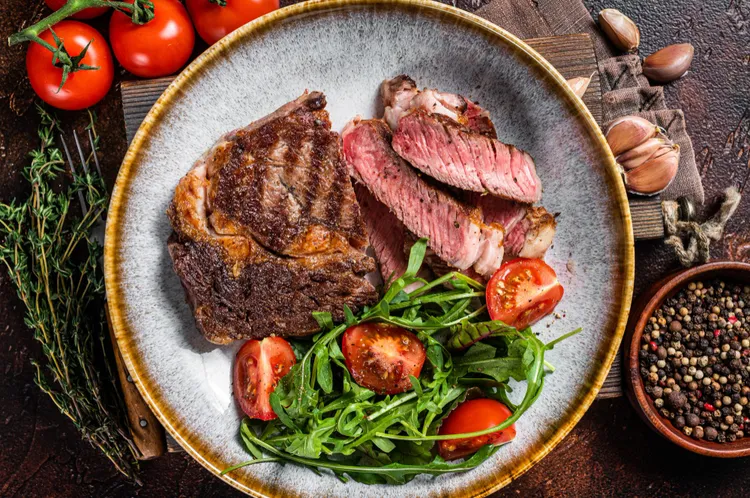
The perfect steak is not a matter of opinion about what "perfect" means - it is a matter of understanding what your specific ideal is and knowing exactly how to achieve it. A medium-rare steak at 54-57°C internal temperature, with a deeply browned, flavour-dense crust and a uniformly pink, juicy interior, is not an accident. It is the product of specific decisions: the right cut, the right pan, the right temperature, the right timing, and the right resting protocol.
This guide covers every major home steak-cooking method - classic hot pan, reverse sear, and butter-basting - and explains the specific conditions each one produces. It covers every doneness level with the internal temperatures that define them. It covers the most common steak failures and their causes. And it covers the resting science that most cooks either skip or misapply.
Choose Your Cut First
The method should match the cut. Not every steak is cooked the same way.
Ribeye (rib-eye, Scotch fillet): High intramuscular fat (marbling), very flavourful, forgiving - the fat bastes the meat from within as it cooks. Excellent for pan-searing. Best at medium-rare to medium.
Sirloin (New York strip, striploin): Moderate marbling, good flavour, slightly firmer texture than ribeye. Works well pan-seared. Best at medium-rare.
Fillet (tenderloin, filet mignon): The most tender cut - very low fat, delicate texture, mild flavour. The tenderness is its strength; the low fat content means it has less flavour than ribeye or sirloin. Must not be overcooked - very susceptible to dryness. Best at rare to medium-rare. Benefits most from the butter-basting technique to compensate for low fat.
Rump: Less expensive, more flavour than fillet, slightly tougher. Best at medium-rare. Slice against the grain - critical for this cut.
Flat iron (feather steak): Well-marbled, very good flavour, affordable. Best at medium-rare.
Flank / skirt: Thin, very flavourful, tough if overcooked. Best cooked hot and fast to medium, then sliced thin against the grain.
T-bone / Porterhouse: Two steaks in one (fillet and sirloin), with a bone. More complex to cook because the two muscles have different ideal temperatures. Best at medium-rare, accepting that the fillet side will be slightly more done than the sirloin side.
The Doneness Guide
Internal temperature is the only reliable measure of steak doneness. Time and colour are unreliable - a 3cm thick ribeye and a 2cm thick sirloin reach the same internal temperature at very different times. Use an instant-read thermometer.
The carry-over cooking note: Steak continues to cook after it is removed from the heat. The internal temperature rises 3-5°C during the resting period. Pull the steak from the heat when it is 3-5°C below the target temperature.
| Doneness | Pull Temperature | Rested Temperature | Colour at Centre |
|---|---|---|---|
| Rare | 47-49°C | 50-52°C | Bright red, very soft |
| Medium-rare | 51-53°C | 54-57°C | Pink-red, slightly springy |
| Medium | 57-60°C | 60-63°C | Pink, firmer |
| Medium-well | 63-65°C | 65-68°C | Slightly pink at centre |
| Well done | 68°C+ | 70°C+ | No pink, firm throughout |
The recommended doneness: Medium-rare (54-57°C rested). At this temperature, the connective tissue has warmed enough to become tender, the fat has rendered enough to provide flavour, and the proteins have contracted enough to hold their shape - but not so much that they have squeezed out the moisture. It is the doneness that produces the most flavour and the most juice simultaneously.
The Pre-Cook Protocol: The Steps Most People Skip
Step 1 - Bring to room temperature (30-45 minutes before cooking): A steak taken directly from the refrigerator is 4°C at its centre. Cooking it requires more time and more heat to bring the centre to temperature - increasing the risk of an overcooked exterior before the interior reaches the target. Allow the steak to sit at room temperature for 30-45 minutes before cooking. The surface will still be cool but the interior will have risen to 15-18°C, significantly reducing the cooking time discrepancy.
Step 2 - Dry the surface (always): The most important step for achieving a crust. Water on the surface of the steak evaporates before the surface can reach the 140-165°C range required for Maillard browning. A wet steak surface steams rather than sears. Pat completely dry with paper towels - every surface, including the sides.
Step 3 - Season generously: Salt the steak liberally on all surfaces at least 40 minutes before cooking - or immediately before. The reason for this specific timing: salt applied 10-30 minutes before cooking draws moisture out of the meat through osmosis, creating surface moisture that must then evaporate before browning can occur. Salt applied 40+ minutes before allows the drawn moisture to be reabsorbed (osmosis reversal), seasoning the interior and leaving the surface dry. Salt applied immediately before cooking has no time to draw moisture. The worst window: 10-30 minutes before.
Black pepper is best applied immediately before cooking - pepper applied too early before a hot sear can burn.
Method 1: Classic Hot Pan (The Standard)
Best for: Ribeye, sirloin, flat iron, rump - any steak 2-4cm thick
Equipment: A cast iron skillet or heavy stainless steel pan (not non-stick - non-stick cannot withstand the required heat), preheated for 3-5 minutes over high heat until smoking
Cooking fat: A fat with a high smoke point for the sear - refined avocado oil, sunflower oil, or refined groundnut oil (not olive oil or butter for the initial sear - both burn at searing temperatures).
Method:
Preheat the pan. 3-5 minutes over the highest heat available. The pan should be genuinely smoking before the steak goes in. A drop of water placed in the pan should evaporate instantly.
Add oil. Add 1 tbsp of high-smoke-point oil. It should smoke immediately.
Place the steak. The steak should sizzle loudly on contact - a quiet or moderate sizzle means the pan wasn't hot enough. Do not move it.
Cook undisturbed for 2-3 minutes until a deep brown crust has formed on the underside. Lift one corner to check - it should be deep mahogany, not just golden.
Flip once. Cook for 2-3 minutes on the second side.
The sides: Hold the steak on each side edge against the pan for 30-60 seconds each, rendering the fat and browning the edges.
Check the temperature. Insert the thermometer horizontally through the thickest point. Pull at the pull temperature for your desired doneness.
Butter basting (optional, highly recommended): In the final 60-90 seconds of cooking, add 2 tbsp of unsalted butter + 2 cloves of garlic (smashed) + fresh thyme to the pan. Tilt the pan and spoon the foaming butter repeatedly over the steak. The butter basting both bastes the steak and produces the brown butter (noisette) flavour from the milk solids browning - adding a specific, nutty depth that plain oil doesn't produce. See How to Brown Butter for the chemistry.
Rest. See the resting section below.
Method 2: Reverse Sear (For Thicker Steaks)
Best for: Very thick steaks (4cm+), fillet, T-bone - any steak where a uniformly cooked interior is difficult to achieve with the hot pan method
The principle: Cook the steak low and slow in the oven first (to the target internal temperature), then sear briefly in a very hot pan for the crust. The reverse of the traditional method - the interior cooking first, the crust last.
The advantage: A steak cooked low and slow reaches its target temperature uniformly throughout before the crust is applied. The hot-pan method produces a temperature gradient - the exterior is well above the target temperature while the interior is at or below it, producing an overcooked band around a correctly cooked centre (the "bullseye" effect). The reverse sear produces a uniformly cooked steak with a thinner overcooked band.
Method:
Preheat the oven to 120°C (fan). Season the steak liberally. Place on a wire rack on a sheet pan. Insert a probe thermometer if you have one.
Roast until 5°C below the target temperature - approximately 45-90 minutes depending on thickness (a 4cm ribeye will take approximately 50-60 minutes).
Remove from the oven. Rest for 10 minutes. (The steak will not rise significantly in temperature during this rest because the oven was very low - the carry-over cooking is minimal at 120°C cooking temperature.)
Sear immediately before serving: Heat a pan or outdoor grill to the absolute maximum heat. Sear for 60-90 seconds per side - the steak is already at target temperature internally, so the sear is only for surface browning. The interior will not cook significantly in 60-90 seconds at this doneness stage.
This produces a steak with a deeply browned crust and a uniformly pink interior from edge to edge.
Method 3: Butter-Basting (For Lean Cuts)
Best for: Fillet (tenderloin), which has low internal fat and benefits from external fat basting throughout cooking
This is a variation of the hot pan method with continuous butter basting from the start.
Sear the steak in oil for 60 seconds per side (first side only until a crust forms). Add butter, garlic, and thyme immediately. Reduce heat slightly (medium-high rather than maximum). Tilt the pan and baste continuously - spooning the foaming butter over the steak every 10-15 seconds - for 3-4 minutes until the target temperature is reached.
The continuous basting produces a more evenly browned surface and adds the butter-basted flavour throughout the cooking period rather than only at the end.
Resting: The Most Misunderstood Step
Why steaks rest: During cooking, the proteins in the muscle fibres contract and push moisture toward the centre of the steak. In a just-cooked steak, the centre contains significantly more moisture than the exterior. Cutting it immediately releases this moisture onto the board rather than distributing it through the meat.
During resting: The muscle fibres relax as the temperature gradient between the centre and exterior equalises. The moisture redistributes throughout the steak. A steak rested for 5-7 minutes releases significantly less moisture when cut than one cut immediately.
How long to rest: A general rule - rest for half the cooking time. A steak that cooked for 8 minutes rests for 4 minutes. A thick reverse-sear steak that cooked for 60 minutes in the oven can rest for 5-10 minutes (the reverse sear's low oven temperature means the muscle fibres haven't contracted as dramatically, so less resting time is needed).
Where to rest: On a warm plate or board, tented loosely with foil. The tent keeps some heat in without trapping steam (which would soften the crust). Do not seal tightly - trapped steam degrades the crust rapidly.
The temperature rise during rest: A steak at 51°C when pulled from the pan rises to approximately 54-57°C during 5 minutes of resting - carry-over cooking from the retained heat in the pan-hot surface of the steak. This is why "pull temperature" is 3-5°C below the target temperature.
The Pan Sauce After the Steak
The fond (caramelised proteins and sugars) left in the pan after searing a steak is one of the most flavour-dense materials in a kitchen. Don't discard it.
Simple steak pan sauce: With the heat at medium-high, add 1 shallot (finely diced) to the pan. Cook 60 seconds. Add 150ml of red wine. Deglaze - scrape the fond from the base of the pan as the wine sizzles. Reduce by two-thirds (2-3 minutes). Add 150ml of beef or chicken stock. Reduce by half. Remove from heat. Add 20g of cold butter in two pieces. Swirl until melted and glossy. Season. Pour over the rested steak.
See How to Make a Pan Sauce for the full technique.
Why Your Steak Is Grey (The Most Common Failure)
Grey steak - steak that has no crust, no browning, that looks boiled rather than seared - has one cause: the pan was not hot enough and/or the steak surface was too wet.
The Maillard reaction that produces browning requires the surface temperature to exceed 140°C. If the pan is not hot enough, the moisture on the steak surface evaporates slowly rather than instantly, and the steak steams rather than sears. The surface temperature never reaches the browning threshold.
The five conditions required for a proper sear:
- Completely dry steak surface - pat with paper towels
- Pan preheated for 3-5 minutes until smoking
- High smoke point oil that can withstand the temperature
- No crowding - one steak per pan, or two at maximum in a large pan (crowding drops the pan temperature dramatically)
- No moving - leave the steak undisturbed for 2-3 minutes before the first flip
See How to Sear Meat Properly for the complete searing science.
Pro Tips
- Buy thicker. A 4cm ribeye is more forgiving than a 2cm one - the thicker the steak, the more window you have to achieve a crust without overcooking the interior. If your butcher sells steaks thin, ask for them cut thicker.
- Season generously. A steak is a thick piece of protein - it needs more salt than seems right. Season immediately before cooking or 40+ minutes before (see the pre-cook protocol above). Never season in the 10-30 minute window.
- One flip. Flipping constantly does not speed up cooking - it slows the crust formation. Flip once when the first side has a deep, well-formed crust.
- The thermometer is not optional. Every other method of testing steak doneness (the touch test, the finger comparison, the colour test) is less reliable than temperature. A £10 thermometer eliminates guesswork permanently.
Common Mistake: Starting With a Cold Pan A cold pan added to a hot burner takes 3-4 minutes to reach searing temperature - and during those minutes, the steak sitting in it is steaming in its own moisture rather than searing. Always preheat the pan for 3-5 minutes before any steak or protein goes in. The pan should be genuinely smoking - not warm, not hot-to-the-touch, smoking - when the steak is added. This single change eliminates grey steak permanently.
FAQ
Q: Should I use butter or oil for searing?
Oil for the initial sear (butter burns at searing temperatures - its milk solids carbonise above 150°C). Add butter in the final 60-90 seconds for the basting stage (the reduced heat of this stage keeps the butter from burning). Many recipes say "sear in olive oil" - refined olive oil works; extra virgin olive oil has too low a smoke point and will produce a bitter flavour at searing temperatures.
Q: Is it safe to eat rare steak?
Rare steak (50-52°C internal) is safe if the exterior surfaces have been properly seared - the bacteria that may be present on the exterior are killed by the searing temperature. The interior of an intact muscle (a steak, not mince) is sterile. This is why a rare steak is considered safe when a rare burger is not - the grinding of mince distributes any surface bacteria throughout.
Q: How do I know when the steak has developed a good crust without lifting it constantly?
Listen. A steak searing correctly produces a consistent, vigorous sizzle. When the crust is properly formed, the sound changes slightly - it becomes less wet and more dry-sounding, because the surface moisture has evaporated. After 2-3 minutes of vigorous sizzling, lift one corner gently with tongs to check the colour. If mahogany-brown: flip. If pale: wait.
🔗 Build the Full Technique
- How to Sear Meat Properly: The Maillard Reaction Explained
- How to Make a Pan Sauce: The Technique That Transforms Any Meal
- How to Brown Butter: The 5-Minute Flavour Upgrade
- Internal Cooking Temperatures: The Complete Guide
- The Art of Seasoning: Salt, Acid, Fat, and Heat
- Knife Skills & Kitchen Techniques: The Complete Guide
Latest