Knife Skills & Kitchen Techniques: The Complete Guide
The foundational skills that make every recipe easier, every result more consistent, and every kitchen hour more productive
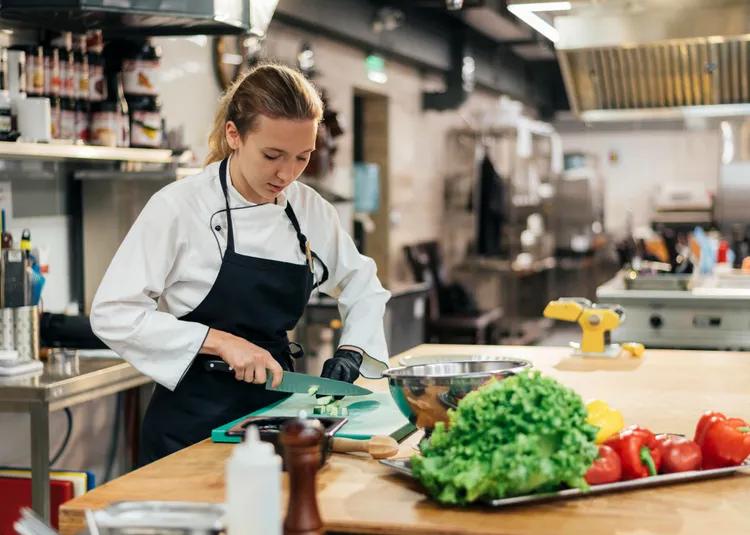
Recipes describe what to cook. Techniques explain how to cook. The difference between a competent cook and an excellent one is usually not the recipes they follow - it is the depth of technique they bring to every recipe they make. A cook who understands how to properly sear protein, why caramelising onions takes 40 minutes rather than 5, how to make a pan sauce from the fond left in any pan, and how to season a dish at every stage rather than just at the end - that cook produces better food from any recipe than a cook who follows instructions without understanding them.
This collection is built around that distinction. Every post explains the mechanism behind the technique - the specific chemistry or physics that makes it work - because understanding the mechanism makes the technique yours rather than the recipe's. A cook who understands why a dry surface is required for searing knows to pat their chicken dry before every cook, automatically, without checking the recipe. A cook who understands why salt is added at multiple stages rather than just at the end applies that principle to every dish they make.
These are the techniques worth learning. Knife skills, heat control, emulsification, seasoning, stock, pan sauces - the fundamental operations that appear in every cuisine tradition and that, mastered, make you a better cook of everything.
Why Technique Matters More Than Recipes
A recipe is a prescription for one specific outcome. A technique is a tool that produces outcomes across an unlimited range of recipes. The investment comparison is not close: learning to make a béchamel produces a tool that applies to lasagne, macaroni and cheese, croque monsieur, moussaka, and any cream sauce application in any cuisine. Learning a béchamel recipe produces one dish.
This is the case for technique-based learning as opposed to recipe-based learning. And it is also the case for why this collection occupies a specific position in this website: the techniques here are not accessories to the recipes in other collections - they are the foundations those recipes rest on. Understanding searing makes the One-Pan collection's protein dishes make sense. Understanding emulsification explains the Plant-Based collection's cashew cream science. Understanding stock explains why the beef stew in the One-Pan collection tastes different from the same recipe made with water.
The techniques in this collection are transferable. Learn them once; apply them everywhere.
The Three Principles of Good Technique
Before the specific skills: three principles that run through every technique in this collection.
Heat Is Not Binary
The most common cooking error is treating heat as a switch - high or low, on or off. Heat is a dial, and the specific level matters enormously. The Maillard reaction (the browning chemistry that produces flavour in seared meat, caramelised onions, and toasted bread) requires surface temperatures above 140°C but works best between 150-180°C. Below that: steaming. Above 200°C: burning. The correct heat for searing is not simply "high" - it is high enough to produce the Maillard reaction but controlled enough to avoid burning.
Understanding heat as a spectrum rather than a switch makes you a more precise cook. You stop cooking on "high" or "medium" based on instinct and start choosing a temperature based on what you want to achieve chemically. See How to Sear Meat: The Maillard Reaction Explained for the full science.
Seasoning Is a Process, Not a Step
Most recipe instructions say "season to taste" at the end of cooking. This is not wrong - but it is incomplete. Seasoning at every stage of cooking produces results that seasoning at the end cannot replicate. Salt added to onions as they cook draws out moisture through osmosis and accelerates caramelisation; salt added to a finished dish only touches the surface. Acid (lemon, vinegar) added to a braise during cooking integrates and mellows; acid added at the end provides sharpness but less integration. Every stage is an opportunity to develop flavour - not just the final taste.
See The Art of Seasoning: Salt, Acid, Fat, and Heat for the complete guide.
Understanding Produces Adaptability
A cook who knows a technique follows a recipe. A cook who understands a technique adapts to whatever is available, whatever has gone slightly wrong, and whatever the occasion requires. Every technique post in this collection includes both the method and the mechanism - not because the mechanism makes the technique more difficult, but because it makes it more applicable. When you know why the technique works, you know how to fix it when it doesn't.
The Skills: A Map of the Collection
Knife Skills
The most fundamental kitchen skill - and the one most home cooks have never been formally taught.
The tool itself - grip, motion, the parts of the blade and what each is for → How to Hold and Use a Chef's Knife
The cut that appears in more recipes than any other - dicing an onion, properly, with the technique that produces even pieces reliably → How to Dice an Onion Properly
The maintenance skill that makes every cut safer - sharpening, honing, and the specific difference between the two → How to Sharpen a Knife: The Complete Guide
The five cuts every cook needs - julienne, brunoise, chiffonade, batonnet, and the standard dice → Knife Skills: The 5 Cuts Every Cook Needs
Heat & Browning
The chemistry of heat is the most misunderstood area of home cooking - and the one where understanding the science most directly improves results.
The Maillard reaction - what produces the crust on seared meat, the flavour of toasted bread, the complexity of caramelised vegetables → How to Sear Meat Properly: The Maillard Reaction Explained
The most-searched cooking technique - perfect steak, by every method, at every doneness → How to Cook the Perfect Steak: Every Method, Every Doneness
The most misrepresented time in recipe writing - caramelising onions properly, and why it takes 40 minutes → How to Caramelise Onions Properly (It Takes 40 Minutes)
The 5-minute flavour upgrade - browning butter, the Maillard reaction applied to dairy fat → How to Brown Butter: The 5-Minute Upgrade That Changes Everything
High-heat immersion cooking - the science of deep-frying, why temperature is everything, how to fry at home without a deep-fryer → Deep-Frying at Home: The Temperature Guide
Sauces & Building Flavour
The techniques that transform individual ingredients into a unified, complex dish.
The most impactful weeknight upgrade - making a pan sauce from the fond left in any seared protein pan → How to Make a Pan Sauce: The Technique That Transforms Any Meal
The foundation of French cooking - what a roux is, the three stages, and the sauces it unlocks → How to Make a Roux and Why It's the Foundation of French Cooking
The most foundational liquid in cooking - chicken stock, beef stock, vegetable stock, and bone broth, from scratch → Stock from Scratch: Chicken, Beef, Vegetable, and Bone Broth
The single skill that most distinguishes good cooks - salt, acid, fat, and heat as seasoning tools → The Art of Seasoning: Salt, Acid, Fat, and Heat
Eggs & Emulsification
Eggs are among the most technically interesting ingredients in the kitchen - protein, fat, emulsifier, leavening, and colouring agent in a single shell.
The most searched egg technique - poaching, with the foolproof method that eliminates the chaos → How to Poach an Egg: The Foolproof Technique
Three genuine preparations, three very different results - French, American, and Asian scrambled eggs → Scrambled Eggs Three Ways: French, American, and Asian
The foundational emulsification technique - mayonnaise, the science of emulsification, and the seven flavoured variations → How to Make Mayonnaise (and Why Emulsification Works)
Essential References
Two reference posts designed to be bookmarked and returned to constantly.
The tab to leave open while cooking - internal temperatures for every protein at every doneness → Cooking Temperatures: The Complete Internal Temperature Guide
The mid-recipe rescue - the thirty cooking substitutions you need most often → Cooking Substitutions: What to Use When You're Out of an Ingredient
The Equipment That Changes Everything
This collection requires no specialist equipment beyond a good chef's knife and a heavy pan. But a few tools produce a disproportionate improvement in results:
A good chef's knife (20-25cm, German or Japanese style): The most important piece of kitchen equipment. A sharp, comfortable chef's knife makes every preparation faster, more precise, and safer. Recommended entry-level: Victorinox Fibrox (£30-40). Recommended upgrade: Wüsthof Classic or Global (£80-120). See How to Hold and Use a Chef's Knife for how to use it correctly.
An instant-read thermometer: The single tool that most improves meat cookery. Internal temperature is the only reliable indicator of doneness - time and colour are unreliable. A £10-15 thermometer eliminates guesswork from steak, chicken, pork, and bread. See Internal Cooking Temperatures: The Complete Guide for the reference chart.
A heavy-based frying pan or cast iron skillet: The correct pan for searing. A thin pan cannot maintain temperature when cold protein is added and produces grey, steamed meat rather than a seared crust. See the One-Pan equipment guide for the full recommendation.
A wooden spoon and a bench scraper: The most underrated kitchen tools. A wooden spoon for stirring (and deglazing fond), a bench scraper for moving and dividing everything from dough to vegetables.
The Learning Sequence
If you are new to technique-based cooking, this is the recommended sequence - the order in which each skill builds on the previous:
- How to Use a Chef's Knife - the foundation of all preparation
- How to Dice an Onion - the most applied knife skill
- The Art of Seasoning - the principle that immediately improves everything
- How to Sear Meat - the heat and browning science
- How to Make a Pan Sauce - the application of the searing science
- How to Poach an Egg - precision heat control
- Stock from Scratch - the foundational cooking liquid
- How to Make a Roux - the sauce foundation
- Emulsification: How to Make Mayonnaise - the physics of sauce
- How to Cook the Perfect Steak - the synthesis of heat, timing, and technique
Each step in this sequence builds directly on the previous. By the end, the cook who completes it has a comprehensive technical foundation that applies to every cuisine and every recipe they will ever make.
FAQ
Q: Do I need to learn techniques before I can cook well?
No - great meals are made from recipes without understanding the underlying techniques all the time. But technique understanding has a compound return: each technique learned makes every subsequent recipe easier to execute and every failure easier to diagnose. The investment is upfront; the returns accumulate indefinitely.
Q: Which technique has the highest return on investment?
Seasoning - specifically, the habit of seasoning at every stage rather than only at the end. It produces an immediate, noticeable improvement in every dish, requires no equipment, costs nothing, and is the single most reliable difference between a good cook and an excellent one. Start with The Art of Seasoning.
Q: How long does it take to learn to use a knife properly?
The correct grip and basic motion can be learned in 15 minutes. Fluency - where knife work is fast, automatic, and precise - takes a few weeks of cooking regularly. The investment is worth it: a cook who can dice an onion in 45 seconds rather than 3 minutes saves meaningful time across a year of regular cooking.
🔗 Start Learning
- How to Cook the Perfect Steak: Every Method, Every Doneness
- How to Poach an Egg: The Foolproof Technique
- How to Dice an Onion Properly (Without Crying)
- How to Sear Meat Properly: The Maillard Reaction Explained
- How to Make a Pan Sauce: The Technique That Transforms Any Meal
- The Art of Seasoning: Salt, Acid, Fat, and Heat
- How to Brown Butter: The 5-Minute Upgrade
- How to Caramelise Onions Properly
- Internal Cooking Temperatures: The Complete Guide
- Cooking Substitutions: 30 Most-Needed Kitchen Swaps
Latest