Cooking Temperatures: The Complete Internal Temperature Guide
Every protein at every doneness, the carry-over rule, and why a thermometer is the most important tool in your kitchen
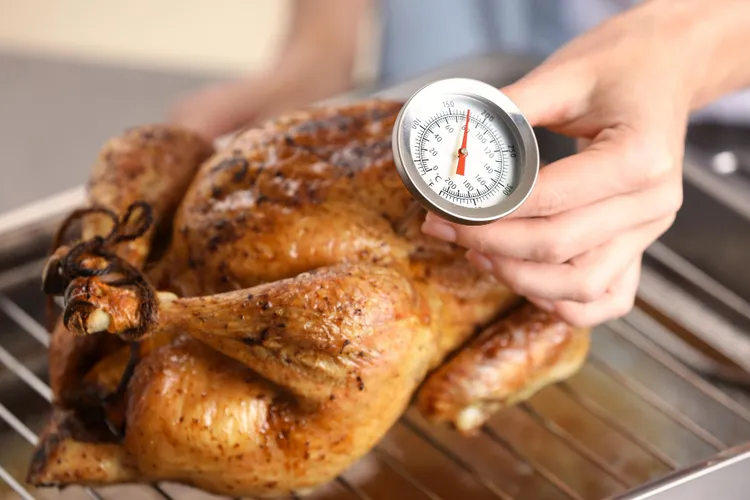
The single biggest improvement available to a home cook who does not use an instant-read thermometer is buying one and starting to use it. Cooking proteins to the correct internal temperature is not a marginal gain - it is the difference between a chicken breast that is dry and stringy (overcooked past 80°C) and one that is juicy and tender (correctly cooked to 74°C), between a steak that is the desired medium-rare and one that is medium because time-based cooking overshot.
Time and colour are unreliable measures of doneness. A chicken breast that is golden on the outside may be raw in the centre or overcooked to dryness - you cannot tell from the outside. An instant-read thermometer removes all guesswork and makes every protein preparation reproducible.
This post is designed to be the tab you leave open while cooking - a reference to consult in the final minutes of every protein preparation.
The Carry-Over Cooking Rule
Every protein continues to cook after it is removed from the heat source. The retained heat of the exterior drives the internal temperature upward for 3-8 minutes after removal.
The rule: Pull the protein from heat when it is 3-5°C below the target temperature. Allow it to rest; the internal temperature will rise to the target during the rest.
The magnitude of carry-over depends on:
- Size: A whole roast chicken (large mass) experiences 5-8°C of carry-over. A thin chicken breast experiences 2-3°C.
- Cooking temperature: Higher cooking temperatures produce more heat retained in the exterior and therefore more carry-over.
- Resting method: Loosely tented with foil retains more heat than uncovered; tightly sealed in foil continues cooking more aggressively.
The temperatures in this guide are the final rested temperatures - the temperature after carry-over is complete. The pull temperature is noted where carry-over is significant.
Beef
Steak
| Doneness | Final Temperature | Pull At | Colour |
|---|---|---|---|
| Rare | 50-52°C | 47-49°C | Bright red centre, very soft |
| Medium-rare | 54-57°C | 51-53°C | Red-pink, slightly springy |
| Medium | 60-63°C | 57-60°C | Pink throughout, firmer |
| Medium-well | 65-68°C | 62-65°C | Slightly pink at centre |
| Well done | 70°C+ | 67°C+ | No pink, firm throughout |
Recommended doneness: Medium-rare (54–57°C) - maximum juiciness and flavour for most cuts.
Cut considerations:
- Ribeye, sirloin, flat iron: Excellent at medium-rare
- Fillet (tenderloin): Best at rare to medium-rare - low fat content means it dries out quickly above 57°C
- Skirt, flank: Best at medium (60°C) - the collagen needs slightly more heat to tenderise
- Brisket, short rib (braised): Cooked to 90-95°C (well done) - the extended cooking time and collagen breakdown produce tenderness at temperatures where a steak would be inedibly dry
Safety note: Intact whole beef muscle (steak) is considered safe at rare temperatures because the interior of intact muscle is sterile - any bacteria present are on the exterior surface, which reaches searing temperatures. Minced beef (burgers) must be cooked to a minimum of 74°C throughout because grinding distributes any surface bacteria through the meat.
Roast Beef
| Doneness | Final Temperature |
|---|---|
| Rare | 50-54°C |
| Medium-rare | 54-57°C |
| Medium | 60-65°C |
| Well done | 70°C+ |
Carry-over for large roasts: A 2kg rib of beef will experience 5-7°C of carry-over. Pull at 47-50°C for medium-rare. Rest for 20-30 minutes tented with foil.
Lamb
| Preparation | Final Temperature | Notes |
|---|---|---|
| Chops (rare) | 52-55°C | Lamb has a wide window - from rare to medium |
| Chops (medium-rare) | 55-60°C | The recommended doneness for most cuts |
| Chops (medium) | 63-68°C | |
| Leg of lamb (medium-rare) | 57-60°C | Pull at 52-55°C; large carry-over |
| Leg of lamb (medium) | 63-68°C | |
| Slow-braised (shoulder, shank) | 85-90°C | Collagen breakdown for tenderness |
Note: UK food safety guidance considers lamb safe at 63°C (medium). Many chefs serve lamb at 55-57°C (medium-rare) without safety issues for healthy adults - whole muscle lamb, like whole muscle beef, is sterile at its interior.
Pork
Modern food safety standards have changed significantly for pork. Current UK/US guidance allows pork to be served at 63°C (slightly pink) - a major improvement from the old 77°C standard, which produced dry, flavourless pork.
| Cut | Final Temperature | Notes |
|---|---|---|
| Pork chop (recommended) | 63-68°C | Slightly pink in centre - juicy and tender |
| Pork tenderloin | 63-65°C | Pull at 60°C; significant carry-over |
| Pork loin roast | 65-68°C | |
| Pork shoulder (slow-cooked) | 88-93°C | For pulling - collagen must convert to gelatin |
| Pork belly (slow-roasted) | 85-90°C | For tenderness |
| Pork ribs (oven) | 88-93°C | Meat should pull from bone cleanly |
| Pork sausages | 74°C+ | Minced meat - cook to safe temperature throughout |
The pink pork note: Pork cooked to 63°C may show a pink blush in the centre. This is safe - pink colour in cooked pork is not the reliable doneness indicator it was once believed to be. Temperature is the correct measure.
Chicken and Poultry
Chicken must reach a minimum of 74°C throughout to be considered safe - there is no "rare chicken" in safe cooking. However, chicken cooked to exactly 74°C is significantly more juicy and tender than chicken cooked to 80°C+. Precision matters.
| Cut | Final Temperature | Notes |
|---|---|---|
| Chicken breast | 74°C | Pull at 71°C; small carry-over. The target temperature is critical - 74°C is juicy; 80°C is dry |
| Chicken thigh (boneless) | 74-77°C | Dark meat tolerates slightly higher temperature without drying |
| Chicken thigh (bone-in) | 80°C | The bone slows cooking - check temperature next to the bone |
| Whole chicken | 74°C at thickest point of thigh | Check in multiple places - between the thigh and the body is the last part to cook |
| Duck breast | 60-65°C | Duck is served pink - similar principle to rare beef; duck breast is not minced |
| Turkey (whole) | 74°C at thigh | Breast can be overcooked while thigh reaches target - brine and spatchcock for even cooking |
The 74°C precision argument: Most food safety guidelines specify 75°C as the minimum. However, food safety science specifies that chicken is safe at 74°C held for a minimum of 15 seconds, and at lower temperatures held for longer. The 74°C target for the pull temperature gives a 1°C safety margin while significantly improving texture compared to cooking to 80°C+.
Fish
Fish is generally done when it reaches 60-63°C internal temperature - at which point it flakes easily but remains moist. Many chefs target 55-58°C for a more translucent, Japanese-style "medium-rare" fish preparation.
| Fish | Temperature | Notes |
|---|---|---|
| White fish (cod, halibut, sea bass) | 60-63°C | Flakes cleanly, moist |
| Salmon | 52-55°C for medium-rare | Translucent orange-red centre - popular and safe for fresh-sourced salmon |
| Salmon | 60-63°C for well-done | Opaque throughout, firmer |
| Tuna steak | 31-38°C for rare | Tuna is eaten at lower temperatures than almost any other fish - essentially raw at the centre for the best texture. Use only sushi-grade tuna |
| Whole fish | 60°C at thickest point | |
| Shellfish (prawns, shrimp) | 60°C, or opaque and pink | |
| Scallops | 45-52°C | Barely set - creamy and tender; above 60°C becomes rubbery |
Veal
| Cut | Final Temperature |
|---|---|
| Veal chops (medium-rare) | 55-60°C |
| Veal chops (medium) | 63-68°C |
| Veal loin | 60-63°C |
Eggs
| Preparation | Temperature | Notes |
|---|---|---|
| Scrambled (soft set) | 63-65°C | French method target |
| Scrambled (American) | 68-70°C | |
| Poached (runny yolk) | White: 70°C, Yolk: <65°C | Achieved at 3-3.5 minutes |
| Soft-boiled (jammy yolk) | Yolk: 65-68°C | Achieved at 6-7 minutes |
| Hard-boiled | 70°C throughout | |
| Pasteurised (for raw-egg preparations) | 60°C held for 3.5 minutes | Kills Salmonella without fully cooking the egg |
Bread and Baked Goods
| Item | Internal Temperature | Notes |
|---|---|---|
| White bread | 93-96°C | Hollow-thump test is a secondary check |
| Sourdough | 95-98°C | Higher starch gelatinisation required |
| Enriched bread (brioche) | 88-92°C | |
| Rye bread | 96-99°C | Requires highest temperature for proper setting |
| Banana bread / loaf cakes | 93-96°C | |
| Victoria sponge | 88-92°C | |
| Quiche / tart custard | 75-78°C | Set but not rubbery |
| Brownies (fudgy target) | 73-77°C at centre | Remove earlier than you think - carryover sets them |
Deep-Frying Oil Temperatures
| Food | Oil Temperature | Notes |
|---|---|---|
| Doughnuts, fritters | 175°C | Low-medium - allows interior to cook before exterior browns |
| Chips (first fry/blanch) | 130-140°C | Cooks through without browning |
| Chips (second fry/finish) | 180-190°C | Crisps the exterior |
| Fried chicken | 165-170°C | Low enough for interior to cook; high enough for crispy skin |
| Fish in batter | 180°C | High enough for immediate crust formation |
| Tempura | 170-180°C | Lighter batter - slightly lower temperature |
| Arancini, croquettes | 175°C |
Safe Minimum Temperatures Reference
For food safety purposes only - not necessarily the optimal eating temperature (which varies by personal preference and specific cut):
| Food | Safe Minimum |
|---|---|
| Beef, lamb, veal (whole muscle) | 63°C |
| Pork (whole muscle) | 63°C |
| Poultry (all) | 74°C |
| Ground/minced meat (all types) | 74°C |
| Fish | 63°C |
| Eggs | 74°C (fully cooked throughout) |
| Reheated leftovers | 74°C throughout |
Buying a Thermometer
An instant-read thermometer is the single piece of kitchen equipment with the highest return on investment relative to cost. A basic, reliable model costs £8-15 and completely eliminates guesswork from every protein preparation.
Recommended: Thermapen ONE (professional, instant, £100) for serious cooks. Lavatools Javelin or ThermoPop (£20-30) for the serious home cook. Any basic probe thermometer (£8-15) is infinitely better than no thermometer.
How to use it: Insert the probe into the thickest part of the protein, away from bone (which conducts heat differently from muscle). Wait for the reading to stabilise (1-3 seconds for instant-read, 10-20 seconds for basic probes). Take readings in multiple places for large cuts.
Pro Tips
- Calibrate your thermometer. Place it in a glass of ice water (0°C) and boiling water (100°C at sea level). If it reads correctly at both: it is accurate. If not: many thermometers have a calibration adjustment.
- Insert at an angle for thin proteins. For thin chicken breasts or fish fillets, inserting the probe at a 45° angle ensures the tip reaches the centre of the thickest part rather than just the surface.
- Temperature, not time, for doneness. Every oven, every pan, and every piece of protein is different. Time-based cooking is an approximation; temperature-based cooking is a measurement.
- Clean the probe between uses. Wipe the probe with an alcohol wipe or hot soapy water between inserting into different foods - particularly important when checking different proteins or when the first reading showed under-temperature (the probe carries bacteria from raw protein).
🔗 Apply the Temperatures
Latest