Why does oil splatter during frying?
Oil splattering during frying isn’t random - and it’s not because your pan “hates” you. That sharp popping sound and flying droplets are caused by a simple but powerful reaction between water and hot oil. Once you understand what’s happening at a microscopic level, you can reduce splatter dramatically.
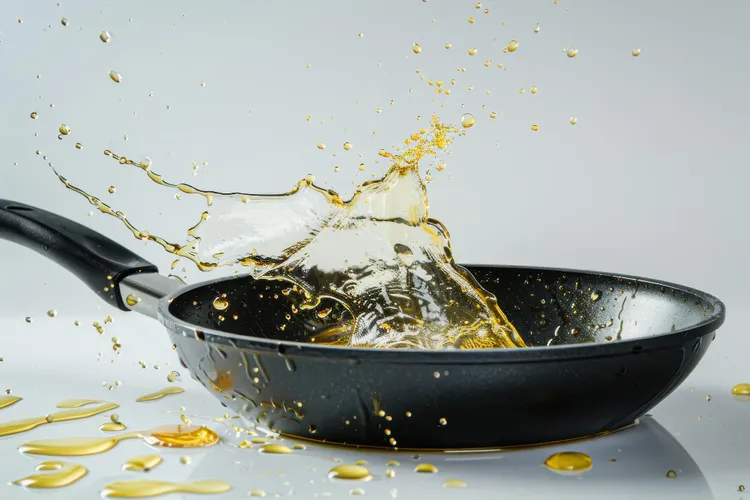
Oil splatters because water and hot oil do not mix - and water turns into steam violently at frying temperatures. When moisture from food hits hot oil, it rapidly vaporizes, expands, and pushes oil outward in tiny explosive bursts.
That’s the pop. That’s the mess.
Oil splatters during frying because water inside food instantly turns into steam when it hits hot oil. Steam expands rapidly - about 1,700 times its original volume - and forces oil droplets outward. The hotter the oil and the wetter the food, the more aggressive the splatter.
Why This Happens
Let’s break this down clearly.
Oil Gets Much Hotter Than Water
Water boils at 212°F (100°C).
Frying oil typically sits between 325-375°F (160-190°C).
That means oil is far above water’s boiling point.
When even a tiny droplet of water touches that oil:
-
It flashes into steam instantly.
-
Steam expands dramatically.
-
That expansion displaces oil.
-
Oil sprays outward.
It’s not the oil “popping.”
It’s steam escaping explosively.
Steam Expansion Is the Real Culprit
Water expands roughly 1,700 times when it turns into steam.
Imagine a microscopic water droplet suddenly expanding that much inside hot oil.
It has to go somewhere.
So it pushes oil away violently.
That’s splatter physics.
Why Some Foods Splatter More Than Others
Not all foods splatter equally.
The biggest factor? Surface moisture.
Foods that splatter heavily:
-
Freshly washed vegetables
-
Wet chicken
-
Frozen foods
-
Marinated meats
Foods that splatter less:
-
Pat-dried proteins
-
Breaded items (coating absorbs moisture first)
-
Fully thawed foods
More surface water = more steam explosions.
What Most People Get Wrong
Myth: Oil Pops Because It’s Too Hot
Hot oil increases splatter intensity - but heat alone isn’t the cause.
Without water, oil doesn’t splatter much.
Moisture is the trigger.
Myth: Adding More Oil Prevents Splatter
More oil doesn’t fix the problem.
It simply creates more oil available to be displaced by steam.
Moisture control matters more than oil volume.
Myth: Salt Causes Splatter
Salt doesn’t stop splatter in any significant way.
This common kitchen myth has no strong scientific backing.
Drying food is far more effective.
Myth: Nonstick Pans Prevent Splatter
Pan coating doesn’t change steam physics.
Steam expansion happens regardless of surface material.
Pan design affects cleanup - not the splatter reaction itself.
Practical Cooking Tips to Reduce Oil Splatter
You can’t eliminate splatter completely when frying.
But you can dramatically reduce it.
1. Pat Food Completely Dry
This is the most important step.
Use paper towels to remove visible moisture.
Especially important for:
-
Chicken thighs
-
Fish fillets
-
Tofu
-
Vegetables
Less water = less steam = less splatter.
2. Avoid Adding Frozen Food Directly to Hot Oil
Ice crystals turn into water instantly.
Then into steam.
This causes aggressive popping.
Always thaw and dry first when possible.
3. Lower Food Gently Into Oil
Dropping food from height traps air and increases splash.
Instead:
-
Use tongs.
-
Lower food away from you.
-
Slide it gently into oil.
Control reduces chaos.
4. Don’t Overcrowd the Pan
Overcrowding releases a large amount of moisture at once.
That creates a steam surge.
Cook in batches.
This improves both texture and safety.
5. Maintain Proper Oil Temperature
Oil that’s too cool causes prolonged bubbling.
Oil that’s too hot increases violent steam reactions.
Use moderate frying temperatures:
-
Pan frying: ~325-350°F (160-175°C)
-
Deep frying: ~350-375°F (175-190°C)
Steady heat = controlled splatter.
6. Use a Splatter Screen
A fine mesh splatter guard:
-
Allows steam to escape
-
Blocks oil droplets
-
Reduces mess significantly
This is one of the simplest tools for safer frying.
7. Use Oils With Higher Smoke Points
Low smoke point oils break down faster and can increase smoking and splashing.
Better frying oils:
-
Avocado oil
-
Peanut oil
-
Canola oil
-
Sunflower oil
Stable oils perform more predictably.
Why Does Oil Splatter More With Meat Than Vegetables?
Meat contains:
-
Surface moisture
-
Internal water
-
Rendered fat
As meat cooks:
-
Surface water vaporizes.
-
Internal juices heat and release steam.
-
Fat renders and mixes with oil.
This layered moisture release increases splatter.
Vegetables with high water content (like zucchini) can splatter heavily for similar reasons.
Why Does Oil Sometimes “Explode” With Water?
If a significant amount of water hits hot oil at once, it can create a mini eruption.
This is especially dangerous in deep frying.
Large water exposure can:
-
Cause oil to foam
-
Push oil out of pot
-
Trigger flare-ups
Never pour water into hot oil.
Even small amounts can be hazardous.
Professional kitchens reduce splatter through preparation discipline.
Common restaurant practices:
-
Proteins are air-dried briefly before cooking.
-
Excess marinade is wiped off.
-
Ingredients are tempered (not fridge-cold).
-
Fry stations use tall-sided pans or deep fryers.
Temperature control and moisture management are built into the workflow.
That’s why restaurant fry stations look calm compared to home kitchens.
Why Does Oil Pop Even When Food Looks Dry?
Food can look dry but still contain surface moisture.
Also:
-
Marinades leave hidden water.
-
Ice crystals from partial thawing cause surprise splatter.
-
Washing produce right before cooking adds residual water.
Dry means truly dry.
Does Lid-On Cooking Stop Splatter?
A lid traps oil but also traps steam.
This can make food soggy instead of crispy.
A splatter screen is better than a solid lid for frying.
Is Oil Splatter Dangerous?
Yes.
Hot oil can cause burns.
Wear:
-
Long sleeves
-
Use long tongs
-
Stand slightly back when adding food
Small safety habits prevent accidents.
The dramatic popping sound during frying is actually rapid steam bubble collapse and escape.
That sound tells you water is leaving the food.
When the popping slows down, it usually means most surface moisture is gone - and crisping is beginning.
Sound is a cooking signal.
Oil splatters because water turns into steam instantly in hot oil and expands aggressively.
It’s not random.
It’s physics.
Control moisture.
Dry food thoroughly.
Use moderate heat.
Lower food gently.
Once you understand the steam reaction, frying becomes less chaotic - and much safer.
Latest