Creamy Vegan Mushroom Pasta
25 minutes. Mixed mushrooms caramelised to a deep golden-brown. A cashew cream sauce that coats every strand. The fast weeknight dinner that tastes like a restaurant.
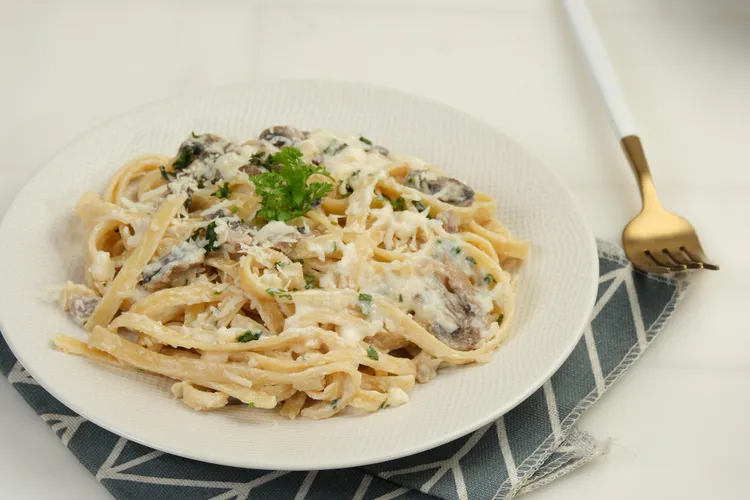
This is the one-pan pasta that earns its keep on a weeknight. Mixed mushrooms - chestnut, shiitake, a handful of dried porcini for depth - cooked until deeply golden and slightly crispy at the edges, then finished in a cashew cream sauce with white wine, fresh thyme, and nutritional yeast. Done in 25 minutes from start to plate.
The mushrooms are the story. This recipe produces them at their best: dry-cooked over very high heat, in a single uncrowded layer, with no stirring for the first 2-3 minutes. This produces the Maillard browning that distinguishes genuinely flavourful mushrooms - nutty, slightly chewy, deeply caramelised - from the pale, steamed, slightly watery result of an overcrowded pan. The sauce is built around mushrooms treated this way. The pasta is subordinate.
The Mushroom Technique: Everything Depends on It
The most important thing in this recipe happens before the sauce. The mushrooms must be caramelised, not steamed, and the difference between these two outcomes is entirely about pan management.
The rules:
- High heat. Medium heat produces steaming before evaporation can occur. High heat immediately evaporates surface moisture.
- Dry pan, at least initially. Some recipes add oil immediately. For mushrooms, starting in a dry (or very lightly oiled) pan allows the surface moisture to evaporate without the oil inhibiting evaporation. Add oil after the first moisture release.
- Single layer with space. If the mushrooms are touching, their steam cannot escape and they cook in each other's moisture. Every piece should have visible space around it.
- Don't stir for the first 2-3 minutes. Let the mushroom surface that is in contact with the hot pan caramelise fully before disturbing. Moving mushrooms before they have coloured prevents the Maillard reaction from completing.
- Salt at the end of browning, not the start. Salt draws moisture out of mushrooms. Added at the start, it floods the pan with liquid before browning can occur. Added after caramelisation, it seasons without disrupting.
This is not overcomplicated. It is 5 minutes of not interfering, which is easier than it sounds.
Ingredients
Serves 4 | Active time: 20 minutes | Total time: 25 minutes
The Mushrooms
- 300g chestnut mushrooms, sliced 5mm thick
- 150g fresh shiitake mushrooms, stems removed, caps sliced
- 20g dried porcini mushrooms, rehydrated in 150ml hot water for 15 minutes (reserve the soaking liquid, strained)
- 2 tbsp olive oil
- 3 cloves garlic, finely sliced
- 4 sprigs fresh thyme (or 1 tsp dried)
- Salt and black pepper
The Sauce
- 150ml dry white wine (a wine you would drink - Pinot Grigio, Sauvignon Blanc, Chardonnay)
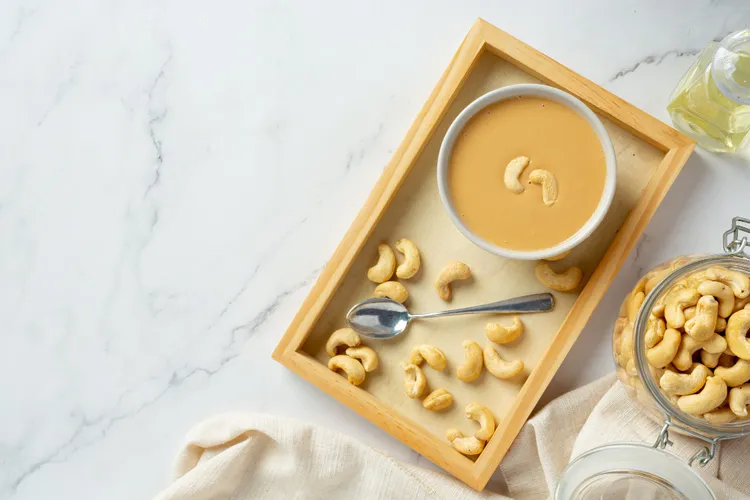
- 200ml cashew cream (medium thickness - see How to Make Cashew Cream, or use the 150g cashews + 180ml water ratio)
- The strained porcini soaking liquid (approximately 100-120ml)
- 3 tbsp nutritional yeast
- 1 tsp dijon mustard
- Juice of ½ lemon
- Salt and white pepper
The Pasta
- 350g dried pasta - tagliatelle, pappardelle, or linguine. Wide, long pasta works better than short shapes here - the sauce clings to the ribbons in a way it doesn't to penne or fusilli.
- Salt for the pasta water
To Finish
- Fresh flat-leaf parsley, roughly chopped
- Extra nutritional yeast for the table
- Good olive oil for drizzling
- Optional: fresh truffle or truffle oil - transforms this into a special-occasion dinner
Method
Step 1: Prepare the porcini (15 minutes, done while prepping everything else)
Place the dried porcini in a small bowl. Cover with 150ml of just-boiled water. Leave to soak for 15 minutes until completely softened. Remove with a slotted spoon, squeeze out excess liquid, and roughly chop. Strain the soaking liquid through a fine-mesh sieve or kitchen paper. Set both aside.
Step 2: Cook the pasta
Bring a large pot of generously salted water to a boil. Cook the pasta according to the packet - tagliatelle typically 8-9 minutes for al dente. Reserve 200ml of pasta cooking water before draining.
Step 3: Caramelise the mushrooms (8-10 minutes)
Heat a very large frying pan or wide sauté pan over high heat until genuinely hot - a drop of water should evaporate immediately on contact.
Add the chestnut and shiitake mushrooms in a single layer. Do not add oil yet. Cook undisturbed for 2-3 minutes - you should hear a continuous sizzle. The mushrooms will release moisture initially; wait until this evaporates and the sizzle intensifies to a dry, crackling sound.
At this point, add 2 tbsp of olive oil around the edges of the pan. Toss the mushrooms briefly and continue cooking for 2-3 more minutes until deeply golden at the edges.
Add the chopped rehydrated porcini mushrooms and toss to combine. Cook for 1 more minute.
Add the sliced garlic and thyme. Cook for 60 seconds, stirring - the garlic should sizzle in the hot oil and become fragrant. Do not let it brown past golden.
Season with salt and pepper now that browning is complete.
Step 4: Deglaze and build the sauce (5 minutes)
Pour in the white wine. Stand back - it will sizzle dramatically against the hot pan. Scrape the base of the pan with a wooden spoon, releasing any fond. Let the wine reduce for 2 minutes until most of the liquid has evaporated and the alcohol smell has gone.
Add the strained porcini soaking liquid. Let it simmer for 1 minute.
Reduce the heat to medium-low. Add the cashew cream, nutritional yeast, and dijon mustard. Stir to combine. The sauce will thin initially as the cashew cream warms - then thicken as it reaches heat.
Simmer gently for 2-3 minutes until the sauce is glossy and coating the mushrooms. Add lemon juice. Taste and adjust seasoning - it should be creamy, savoury, slightly sharp from the lemon and mustard, with the deep mushroom flavour running through everything.
Step 5: Combine and finish
Add the drained pasta to the pan. Toss to coat - use tongs for long pasta, stirring everything together until every strand is glossy with the sauce.
If the sauce is too thick, add pasta cooking water a tablespoon at a time, tossing continuously, until the sauce is fluid and coating. The sauce should move freely in the pan - not sit in a solid mass.
Taste one final time. The last seasoning check is the most important.
Step 6: Serve
Transfer to warm bowls immediately. Scatter fresh parsley generously. Drizzle with a little good olive oil. Offer extra nutritional yeast at the table.
Serve immediately - this pasta waits for no one. The sauce tightens as it cools.
What to Do with Leftovers
Pasta with cashew cream sauce thickens significantly in the fridge as the starch sets and the cream firms. Reheating:
Stovetop: Add 3-4 tbsp of water or plant milk to the pasta in a pan over low heat. Stir constantly until loosened and hot. The sauce will re-emulsify with the added liquid.
Leftover upgrade: The leftover pasta, tossed in a hot dry pan until slightly caramelised on the outside (the pasta crisps a little where it touches the hot pan), becomes something excellent - almost like a pasta fritter effect, with crispy edges and a creamy centre.
Variations
With Asparagus (Spring)
Add 200g of asparagus spears, cut into 3cm pieces, to the pan with the porcini soaking liquid. They cook through in the 5 minutes of sauce-building and add a fresh, grassy note that is excellent with mushrooms.
With Spinach and Pine Nuts (Classic)
Add 150g of baby spinach in the final 30 seconds of pasta tossing - it wilts into the sauce and adds colour, iron, and a slight bitterness that balances the richness. Scatter toasted pine nuts over the finished dish.
With Crispy Capers
Fry 3 tbsp of capers in a small amount of olive oil over high heat until they pop open and become crispy - 2-3 minutes. Scatter over the finished pasta. The salty, briny burst of a fried caper against the creamy mushroom sauce is one of the best flavour combinations in this collection.
Truffle Version (Special Occasion)
Omit the lemon juice. Add 1 tsp of truffle oil to the finished sauce and 1 tbsp of fresh truffle shavings over the plated pasta. The mushroom-truffle combination is a classic pairing - the mushrooms provide earthiness that amplifies the truffle's aromatic complexity.
Pro Tips
- Two pans for the mushrooms if needed. If you do not have a pan large enough to cook all the mushrooms in a single layer with space between them, use two pans simultaneously or cook in batches. Batch cooking takes 3 extra minutes and produces vastly better mushrooms than an overcrowded single pan.
- The porcini soaking liquid is not optional. This dark, intensely savoury liquid - 150ml of concentrated mushroom stock - is the element that gives the sauce its depth. The sauce without it is good; with it, it is great. Never discard it.
- Warm the bowls. This pasta cools fast. Warm serving bowls (30 seconds in the oven, or filled with hot water then emptied and dried) extend the window of the pasta at its best temperature by several minutes.
- The wine must be one you would drink. Cooking wine - low-quality, salty, and marketed specifically for cooking - produces a slightly harsh, flat sauce. A glass of the wine you are drinking with dinner is the correct cooking wine.
Common Mistake: Adding Oil to Cold Mushrooms in a Cold Pan Mushrooms added to a cold pan with cold oil begin steaming in the released moisture before any browning can occur. By the time the pan reaches browning temperature, the mushrooms have already released most of their moisture and are partially cooked - producing a pale, steamed result with no caramelisation. Always preheat the pan until genuinely hot before adding mushrooms. The 2-minute wait for the pan to heat is the investment that produces the golden, flavour-dense mushrooms that make this pasta what it is.
FAQ
Q: Can I use only one type of mushroom?
Yes - chestnut mushrooms alone produce a good pasta. The combination of fresh mushrooms and dried porcini is what elevates it to great. At minimum, use the porcini soaking liquid (from rehydrated dried porcini) even if you don't use the mushrooms themselves in the dish - the liquid provides the depth that single-mushroom fresh pastas often lack.
Q: I don't have white wine. What can I substitute?
Dry vermouth (in the same quantity), dry sherry (in slightly less quantity - it's more intense), or an additional 100ml of the porcini soaking liquid with a squeeze of lemon. Grape juice is a non-alcoholic substitute that provides some of the acidity and sweetness of wine, though the depth is different. Plain water works but the sauce will be noticeably flatter.
Q: Can I prepare the cashew cream and porcini ahead?
Yes - both can be prepared up to 3 days ahead. The porcini soaking liquid keeps refrigerated; the cashew cream keeps for 4-5 days. Having both ready reduces the active cooking time to approximately 12 minutes.
🔗 Continue Cooking
Latest