Sheet Pan Vegetables with Chickpeas and Tahini Dressing
Crispy chickpeas, caramelised seasonal vegetables, and the tahini sauce that makes everything taste extraordinary
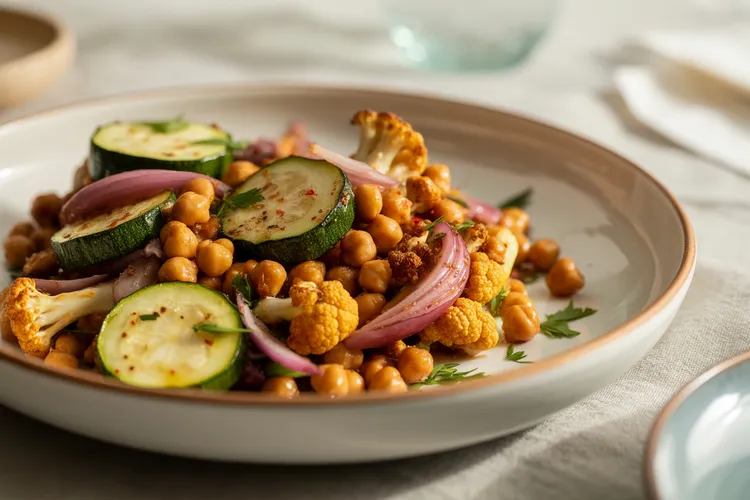
The best plant-based sheet pan dinner in this collection is also the most adaptable. Crispy roasted chickpeas - firm, golden, slightly chewy at the centre with a crackling exterior - alongside whatever seasonal vegetables are available, finished with a tahini-lemon dressing that is simultaneously the marinade, the sauce, and the reason to make this dish. Naturally vegan. Naturally gluten-free. Ready in 35 minutes.
The chickpeas are the protein and the textural foundation - and they require understanding one critical technique to get right: they must be completely, thoroughly dry before they go in the oven. A wet chickpea steams in the oven heat; a dry chickpea roasts. The difference is between a soft, pale result and the genuinely crispy, caramelised chickpea that makes this dish what it is. The drying step takes 20 minutes and is the only preparation required.
The tahini dressing is the element that holds everything together. Tahini, lemon, garlic, and water whisked into a smooth, pourable sauce with a nutty richness and bright acidity that clings to the warm vegetables and chickpeas. It goes in twice - half as a toss before roasting (the heat caramelises the tahini slightly and creates a flavoured coating), half as a fresh drizzle after (preserving the raw tahini brightness as a contrast to the roasted depth).
The Chickpea Technique: Dry Is Everything
This is worth repeating because it is the single variable that determines whether this dish is excellent or mediocre.
Canned chickpeas contain significant moisture - both inside the chickpea and clinging to the exterior. In the oven, this moisture must first evaporate before any browning can begin. If there is too much moisture, the chickpea steams throughout its entire oven time and never achieves the temperature needed for the Maillard reaction. The result is pale, soft chickpeas with no crunch.
The drying method:
- Drain and rinse the canned chickpeas under cold water
- Spread on a clean tea towel in a single layer
- Pat dry with another tea towel, rubbing firmly - the rubbing also removes the thin outer skin of some chickpeas, which is fine and actually improves crispiness
- Leave to air-dry for 20 minutes - this is the critical step most recipes skip
- Transfer to the sheet pan immediately before oiling and seasoning
After air-drying, the chickpeas should look matte rather than glossy. Any remaining moisture visible on the surface means they need more time.
Ingredients
Serves 4 | Active time: 15 minutes | Drying time: 20 minutes | Roast time: 30-35 minutes
The Chickpeas
- 2 × 400g cans chickpeas, drained and rinsed - approximately 480g drained weight
- 3 tbsp olive oil
- 1 tsp smoked paprika
- 1 tsp ground cumin
- ½ tsp garlic powder
- ½ tsp fine sea salt
- ¼ tsp cayenne or chili flakes - optional, for heat
The Vegetables (Standard Version)
- 1 medium cauliflower (approximately 600g), broken into florets - cauliflower roasts beautifully and has a natural affinity with tahini
- 2 medium courgettes, cut into 2cm half-rounds
- 1 red onion, cut into 8 wedges
- 2 tbsp olive oil
- Salt and pepper
The Tahini Dressing (Makes Enough for Two Uses - See Method)
- 4 tbsp good-quality tahini - sesame paste; quality varies significantly. The best tahini (from roasted sesame seeds, from Lebanese or Palestinian producers) is smooth, pourable, and slightly sweet. Cheap tahini is bitter and gritty. It is worth spending more.
- Juice of 1½ lemons (approximately 60ml)
- 1 clove garlic, minced to a paste
- 4-6 tbsp cold water - to adjust consistency
- ½ tsp fine sea salt
- Optional: 1 tsp honey - balances bitterness in lower-quality tahini
To Finish
- Fresh flat-leaf parsley, roughly chopped
- Pomegranate seeds - optional but spectacular visually and texturally
- Toasted sesame seeds or za'atar
- Lemon wedges for serving
Method
Step 1: Dry the chickpeas (20 minutes passive)
Drain and rinse the chickpeas. Spread on a clean tea towel, cover with another tea towel, and rub firmly to remove surface moisture and loose skins. Spread in a single layer and air-dry for 20 minutes.
Step 2: Preheat the oven and prepare the vegetables
Preheat the oven to 210°C (fan). Place two sheet pans in the oven while it heats.
Toss the cauliflower and red onion with 2 tbsp olive oil, salt, and pepper in a bowl.
Step 3: Make the tahini dressing
Whisk together tahini, lemon juice, garlic, and salt in a small bowl. Add cold water a tablespoon at a time, whisking constantly - the tahini will seize and thicken initially before loosening into a smooth, pourable sauce. This is normal; keep whisking and adding water until the sauce pours smoothly and coats a spoon lightly. Add honey if using.
Divide the dressing: Set aside half (approximately 4 tbsp) for finishing after roasting. Use the remaining half for marinating the chickpeas.
Step 4: Season the chickpeas
Toss the dried chickpeas with 3 tbsp olive oil, smoked paprika, cumin, garlic powder, salt, and cayenne. Add 2 tbsp of the tahini dressing and toss to coat - the tahini creates a flavoured coating that caramelises slightly during roasting.
Step 5: Arrange on the preheated pans
Remove the preheated pans from the oven. Working quickly:
Pan 1: Spread the seasoned chickpeas in a single layer. They should have clear space between them.
Pan 2: Arrange the cauliflower and onion in a single layer, cut sides down for maximum caramelisation.
The courgette goes on whichever pan has space - it needs only 18-20 minutes, so add it 10-15 minutes into the roasting.
Step 6: Roast (30-35 minutes)
Place both pans in the oven. Roast without disturbing for the first 15 minutes.
At 15 minutes: add the courgette to the vegetable pan. Toss or shake the chickpea pan briefly. Rotate both pans 180°.
At 30 minutes, check doneness:
- Chickpeas: Should be golden-brown and feel firm when pressed - not soft. Shake the pan; they should rattle rather than roll softly. If still soft, return for 5 more minutes.
- Cauliflower: Should be deeply caramelised at the edges, golden-brown on the cut surfaces, tender throughout.
- Courgette: Should be caramelised at the edges, slightly softened.
- Red onion: Should be softened and charred at the tips.
Step 7: Finish and serve
Arrange the roasted vegetables on a warm serving platter or serve directly from the pans. Scatter the crispy chickpeas over and around the vegetables.
Drizzle the reserved tahini dressing generously over everything. It should pool in the crevices of the cauliflower and coat the chickpeas - use it generously, not as a garnish.
Scatter fresh parsley, pomegranate seeds (if using), and sesame seeds or za'atar. Serve with lemon wedges alongside.
The Tahini Dressing: Why It Works in Both Stages
The two-stage tahini application is the technique that gives this dish its layered flavour:
Stage 1 - Tossed with the chickpeas before roasting: The tahini coating caramelises slightly in the oven heat, developing a roasted, slightly nutty character. The Maillard reactions in the tahini produce flavour compounds that raw tahini doesn't have. The coating also helps the spices adhere better to the chickpea surface.
Stage 2 - Drizzled fresh after roasting: Raw tahini has a bright, slightly sharp, nutty freshness that the roasted version lacks. The contrast between the caramelised tahini on the chickpeas and the fresh, bright tahini drizzled over the finished dish produces the layered complexity that makes this more interesting than a single application would produce.
This is the same principle as the two-stage lemon application in the One-Pan Orzo - build flavour in layers rather than at a single point.
Seasonal Vegetable Variations
The chickpeas and tahini dressing work with any vegetable combination that roasts well. The seasonal guide:
Autumn
- Butternut squash (3cm cubes, 30-35 min) + red onion (25 min) + chickpeas
- Finish: Tahini dressing + pomegranate + fresh mint + toasted pumpkin seeds
- Character: Sweet, warming, the pomegranate's sharpness cutting through the squash's sweetness
Winter
- Broccoli (florets, 20-25 min) + sweet potato (2cm cubes, parboiled 5 min, 25-30 min) + chickpeas
- Finish: Tahini dressing + toasted sesame + crispy capers (fried briefly in olive oil until popping)
- Character: Earthy, hearty, the sweet potato providing warmth and substance
Spring
- Asparagus (spears, 12-15 min, added late) + new potatoes (parboiled, 25-30 min) + chickpeas
- Finish: Tahini dressing thinned with extra lemon + fresh dill + soft-boiled eggs halved on top (the eggs break the "vegan" designation but the combination is outstanding)
- Character: Light, lemony, the brightest version of the dish
Summer
- Courgette + cherry tomatoes (15-20 min, added very late) + red pepper (20-25 min) + chickpeas
- Finish: Tahini dressing + fresh basil + torn flatbread croutons
- Character: Mediterranean, tomato-sweet, the flatbread croutons adding unexpected crunch
Serving Suggestions
This dish works at multiple scales and in multiple contexts:
As a standalone dinner: The chickpeas provide complete protein (combined with the sesame in the tahini). Served with warm flatbread or pitta for scooping, it is a nutritionally complete, entirely plant-based dinner.
As part of a Middle Eastern spread: Alongside labneh from the fermentation collection, hummus, warm pitta, and a simple tomato-cucumber salad. The tahini connects all the elements.
With a grain base: Spoon over cooked quinoa, couscous, or rice. The tahini dressing becomes the sauce for the whole bowl.
As a component: The crispy chickpeas are excellent scattered over soups (particularly the One-Pot Lentil Soup from this collection), salads, and grain bowls throughout the week.
Make-Ahead Notes
Chickpeas: The drying and seasoning step can be done up to 2 hours ahead - leave the seasoned, dried chickpeas on the sheet pan uncovered until ready to roast.
Vegetables: Prep up to 4 hours ahead, store covered in the fridge.
Tahini dressing: Keeps refrigerated for up to 5 days. It thickens in the fridge - thin with a little cold water before using.
Leftovers: The roasted chickpeas lose their crispiness overnight as they absorb moisture from the vegetables. For leftovers, store chickpeas and vegetables separately. Reheat the chickpeas in a 200°C oven for 8-10 minutes to restore some crispiness.
Pro Tips
- The drying step is non-negotiable. Twenty minutes of air-drying is the technique that produces genuinely crispy chickpeas. Skipping it produces pale, soft chickpeas. See above for why.
- Use two sheet pans. Chickpeas and vegetables on the same pan leads to overcrowding and steaming rather than roasting. Keeping them on separate pans allows each element to roast independently at the correct temperature.
- The tahini quality matters here more than in most applications. Because the tahini dressing is the defining flavour of the dish, used both as a cooking element and as a finishing sauce, the quality is front and centre. Al Arz, Soom, and Seed + Mill are all excellent; Belazu is widely available in the UK. Avoid any tahini that smells rancid or tastes bitter - sesame oil oxidises over time and stale tahini is one of the most common reasons people don't enjoy tahini dishes.
- Serve warm, not hot. The tahini dressing and fresh herbs show best when the vegetables have cooled slightly from oven temperature - 5 minutes of resting before finishing and serving produces better flavour distribution than serving straight from the oven.
Common Mistake: Oiling the Chickpeas Before They Are Dry Oiling wet chickpeas traps surface moisture under the oil layer, preventing evaporation during roasting and guaranteeing soft, pale results. The drying must happen before the oil is added. Dry, then oil, then season, then roast - in that sequence. The oil coats a dry surface and can begin browning that surface immediately when it hits the hot pan.
FAQ
Q: Can I use dried chickpeas instead of canned?
Yes - cook dried chickpeas from scratch (soaked overnight, simmered for 45-60 minutes until very tender). Drain, spread on a tea towel, and air-dry for 30 minutes. The result is slightly firmer and nuttier than canned chickpeas. The drying time is longer because home-cooked chickpeas retain more moisture than canned.
Q: My chickpeas are golden but still soft inside. What went wrong?
Either they were not dry enough before roasting, or the oven temperature was not high enough, or they were overcrowded on the pan. Check all three. For the crispiest possible chickpeas, increase the temperature to 220°C and ensure the chickpeas are in a single layer with space between each one.
Q: How do I make the tahini dressing less bitter?
Bitterness in tahini dressing usually indicates either low-quality tahini (replace with a better brand) or too much raw garlic. Reduce the garlic to half a clove and allow the minced garlic to rest in the lemon juice for 5 minutes before whisking - the acid mellows the garlic's bite. A teaspoon of honey also balances bitterness effectively.
Q: Is this dish suitable for meal prep?
The tahini dressing is excellent for meal prep - it improves overnight. The vegetables reheat well. The chickpeas lose crispiness overnight; restore it with 8-10 minutes in a hot oven before serving. Assemble fresh each time from the prepped components.
🔗 Continue Cooking
Latest