How to Make a Roux and Why It's the Foundation of French Cooking
What a roux is, the three stages and what each produces, the science of thickening, and every sauce it unlocks
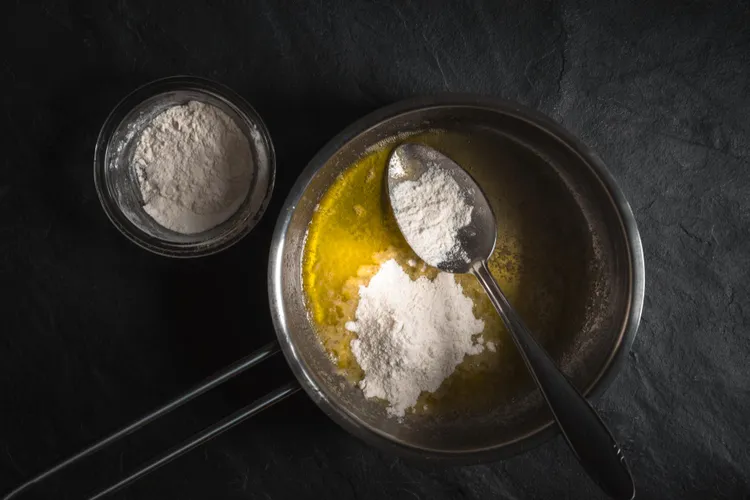
A roux is the simplest thickening agent in classical cooking - equal weights of fat and flour, cooked together until the raw flour taste is gone and the starch granules are ready to absorb liquid and thicken it into sauce. It is also the foundational technique of French classical cuisine, underpinning the five mother sauces that French cooking codified in the nineteenth century as the basis of all Western sauce-making.
Understanding the roux is understanding how to thicken any sauce correctly - without lumps, without raw flour taste, with the specific character that distinguishes béchamel from velouté from espagnole. It is a technique that takes five minutes to learn and produces a lifetime of better cooking.
The Science: Why a Roux Thickens
Flour contains starch granules. In their native state, these granules are insoluble in cold water - they do not thicken a cold liquid. When heated in a liquid above approximately 60°C, the granules absorb water, swell dramatically, and burst - releasing starch molecules that form a network of polymer chains throughout the liquid. This process is called starch gelatinisation, and it is what transforms a thin liquid into a thick sauce.
The roux pre-cooks the flour in fat before liquid is added. This cooking achieves two things:
It separates the starch granules. Fat coats the individual starch granules, preventing them from clumping together when liquid is added. Clumped granules produce lumps in the finished sauce. Fat-coated, separated granules disperse evenly into the liquid and produce a smooth sauce.
It removes the raw flour taste. Raw flour has a specific starchy, slightly chalky taste that is unpleasant in a finished sauce. Cooking the flour in the fat - even for 2 minutes for a white roux - removes this rawness. The longer and hotter the cooking, the more the raw taste is removed, and the more new toasted, nutty flavour develops.
The Three Stages of Roux
The same starting ingredients - equal weights of fat and flour - produce three different products depending on how long and how hot they are cooked.
White Roux (Roux Blanc)
Cooking time: 2-3 minutes over medium heat Colour: Pale blonde - almost no colour change from the original mixture Smell: Starchy, slightly cooked flour Thickening power: Maximum - the starch granules are pre-cooked but not broken down; they retain full thickening capacity Flavour: Neutral - provides body and silkiness to sauce without adding flavour of its own Uses: Béchamel (white sauce), velouté, cheese sauce, any cream sauce where a clean, neutral flavour base is wanted
Blonde Roux (Roux Blond)
Cooking time: 5-7 minutes over medium heat Colour: Light golden - pale tan, the colour of a hazelnut shell Smell: Slightly nutty, beginning to develop toasted notes Thickening power: Slightly reduced (approximately 80% of white roux) - some starch granule breakdown begins Flavour: Lightly nutty, with a mild toasted character Uses: Velouté-style sauces, chicken and seafood cream sauces, lighter brown sauces
Dark Roux (Roux Brun or Roux Foncé)
Cooking time: 10-40 minutes over medium to medium-low heat Colour: Deep brown - mahogany to dark chocolate depending on depth required Smell: Intensely nutty, toasted, complex Thickening power: Significantly reduced (approximately 30-40% of white roux) - extended cooking breaks down the starch granules substantially Flavour: Deeply nutty, complex, slightly bitter, chocolate-adjacent Uses: Espagnole (brown sauce), Cajun and Creole gumbo, étouffée - applications where colour and flavour are more important than maximum thickening power
The dark roux for Cajun gumbo is the most extreme version - cooked for 30-45 minutes, stirring continuously, until the roux is the colour of dark chocolate. At this stage, it has almost no thickening power but extraordinary flavour - the reason gumbo has its specific depth.
The Basic Roux Method
Makes enough roux for approximately 500ml of sauce | Active time: 2-10 minutes depending on stage
Ingredients
- 30g unsalted butter (or other fat - see below)
- 30g plain flour
The 1:1 ratio by weight is the standard. Some recipes use slightly more flour than fat for a thicker sauce base; some use slightly more fat for a richer, silkier result. The 1:1 ratio is reliable and universal.
Method
Step 1: Melt the butter in a heavy saucepan over medium heat. The butter should be melted and warm but not beginning to brown.
Step 2: Add all the flour at once. Stir immediately and vigorously with a wooden spoon or whisk to combine the flour and fat into a smooth paste with no dry flour patches.
Step 3: Cook, stirring continuously, for the time appropriate to the roux stage:
- White roux: 2-3 minutes - barely any colour change
- Blonde roux: 5-7 minutes - light golden colour, nutty smell
- Dark roux: 10-40 minutes - deep brown, stirring every minute (not continuously, but frequently enough to prevent burning)
During cooking: The roux will bubble gently (the water in the butter evaporating). It will tighten and become slightly stiff. It may stick slightly to the pan base - scrape it away with the spoon. The paste should be smooth throughout.
The dark roux risk: At higher temperatures and longer cooking times, the roux can burn. A burnt roux (black, acrid smell) cannot be rescued - discard and start again. For dark roux, reduce the heat to medium-low after the initial cooking and stir every 60 seconds rather than continuously.
Adding Liquid: The Crucial Step
The addition of liquid to the roux is where most failures occur. The correct technique eliminates lumps; the incorrect technique produces them.
The temperature rule: There are two reliable methods:
Hot roux + cold/room-temperature liquid: Add the cold liquid to the hot roux gradually while whisking constantly. The liquid hits the hot roux and begins gelatinising immediately around each addition - as long as you whisk constantly, the starch granules disperse before they can clump.
Cold roux + hot liquid: The reverse - cool the roux completely, then add hot liquid all at once while whisking. The hot liquid heats the cold roux gradually and evenly, also preventing lumps.
What produces lumps: Adding hot liquid to a hot roux all at once - the outer starch granules gelatinise immediately and form a skin before the liquid can penetrate to the inner granules. The result is pockets of cooked roux in a thin liquid.
For béchamel (the most common application):
After making a white roux (2-3 minutes), remove from the heat for 60 seconds to cool slightly. Return to low heat. Add warm (not boiling) milk gradually - first 100ml, whisking vigorously until smooth. Then another 100ml, whisking again. Then the remaining milk in a steady stream, whisking continuously. Return to medium heat and continue stirring until the sauce thickens (approximately 5 minutes). Season with salt, white pepper, and nutmeg.
The Five Sauces a Roux Unlocks
Béchamel (White Sauce)
White roux + warm milk. The most used sauce base in European cooking. The starting point for cheese sauce (Mornay), soubise (béchamel with puréed onion), cream sauce, and the pasta sauce in a lasagne. The sauce that makes mac and cheese, croque monsieur, moussaka, and gratin dauphinois possible.
Base ratio: 30g butter + 30g flour + 500ml whole milk → approximately 500ml béchamel
See Vegan Lasagne with Cashew Béchamel in the Plant-Based collection for the cashew-based dairy-free version using the same technique.
Velouté
White or blonde roux + white stock (chicken, veal, or fish depending on application). Lighter than béchamel - stock rather than milk produces a more savoury, less creamy sauce. The base for supreme sauce (velouté + cream), allemande (velouté + egg yolk + lemon), and numerous classic French preparations.
Base ratio: 30g butter + 30g flour + 500ml warm chicken or veal stock
Espagnole (Brown Sauce)
Dark roux + brown veal or beef stock. The foundational brown sauce of classical French cooking. Enormously complex in flavour from the dark roux; the starting point for demi-glace (espagnole reduced by half), Robert sauce, and périgueux. Rarely made in home cooking at full classical complexity, but the principle - dark roux + rich brown stock - produces deeply flavoured results in simplified applications.
Gumbo
Cajun dark roux + holy trinity (onion, celery, green pepper) + stock. The Louisiana preparation that takes the dark roux further than any European tradition. A 45-minute roux produces a sauce base of extraordinary complexity - the foundation of one of the most flavour-dense dishes in American cooking. The roux here is made with oil rather than butter (higher smoke point for the longer, hotter cooking) and cooked until the colour of dark chocolate.
Cheese Sauce (Mornay)
White béchamel + grated cheese (Gruyère, Comté, or mature Cheddar). The sauce that makes macaroni and cheese, cauliflower cheese, croque monsieur, and Welsh rarebit. The cheese is added off the heat (or at very low heat) - heat above 85°C causes the cheese proteins to separate, producing a grainy, broken sauce rather than a smooth, glossy one.
Fixing Lumpy Sauce
If lumps form despite correct technique:
If the sauce is still in the pan and hot: Whisk vigorously - small lumps can sometimes be whisked out if caught early. Add the sauce to a blender if whisking doesn't resolve it and blend until smooth.
A fine-mesh sieve: Pass the lumpy sauce through a fine-mesh sieve, pressing the lumps through with a spatula. The result is smooth. This is the professional rescue technique - it works on virtually any lumpy sauce.
Prevention is more reliable than rescue: The correct temperature combination (hot roux + cold/warm liquid, or cold roux + hot liquid), gradual liquid addition, and continuous whisking produce lump-free sauce every time.
Fat Alternatives to Butter
The roux technique works with any fat:
Oil: Produces a roux with less flavour than butter but higher smoke point - better for dark roux applications (gumbo) where extended cooking would burn butter. Use a neutral oil.
Rendered fat (duck, bacon, or chicken): Produces a roux with the specific flavour of the rendered fat - excellent in savoury applications where that flavour complements the finished sauce.
Vegan butter: Works identically to regular butter for white and blonde roux. May not achieve the same colour development in dark roux depending on the brand's milk solid content.
Ghee: Higher smoke point than butter - useful for blonde roux applications where butter might begin to brown before the roux is complete.
Roux Quantity Guide
The amount of roux relative to liquid determines the sauce's thickness:
| Consistency | Roux per 500ml liquid | Application |
|---|---|---|
| Thin (coating) | 15g butter + 15g flour | Pouring sauce, soup |
| Medium | 25g butter + 25g flour | Standard béchamel, velouté |
| Thick | 35g butter + 35g flour | Soufflé base, croquette filling |
| Very thick (binding) | 50g butter + 50g flour | Croquettes, thick binding sauces |
Pro Tips
- Stir or whisk continuously. Particularly for white and blonde roux, the flour must not sit stationary against the hot pan - it burns quickly in contact with a hot metal surface without the movement of the spoon redistributing it.
- Warm the milk before adding. Cold milk added to a hot roux produces more lumps than warm milk - the temperature shock causes uneven gelatinisation. Warm the milk to steaming (not boiling) before adding to béchamel.
- The roux is done when it smells cooked, not raw. Raw flour has a specific starchy smell. Cooked flour smells biscuit-like. Trust the smell - 2 minutes of cooking is usually sufficient for a white roux.
- Never season béchamel until the end. Salt added to the roux before liquid affects its consistency. Season the finished sauce, not the roux.
Common Mistake: Adding All the Liquid at Once to a Hot Roux A hot roux has starch granules at the surface ready to gelatinise immediately on contact with liquid. Adding all the milk or stock at once produces rapid gelatinisation of the outer layer before the liquid can fully penetrate - the result is a thick, lumpy paste rather than a smooth sauce. Add the liquid gradually - the first 100ml while whisking vigorously to produce a smooth, thick paste, then the remainder in a steady stream. Gradual addition gives the starch time to disperse evenly rather than clumping at the surface.
FAQ
Q: Can I make roux ahead and store it?
Yes - cooked roux keeps in the refrigerator for 2 weeks and can be frozen for 3 months. Store in a sealed container. Use it cold: crumble a tablespoon of cold roux into hot stock or milk and whisk - the cold roux disperses into the hot liquid without lumps. This is the professional approach for rapid sauce making during service.
Q: My béchamel always tastes floury. What's wrong?
The roux wasn't cooked long enough. Two minutes at medium heat is the minimum for a white roux - if you added liquid very quickly after combining the fat and flour, the raw starch taste hasn't been cooked out. Cook the roux for the full 2-3 minutes, stirring continuously, until the mixture smells biscuit-like rather than raw and starchy.
Q: What's the difference between a roux and a slurry?
A slurry is cornflour (cornstarch) or arrowroot mixed with cold water and added to a hot liquid for thickening - no cooking of the thickener before liquid addition. Slurries produce a more neutral-flavoured thickening with a slightly different texture to roux-thickened sauces (clearer, slightly glossier). Slurries are common in Asian cooking (cornflour slurries in Chinese stir-fry sauces, for example). Roux is the European classical approach.
🔗 Apply the Technique
- How to Make a Pan Sauce: Four Steps to Restaurant Flavour
- Stock from Scratch: Chicken, Beef, Vegetable, and Bone Broth
- The Art of Seasoning: Salt, Acid, Fat, and Heat
- Vegan Lasagne with Cashew Béchamel - Plant-Based collection
- Flour, Butter, Eggs, Sugar: What Every Baking Ingredient Actually Does
- Knife Skills & Kitchen Techniques: The Complete Guide
Latest