Active Dry vs. Instant Yeast: What's the Difference and Does It Matter?
You've got a bread recipe in hand, you're standing in the baking aisle, and suddenly there are three types of yeast staring back at you. Active dry, instant, rapid-rise - what does it all mean, and which one should you grab?
The difference between active dry and instant yeast is one of the most common points of confusion for beginner bakers. And honestly? It's not as complicated as it seems. Understanding yeast for baking bread comes down to a few key practical differences that will change how you approach a recipe.
Let's clear it up for good.
What Is Yeast and Why Does Bread Need It?
Yeast is a living microorganism - a single-celled fungus that, when activated, consumes the natural sugars in flour and releases carbon dioxide gas. That gas gets trapped in the gluten network of your dough, making it rise into a light, airy loaf rather than a dense brick.
Without yeast (or another leavening agent), bread doesn't rise. Simple as that.
Both active dry and instant yeast are Saccharomyces cerevisiae - the same species. The difference lies in how they're processed and, as a result, how you use them.
Active Dry Yeast: The Traditional Choice
Active dry yeast consists of larger granules with a coating of dead yeast cells surrounding the live ones. Because of this coating, it needs to be "proofed" - dissolved in warm water before being added to your dough - to wake up properly.
How to proof active dry yeast:
- Combine the yeast with warm water (100-110°F / 38-43°C)
- Add a pinch of sugar (optional, but it gives the yeast something to feed on)
- Wait 5-10 minutes until it becomes foamy and bubbly
If it doesn't foam, your yeast is dead. This is actually one of the advantages of active dry: you know before you've mixed your entire dough whether the yeast is viable.
Tip: Water temperature is critical. Below 90°F (32°C) and the yeast activates too slowly. Above 120°F (49°C) and you'll kill it. If you don't have a thermometer, aim for water that feels comfortably warm on your wrist - not hot.
Instant Yeast: The Modern Baker's Choice
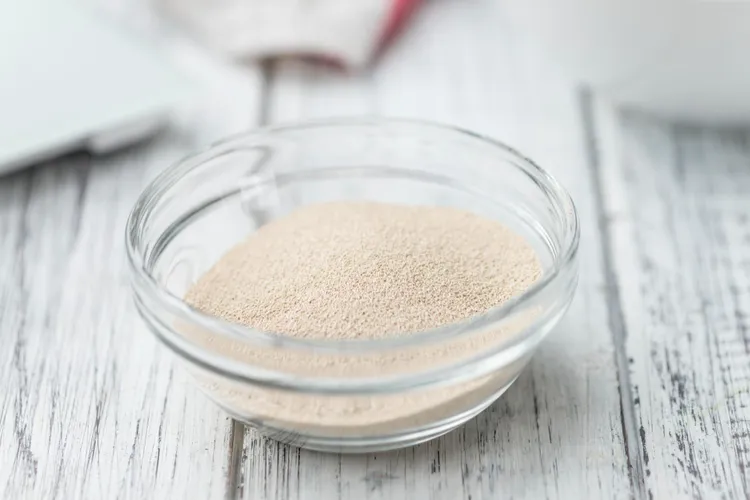
Instant yeast (also sold as "rapid-rise" or "bread machine yeast") is milled into finer granules and dried to a lower moisture content. This means the outer layer dissolves faster, and it activates more readily without needing to be pre-dissolved.
You can add instant yeast directly to your dry ingredients. No proofing step required.
Instant yeast is also slightly more potent than active dry - most sources put it at about 25% stronger. This means it typically produces a faster rise, though the difference is modest in most home baking scenarios (30 minutes to an hour faster, depending on conditions).
Side-by-Side Comparison
| Feature | Active Dry | Instant |
|---|---|---|
| Granule size | Larger | Finer |
| Needs proofing? | Yes | No |
| Mix into dry ingredients? | No | Yes |
| Rise speed | Moderate | Slightly faster |
| Shelf life (unopened) | 2 years | 2 years |
| Shelf life (opened) | 4 months fridge | 4 months fridge |
| Best for | Traditional recipes | Quick weeknight baking |
Can You Substitute One for the Other?
Yes - with a small adjustment.
Active dry → Instant: Use 25% less instant yeast. If the recipe calls for 1 teaspoon active dry, use ¾ teaspoon instant.
Instant → Active dry: Use 25% more active dry, and proof it in water before adding. If the recipe calls for 1 teaspoon instant, use 1¼ teaspoons active dry.
In practice, most experienced bakers don't bother with precise conversions for small amounts - a small difference in yeast quantity mainly affects how quickly the dough rises, which you can compensate for by just watching the dough rather than the clock.
What About Rapid-Rise and Bread Machine Yeast?
Rapid-rise yeast is essentially instant yeast with additional enzymes to speed fermentation. It's designed to cut rise times dramatically, sometimes skipping the second proof entirely.
The tradeoff: flavor. Rapid fermentation means less time for the complex organic acids and esters that give bread its depth to develop. Rapid-rise loaves tend to taste flatter and less interesting than those made with standard instant or active dry yeast.
Bread machine yeast is also a form of instant yeast, optimized for the specific conditions inside a bread machine. It works fine in hand-baked bread too.
Which Yeast Is Better for Beginners?
Instant yeast. Here's why:
- Fewer steps (no proofing required)
- More forgiving of slight water temperature variations
- Faster rise means less waiting
- Widely available and affordable
That said, active dry yeast has one meaningful advantage for beginners: the proofing step confirms your yeast is alive before you commit to the full recipe. If you've had yeast failures before, or your yeast has been sitting in a cabinet for a year, testing it first is a smart move.
For the recipe in our Complete Beginner's Guide to Baking Bread, either type will work beautifully.
Common Mistakes with Yeast
Mistake 1: Using water that's too hot. This is the number one yeast killer. Water above 120°F (49°C) will kill your yeast before it ever gets a chance to work. Always check the temperature or err on the side of cooler rather than hotter.
Mistake 2: Adding salt directly onto yeast. Salt in high concentrations inhibits yeast activity. In hand mixing, this isn't a major issue since everything gets mixed quickly. But in recipes where you layer dry ingredients, keep salt and yeast on opposite sides of the bowl until you mix.
Frequently Asked Questions
Q: How do I know if my yeast is still good? Proof it: dissolve in warm water with a pinch of sugar and wait 10 minutes. If it foams up, it's alive. If nothing happens, it's time for a new packet.
Q: Can I use too much yeast? Yes. Excess yeast causes dough to rise too fast, which can weaken the gluten structure and produce a coarse, uneven crumb with an overly yeasty taste. Stick to recipe amounts.
Q: Does fresh yeast work the same way? Fresh yeast (also called compressed or cake yeast) is highly perishable but very potent. It's less commonly available in supermarkets but beloved by professional bakers. Use roughly 3x the amount of fresh yeast when substituting for active dry.
Q: Why does my dough smell strongly of yeast? An overpowering yeast smell usually means over-fermentation. The dough has proofed too long. Next time, try a cooler proofing environment or reduce proofing time.
Q: Can I freeze yeast? Yes. Sealed packets of both active dry and instant yeast freeze well for up to a year. Thaw in the fridge before using.
For everyday bread baking: instant yeast is your friend - skip the proofing step and get straight to mixing. If you want the extra security of testing your yeast first, go with active dry and take the extra five minutes to proof it.
Either way, yeast is far less fussy than most beginners expect. Get the water temperature right, don't use ancient yeast, and you're almost guaranteed a great rise.
Ready to put your yeast to work? Head to our Complete Beginner's Guide to Baking Bread for a step-by-step first loaf recipe - or jump straight into our No-Knead Overnight Bread for the most forgiving introduction to homemade bread imaginable.
More from the Beginner's Bread Series:
Latest