No-Knead Overnight Bread: The Easiest Loaf You'll Ever Make
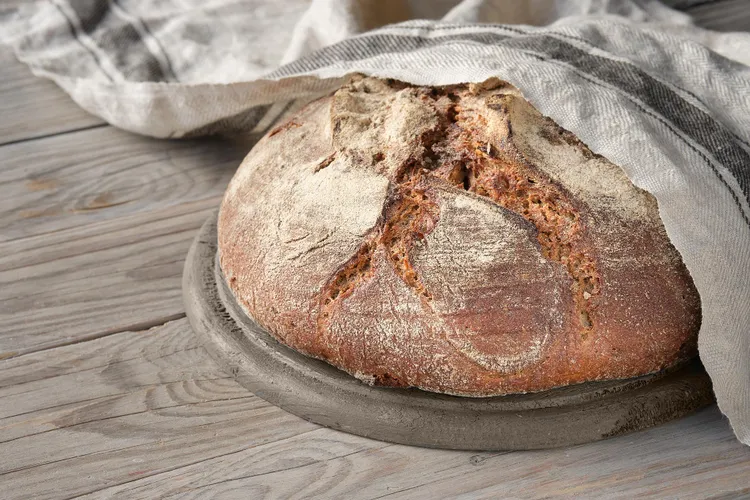
What if I told you that the most impressive-looking loaf you'll ever bake requires about 5 minutes of actual work? Craggy crust, open crumb, deep golden color - and the only effort required is stirring four ingredients together the night before.
No-knead overnight bread changed the way millions of people bake at home. When food writer Mark Bittman published Jim Lahey's revolutionary method in the New York Times in 2006, it democratized artisan bread baking overnight. The concept is simple: time replaces kneading. A long, slow fermentation of 12-18 hours develops the gluten naturally, with zero effort from you.
This is the perfect starting point for anyone following our Complete Beginner's Guide to Baking Bread - zero technique required, maximum reward.
Why No-Knead Bread Works So Well
Traditional bread recipes knead dough to quickly develop gluten - the protein network that gives bread its structure. No-knead bread achieves the same result through a different mechanism: extended fermentation.
Over 12-18 hours, the gluten proteins gradually align and strengthen on their own as the dough slowly ferments. You get the same elastic, well-structured dough without touching it once.
The long fermentation also produces something kneaded bread can't easily match: flavor. The extended time allows complex organic acids and aromatic compounds to develop, giving no-knead bread a depth that tastes like it came from a bakery.
Tip: The ideal room temperature for overnight fermentation is 65-70°F (18-21°C). Warmer and the dough will be ready in 10-12 hours; cooler and it may take up to 18 hours. Both produce excellent results.
What You Need (Truly Minimal Equipment)
- Large mixing bowl (at least 4 quarts)
- Plastic wrap or shower cap
- Dutch oven with lid (crucial for the crust - see note below)
- Bench scraper or bowl scraper (helpful but not required)
On the Dutch oven: This recipe genuinely benefits from one. The enclosed environment traps steam from the dough during the first 20 minutes of baking, creating the glossy, crackly crust that makes artisan bread so distinctive. A 4-5 quart Dutch oven works perfectly.
Don't have one? Place a deep oven-safe pot over the dough for the first 20 minutes of baking as an improvised lid.
For more equipment guidance, see: The Only 5 Tools You Need to Start Baking Bread at Home
No-Knead Overnight Bread Recipe
Makes: 1 large round loaf
Active Time: 10 minutes
Total Time: 14-20 hours (mostly hands-off overnight)
Ingredients
- 430g (3½ cups) all-purpose or bread flour, plus more for shaping
- 330g (1⅓ cups) cool water
- 2g (½ tsp) instant yeast
- 8g (1¼ tsp) salt
Note the very small amount of yeast - this is intentional. Less yeast means slower fermentation, which means more flavor.
Step 1: Mix (Night Before - 5 Minutes)
In a large bowl, whisk together flour, yeast, and salt. Add the water all at once and stir with a fork or wooden spoon until no dry flour remains. The dough will look rough and shaggy - that's exactly right. Don't try to smooth it out.
Cover tightly with plastic wrap or a shower cap and leave at room temperature for 12-18 hours.
Step 2: Check Your Dough (Next Morning)
After 12-18 hours, your dough should be roughly doubled in size, dotted with bubbles on the surface, and smell pleasantly yeasty - almost tangy. The surface will be slightly domed and bubbly.
If it's not quite doubled yet, give it another hour or two. Temperature variations are normal.
Step 3: Shape (15 Minutes Before Baking)
Generously flour a work surface. Turn the dough out - it will be very sticky and loose, which is normal. Don't panic.
Using floured hands or a bench scraper, fold the dough over itself 4-6 times to tighten it into a rough ball. Flip it so the smooth side faces up.
Place a sheet of parchment paper in your Dutch oven (or coat generously with flour). Carefully lower the shaped dough in, seam-side down.
Cover and let rest for 30 minutes while you preheat your oven.
Step 4: Preheat (30 Minutes)
Place your Dutch oven (with the lid on) inside your oven and preheat to 475°F (245°C). Let it heat for at least 30 minutes - a fully preheated Dutch oven is essential for the crust.
Step 5: Bake
Carefully score the top of the dough with a sharp knife or bread lame - a simple slash or X pattern works perfectly.
With lid on: Bake at 475°F for 20 minutes. The steam trapped inside creates the crust.
Remove lid: Reduce oven to 450°F (230°C) and bake for another 20-25 minutes until the crust is deep golden brown.
The internal temperature should read 200-210°F (93-99°C).
Step 6: Cool (The Hardest Part)
Transfer the loaf to a wire rack and resist cutting into it for at least 45-60 minutes. The crumb is still setting as steam releases. Cut too early and you'll get a gummy interior.
Variations to Try Once You've Nailed the Basic
Rosemary & Sea Salt: Add 1 tablespoon of chopped fresh rosemary and a pinch of flaky salt to the dough when mixing.
Olive & Herb: Fold in ½ cup of chopped olives and 1 teaspoon dried thyme after the bulk fermentation.
Seeded Crust: Brush the top of the shaped dough with water and press sesame seeds, poppy seeds, or everything bagel seasoning before baking.
Cold Retard: After the overnight bulk fermentation, shape the dough and refrigerate (covered) for up to 24 more hours before baking. The extra cold fermentation adds remarkable flavor complexity.
Common Mistakes With No-Knead Bread
Mistake 1: Not using a Dutch oven (or substitute). The steam-trapping lid is responsible for the remarkable crust. Without it, you'll get a much thicker, paler crust. It's worth improvising a solution if you don't own one.
Mistake 2: Rushing the fermentation. The whole magic of this method is time. If your dough hasn't bubbled and risen after 12 hours, give it more time rather than moving forward. Cool kitchens can push fermentation to 18+ hours - that's fine.
Frequently Asked Questions
Q: Can I use active dry yeast instead of instant? Yes - use ¾ teaspoon active dry yeast and dissolve it in the water before adding to the flour. The rise time will be similar.
Q: What if my dough is incredibly sticky and hard to shape? That's normal. Use generous flour on your hands and work surface. A bench scraper is invaluable here for manipulating the dough without it sticking to everything. The wetter the dough, the more open the crumb will be.
Q: Can I make this with whole wheat flour? Yes - replace up to 30% of the flour with whole wheat. You may need to add a tablespoon or two of extra water since whole wheat absorbs more liquid.
Q: How long does no-knead bread keep? 2-3 days at room temperature, stored cut-side down. It freezes beautifully - slice it first, then freeze. Individual slices can be toasted straight from frozen.
Q: Can I double the recipe? Yes, though you'll need a larger Dutch oven (6+ quarts) or bake two separate loaves.
Make It Tonight
Mix the dough before bed tonight. Wake up tomorrow to dough that's ready to shape. Bake it before lunch. That's genuinely how easy this is.
If you're building your bread baking skills from scratch, this loaf is the perfect second step after the basic sandwich bread in our Complete Beginner's Guide to Baking Bread. It teaches you to read dough - its feel, its smell, its look - without any kneading stress.
More from the Beginner's Bread Series:
Latest