Choux Pastry: The Science of Steam Leavening
No yeast. No baking powder. Just water, butter, flour, and eggs - and the specific heat physics that turns them into hollow golden spheres
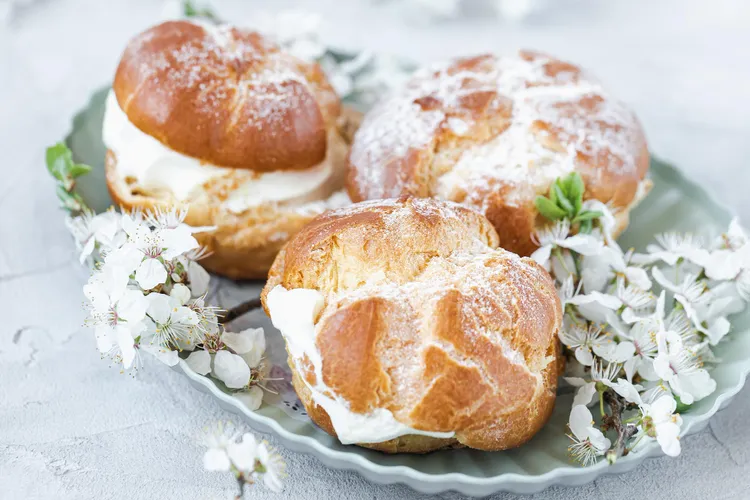
Choux pastry is the most technically unusual pastry in this collection. It contains no leavening agent - no yeast, no baking soda, no baking powder. It is not rolled, not rubbed in, not laminated. It is cooked twice before it ever reaches the table: first on the hob to form a paste, then in the oven to set the structure. And it produces, against all apparent logic, perfectly hollow, golden, crisp-shelled pastry spheres and fingers - profiteroles, éclairs, Paris-Brest, gougères - that seem to contain more air than substance.
The mechanism is steam. Water in the dough (from the eggs and from the water used to make the initial paste) converts to steam in the oven's heat and expands to approximately 1,700 times its liquid volume - forcing the soft pastry shell outward and upward into the characteristic puff. The shell, set by the cooked egg proteins and the gelatinised flour starch, holds its shape around the steam-created hollow. When cooled, the steam condenses and the hollow remains.
Once you understand this mechanism, every instruction in a choux recipe makes sense: why the dough is cooked on the hob first (to gelatinise the starch, creating a structure that can hold steam without tearing); why the eggs are added off the heat (hot enough to be incorporated but not so hot that they scramble); and why the oven door must never be opened during baking (the drop in temperature condenses the steam before the shell has set, and the pastry collapses).
The Choux Method: Three Stages
Choux pastry is always made in the same sequence:
Stage 1 - The panade: Butter, water (or milk), salt (and sugar for sweet choux) are brought to a boil. Flour is added all at once. The mixture is cooked briefly, stirring, until it forms a cohesive dough that pulls away from the sides of the pan. This stage gelatinises the starch - creating the structural paste that will hold the steam during baking.
Stage 2 - Cooling and egg addition: The panade is beaten briefly to cool, then eggs are added one at a time, each one beaten in completely before the next is added. This is the stage that determines the batter's final consistency - and the stage where most failures occur.
Stage 3 - Piping and baking: The batter is piped into the desired shapes and baked in a hot oven until hollow, golden, and crisp.
Ingredients
Makes approximately 24 profiteroles or 12 éclairs
The Choux Pastry
- 250ml water (or half water, half whole milk - milk produces a richer, more golden shell)
- 100g unsalted butter, cut into pieces
- 1 tsp caster sugar (for sweet applications) or a pinch of sugar (for savoury)
- Pinch of fine salt
- 150g plain flour, sifted - sifted to prevent lumps in the panade
- 4 large eggs, at room temperature
Crème Pâtissière (Pastry Cream) - for profiteroles and éclairs
- 500ml whole milk
- 6 large egg yolks
- 120g caster sugar
- 40g cornflour
- 1 tsp vanilla extract (or 1 vanilla pod, seeds scraped)
- 30g unsalted butter, cold, cubed
Chocolate Glaze - for éclairs
- 150g dark chocolate (70%), finely chopped
- 150ml double cream
Method
Stage 1: Make the Panade (5 minutes)
Combine water (or water and milk), butter, sugar, and salt in a medium saucepan. Heat over medium heat, stirring occasionally, until the butter is completely melted and the mixture comes to a full, rolling boil.
Remove from heat immediately. Add all the sifted flour at once. Beat vigorously with a wooden spoon - the mixture will seize into a rough, lumpy paste.
Return to medium heat. Continue stirring and pressing the dough against the base of the pan for 2-3 minutes. The dough is ready when:
- It has pulled away from the sides of the pan completely into a smooth, cohesive ball
- A thin film of dough has formed on the base of the pan (this is the cooked starch drying out slightly - a good sign)
- The dough smells slightly nutty rather than raw
Transfer to the bowl of a stand mixer fitted with a paddle attachment (or a large bowl for hand-beating). Beat for 2 minutes to cool the dough - you need it warm but not hot before adding eggs.
Stage 2: Adding the Eggs (5 minutes)
This is the most critical and most misunderstood stage. The eggs must be added one at a time, with each egg beaten completely into the dough before the next is added. Adding all eggs at once prevents proper emulsification.
Add the first egg. The dough will look terrible - it will slippery and seem to reject the egg, breaking into greasy, shiny lumps. This is normal. Beat vigorously for 60 seconds until the dough comes back together completely.
Repeat with each egg. After the fourth egg, the batter should be:
- Smooth and glossy - not dull or rough
- Thick enough to hold its shape when piped, but soft enough to fall from the spoon in a slow, reluctant "V" shape when a spoonful is lifted and allowed to fall
- When a finger is dragged through the batter, the groove should close slowly (approximately 3-4 seconds) - this is the classic consistency test
The V-test (the most important consistency check): Lift a spatula full of batter and hold it horizontally. The batter should fall in a thick, sticky ribbon that ends in a downward "V" or inverted triangle. If it falls in a thick blob: the batter needs more egg (add the fifth egg in small increments). If it runs off the spatula in a thin stream: too much egg has been added - the batter cannot be corrected, but it will still produce adequate results.
Why egg quantity varies: Egg size, flour humidity, and how much water evaporated during the panade stage all affect how much egg is needed. Four eggs is the standard, but some batches need slightly more or slightly less. The V-test is more reliable than a fixed egg count.
Stage 3: Pipe and Bake
Preheat the oven to 200°C (fan). Line two baking sheets with parchment.
Transfer the batter to a piping bag fitted with:
- A round tip (1-1.5cm diameter) for profiteroles and round shapes
- A star tip (1cm) for éclairs and churro-style fingers - the ridged surface provides more area for the steam to push against, producing a more dramatic puff
For profiteroles: Pipe rounds approximately 4cm in diameter, leaving 5cm between each (they double in size).
For éclairs: Pipe fingers approximately 12cm long, moving steadily in one direction. The speed of piping determines the thickness - slower = thicker.
Smoothing peaks: Dip a finger in water and press down any pointed tips - these burn before the pastry sets.
Egg wash: Brush lightly with beaten egg for a more golden, professional finish.
Bake at 200°C for 25-30 minutes until deeply golden. The pastry must be deeply coloured - pale choux has not dried out sufficiently and will collapse as it cools.
The critical rule: do not open the oven door before 25 minutes. Cold air entering the hot oven condenses the steam before the shell has set - the pastry collapses and cannot recover.
Drying step: When the pastry is golden, pierce each one with a skewer or sharp knife to allow steam to escape. Return to the oven at 160°C for 5 minutes with the door slightly ajar. This drying step is what produces choux pastry that stays crisp for several hours rather than softening immediately.
Making Crème Pâtissière (Pastry Cream)
The classic choux filling - thick, silky, vanilla custard that pipes without running and holds its shape.
Method:
Warm the milk until steaming (not boiling) in a medium saucepan. Separately, whisk egg yolks, sugar, and cornflour together vigorously until pale and thick.
Pour half the hot milk into the yolk mixture, whisking constantly (tempering - prevents scrambling). Return the tempered mixture to the saucepan with the remaining milk.
Cook over medium heat, whisking constantly, until the mixture thickens dramatically - this happens quickly, usually within 2-3 minutes of returning to heat. Continue for 1 more minute after it thickens (to fully cook the cornflour and remove any starchy taste).
Remove from heat. Beat in the cold butter cubes until incorporated - the butter enriches and glosses the cream. Add vanilla.
Press cling film directly onto the surface (preventing a skin forming) and refrigerate until completely cold (at least 2 hours, ideally overnight).
Before using: Beat the cold pastry cream with a spatula or whisk to return it to a pipeable, smooth consistency.
Four Applications
1. Profiteroles with Chocolate Sauce
Fill cooled choux balls with whipped double cream or crème pâtissière using a piping bag (pierce the base with a thin tip and fill from the underside). Pile high on a serving plate. Drizzle with warm chocolate ganache (100g dark chocolate + 100ml double cream, heated together and stirred until smooth).
2. Éclairs with Chocolate Glaze
Fill cooled éclair fingers with crème pâtissière. Dip the top in chocolate glaze (150g dark chocolate + 150ml cream heated and stirred until smooth). Allow the glaze to set at room temperature for 20 minutes.
Flavour variations: Coffee éclairs (add 2 tsp instant espresso to the pastry cream and coffee-flavoured fondant on top); raspberry éclairs (fill with raspberry cream - whipped cream folded with raspberry jam - and top with pink fondant); pistachio (pistachio pastry cream, green chocolate glaze).
3. Cheese Gougères (Savoury)
Omit the sugar from the panade. Add 100g of finely grated Gruyère or Comté cheese to the batter after the eggs. Pipe small rounds (3cm). Bake as above. The cheese melts into the dough during baking, producing a golden, intensely cheesy shell with the characteristic choux hollow.
The finest canapé in this collection. Warm from the oven, they vanish immediately. Make twice as many as you think you need.
4. Paris-Brest
Pipe the batter in a large ring (28cm diameter) by piping two concentric circles then a third on top. Scatter flaked almonds over. Bake as above. Fill when cooled with praline cream (crème pâtissière folded with whipped cream and hazelnut praline paste). A showstopper.
Pro Tips
- Cook the panade long enough. The thin film on the bottom of the pan indicates sufficient starch gelatinisation. Undercooked panade produces a wet, soft pastry that doesn't hold its structure.
- Let it cool before eggs. Eggs added to a too-hot panade scramble on contact. The dough should be hot-to-the-touch warm but not steaming - 60-65°C if you're using a thermometer.
- Golden = done. Pale choux has not dried sufficiently - the shell is still holding significant moisture and will soften rapidly as it cools. Deep golden brown is correct.
- Pierce and dry. The piercing and additional 5-minute drying step is not optional if you want choux that stays crisp. The steam trapped inside the shell continues to soften it from within if not given an escape.
The Collapsed Choux Problem Choux pastry that puffs beautifully in the oven and then collapses as it cools has two possible causes: the oven door was opened too early (steam escaped before the shell set), or the pastry was removed before fully baked (the shell wasn't rigid enough to support itself when the steam condensed). Never open the oven before 25 minutes. Bake until deeply golden. Pierce and dry. These three rules prevent almost every choux failure.
FAQ
Q: My choux isn't puffing. What went wrong?
Most commonly: the panade wasn't cooked long enough (starch not fully gelatinised, shell tears before puffing), or the oven temperature was too low (insufficient heat to produce rapid steam). Cook the panade until the dough pulls completely away from the sides of the pan and forms a film on the base. Preheat the oven fully - 200°C fan minimum.
Q: Can I make choux ahead?
Baked, unfilled shells: Keep at room temperature uncovered for up to 6 hours. Do not seal in a container - the trapped humidity softens them. Re-crisp in a 160°C oven for 5 minutes before filling.
Unbaked piped batter: Freeze the piped shapes on a baking sheet. Once solid, transfer to a sealed bag. Bake from frozen, adding 5-8 minutes to the baking time. Excellent for making ahead.
Filled choux: Best filled and served immediately. Crème pâtissière-filled choux soften within 2-3 hours.
🔗 Continue Baking
- Rough Puff Pastry: Layers Without the Wait
- Shortcrust Pastry: The Foundation of Every Tart
- Flour, Butter, Eggs, Sugar: What Every Baking Ingredient Actually Does
- The Science of Leavening: Yeast, Baking Soda, Baking Powder, Steam
- Cookie Science: Three Textures, One Recipe
- Baking From Scratch: The Complete Guide
Latest