The Science of Leavening: Yeast, Baking Soda, Baking Powder, and Steam
The four mechanisms that make baked goods rise - what each one does, why they are not interchangeable, and how to use them correctly
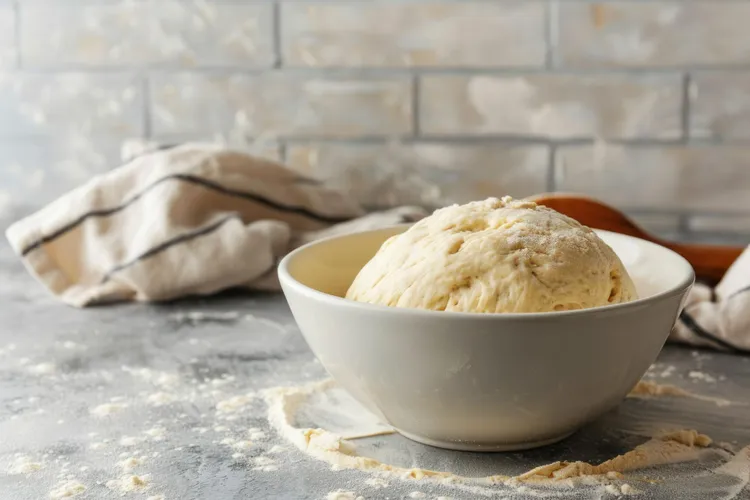
Every baked good rises. Bread rises dramatically, developing an open crumb and oven spring. Cakes rise gently, producing an even, airy texture. Croissants and puff pastry rise into flaky, layered sheets. Choux pastry rises into hollow spheres. These are all the same phenomenon - gas expanding inside a structured dough or batter - achieved through four completely different mechanisms.
Understanding which mechanism a recipe uses, and why that mechanism was chosen, makes every baking recipe more legible and every baking failure more diagnosable. Most home bakers know vaguely that yeast makes bread rise, and that "baking soda is different from baking powder," but without knowing specifically how and why, the distinction stays mysterious. This post removes the mystery.
Mechanism 1: Yeast
What It Is
Yeast (Saccharomyces cerevisiae) is a single-celled fungus. In baking, it is used in two forms: fresh yeast (a soft, moist cake sold by weight) and dried yeast (granules or powder with a much longer shelf life). Both perform the same function.
How It Works
Yeast feeds on the sugars present in flour (and any added sugar) through fermentation - a process that converts sugars to carbon dioxide (CO₂) and ethanol (alcohol). The CO₂ is trapped by the gluten network in the dough (see The Science of Gluten), causing the dough to inflate. The alcohol evaporates during baking.
The equation (simplified): Sugar + Yeast → Carbon Dioxide + Alcohol
The CO₂ production is continuous - it begins as soon as yeast contacts sugar and warm water, and continues throughout fermentation (the prove) and into the early minutes of baking, when the heat causes the trapped gas to expand rapidly (oven spring).
The Variables That Control Yeast Activity
Temperature: Yeast is most active between 25-35°C. At lower temperatures, fermentation slows significantly (which is why cold proving/retarding in the refrigerator slows and extends fermentation for flavour development). At temperatures above 38°C, yeast begins to die. Above 60°C, it is killed completely. This is why bread dough recipes specify "lukewarm water" - hot water kills the yeast before it can begin working.
Sugar: Yeast feeds on sugar. A small amount of added sugar (most bread recipes include 1 tsp) gives the yeast an immediate food source and accelerates initial activity. Very large amounts of sugar (as in brioche and enriched doughs) actually slow yeast activity - osmotic pressure from the sugar draws water out of the yeast cells, stressing them.
Salt: Salt is toxic to yeast in direct contact. This is why bread recipes specify adding salt separately or after the yeast is incorporated - salt poured directly onto dry yeast can inhibit or kill it. Once diluted in the dough, salt regulates rather than kills yeast, keeping fermentation controlled rather than runaway.
When to Use Yeast
Any recipe where flavour development from fermentation is wanted, or where a long, slow rise is structurally necessary. Bread, pizza dough, focaccia, brioche, cinnamon rolls, bagels, pretzels. Yeast is never used in recipes where the goal is immediate chemical leavening - cakes, muffins, quick breads, and most pastries.
Testing yeast freshness: Dissolve ½ tsp of yeast in 100ml of warm water (30°C) with 1 tsp of sugar. It should foam visibly within 5-10 minutes. No foam means dead yeast - discard and replace.
Mechanism 2: Baking Soda (Bicarbonate of Soda)
What It Is
Baking soda is sodium bicarbonate - a pure chemical compound (NaHCO₃). It is a single ingredient.
How It Works
Baking soda is alkaline. When it contacts an acid in a moist environment, a chemical reaction produces CO₂ immediately. The CO₂ bubbles inflate the batter or dough, producing rise.
The equation: Baking Soda (NaHCO₃) + Acid → CO₂ + Water + Salt
The critical requirement: An acidic ingredient must be present in the recipe for baking soda to work. Without acid, baking soda produces very little CO₂ and leaves a soapy, metallic taste in the finished bake (from the sodium carbonate that forms when baking soda decomposes without acid).
Common acidic ingredients that activate baking soda:
- Buttermilk
- Plain yogurt or soured cream
- Lemon juice or vinegar
- Honey or maple syrup (slightly acidic)
- Brown sugar (contains molasses, which is acidic)
- Cocoa powder (natural/non-Dutch process cocoa is acidic; Dutch process is neutral)
- Coffee
- Overripe banana (the banana in banana bread activates the baking soda)
The Timing Issue
Unlike baking powder, which has a second heat-triggered reaction, baking soda's reaction with acid begins immediately when wet and dry ingredients combine. Batters leavened with baking soda must go straight into the oven - prolonged resting after mixing allows the CO₂ to escape before the batter is set by heat.
When to Use Baking Soda
Recipes with a clearly acidic ingredient - banana bread (banana), chocolate cake (cocoa or buttermilk), carrot cake (buttermilk or pineapple), red velvet cake (vinegar and cocoa). The acid both activates the baking soda and contributes to the recipe's flavour profile.
Mechanism 3: Baking Powder
What It Is
Baking powder is baking soda with a built-in acid (usually cream of tartar or sodium pyrophosphate) and a starch filler (cornstarch) to prevent premature reaction in the container.
How It Works
Most commercial baking powder is "double-acting" - it reacts twice. The first reaction occurs when the powder gets wet (same mechanism as baking soda + acid). The second reaction occurs when heat is applied during baking. This double action is the key difference from baking soda: the second heat-triggered reaction means baking powder leavening continues into the oven, producing lift throughout the bake rather than only at the mixing stage.
The practical implication: Batters leavened with baking powder are more forgiving about resting before baking - some CO₂ may escape during a brief rest, but the heat-triggered second reaction compensates.
Why Baking Soda and Baking Powder Are Not Interchangeable
This is the most important distinction in chemical leavening:
Baking soda requires an acid in the recipe. Without acid, it doesn't produce CO₂ efficiently and leaves a soapy taste. Using baking soda in a recipe without an acidic ingredient produces a flat, bitter-tasting bake.
Baking powder contains its own acid. It works without additional acidic ingredients. Using baking powder in a recipe that already contains an acidic ingredient is fine - the baking powder provides the leavening; the acid contributes to flavour and can be balanced with a small amount of baking soda.
Substitution: 1 tsp baking powder ≈ ¼ tsp baking soda + ½ tsp cream of tartar. This substitution works only if the recipe has no other acid - if it does, simply use less baking soda (the acid in the recipe provides the missing acid component of the baking powder).
The 3:1 ratio: Baking powder is approximately three times less potent than baking soda (by weight). Substituting 1 tsp of baking soda for 1 tsp of baking powder in a recipe without an acid produces three times as much CO₂ - an over-leavened, collapsed result.
When to Use Baking Powder
Recipes without strongly acidic ingredients: Victoria sponge, vanilla cake, scones, most muffins, pancakes, waffles. The self-raising flour used in Victoria sponge is plain flour with baking powder already incorporated - a convenience product that standardises the ratio.
Mechanism 4: Steam
What It Is
Steam leavening requires no yeast, no baking soda, and no baking powder. Instead, the water present in the dough or batter converts to steam in the oven's heat, expanding to approximately 1,700 times its liquid volume and pushing the surrounding structure outward.
How It Works
Steam leavening requires:
- High water content in the dough - the water must be present to become steam
- High oven temperature - steam is produced rapidly at 200°C+
- A structure that can hold the steam - usually fat layers (in laminated pastries) or a set protein shell (in choux)
The Applications
Choux pastry (profiteroles, éclairs, gougères): Choux dough is made by cooking flour in boiling water and butter, then beating in eggs. The high water content (from the water and eggs) produces enormous amounts of steam in the oven, which puffs the dough into a hollow sphere. The cooked shell sets around the steam pocket, producing the characteristic hollow interior. No yeast. No baking powder. Pure steam.
Puff pastry and croissants (laminated pastries): The water in the butter layers converts to steam between the pastry layers, pushing the layers apart and creating the characteristic flakiness. Each layer is separated by steam-driven expansion. The butter layers also melt, creating space between the pastry sheets. The combination produces hundreds of distinct layers from what starts as a simple dough and butter package.
Popovers and Yorkshire pudding: A high-water batter (eggs, milk, flour) poured into a very hot, oiled pan. The water converts to steam rapidly, puffing the pudding dramatically before the outer shell sets. The rapid steam production is why popovers deflate immediately if the oven door is opened during baking - the steam escapes and the structure collapses.
The professional bread oven (steam injection): Professional bread ovens inject steam into the oven chamber during the first 15 minutes of baking. The steam keeps the surface of the bread pliable during oven spring, allowing maximum rise before the crust sets. This is why home bakers use a Dutch oven - the trapped steam inside the covered pot replicates the professional steam injection environment.
When Mechanisms Are Combined
Many recipes use more than one leavening mechanism simultaneously:
Creamed cakes (Victoria sponge, butter cake): The primary leavening is mechanical (air incorporated during creaming), supplemented by chemical leavening from the baking powder in self-raising flour. The mechanical air provides immediate structure; the baking powder provides lift throughout the bake.
Bread rolls with a very soft crust: Sometimes a small amount of baking powder is added alongside yeast to accelerate initial rise. An unusual combination, but not incorrect.
Choux with egg: Steam does the primary leavening work, but the eggs in choux batter also provide protein that sets the structure around the steam pocket. The eggs are essential not for leavening but for structure - without them, the steam pocket would collapse as the pastry cools.
Testing Leavening Agents for Freshness
Baking powder: Dissolve 1 tsp in 100ml of hot water. It should bubble vigorously immediately. No bubbles = dead baking powder.
Baking soda: Dissolve ½ tsp in 100ml of hot water with 1 tbsp of vinegar. It should fizz vigorously. No fizz = degraded baking soda.
Yeast: Dissolve ½ tsp in 100ml of warm water with 1 tsp of sugar. It should foam within 5-10 minutes. No foam = dead yeast.
Both chemical leaveners degrade over time, especially in humid environments. Replace baking soda and baking powder every 6-12 months, stored in a cool, dry place away from the steam of a kitchen.
Pro Tips
- Baking soda needs immediate baking. Once the acid contacts the baking soda, CO₂ production begins. Long resting after mixing means lost lift. Mix, pour, bake.
- Baking powder gives you more flexibility. The double-acting nature means some CO₂ production in the oven - a short rest before baking is fine.
- The smell test for baking soda gone wrong: If a baked good smells vaguely soapy or metallic, either there was too much baking soda, there wasn't enough acid to activate it fully, or both. Reduce the baking soda or ensure the acidic ingredient is present.
- Never pour salt directly onto active yeast. Salt kills yeast on direct contact. Incorporate salt into the flour before adding yeast, or add it after the yeast is incorporated into the dough.
FAQ
Q: My cake recipe calls for baking powder and I only have baking soda. Can I substitute?
Use ¼ of the baking powder amount in baking soda, but only if the recipe has an acidic ingredient (buttermilk, yogurt, lemon juice) to activate it. If there's no acid in the recipe, use a mix: ¼ tsp baking soda + ½ tsp cream of tartar per 1 tsp baking powder.
Q: Why does some bread recipe use both yeast and baking powder?
Unusual but not wrong - often seen in recipes where the yeast provides flavour and the baking powder provides additional immediate lift. More common in American-style enriched breads than in European traditions.
Q: Is sourdough the same as yeast leavening?
Mechanically yes - sourdough is leavened by yeast (wild yeast from the starter) producing CO₂. But the flavour development is very different: sourdough's wild yeast ferments more slowly and is accompanied by lactic acid bacteria that produce the characteristic tang. Commercial dried yeast is faster and more neutral in flavour. See Sourdough Bread: The Beginner's Definitive Guide and the Fermentation collection's Sourdough Starter guide for the full details.
🔗 Apply the Science
- Sourdough Bread: The Beginner's Definitive Guide - yeast leavening
- Banana Bread: The Science Behind a Perfect Loaf - baking soda + acid
- Focaccia: The Forgiving Bread That Always Works - yeast at high hydration
- Victoria Sponge: The British Classic, Made Properly - mechanical + chemical leavening
- The Science of Gluten: Why Bread Has Structure and Cake Doesn't
- Baking From Scratch: The Complete Guide
Latest