How to Make Kombucha at Home: The Complete Guide
The fizzy fermented tea that turns a pot of sweet tea into something extraordinary - and costs a fraction of the shop-bought version
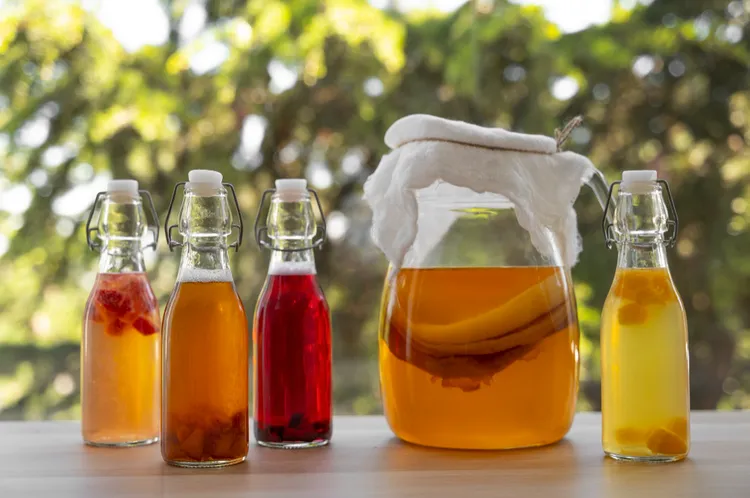
Walk into any health food shop, any artisan grocery, any café with a cold drinks section, and you will find kombucha. It comes in brown glass bottles with carefully designed labels. It costs £3-5 per bottle. It is described, variously, as a probiotic powerhouse, an ancient elixir, a wellness ritual, and a digestive tonic. Some of these claims are better supported than others.
What is unambiguously true: kombucha is a genuinely delicious, genuinely live, genuinely complex fermented drink that you can make at home for approximately 20-30p per litre - a fraction of the shop-bought price - with better flavour, more live cultures, and the particular satisfaction of having made it yourself.
Kombucha is fermented sweet tea. Black or green tea, sweetened with sugar, is fermented by a SCOBY - a Symbiotic Culture Of Bacteria and Yeast - that produces organic acids, B vitamins, a small amount of alcohol, and CO2. The result is slightly effervescent, pleasantly tart, with the tea's character running underneath the fermented complexity.
The process has two stages: a first fermentation (7-14 days) that produces the kombucha, and a second fermentation (1-3 days, sealed in bottles) that builds the carbonation and allows for flavour additions. Once you have an active SCOBY, the ongoing practice is almost entirely hands-off - the most demanding weekly task is brewing a pot of tea.
This guide covers the complete process from acquiring a SCOBY to drinking your first bottle, with the science, the flavouring, the troubleshooting, and the honest health claims that separate what kombucha does from what is sometimes said about it.
📖 The safety principles for kombucha are the same as for all ferments in this collection. Before starting, read Fermentation Safety: The Complete Guide to What's Safe and What's Not. The Science of Fermentation covers the microbiology that underlies this recipe.
What Is a SCOBY?
SCOBY stands for Symbiotic Culture Of Bacteria and Yeast - a rubbery, disc-shaped, slightly translucent culture that forms at the surface of fermenting kombucha. It looks like a pale, slightly slimy pancake and is one of the more visually unusual things you will encounter in home fermentation.
The SCOBY is the home of the microbial community that ferments kombucha. It is a cellulose matrix - produced by the bacteria themselves - that holds the culture together and floats at the surface of the tea, ensuring the culture has access to oxygen (kombucha involves both aerobic and anaerobic processes, unlike the strictly anaerobic lacto-fermentation of sauerkraut and kimchi).
The microbial community in a kombucha SCOBY typically includes:
- Bacteria: primarily Komagataeibacter xylinus (formerly Acetobacter xylinum, the cellulose-producing bacteria that forms the SCOBY matrix), alongside various Lactobacillus and Gluconobacter species
- Yeast: primarily Brettanomyces, Zygosaccharomyces, and Saccharomyces species
What they collectively do:
- The yeast ferment sugars into ethanol and CO2
- The acetic acid bacteria (primarily K. xylinus) convert the ethanol into acetic acid - giving kombucha its characteristic vinegary tang
- The LAB produce lactic acid - a softer, more yogurt-like sourness
- The combined organic acids produce the pH drop (to approximately 2.5-3.5) that makes kombucha self-preserving and, at the correct pH, safe
The "tea fungus" misconception: Kombucha is sometimes called a tea fungus, but the SCOBY contains no fungal component - it is bacteria and yeast, not fungi. The rubbery disc is a bacterial cellulose matrix, not mycelium.
The Honest Health Picture
Kombucha has been claimed to cure everything from cancer to arthritis. The evidence does not support these claims.
What the evidence does support:
- Kombucha contains live bacteria and yeast - live cultures that contribute to gut microbiome diversity, as discussed in The Gut Health Connection
- It contains organic acids (acetic, lactic, gluconic) that may have antimicrobial properties
- It contains B vitamins produced during fermentation
- It contains antioxidants from the tea itself (particularly if made with green tea)
- It contains a small amount of ethanol (typically 0.5-3%)
What the evidence does not support:
- Curing or treating specific diseases
- "Detoxifying" the liver (the liver detoxifies; kombucha doesn't meaningfully assist this process)
- Specific cancer-fighting properties in human clinical trials
- Dramatic weight loss or metabolic transformation
Kombucha is a genuinely healthy, genuinely fermented drink with real nutritional complexity. It is not medicine. The honest position is the same as for all fermented foods in this collection: regular consumption contributes to a diverse gut microbiome and provides live cultures, organic acids, and vitamins as part of a balanced diet.
Acquiring a SCOBY
You cannot make kombucha without a SCOBY. There are three ways to get one:
From another home brewer: The most common and most sustainable source. SCOBYs grow with each batch - a healthy SCOBY produces a new "baby" SCOBY (called a hotel) attached to the original with each fermentation cycle. Home brewers regularly have excess SCOBYs to give away. Fermentation community groups (Facebook, Reddit r/kombucha, local fermentation clubs) are the best source.
Growing from a bottle of raw kombucha: A SCOBY can be grown from a bottle of raw, unpasteurised, unflavoured commercial kombucha. The live cultures in the liquid, given sweet tea and time, will form a SCOBY.
Method: Pour one bottle (330-500ml) of raw, unflavoured kombucha into a clean jar. Add 250ml of cooled sweetened black tea (1 tsp sugar per 100ml). Cover with muslin and leave at room temperature (22-26°C) for 2-4 weeks. A thin SCOBY will form on the surface. Once it reaches 5-6mm thick and covers the surface of the jar, it is ready to use.
From an online supplier: Dried or liquid SCOBY cultures are available online (search "buy kombucha SCOBY"). Functional but less ideal than a living culture from an active home brewer - the dried version requires rehydration and several starter batches before reaching full activity.
Ingredients
Makes approximately 1 litre of first ferment | Active time: 20 minutes | First fermentation: 7-14 days
For the First Fermentation
- 1 litre filtered or de-chlorinated water
- 4-6 tsp loose-leaf black tea or 4 black tea bags (or green tea for a lighter, more delicate kombucha)
- 80g white sugar - standard cane sugar. The sugar is food for the SCOBY, not sweetness in the finished drink - most is consumed during fermentation
- 100-150ml starter liquid - kombucha from a previous batch, or from the bottle you used to grow your SCOBY. The starter liquid acidifies the new batch immediately, inhibiting contamination before the fermentation is underway
- 1 active SCOBY
For the Second Fermentation (per 500ml bottle)
- 500ml first ferment kombucha
- 50-80ml flavouring (fruit juice, ginger juice, herb infusion - see flavour guide)
- Optional: 1 tsp additional sugar per 500ml if very low carbonation is needed
The First Fermentation
Step 1: Brew the sweet tea
Bring 1 litre of water to a boil. Add the tea and steep for 5-7 minutes - a full, strong brew. Remove the tea. Add the sugar and stir until completely dissolved.
Allow the sweet tea to cool completely to room temperature - below 30°C. Never add the SCOBY to hot tea. Temperatures above 35°C stress and eventually kill the microbial community.
Step 2: Add starter liquid and SCOBY
Pour the cooled sweet tea into a wide-mouthed glass jar (a 2-litre jar works well for this batch size). Add the starter liquid and stir gently.
Place the SCOBY on the surface of the liquid. It may float, sink, or sit sideways - all are normal. The SCOBY will orientate itself during fermentation.
Step 3: Cover and ferment
Cover the jar with a clean cloth (muslin, a coffee filter, or a clean tea towel) secured with a rubber band. Do not use an airtight lid - kombucha fermentation requires air exchange. The acetic acid bacteria that produce the sour character are aerobic; sealing the jar inhibits them and produces a very different, less complex drink.
Place in a warm location away from direct sunlight - 22-26°C is ideal. Keep away from strong-smelling foods (kombucha can absorb ambient aromas through its cloth cover) and away from other fermenting projects where possible (cross-contamination of cultures can affect flavour).
Step 4: Ferment for 7-14 days
Do not disturb the SCOBY during fermentation. The new layer of SCOBY forming on the surface (the "baby") is delicate in its early formation and disturbance can disrupt its structure.
Begin tasting from Day 7: Using a clean straw or spoon, draw a small sample from beneath the SCOBY and taste:
- Day 7: Pleasantly tart, still has significant sweetness, relatively mild fermented character. Ready for those who prefer a milder, sweeter kombucha.
- Day 10: More pronounced sourness, less sweetness, more complex. The standard for most home brewers.
- Day 14: Quite sour, vinegary notes developing, very little residual sweetness. Good for second fermentation (the sourness is balanced by fruit juice) or for those who prefer a strong kombucha.
Beyond Day 14: The kombucha continues to ferment and becomes increasingly vinegar-like. Very long-fermented kombucha (3-4 weeks) can be used as a vinegar substitute in cooking or as starter liquid for future batches, but it is too acidic to drink pleasantly.
The pH guide: A properly fermented first ferment should reach pH 2.5-3.5. pH strips give objective confirmation of readiness. Below pH 2.5: over-fermented. Above pH 3.5 after 10 days: fermentation is slow - check temperature and SCOBY health.
Step 5: Harvest and reserve
When the kombucha reaches your preferred tartness, remove the SCOBY (and its baby layer) with clean hands. Place the SCOBYs in a clean bowl or jar with approximately 200ml of the fermented kombucha as their "hotel" - this keeps them healthy between batches.
Reserve 100-150ml of the fermented kombucha as starter liquid for the next batch. This is essential - the acidic starter liquid protects the new batch during its vulnerable early hours.
Proceed to the second fermentation with the remaining kombucha.
The Second Fermentation: Building Carbonation and Flavour
The second fermentation is what transforms flat first-ferment kombucha into a genuinely fizzy, flavourful drink. It happens in sealed swing-top bottles (the same bottles used for water kefir) and takes 1-3 days at room temperature.
Method
Pour the first ferment kombucha into swing-top bottles, filling to approximately 3-4cm below the lid. Add your chosen flavouring (see flavour guide below). Seal the bottles.
Leave at room temperature (22-24°C) for 1-3 days. The residual yeast and bacteria in the kombucha continue fermenting the sugars (from the kombucha itself and from the added fruit juice), producing CO2 that builds in the sealed bottle.
Pressure testing: After 24 hours, carefully open a bottle briefly over a sink to test carbonation levels. A good hiss indicates active carbonation. If very little pressure has built, seal and leave another 12-24 hours.
Move to the refrigerator once the desired carbonation is reached. Cold stops active fermentation and preserves the fizz. The kombucha continues to develop slowly in the refrigerator.
The over-carbonation risk: Second ferment kombucha can build significant pressure, particularly with high-sugar fruit additions in warm weather. Open bottles carefully, pointing away from your face, over a sink. Check pressure daily during warm weather fermentation. This is the most important safety consideration in kombucha brewing.
Flavour Guide: Six Second Fermentation Directions
1. Ginger and Lemon (Classic)
Per 500ml: 30ml fresh ginger juice (grate and squeeze fresh ginger) + juice of ½ lemon. The most widely made kombucha flavour combination - the ginger's warmth amplifies the kombucha's natural tang; the lemon adds brightness. The result tastes like the finest ginger beer you have ever had, with layers of complexity beneath.
2. Mixed Berry
Per 500ml: 60ml mixed berry juice (blend and strain fresh or frozen berries). The fruit sugars fuel vigorous carbonation; the berry flavour integrates deeply into the kombucha. Blackcurrant produces a particularly complex result - its high tannin content pairs well with the kombucha's tea base.
3. Mango and Chili
Per 500ml: 60ml mango juice + a thin slice of fresh red chili (seeds removed for mild, seeds in for heat). The tropical sweetness of mango against the kombucha tang is a combination that sounds simple and tastes extraordinary. The chili heat builds slowly as the drink is consumed - a warmth rather than a burn.
4. Hibiscus and Rose
Per 500ml: Steep 2 tsp dried hibiscus flowers in 100ml of hot water for 5 minutes, cool completely, strain, and add 60ml to the bottle. A pinch of dried rose petals adds a floral note. The hibiscus produces a vivid crimson colour and a tart, fruity sourness that complements the kombucha beautifully. The most striking kombucha in this collection.
5. Apple and Cinnamon (Autumn)
Per 500ml: 60ml fresh apple juice + 1 cinnamon stick. The cinnamon infuses during second fermentation, producing a warming, spiced kombucha that tastes specifically autumnal. A pinch of ground cardamom is an excellent addition.
6. Green Tea Kombucha with Jasmine and Honey
For the first fermentation: Replace black tea with green tea or jasmine green tea (slightly shorter steep - 3-4 minutes at 80°C, not boiling). For second fermentation: 1 tsp good-quality honey per 500ml. The result is lighter, more floral, and more delicate than black tea kombucha - a completely different character from the same process.
The SCOBY Hotel: Managing Your Culture Between Batches
The SCOBY hotel is the jar where you keep your SCOBY (and any baby SCOBYs that have accumulated) between batches, or when you want to pause brewing.
Setup: A clean glass jar containing the SCOBY(s) submerged in kombucha - approximately 200ml of finished kombucha per SCOBY. Cover with muslin. Keep at room temperature for active brewing cycles, or refrigerate for storage between batches.
At room temperature: Feed the hotel with a small amount of fresh sweet tea every 1-2 weeks to maintain the culture's activity. Do not let the liquid become entirely consumed.
Refrigerated: The SCOBYs enter a dormant state in the cold. They can be refrigerated for up to 3 months without attention - a significant advantage over water kefir and milk kefir grains, which need more regular feeding. Bring to room temperature and run 1-2 starter batches before expecting full activity after refrigeration.
Accumulating SCOBYs: Every batch produces a new baby SCOBY attached to the original. Over time, the hotel accumulates multiple layers. Keep the two most recent, healthy-looking layers for brewing; share or compost the older layers.
What to do with excess SCOBYs:
- Share with other home brewers - the most sustainable option
- Use in smoothies - SCOBYs are edible, with a mild, slightly sweet flavour and a high probiotic content
- Make "SCOBY candy" - dehydrate thin slices with sugar for a chewy, slightly sweet fermented snack
- Compost - they are entirely organic
Troubleshooting
The SCOBY has brown strings hanging from it. Normal - these are yeast strands from the fermentation. They are harmless and indicate active yeast activity. More yeast strands = more active fermentation = more carbonation in second fermentation.
The kombucha smells strongly of vinegar. The fermentation has run too long - the acetic acid has built to a high level. The kombucha is not ruined; it can be used as a starter liquid (very effective) or as a mild vinegar substitute in cooking. Next batch: taste from Day 6 and move to second fermentation earlier.
There is a fuzzy growth on the SCOBY. Inspect carefully: flat, slightly opaque patches on the SCOBY surface are new SCOBY forming - normal. Fuzzy, raised growth in any colour other than white is mould - discard the SCOBY, the kombucha, and the batch. Thoroughly clean the jar. Source a new SCOBY and restart. Mould on kombucha is rare (the acidic environment is hostile to most moulds) but can occur if: the starter liquid was insufficient, the tea was too hot when the SCOBY was added, or the environment was contaminated.
The kombucha is very sweet and barely tart after 10 days. The fermentation is sluggish - likely causes: temperature too cool (below 20°C), SCOBY too thin or recently acquired, starter liquid insufficient (less than 10% of the batch volume). Move to a warmer location, ensure the starter liquid volume is adequate, and give the SCOBY 1-2 more batches to become fully established.
The second fermentation is not producing carbonation. Insufficient residual sugar for the yeast to produce CO2. Add ½ tsp of sugar per 500ml to the bottle before sealing. Alternatively, the first fermentation ran too long and consumed all fermentable sugars - next time, harvest from the first ferment earlier (at Day 7-8 rather than Day 12-14).
The SCOBY is sinking, not floating. Normal. SCOBY position doesn't affect fermentation quality - a sinking SCOBY ferments equally well as a floating one. A new baby SCOBY will form at the surface regardless of where the original SCOBY sits.
Continuous Brew Method
For home brewers who want a continuous supply without the batch cycle, the continuous brew method maintains a large kombucha vessel permanently, drawing off kombucha and replacing with sweet tea on a rolling basis.
Setup: A 4-8 litre jar with a tap at the bottom. Fill with sweet tea, SCOBY, and starter liquid. After 7-10 days, draw off 30-40% of the volume through the tap. Replace with fresh sweet tea. The fermentation never stops; a fresh supply is always available.
Advantages: No batch cycle, no starting and stopping. The SCOBY becomes very large and robust over time. The flavour deepens as the culture matures.
Disadvantages: A larger vessel commitment. The SCOBY grows to fill the vessel - management of the hotel is more involved. Slightly more complex flavour control than batch brewing.
Best for: Home brewers who drink kombucha daily and want to eliminate the batch administration.
Kombucha in Cooking
The assertive flavour of kombucha - tangy, slightly sweet, complex - makes it a useful cooking ingredient beyond its role as a drink:
As a vinegar substitute: Over-fermented first-ferment kombucha (pH below 2.8) has the acidity and flavour to replace rice vinegar in salad dressings, marinades, and sauces. It adds complexity that pure vinegar doesn't have.
In cocktails and mocktails: Kombucha as a mixer produces drinks with a complexity that tonic water or ginger beer can't match. With gin (and a slice of cucumber): excellent. With whisky and ginger kombucha: a homemade highball with character. With sparkling water and frozen berries as a mocktail: refreshing and sophisticated.
In bread dough: Replace some of the liquid in a bread recipe with kombucha. The organic acids contribute to flavour development; the residual yeast can contribute to leavening (though commercial yeast is still needed for reliable rise). Particularly good in rye bread.
As a marinade acid: Replace lemon juice or vinegar in a chicken or fish marinade with kombucha. The complex acids tenderise and flavour without the sharpness of straight vinegar.
Kombucha vs. Water Kefir: The Comparison
Both are fizzy, fermented, probiotic drinks made at home in similar timeframes. They attract the same audience and serve similar purposes - here is an honest comparison:
| Feature | Kombucha | Water Kefir |
|---|---|---|
| Base ingredient | Sweetened tea | Sweetened water |
| Fermentation time | 7-14 days (1st) + 1-3 days (2nd) | 24-48 hours (1st) + 12-24 hours (2nd) |
| SCOBY type | Disc-shaped cellulose mat | Small granular grains |
| Flavour profile | Complex, tea-forward, vinegary tang | Lighter, cleaner, more neutral |
| Alcohol content | 0.5-3% (higher than water kefir) | 0.5-1.5% |
| Caffeine | Yes (from tea) | No |
| Microbial diversity | High | High (different species) |
| Equipment needed | Wide-mouth jar, cloth cover, bottles | Jar, strainer, bottles |
| Difficulty | Beginner–intermediate | Beginner |
Neither is superior - they complement each other. Kombucha has more complexity and caffeine; water kefir is faster and caffeine-free. The home that makes both has the full spectrum of fermented drinks covered.
Pro Tips
- Wide-mouth jars only. The SCOBY needs to cover the full surface area of the liquid to do its job - a narrow-mouthed jar produces a thin, elongated SCOBY that is less effective. Wide-mouth allows a flat, full-surface SCOBY.
- Consistent tea strength. The tea's tannins and caffeine are nutrients for the SCOBY culture. Inconsistent brew strength produces inconsistent fermentation. Measure your tea the same way every batch.
- The starter liquid is not optional. The 100-150ml of acidic starter liquid protects the new batch during the vulnerable early hours before the SCOBY's fermentation has had time to acidify the tea. Without it, the new batch is at higher risk of contamination.
- Keep a SCOBY journal. Batch number, start date, tea type, sugar amount, first fermentation days, final taste notes, second fermentation flavours, carbonation level. Within 5–6 batches you will have a clear picture of your specific SCOBY's behaviour and can make precise adjustments.
- Taste before bottling. The flavour at bottling determines the flavour of the finished drink. Too sweet: leave another 2-3 days. Too sour: bottle now and use fruit juice to balance in second fermentation.
Common Mistake: Using a Metal Lid or Metal Utensils Metal reacts with the organic acids in kombucha - acetic acid and lactic acid corrode certain metals, and the metal ions released can damage the SCOBY and affect the flavour of the kombucha. Use only glass, food-grade plastic, or wooden tools for everything that contacts the kombucha or SCOBY. The jar must be glass; the cover must be cloth; any utensils that contact the SCOBY must be non-metal. This applies particularly to the jar tap in continuous brew setups - ensure any tap is food-grade plastic, not metal.
FAQ
Q: Is kombucha alcoholic?
Yes, slightly. Kombucha typically contains 0.5-3% alcohol - the range varies with fermentation time, temperature, and the specific yeast strains in the SCOBY. Commercial kombucha is required by law in many countries to remain below 0.5% (the threshold for non-alcoholic designation); home-brewed kombucha can exceed this, particularly with longer fermentation times. Those avoiding alcohol for any reason should be aware of this.
Q: Can I make kombucha with green tea?
Yes - green tea produces a lighter, more delicate, slightly less tangy kombucha than black tea. The kombucha character is more subtle and the tea character more prominent. Steep green tea at 80°C (not boiling) for 3-4 minutes to avoid bitterness. The SCOBY performs equally well with green tea; switching between teas is fine.
Q: How do I know if my kombucha is safe to drink?
A properly fermented kombucha (pH 2.5-3.5) is self-preserving - the acidity inhibits pathogens. Sensory checks: it should smell tart and tea-like (not rotten or strongly of acetone), it should taste pleasantly sour with tea character (not offensive), and it should show no fuzzy mould growth on the SCOBY or the liquid surface. If in doubt about any of these, refer to Fermentation Safety: The Complete Guide.
Q: My SCOBY has grown very thick - do I need to separate the layers?
Once the SCOBY is thicker than approximately 2-3cm, it is worth separating the layers. Peel apart gently and use the most recent, most active layers for brewing; add the older layers to the SCOBY hotel or share them. Very thick SCOBYs can inhibit gas exchange and create uneven fermentation through the depth of the culture.
Q: How is home kombucha different from commercial kombucha?
Home kombucha is typically higher in live culture content (not pasteurised), has a more complex flavour (wild fermentation rather than controlled commercial starter), contains more variable amounts of alcohol (not standardised to below 0.5%), and costs dramatically less. The trade-off is consistency - commercial kombucha is uniform batch to batch; home kombucha varies with temperature, SCOBY activity, and tea variation. Most home brewers find the variation a feature rather than a flaw.
🔗 Continue Exploring the Fermentation Collection
- Water Kefir: The Fizzy Probiotic Drink You Can Make in 48 Hours
- Milk Kefir: Thicker Than Yogurt, Better for Your Gut
- The Gut Health Connection: What Fermented Foods Actually Do
- Fermentation Safety: The Complete Guide to What's Safe and What's Not
- The Science of Fermentation: What's Actually Happening in Your Jar
- How to Build a Fermentation Weekly Routine
- Fermentation & Gut Health at Home: The Ultimate Guide
Latest