The Science of Fermentation: What's Actually Happening in Your Jar
No jargon. Just the understanding that makes every ferment more intuitive - and every success more predictable.
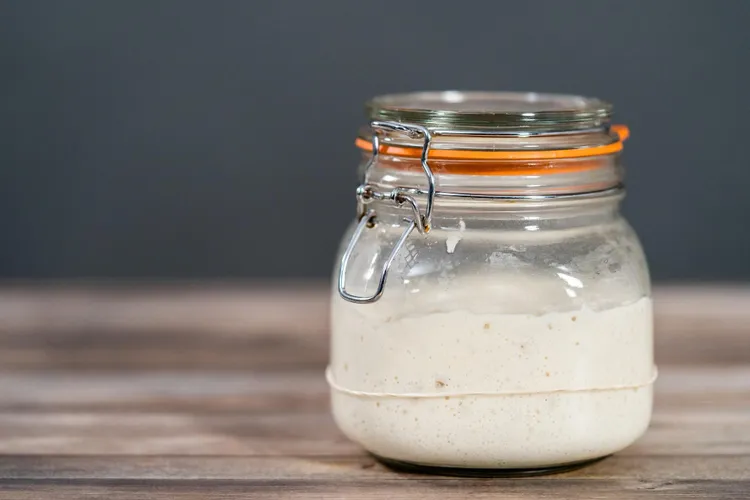
Fermentation looks like magic. You put cabbage and salt in a jar, leave it on the counter for a week, and it comes out transformed - tangy, complex, alive in a way it wasn't before. You stir flour and water together, leave it for five days, and wild microorganisms colonise it from the air and turn it into something that can leaven bread. You warm milk with a spoonful of yesterday's yogurt and it sets overnight into something thick and tangy and nutritionally richer than the milk you started with.
It is not magic. It is biology - specifically, the metabolism of microorganisms that have evolved alongside human food culture for thousands of years. And once you understand what those organisms are doing, and why, the process becomes not just comprehensible but intuitive. You stop following fermentation recipes like instructions and start understanding them like principles - and that shift changes everything about how you ferment.
This guide explains the science of fermentation in plain language. No biochemistry degree required. By the end, you will understand what lactic acid bacteria are and why they matter, what salt does at the molecular level, why temperature controls fermentation speed, what pH means and why it determines safety, and why the cloudiness in your brine is one of the best signs you can see.
The Cast of Characters: Who Does the Work
Fermentation is performed by microorganisms - bacteria, yeast, and sometimes fungi. Different ferments involve different primary performers, and understanding who is working in a given ferment explains why it tastes and behaves the way it does.
Lactic Acid Bacteria (LAB)
The stars of most ferments in this collection. Lactic acid bacteria - primarily Lactobacillus species, but also Leuconostoc, Pediococcus, and others - are gram-positive bacteria found naturally on the surface of almost all fresh vegetables, in unpasteurised dairy, and in the environment generally.
What they do: LAB are heterotrophic - they cannot make their own food. They consume sugars (glucose, fructose, sucrose) and convert them into lactic acid as the primary byproduct of their metabolism. This process is called lactic acid fermentation.
Why this matters: Lactic acid is an acid. As LAB metabolise, they progressively acidify their environment. This acidification is the mechanism that preserves food, creates the tangy flavor of fermented foods, and creates the environment that pathogens cannot survive in. The bacteria are, in effect, building their own protective fortress by changing the chemistry of the food around them.
Where they come from: LAB are present on unwashed vegetables - on the surface of cabbage leaves, in soil attached to carrots, on the skin of peppers. When you make sauerkraut, you are not introducing bacteria from outside - you are creating conditions in which the bacteria already on the cabbage thrive. This is why fermentation is sometimes described as "wild" - you are working with microorganisms that are already there.
Salt tolerance: LAB are significantly more salt-tolerant than most other bacteria, including most pathogens. This is the key to why salt is the critical enabler of lacto-fermentation - at the correct salt concentration, LAB thrive while competition from less salt-tolerant organisms is suppressed.
Wild Yeast
Yeast are single-celled fungi - eukaryotic organisms more complex than bacteria. The most relevant yeast for home fermentation is Saccharomyces cerevisiae, the yeast used in bread and brewing, but dozens of other wild yeast species are involved in sourdough fermentation and appear in other ferments.
What they do: Yeast perform alcoholic fermentation - they convert sugars into ethanol (alcohol) and carbon dioxide (CO2). The CO2 is what leavens bread (the bubbles in sourdough are CO2 produced by yeast). The ethanol evaporates during baking or remains at very low levels in fermented drinks.
Where they come from: Wild yeast exist in the air, on grain, on fruit, and on our hands. A sourdough starter captures and cultivates wild yeast from the environment - which is why starters from different locations, fed with different flours, develop distinct characteristics.
The LAB-yeast relationship in sourdough: In sourdough, LAB and wild yeast coexist in a complex relationship. The LAB produce lactic and acetic acids that give sourdough its tang and create a pH that favours their own growth. The yeast produce CO2 that leavens the bread and ethanol that contributes to flavor. Neither can produce sourdough bread alone - the combination is what creates the specific character of natural leavening.
Koji (Aspergillus oryzae)
A fungus - specifically a mould - that is fundamental to Japanese fermentation. Koji is grown on rice, barley, or soybeans and produces a remarkable range of enzymes:
Amylases - break down starches into sugars. In amazake, koji enzymes convert the starches in rice into glucose, producing natural sweetness without any added sugar. In sake production, the same process makes the starches fermentable by yeast.
Proteases - break down proteins into amino acids. In miso production, koji proteases break down the proteins in soybeans, releasing glutamates and other amino acids that produce the deep umami flavor of aged miso.
Lipases - break down fats. In longer-fermented miso and in sake, lipases contribute to the complex, rounded flavor of aged products.
Koji does not produce lactic acid - it is not LAB. But it creates the substrate that LAB and other organisms then work on in miso production, making the whole process a multi-organism collaboration of extraordinary complexity.
What Salt Actually Does
Salt is the most important ingredient in lacto-fermentation - more important than the vessel, more important than the temperature, more important than the time. Understanding what it does explains why the ratio matters so much.
The Selective Environment
Salt creates what microbiologists call a selective environment - conditions that favour some microorganisms over others. At the 2% salt concentration standard in this collection:
- Lactic acid bacteria: Thrive. They are halotolerant (salt-tolerant) and have evolved to function well in moderately saline environments, partly because they naturally inhabit the surface of vegetables that may be exposed to soil salt.
- Most pathogenic bacteria (Salmonella, E. coli, Listeria): Inhibited. These organisms are not significantly salt-tolerant at 2% salt concentration.
- Spoilage bacteria (those responsible for rotting): Inhibited. Most cannot function at 2% salt.
This means that from the moment salt is added to vegetables, the environment is already tilted toward LAB and away from the competition. The fermentation that follows is not a race where all organisms compete equally - it is a race where LAB have already won the starting position.
Osmosis and Brine Formation
Salt draws water out of vegetables through osmosis - the movement of water across a semi-permeable membrane (the cell walls of the vegetable) from a lower-concentration solution (inside the cell) to a higher-concentration solution (the salty environment outside).
This is why massaging salted cabbage produces brine that wasn't there before - the brine is water drawn out of the cabbage cells by osmotic pressure. This naturally produced brine is already slightly salty and contains the sugars and other compounds that LAB will use as fuel. It is, from the first moment, the ideal growth medium for the fermentation you want.
The Right Ratio
Too little salt (below approximately 1.5%): The selective pressure is insufficient. Less salt-tolerant organisms can compete with LAB. Fermentation may still proceed, but the result is less reliable, more prone to off-flavors, and potentially less safe.
Too much salt (above approximately 3%): Even the salt-tolerant LAB are inhibited. Fermentation slows dramatically or stalls. The vegetable becomes very salty without developing the complex sourness of fermentation.
The 2% standard is the result of thousands of years of empirical observation followed by microbiology confirming what experienced fermenters already knew: this ratio reliably creates the conditions that LAB need to thrive and produce safe, delicious food.
Practical calculation: 2% of the total weight. For 1kg of cabbage: 20g of salt. For 500g of vegetables: 10g of salt. Weigh everything; measure nothing.
The pH Story: Why Acidity Is Safety
pH is the measure of acidity or alkalinity on a scale from 0 (most acidic) to 14 (most alkaline), with 7 as neutral. Understanding pH in fermentation explains both the safety mechanism and the flavor development.
How pH Changes During Fermentation
At the start: Fresh vegetables in brine have a pH of approximately 6-7 - near neutral.
Days 1-2: LAB begin producing lactic acid. pH drops to approximately 5-6. The taste is beginning to develop a slight tartness.
Days 3-5 (active phase): LAB are producing lactic acid rapidly. pH drops to approximately 4-4.6. The environment is becoming noticeably acidic. The taste is recognisably sour.
Days 7-14 (mature phase): pH stabilises at approximately 3.5-3.8. The ferment is fully acidified. The taste is distinctly sour and complex.
In the refrigerator: Fermentation continues extremely slowly. pH may drop slightly further over weeks and months.
Why pH 4.6 Is the Magic Number
4.6 is the pH below which Clostridium botulinum cannot produce toxin. It is also below the survival threshold of most other pathogenic bacteria. When a lacto-ferment reaches pH 4.6, it has created an environment that is inhospitable to the organisms that cause foodborne illness.
This is why fermentation safety is so fundamentally sound: the process itself produces the safety mechanism. You don't have to add acid (as in pickling with vinegar) because the bacteria produce it for you.
pH and Flavor
Lactic acid (produced by homofermentative LAB) has a clean, mild sourness - the flavour of yogurt. Acetic acid (produced by heterofermentative LAB and acetic acid bacteria) has a sharper, more vinegary sourness - the tang of kimchi and sourdough. Most lacto-ferments produce a mixture of both, which is why their flavor is more complex than either pure lactic acid or pure acetic acid alone.
The ratio of lactic to acetic acid in a ferment is influenced by temperature and time:
- Warmer temperatures (above 22°C) favour lactic acid production - a cleaner, milder sourness
- Cooler temperatures (below 18°C) favour acetic acid production - a sharper, more complex sourness
Traditional German sauerkraut, fermented slowly at cellar temperatures, has a more complex acidity than quickly fermented room-temperature sauerkraut. Korean kimchi, fermented at various temperatures through the seasons, develops different flavor profiles as the temperature changes through the year.
Temperature: The Control Variable
Temperature is the variable you have the most control over, and understanding its effects allows you to actively manage your ferments rather than simply waiting.
How Temperature Affects Fermentation Speed
All microbial processes have an optimal temperature range - the range in which metabolic activity is fastest. For LAB, this range is approximately 18-24°C.
Below 12°C: Fermentation slows to a crawl. This is why refrigeration halts fermentation - it doesn't stop it entirely, but it reduces LAB activity to a level where flavor development takes weeks or months rather than days.
12-18°C (cellar temperature): Slow fermentation. Produces complex, nuanced flavors. Traditional European sauerkraut and Korean kimchi were fermented in this range before modern temperature control. Excellent results with patience.
18-24°C (room temperature): The ideal range for most home fermentation. Active, reliable fermentation with good flavor development.
Above 26°C: Fermentation becomes very fast - sometimes too fast. The rapid production of lactic acid can outpace the development of more complex flavor compounds, producing a sour result that lacks depth. It also increases the risk of kahm yeast growth. Fermentation in hot weather requires shorter fermentation times and more frequent monitoring.
Above 40°C: Most LAB die or become dormant. Fermentation effectively stops.
Temperature in Dairy Ferments
Dairy ferments involve specific bacterial strains (Streptococcus thermophilus and Lactobacillus bulgaricus in yogurt) that have narrow optimal temperature ranges compared to the wild LAB in vegetable ferments:
- Yogurt cultures: Optimal at 40-45°C. Below 38°C, the cultures are insufficiently active to set the milk. Above 47°C, the cultures begin to die.
- Kefir cultures: More cold-tolerant, fermenting well at 20-25°C (room temperature). They do not need incubation warmth.
This is why yogurt requires active temperature management (the incubation step) while kefir works at room temperature without any special equipment.
What the Cloudiness Means
The cloudy appearance of fermenting brine is one of the most reassuring sights in fermentation - and one of the most commonly misidentified as a problem.
The cloudiness is bacteria. Specifically, it is LAB in suspension in the brine, along with dead LAB cells and other metabolic byproducts of active fermentation. The cloudier the brine, the more actively the ferment has been working.
Clear brine after several days at room temperature can actually indicate that fermentation is not proceeding normally - the LAB population hasn't built up enough to create cloudiness.
The cloudiness does not indicate that the ferment is spoiled. It is, if anything, the opposite - visible evidence of a healthy, active fermentation.
Why Fermented Food Tastes Different from Fresh Food
The transformation of flavor during fermentation is the result of multiple chemical processes occurring simultaneously:
Lactic acid production: Adds sourness that was not present in the fresh vegetable.
Enzymatic breakdown: LAB and the food's own enzymes break down complex carbohydrates and proteins into simpler components - sugars, amino acids, organic acids. These simpler compounds are more immediately flavourful and more bioavailable.
Proteolysis (protein breakdown): Particularly important in miso and long-fermented dairy. As proteins are broken into amino acids, glutamates are released - the compounds responsible for umami. This is why aged miso has such profound savory depth and why long-aged cheeses are so intensely flavourful.
Reduction of anti-nutritional factors: Fresh vegetables contain compounds (phytates, oxalates, lectins) that bind to nutrients and reduce their bioavailability. Fermentation significantly reduces these compounds, making the nutrients in fermented vegetables more accessible than those in their fresh equivalents.
New compound synthesis: LAB produce B vitamins (particularly B12 in some ferments), short-chain fatty acids, and other compounds that were not present in the original food. The nutritional profile of fermented food is genuinely different from - and in several respects more complex than - the food it was made from.
The Different Types of Fermentation in This Collection
| Ferment | Primary Organism | Type | Key Product |
|---|---|---|---|
| Sauerkraut | Lactobacillus species | Lactic acid | Lactic acid, CO₂ |
| Kimchi | Lactobacillus, Leuconostoc | Lactic acid | Lactic acid, CO₂ |
| Hot sauce | Lactobacillus species | Lactic acid | Lactic acid |
| Yogurt | L. bulgaricus, S. thermophilus | Lactic acid | Lactic acid |
| Kefir | Mixed LAB + yeast | Lactic acid + alcoholic | Lactic acid, ethanol, CO₂ |
| Labneh | Same as yogurt | Lactic acid | Lactic acid |
| Sourdough starter | Wild yeast + LAB | Alcoholic + lactic acid | CO₂, ethanol, lactic acid |
| Kvass | Wild yeast + LAB | Alcoholic + lactic acid | CO₂, ethanol, lactic acid |
| Water kefir | Water kefir grains (mixed) | Lactic acid + alcoholic | Lactic acid, CO₂, ethanol |
| Miso | Koji + LAB + yeast | Enzymatic + lactic acid | Amino acids, lactic acid |
| Amazake | Koji (Aspergillus oryzae) | Enzymatic | Glucose, amino acids |
The Practical Implications
Understanding the science changes the way you ferment in concrete ways:
Why you weigh salt instead of measuring it: The 2% ratio is the specific concentration that creates the right selective environment. Volume measurements of salt are imprecise because different salts have different densities - a tablespoon of kosher salt and a tablespoon of fine sea salt are not the same weight. Only weight gives you the precision that salt ratios require.
Why you keep vegetables submerged: Above the brine line, vegetables are in contact with oxygen. Most LAB are anaerobes or facultative anaerobes - they work better without oxygen. More importantly, surface exposure allows oxygen-tolerant organisms (including mould) to grow where they would be outcompeted in the anaerobic brine.
Why cloudiness is good: You are now watching LAB build up in suspension. Every particle of cloudiness is evidence of a thriving microbial culture doing exactly what you need it to do.
Why temperature changes the timeline: In summer, your sauerkraut may be ready in 5 days. In winter, it may need 14. The bacteria are the same - the temperature changes how fast they work. Taste frequently; the ferment tells you when it's ready.
Why refrigeration doesn't end fermentation: It slows LAB activity dramatically. A sauerkraut in the refrigerator is still fermenting - just at a pace that may take months to equal a week at room temperature. This is why very old refrigerated kimchi becomes profoundly sour - the slow fermentation has continued across months or years.
FAQ
Q: If LAB are already on the vegetables, why do I need to do anything?
You need to create the conditions in which LAB thrive and other organisms cannot. Salt creates the selective environment. Submersion creates the anaerobic conditions. The right temperature creates the speed. Without these conditions, the LAB are present but cannot outcompete everything else - and the result is rot rather than fermentation.
Q: Why does sourdough taste different from commercial yeast bread?
Commercial bread uses a single strain of Saccharomyces cerevisiae (commercial yeast), which produces CO2 efficiently and quickly but few flavor compounds. Sourdough starter contains multiple wild yeast strains AND lactic acid bacteria - the LAB produce lactic and acetic acids that give sourdough its characteristic tang, while multiple yeast strains produce a wider range of flavor compounds than any single commercial strain. The complexity of sourdough flavor is literally the complexity of its microbial community.
Q: Why does fermentation produce different flavors at different temperatures?
Temperature affects which metabolic pathways are most active in LAB. At warmer temperatures, homofermentative pathways (producing primarily lactic acid) are faster. At cooler temperatures, heterofermentative pathways (producing lactic acid, acetic acid, CO2, and other compounds) are relatively more active. The result is a different ratio of acids and flavor compounds - warmer = cleaner and milder; cooler = more complex and sharper.
Q: Is all cloudiness in a ferment healthy?
Cloudiness from LAB in suspension: yes. A completely clear brine is sometimes a sign that fermentation hasn't started properly. White cloudiness that develops early and stays: healthy. The cloudiness that should concern you is a fluffy, raised, three-dimensional surface growth - that is mould, not cloudiness in the brine. See Fermentation Safety for the full guide to distinguishing safe cloudiness from problematic surface growth.
🔗 Apply This Knowledge
- Fermentation Safety: The Complete Guide to What's Safe and What's Not
- The Gut Health Connection: What Fermented Foods Actually Do
- Sauerkraut: The Easiest Ferment You'll Ever Make
- How to Make Kimchi: The Complete Beginner's Guide
- Sourdough Starter from Scratch: The 7-Day Guide
- Fermentation Equipment Guide: Everything You Need
- Fermentation & Gut Health at Home: The Ultimate Guide
Latest