Scrambled Eggs Three Ways: French, American, and Asian
Three genuinely different preparations, three different temperatures, three completely different results - and the protein science that explains all of them
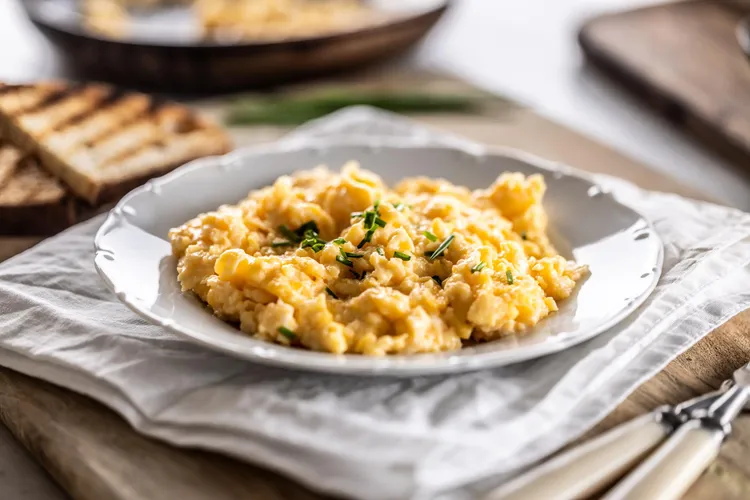
Scrambled eggs are not a single dish. They are a technique applied at three very different temperatures, producing three results that are genuinely distinct in texture, character, and best use. The French version - cooked over the lowest possible heat, stirred almost continuously, finished with crème fraîche - produces a barely-set, almost liquid, intensely rich and flavourful result that is closer to a sauce than to the eggs most people eat for breakfast. The American version - moderate heat, loose and buttery, just set - is the familiar morning preparation. The Asian version - very high heat, wok-tossed, silky and specific - is different again: lighter, more wokky, finished with sesame oil.
Understanding the temperature variable explains all three: it is not three different recipes that produce these three results. It is three different approaches to the same ingredient.
The Science: Egg Coagulation and Temperature
Egg white proteins (primarily ovalbumin) begin to coagulate at approximately 62°C. Egg yolk proteins begin to coagulate at approximately 65°C. Both are fully set at approximately 70°C.
In scrambled eggs, these temperatures explain everything:
Slow, low heat (French method): The eggs reach 62-65°C very slowly, over several minutes. The proteins coagulate gradually into very small, very soft curds - the texture is smooth, almost continuous, barely set. Removing from heat just before they appear done (at approximately 63°C) and finishing with cold crème fraîche stops the cooking before the proteins tighten.
Moderate heat (American method): The eggs reach 70°C more quickly. The curds are slightly larger and more distinct, the texture firmer but still soft. Removing from heat just before fully set allows carryover cooking to finish the eggs correctly.
High heat (Asian method): The eggs hit a very hot, oiled surface and coagulate almost instantly - large, irregular, slightly crispy-edged curds that are somehow simultaneously light and rich. The wok heat produces the specific texture and flavour (the "wok hei" - breath of the wok) that lower heat cannot replicate.
Method 1: The French Scrambled Egg (Œufs Brouillés)
The silkiest, most technically demanding, most rewarding of the three
French scrambled eggs are not what most people eat for breakfast. They are slow, attention-requiring, and produce a result with a texture closer to a very soft, flowing custard than to conventional scrambled eggs. They are worth knowing because they represent the absolute limit of what scrambled eggs can be texturally - and because the technique, once mastered, produces one of the most luxurious simple preparations in cooking.
Ingredients (Serves 2)
- 4 large eggs, at room temperature
- 20g unsalted butter, cold, cut into small cubes
- 2 tbsp crème fraîche (or soured cream) - added at the very end to stop cooking and add richness
- Fine sea salt
- White pepper (black pepper visible in pale eggs - a French kitchen aesthetic consideration)
- Optional: fresh chives or tarragon, finely chopped, to finish
Method
Step 1: Crack the eggs into a cold saucepan. Do not whisk them before cooking - the whisking in the pan is the technique. Add the cold butter cubes.
Step 2: Place the pan over the lowest possible heat - the smallest burner at minimum, or use a heat diffuser. The temperature throughout the cooking should never make the eggs hiss or spit. The pan should be barely warm when you first place your hand near it.
Step 3: Stir the eggs continuously with a heatproof spatula, scraping the base and sides of the pan, as the butter melts and the eggs slowly begin to thicken. Continuous stirring keeps the temperature even and prevents large curds from forming.
Step 4: If the eggs begin to cook too fast at any point (if they start to stick, hiss, or form obvious curds on the base), remove the pan from heat entirely and continue stirring off the heat. Return to the heat. This on-and-off-heat technique is the French scrambled egg's defining approach - the cook controls the temperature by moving the pan rather than adjusting the burner.
Step 5: The process takes 8-12 minutes. Continue stirring until the eggs reach the consistency of thick, flowing yogurt - they should coat the spatula and form slow, continuous ribbons when the spatula is lifted. At this point, the eggs look slightly underdone.
Step 6: Remove from heat completely. Add the crème fraîche immediately - it is cold and stops the cooking. Stir to incorporate. Season with salt and white pepper. The residual heat will continue to set the eggs very slightly as you plate.
Step 7: Serve immediately on warm plates. French scrambled eggs wait for no one - they continue to set even off heat.
Serve on: Toasted brioche, with smoked salmon, with caviar (the classic luxury preparation), or on its own to appreciate the technique.
Method 2: The American Scrambled Egg
The familiar morning preparation - done correctly, which most people haven't experienced
American scrambled eggs at their best are soft, buttery, loosely curdled, and barely set - not the dry, overcooked, slightly rubbery version that most people associate with scrambled eggs. The version produced by correct technique (slightly higher heat than French, but still lower than instinct suggests, and removed from heat before they appear done) is the preparation most people are trying to make and usually overcooking.
Ingredients (Serves 2)
- 4 large eggs
- 2 tbsp whole milk or double cream - adds moisture and slightly dilutes the proteins, producing softer curds
- 20g unsalted butter
- Fine sea salt and black pepper
Method
Step 1: Whisk the eggs and milk together vigorously until completely combined and slightly frothy. Season with a pinch of salt.
Step 2: Heat a non-stick pan over medium-low heat. Add the butter and allow it to melt and foam.
Step 3: Pour the egg mixture into the pan. Leave it undisturbed for 20-30 seconds until the edges begin to set slightly.
Step 4: Use a spatula to fold the set edges toward the centre, allowing liquid egg to flow to the outside. Continue this folding motion - not stirring, folding - every 15-20 seconds.
Step 5: Remove from heat when the eggs still look slightly underdone - glossy, with some liquid egg still visible. The carryover heat of the pan and the residual heat in the eggs will continue cooking them for 30-45 seconds off heat, bringing them to the correct barely-set consistency.
Step 6: Season with salt and black pepper. Serve immediately.
The most common error: Continuing to cook until they look done in the pan. At that point, they are overcooked - the carryover heat will take them to dry and rubbery. Pull them at glossy and slightly wet; eat them at perfectly soft.
Method 3: The Asian Scrambled Egg (中式炒蛋 / 玉子炒め)
High heat, wok, sesame oil - a completely different texture and flavour from either Western method
Asian scrambled eggs - found in Chinese, Japanese, Korean, and other East Asian cooking traditions, each with their specific variations - are characterised by very high heat, a very hot wok or pan, and a small amount of sesame oil as the finish. The result has large, irregular curds with slightly crispy edges, a lighter texture than either French or American, and a specific flavour from the sesame and the wok heat that is impossible to replicate without those elements.
Ingredients (Serves 2, as part of a larger meal)
- 4 large eggs
- 1 tbsp light soy sauce - seasons the eggs from within
- 1 tsp sesame oil - for finishing
- 1 tsp Shaoxing rice wine (optional but traditional in Chinese preparations) - adds a specific depth
- 2-3 tbsp neutral oil (sunflower, vegetable) - needs high smoke point for wok temperature
- 2 spring onions, thinly sliced
- Optional additions: small cooked prawns, crab meat, tomato (very traditional pairing in Chinese cooking - tomato and egg stir-fry is one of the most common home dishes in China)
Method
Step 1: Whisk the eggs with the soy sauce and Shaoxing wine until fully combined.
Step 2: Heat a wok over the highest possible heat for 2 minutes until smoking. Add the neutral oil - it should shimmer and smoke immediately.
Step 3: Add the spring onions. Stir for 10 seconds.
Step 4: Pour the egg mixture in all at once. Leave for 5 seconds - the bottom will set rapidly and puff slightly from the wok's intense heat.
Step 5: Fold the set bottom over itself - large, dramatic folds rather than the gentle scraping of the Western methods. The eggs should cook rapidly, in approximately 30–45 seconds total.
Step 6: Remove from heat while still visibly slightly underdone. Add the sesame oil - it hits the hot eggs and releases its aroma immediately.
Step 7: Serve immediately over rice or alongside other dishes.
The wok heat is not optional. An Asian scrambled egg made in a cold or warm pan produces something closer to the American method with soy sauce - pleasant but not the same preparation. The very high wok heat is what produces the large, irregular, slightly crispy-edged curds and the specific flavour of wok-cooked eggs.
The Comparison at a Glance
| French | American | Asian | |
|---|---|---|---|
| Heat | Lowest possible | Medium-low | Maximum |
| Texture | Silky, almost liquid | Soft, loose curds | Large, irregular, slightly crispy |
| Time | 8-12 minutes | 3-5 minutes | 30-60 seconds |
| Character | Rich, custard-like | Familiar, buttery | Light, wokky, specific |
| Serve with | Brioche, smoked salmon | Toast, bacon | Rice, as part of a meal |
| Difficulty | Highest (patience) | Medium | Highest (speed) |
The Best Eggs for Scrambling
Fresh eggs with orange-yellow, firm yolks produce more flavourful scrambled eggs than pale, liquid yolks from stressed or poorly fed hens. The difference is visible in the colour and detectable in the flavour. Source the best eggs available - for a preparation where the egg is the entire dish, the quality of the egg matters more than in preparations where it is one of many components.
Free-range, pasture-raised eggs (with bright orange yolks) produce measurably more flavourful scrambled eggs than standard eggs. The difference is most noticeable in the French method, where nothing beyond the egg, butter, and crème fraîche exists to add flavour.
Pro Tips
- The pan temperature is the single most important variable. All three methods fail at the wrong temperature. French eggs cooked too fast are American eggs. American eggs cooked too fast are rubbery. Asian eggs cooked too slowly are American eggs with soy sauce.
- Never add salt before cooking for French or American methods. Salt added to raw eggs before cooking draws moisture out through osmosis and can produce a slightly watery result. Season at the end.
- Cold crème fraîche stops the French eggs exactly. Its coldness immediately drops the pan temperature and its fat content provides a final enrichment simultaneously. Have it measured and ready before the eggs go in.
- The wok hei element: The specific flavour of wok-cooked eggs - sometimes described as "breath of the wok" - comes from the Maillard reaction products produced at very high heat in a well-seasoned wok. A non-stick pan at high heat produces a version; a seasoned carbon steel wok at maximum heat produces the genuine article.
The Universal Scrambled Egg Error: Cooking Until Done Scrambled eggs removed from heat when they look done are overcooked by the time they reach the table - carryover cooking from the pan's residual heat continues for 30–60 seconds off heat. All three methods require removing the eggs from heat when they still appear slightly underdone: French eggs should look barely thickened; American eggs should show visible liquid; Asian eggs should look wet in the centre when folded. Trust the carryover. Remove early, serve immediately.
FAQ
Q: Should I add milk to scrambled eggs?
For the American method: yes - milk or cream slightly dilutes the proteins, producing softer, more tender curds. For the French method: no - pure egg and butter is the traditional preparation; crème fraîche is added at the end. For the Asian method: no - the additional liquid reduces the wok temperature and prevents the rapid cooking that produces the characteristic texture.
Q: How do I prevent scrambled eggs from becoming watery?
Watery scrambled eggs come from two sources: pre-salting (draws out moisture before cooking) or overcooking (the proteins squeeze out water as they over-tighten). Season at the end, not before. Remove from heat before they look done.
Q: Can I make these in the microwave?
The American method can be approximated in a microwave - 2 minutes at 50% power, stopping and stirring every 30 seconds. The result is acceptable and faster than hob cooking. The French and Asian methods cannot be replicated in a microwave - their defining characteristics (continuous stirring and very low heat; very high wok heat) are impossible to achieve in a microwave environment.
🔗 Continue Learning
- How to Poach an Egg: The Foolproof No-Fail Technique
- How to Make Mayonnaise (and Why Emulsification Works)
- How to Brown Butter: The 5-Minute Flavour Upgrade
- The Art of Seasoning: Salt, Acid, Fat, and Heat
- Flour, Butter, Eggs, Sugar: What Every Baking Ingredient Actually Does
- Knife Skills & Kitchen Techniques: The Complete Guide
Latest