How to Create Professional Pastry Cream (Crème Pâtissière) at Home
Pastry cream may seem like a bakery-only skill, but with the right technique, it’s surprisingly achievable at home. This smooth, rich custard is the foundation of countless classic desserts, from éclairs to fruit tarts. Once you understand how heat, timing, and texture work together, making professional-quality crème pâtissière becomes second nature.
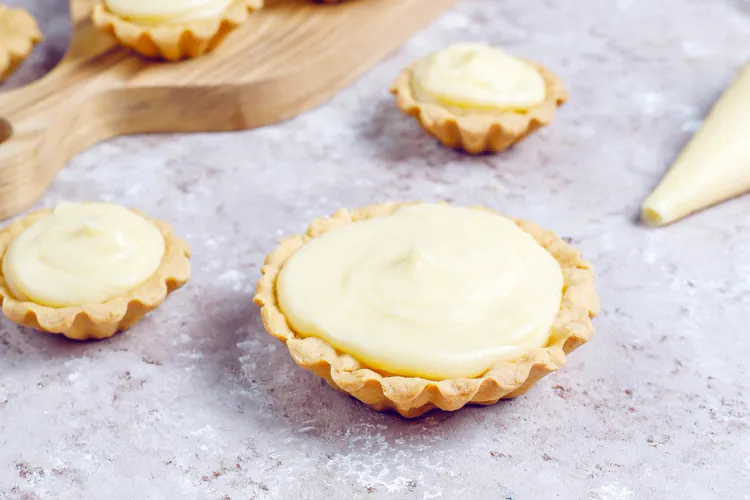
Pastry cream, or crème pâtissière, is one of the most important building blocks in classic baking. It’s the silky filling tucked inside éclairs, the smooth layer beneath fruit tarts, and the rich center that transforms simple pastries into bakery-worthy desserts. While it may sound like something reserved for pastry chefs in starched jackets, professional-quality pastry cream is entirely achievable at home. With a clear understanding of heat, timing, and texture, you can make a cream that’s glossy, stable, and deeply flavorful - no shortcuts, no graininess, no guesswork.
At its heart, pastry cream is a custard thickened with starch, usually cornstarch or flour, and stabilized by eggs. What makes it different from sauces or puddings is its balance: thick enough to hold its shape when piped, yet soft and smooth on the palate. Achieving that balance starts with proper heating and careful control. Milk is gently warmed to extract flavor from vanilla, while eggs and sugar are whisked together until pale. This step matters more than it seems. Sugar begins dissolving immediately, protecting the eggs from curdling and creating a smooth base before heat ever enters the picture.
Tempering is the moment where many home cooks go wrong, but it’s also where professional results are made. Hot milk must be added gradually to the egg mixture while whisking constantly. This slow introduction of heat raises the temperature of the eggs gently, preventing scrambling. Once combined, the mixture returns to the stove and is cooked with steady whisking until it thickens. This isn’t a passive step - you must stay present. As the custard heats, starch granules swell and burst, thickening the cream rapidly. The transformation happens quickly, and once it does, the cream must be cooked just long enough to eliminate any starchy taste without overheating and breaking the emulsion.
One of the defining characteristics of professional pastry cream is its smoothness. Lumps are not optional - they’re unacceptable. This is why continuous whisking and proper heat control matter so much. If the heat is too high, the eggs overcook before the starch fully gelatinizes. If it’s too low, the cream won’t thicken evenly. The goal is a slow, controlled boil - just a few bubbles - followed by 30 to 60 seconds of cooking to stabilize the structure. At this point, the pastry cream should fall from the whisk in thick ribbons and hold soft peaks.
Butter is often added at the end, not for thickness, but for silkiness and shine. It rounds out the flavor and creates that luxurious mouthfeel associated with high-end pastries. Adding butter while the cream is hot ensures it emulsifies fully, producing a glossy, cohesive texture. For extra refinement, professional pastry chefs often strain the cream through a fine sieve, removing any tiny bits of cooked egg and ensuring a perfectly smooth result.
Cooling pastry cream properly is just as important as cooking it. If left uncovered, it forms a skin that ruins texture. Pressing plastic wrap directly onto the surface prevents this and preserves moisture. Rapid cooling in the refrigerator helps set the structure and prevents bacterial growth. Once chilled, pastry cream will be firm but spoonable. Before using, it should be gently whisked to restore its smooth consistency. Overwhipping at this stage can cause it to loosen too much, so care is key.
Pastry cream’s versatility is part of its magic. By infusing the milk with citrus zest, coffee beans, or spices, you can customize flavor without altering structure. Fold in whipped cream, and you’ve made crème légère. Add melted chocolate, and it becomes crème pâtissière au chocolat. Stir in butter and chill longer, and it becomes a stable filling for layered cakes. Mastering the base recipe opens the door to countless variations - all built on the same foundational technique.
Troubleshooting pastry cream comes down to understanding what went wrong. If it’s too thin, it likely wasn’t cooked long enough. If it’s grainy, the heat was too high or the eggs overcooked. If it tastes starchy, it needs more time on the heat. These are not failures; they’re adjustments. Every batch teaches you how pastry cream behaves, and with practice, the process becomes second nature.
Creating professional pastry cream at home is about more than following a recipe - it’s about controlling temperature, timing, and texture with intention. Once you master this foundational skill, you gain confidence across countless desserts. Éclairs, cream puffs, tarts, mille-feuille, and layered cakes all become attainable. And when you spoon out a perfectly smooth, vanilla-scented crème pâtissière that pipes cleanly and tastes impossibly rich, you’ll realize that professional pastry isn’t about fancy tools - it’s about technique.
Latest