Matcha Tahini Bliss Balls: The Snack Everyone's Making
No bake. Five ingredients. Fifteen minutes. The snack you'll make every Sunday for the rest of your life.
There is a category of recipe that earns permanent residency in your kitchen - not because it's technically impressive or because it photographs dramatically, but because it solves a problem so reliably and so deliciously that you keep making it without being asked.
These are that recipe.
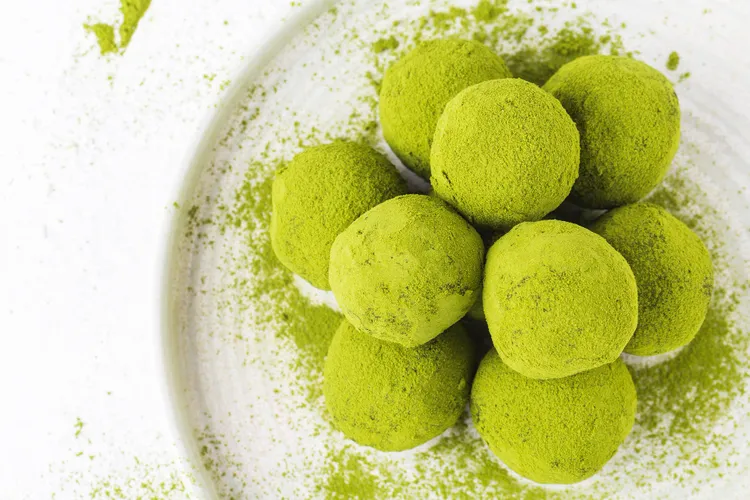
Matcha tahini bliss balls are the Sunday meal-prep snack that takes fifteen minutes, produces twenty snack-sized bites, and disappears from the fridge by Thursday. The flavor is complex for something so simple: the earthy depth of matcha and the rich, slightly bitter nuttiness of tahini are natural companions - the same pairing at the heart of our Matcha and Sesame Cookies - bound together with oats, honey, and a pinch of sea salt into something that tastes like it took considerably more effort than it did.
They are also, genuinely, a very good snack. Not just "good for a healthy snack" - good full stop. Satisfying enough to replace a mid-morning biscuit or afternoon chocolate, energising enough to take to the gym, small enough to eat two without guilt and interesting enough that you usually want to.
Matcha grade in no-bake snacks: Because there's no heat, the flavor of your matcha comes through with full clarity and no moderation. Use a mid-grade culinary or entry-level ceremonial - something clean and pleasant rather than harsh. See Matcha 101: Why Not All Green Powders Are Created Equal for the full breakdown.
Why Tahini and Matcha Are Made for Each Other
The pairing appears two times in this collection: the Matcha and Sesame Cookies, and here. It keeps returning because it keeps working.
Tahini is sesame paste - made from toasted sesame seeds ground to a smooth, oily consistency. Its flavor is nutty, slightly bitter, and rich in a way that nut butters aren't quite. Like matcha, it has an earthy complexity. Like matcha, it is faintly bitter. And like matcha, that bitterness becomes interesting rather than unpleasant in the right context.
In a bliss ball, the two ingredients meet on equal terms. Neither overwhelms. The honey brings sweetness. The oats bring body. The sea salt - the ingredient that most recipes get wrong by omitting it - amplifies both the matcha and the tahini and makes the whole thing more present and more satisfying than it would be without it.
Ingredients
Makes approximately 18-20 balls
The Base
- 160g rolled oats - blended to a coarse flour, or left whole for a chewier texture (see method note)
- 120g tahini, well-stirred - runny, smooth tahini gives the most even distribution; thick, separated tahini makes the mix dry and crumbly
- 60ml honey or maple syrup - start with 50ml and add more to taste
- 12g culinary or entry-level ceremonial matcha (about 2.5 tsp), sifted
- ½ tsp fine sea salt - this is the ingredient that makes the difference between good and extraordinary
- 1 tsp vanilla extract
Optional Add-ins (Choose One or Combine)
- 40g white chocolate chips - pockets of sweetness against the earthy base
- 40g desiccated coconut, stirred through or for rolling
- 30g black sesame seeds - stirred through the mix or rolled on the outside for visual and textural drama
- 40g dark chocolate chips - for a more bittersweet, complex version
- 30g hemp seeds or chia seeds - for additional nutrition without changing the flavor
For Rolling (Optional)
- Extra matcha powder, dusted through a fine sieve
- Finely ground desiccated coconut
- Crushed toasted sesame seeds
- Cacao powder - creates a dark, sophisticated exterior
Method
Total time: 15 minutes active + 30 minutes chilling
Step 1: Blend the oats (optional but recommended) For a smoother, more cohesive bliss ball, blend 120g of the rolled oats in a food processor or blender for 20-30 seconds until they resemble a coarse flour. Leave the remaining 40g whole for texture. If you prefer a chewier, more textured result, skip the blending and use all oats whole.
Step 2: Combine dry ingredients In a large mixing bowl, combine the blended oat flour, whole oats (if using), sifted matcha, and sea salt. Whisk together until the matcha is evenly distributed - any pockets of unmixed matcha will create bitter spots in the finished balls.
Step 3: Add wet ingredients Add tahini, honey, and vanilla to the dry ingredients. Mix with a spatula or your hands until a uniform, cohesive dough forms. The mixture should hold together when pressed - if it crumbles, add honey a teaspoon at a time. If it's too sticky to handle, add a tablespoon of oats.
Texture check: Press a small amount between two fingers. It should hold together without crumbling and release cleanly without sticking aggressively to your hands. This is the consistency you're looking for before adding any optional ingredients.
Step 4: Fold in add-ins Add any optional ingredients - white chocolate chips, sesame seeds, coconut - and fold through until evenly distributed.
Step 5: Chill the mixture Cover the bowl and refrigerate for 20-30 minutes. Chilled mixture is significantly easier to roll - at room temperature the tahini makes it slightly soft and sticky. The chill time is worth it for clean, round balls.
Step 6: Roll Using slightly damp hands - or lightly oiled hands if the mixture is sticky - scoop portions of approximately 25-30g each (about the size of a large cherry) and roll between your palms into smooth balls. Place on a parchment-lined tray.
If coating: roll immediately in your chosen coating - matcha, coconut, sesame, or cacao - before the surface dries.
Step 7: Chill to set Return the rolled balls to the fridge for at least 30 minutes before eating. The final chill firms the structure and deepens the flavors. Balls eaten too soon taste pleasant but slightly raw; properly chilled balls have a more developed, complex flavor.
The Flavor Development Note
This recipe rewards waiting. The balls taste good immediately after chilling. They taste better after 12 hours in the fridge. And they taste best on day two or three, when the matcha has had time to fully permeate the oats and the honey has settled through the tahini.
This is not just perception - the same phenomenon occurs with Matcha and Sesame Cookies (which we deliberately recommend making 48 hours ahead), Matcha Overnight Oats, and Matcha White Chocolate Truffles. Matcha's flavor compounds continue integrating with surrounding fats and starches over time, producing a more cohesive, more complex flavor than fresh-made gives.
Make these on Sunday. Eat the best ones on Tuesday.
Meal Prep System
This recipe was designed for weekly meal prep. Here is how to integrate it:
Sunday batch: One recipe makes 18-20 balls. Stored in an airtight container in the fridge, they last for 10 days. One ball is a satisfying snack. Two balls is a small meal replacement.
Doubling: The recipe doubles perfectly. A double batch (36-40 balls) provides snacks for two people for the full week - or one person with a generous snacking habit.
Freezing: Bliss balls freeze brilliantly. After the final chill, place on a tray in the freezer for 1 hour to firm individually, then transfer to a zip-lock bag. Frozen balls keep for 3 months. Remove one or two the night before and leave in the fridge to defrost, or leave at room temperature for 20 minutes.
Weekly variation: Make the same base recipe but rotate the add-ins and coating each week - white chocolate one week, black sesame the next, coconut the week after. The base stays the same; the experience changes.
6 Variations
The Classic
Base recipe with black sesame seeds stirred through and rolled in crushed toasted sesame. The most visually striking version - pale green balls with visible black seeds, rolled in more seeds for a speckled, dramatic exterior. The flavor is the purest expression of the matcha-sesame pairing.
White Chocolate Matcha Bliss Balls
Fold 50g of finely chopped white chocolate into the base. Roll in sifted matcha powder. The white chocolate melts slightly against the warmth of your hands as you roll, creating a slightly marbled interior. Refrigerate immediately to re-firm. The flavor is the same beloved combination from Matcha White Chocolate Truffles in a simpler, less technical format.
Coconut Matcha Bliss Balls
Add 40g of finely desiccated coconut to the base and roll the finished balls in more coconut. The coconut adds sweetness, a slight chew, and a tropical note that lifts the earthiness of the matcha. Use coconut oil in place of up to 30g of the tahini for an even more pronounced coconut character.
Chocolate Matcha Bliss Balls
Add 30g of cacao powder to the base alongside the matcha, reducing the matcha to 8g. Roll in a mixture of cacao and matcha. The resulting ball is darker, more bittersweet, and more complex - for the person who finds the standard version too sweet or too subtle. Pair with a Warm Matcha Oat Latte with Cinnamon & Honey for a genuinely excellent afternoon snack combination.
Protein Matcha Bliss Balls
Add one scoop of vanilla protein powder (about 30g) to the base and reduce the oats by 30g to compensate. The protein powder slightly changes the texture - denser, slightly more grainy - but the flavor is good and the macros improve significantly. The post-workout version: make a batch on Sunday, take two to the gym on Monday. For more on matcha and exercise, see Matcha for Workout Recovery: What Athletes Are Drinking.
Ginger Matcha Bliss Balls
Add 1 tsp of ground ginger and ½ tsp of ground cardamom to the dry ingredients. The warm spice of ginger against the earthy matcha and sesame creates something that feels distinctly Japanese-Middle Eastern - unexpected, very grown-up, and addictive in the way that slightly unusual flavor combinations often are. Roll in finely chopped crystallised ginger if you can find it.
Troubleshooting
The mixture is too dry and crumbly: The tahini is too thick, or there isn't enough of it. Add honey a teaspoon at a time and mix. If the tahini is the thick, separated kind where the oil has risen to the top and the paste is dense at the bottom - stir it thoroughly before measuring, or warm it briefly in the microwave to loosen.
The mixture is too wet and sticky to roll: Add rolled oats a tablespoon at a time until the mixture reaches a rollable consistency. Alternatively, refrigerate for a longer period - 45 minutes rather than 20 - until the mixture firms enough to handle.
The balls are falling apart: Usually means the mixture was rolled before chilling. Refrigerate the mixture, then roll. The chill makes the honey and tahini set slightly, binding the mixture.
The matcha flavor isn't coming through clearly: Either the powder is stale, the grade is too mild for the strong base, or the ratio needs adjusting. Add an additional ½ tsp of matcha to the next batch. Also check that the matcha was sifted - unsifted matcha doesn't distribute evenly and can taste patchy.
Nutrition Notes (Per Ball, Approximate)
| Nutrient | Amount |
|---|---|
| Calories | ~110 kcal |
| Protein | ~3g |
| Fat | ~6g (predominantly unsaturated, from tahini) |
| Carbohydrates | ~12g |
| Fiber | ~1.5g |
| Sugar | ~5g (from honey) |
The tahini provides a significant portion of the fat content - predominantly monounsaturated and polyunsaturated fats - alongside calcium, iron, and B vitamins. The matcha contributes antioxidant polyphenols (EGCG) and the L-theanine that gives matcha its calm energy properties. The oats provide slow-release carbohydrates and soluble fiber (beta-glucan).
These are not a diet food. They are a snack made of real ingredients that does what a good snack should: provides actual energy, genuine satiety, and a flavor that makes you look forward to eating them.
Pro Tips
- Stir your tahini before measuring. Natural tahini separates in the jar - oil on top, dense paste below. Stir until fully combined before measuring. Unmixed tahini produces uneven texture and inconsistent flavor.
- Damp hands. Not wet - damp. A quick pass under cold water and a gentle shake, then roll. This prevents sticking without making the balls wet. Re-dampen after every 3-4 balls.
- Sift the matcha every time. Even if it looks clump-free in the tin, sift it directly into the dry ingredients. A pocket of undissolved matcha creates an unpleasantly bitter bite in an otherwise balanced ball.
- Taste the mixture before rolling. This is your last chance to adjust. Does it need more honey? More matcha? More salt? Adjust now, before you've committed to 20 balls of a mixture that's slightly off.
- Consistent size. Use a kitchen scale or a tablespoon measure for each portion - consistently sized balls look more professional, chill more evenly, and are easier to track for portion control if that matters to you. A 25g portion is the standard; 30g if you want something more substantial.
Common Mistake: Under-Salting The single most common reason these balls taste one-dimensional is insufficient salt. A full ½ tsp of fine sea salt sounds like a lot for a snack recipe - it isn't. Salt suppresses bitterness (which makes the matcha taste cleaner and rounder), amplifies sweetness (which makes the honey more present), and intensifies the nuttiness of the tahini. Without it, the balls are fine. With it, they are excellent. Use the full amount.
FAQ
Q: Can I make these nut-free?
Yes - the base recipe contains no nuts. Tahini is sesame seed paste, not a nut butter. All the add-ins listed are nut-free as written. If you're making these for someone with a nut allergy, check your protein powder and any other add-ins for nut contamination warnings, as manufacturing cross-contamination is possible.
Q: Can I use almond butter or peanut butter instead of tahini?
Yes, with a flavor caveat. Almond butter produces a milder, sweeter result - the matcha flavor is more prominent. Peanut butter produces a more assertive result - the peanut is present alongside the matcha and can dominate. Both work technically; neither produces the same matcha-sesame harmony as tahini. If you don't have or don't like tahini, almond butter is the closest substitute.
Q: Are these suitable for children?
Yes, with the matcha amount halved to 1.5 tsp (approximately 6g) to reduce caffeine. Children tend to like the sweetness and the texture - the matcha flavor at half-strength reads as earthy and interesting rather than assertive. The L-theanine at this dose is harmless and may actually be beneficial.
Q: Can I use quick oats instead of rolled oats?
Technically yes, but quick oats absorb liquid faster and produce a denser, slightly pastier texture. Rolled oats give better texture - chewier in the whole-oat version, more flour-like in the blended version. If quick oats are all you have, use 10% less and check the texture carefully before chilling.
Q: How do I know when the mixture is the right consistency?
Press a golf-ball sized portion in your palm and squeeze. It should hold a clean shape and release from your hand without leaving much residue. Too sticky = needs more oats. Falls apart = needs more honey. Holds shape but is dry on the surface = perfect, chill and roll.
🔗 Continue Exploring
- Matcha and Sesame Cookies - the baked expression of this same pairing
- Matcha Energy Balls - the sister recipe in this collection
- Matcha Overnight Oats - the other Sunday meal-prep essential
- Matcha Smoothie Bowl Muffins - portable baked meal prep
- Matcha White Chocolate Truffles - same white choc pairing, more indulgent
- Matcha Coconut Ice Cream: No-Churn, No-Fuss - the black sesame ripple variation
- Matcha for Workout Recovery: What Athletes Are Drinking
- L-Theanine: The Science Behind Matcha's Calm Energy
- Warm Matcha Oat Latte with Cinnamon & Honey
- Matcha 101: Grades Explained
- The Ultimate Matcha Guide
Latest