Matcha Coconut Ice Cream: No-Churn, No-Fuss
Vivid green, deeply creamy, completely dairy-free - and fifteen minutes of actual work
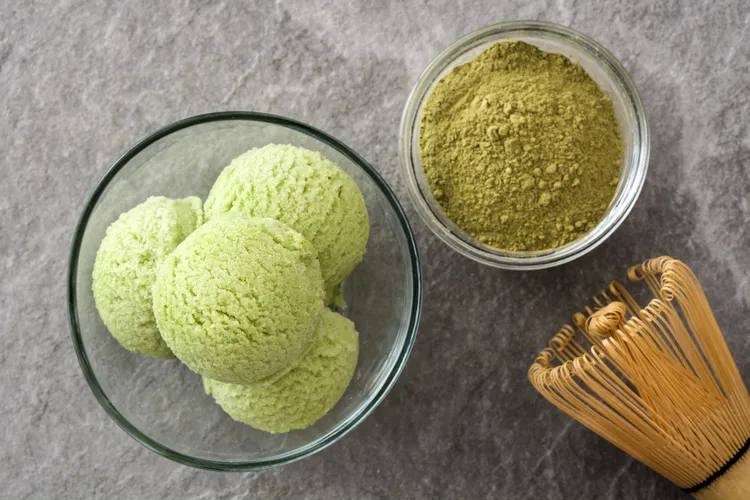
Ice cream machines are wonderful things. They also cost a significant amount of money, take up an entire shelf in the freezer, require advance planning, and produce the same result as a technique that requires none of those things - when the recipe is right.
This is the recipe that's right.
No-churn ice cream has a reputation for being a compromise: acceptable but not quite the real thing, serviceable but never extraordinary. This version disproves that reputation completely. The base - full-fat coconut cream whipped to soft peaks - produces a texture that is genuinely silky, genuinely scoopable, and genuinely creamy in a way that cheap dairy ice cream can't match. The matcha runs through it in an even, vivid green that makes every scoop look like it came from a patisserie in Kyoto. And the flavor - earthy, slightly bitter matcha against the sweet, tropical coconut cream - is one of those combinations that immediately makes sense and immediately makes you want more.
It freezes in four hours. It keeps for a month. It takes fifteen minutes of actual work. And it is, without question, one of the things we are most proud of in this collection.
The matcha you use determines the color and the flavor. In ice cream there's no heat to moderate quality differences - a harsh culinary grade will be harsh in every scoop. A good mid-grade ceremonial produces a vivid green and a clean, complex flavor. See Matcha 101: Why Not All Green Powders Are Created Equal and The Best Matcha Powders of 2025, Ranked.
Why Coconut and Matcha Are the Perfect Ice Cream Pairing
We have tested this recipe with dairy cream, oat cream, and coconut cream. Coconut cream wins, and not narrowly.
Coconut cream freezes better. The high fat content of full-fat coconut cream - approximately 17-20% compared to 10-12% in standard double cream - creates an ice cream base that stays softer and more scoopable at freezer temperature. Dairy-based no-churn ice cream becomes quite hard after 24 hours and needs to sit at room temperature for 5-10 minutes before scooping. Coconut cream bases remain much more approachable straight from the freezer.
Coconut cream tastes better with matcha. Dairy cream has a neutral, slightly grassy flavor that pairs well with matcha but doesn't add anything. Coconut cream brings sweetness, a gentle tropical note, and a fat-rich mouthfeel that makes matcha's bitterness feel rounder and more complex - the same way a good olive oil makes a herb more present rather than diluting it.
It's naturally dairy-free. Which matters not only for guests with dairy intolerances but because it keeps the ingredient list simpler and makes the tropical-Japanese flavor profile feel more coherent - coconut and matcha are both equatorial or near-equatorial crops that have been used in sweet preparations across Asia for centuries.
The No-Churn Method: How It Works
Standard ice cream requires a machine to churn the mixture as it freezes, breaking up ice crystals and incorporating air to create smoothness. No-churn ice cream achieves the same result by a different mechanism: you whip the fat into airy, stable foam before freezing, and the incorporated air does the work the machine would have done.
The critical step is whipping the coconut cream to genuinely stiff, stable peaks - not just slightly thickened, but fully whipped. This requires cold coconut cream (refrigerated overnight), a cold bowl, and patience. Under-whipped coconut cream produces dense, icy ice cream rather than the silky, scoopable result you're after.
The matcha is dissolved into a small amount of honey and warm water first, creating a paste that distributes evenly through the cream without creating pockets of undissolved powder - the ice cream equivalent of the pre-dissolve step that matters so much in whisked matcha and iced lattes.
Ingredients
Serves 6-8 | Active time: 15 minutes | Freeze time: 4 hours minimum
The Ice Cream Base
- 2 × 400ml cans full-fat coconut cream, refrigerated overnight - the fat needs to be thoroughly chilled and solid to whip properly. Do not shake the cans before opening.
- 80g icing sugar, sifted - icing sugar dissolves into the cream more smoothly than caster sugar; do not substitute
- 1 tsp pure vanilla extract
- Pinch of fine sea salt - amplifies every other flavor
The Matcha Swirl
- 12g mid-grade ceremonial matcha (about 2½ tsp), sifted
- 2 tbsp honey or maple syrup - forms the paste base
- 2 tbsp warm water at 70°C - hot enough to dissolve, cool enough not to damage the matcha
Optional Mix-ins
- 60g white chocolate, finely chopped - pools of sweetness against the earthy ice cream
- 40g toasted desiccated coconut - texture and visual contrast
- 60g dark chocolate chips - bittersweet counterpoint
- 40g candied ginger, finely chopped - unexpected and extraordinary
Method
The Night Before: Chill the Cans
Refrigerate both cans of coconut cream upright overnight - at least 8 hours. This allows the solid coconut fat to fully separate from the liquid and rise to the top of the can. Cold, separated coconut cream is the entire structural foundation of this recipe. Do not skip this step.
Day Of
Step 1: Make the matcha paste Sift matcha into a small bowl. Add honey and warm water. Whisk vigorously with a small whisk or fork for a full 60 seconds until you have a smooth, dark green paste with no lumps. Set aside to cool completely - it needs to be at room temperature before you fold it into the cream. Warm matcha paste melts the whipped cream and ruins the texture.
Step 2: Prepare the coconut cream Open the chilled coconut cream cans without shaking. Scoop the solid white coconut fat from the top of each can into a large, cold bowl - a bowl that has been in the fridge for 30 minutes is ideal. Leave behind the liquid coconut water at the bottom of the cans. Reserve this liquid for smoothies or the Matcha Coconut Cold Brew.
Step 3: Whip the coconut cream Using an electric hand mixer or stand mixer, whip the solid coconut cream on medium-high speed for 3-4 minutes until it forms stiff, glossy peaks - the texture of freshly whipped double cream. It should hold its shape when the whisk is lifted. Add sifted icing sugar, vanilla, and salt and whip for a further 30 seconds to incorporate.
Do not over-whip. Once the cream starts to look grainy or separated, you have gone too far. Stop the moment it reaches stiff peaks.
Step 4: Fold in the matcha Add the cooled matcha paste to the whipped cream. Using a large spatula, fold it in with slow, deliberate strokes - under, over, and rotate the bowl. You are not stirring. Stirring deflates the whipped air. Fold until the cream is uniformly and vividly green, with no white streaks remaining.
Fold in any mix-ins at this stage - white chocolate chips, toasted coconut, or others.
Step 5: Freeze Pour the mixture into a 900ml-1 litre freezer-safe container - a loaf tin lined with cling film, a metal container, or a dedicated ice cream tub all work well. Metal containers freeze faster and more evenly than plastic.
Smooth the top with a spatula. Press a sheet of cling film directly onto the surface to prevent ice crystal formation. Cover the container and freeze for at least 4 hours. Overnight is better - the texture improves significantly after 8+ hours as the ice cream fully sets.
Step 6: Serve Remove from the freezer 5-8 minutes before serving to allow the ice cream to soften slightly. Scoop with a warm, dry ice cream scoop - run it briefly under hot water between scoops for cleaner, rounder results.
Serve in chilled bowls if you want the ice cream to hold its shape longer.
Serving Suggestions
This ice cream is complete on its own - vivid, elegant, and flavorful enough to need nothing else. But there are pairings that elevate it further:
With Matcha Shortbread: Serve a scoop alongside two or three biscuits for the simplest, most elegant possible dessert. The crunch of the shortbread against the silky ice cream is a texture contrast that works every time.
With Matcha Financiers: Warm a financier for 20 seconds in the microwave, place on a plate, and rest a scoop of ice cream beside it. The warm butter cake melting into the cold ice cream is one of those dessert moments worth pausing for.
As a Matcha Frozen Matcha Frappé: Scoop directly into a blender with cold oat milk and blend until smooth. The coconut matcha ice cream produces an extraordinary frappe - creamier and more intensely flavored than anything made with plain ice.
Affogato-style: Pour a shot of very strong, hot matcha concentrate directly over a scoop. The hot matcha melts the ice cream at the edges while the centre stays cold - an affogato for tea people. Remarkable.
As a dessert for the Matcha Tasting Party: Serve a small scoop in a chilled bowl between tasting samples as a palate refresher, or as the dessert course after the celebration food. The dairy-free format means it works for most dietary restrictions without needing an alternative.
Decoration and Presentation
The ice cream itself is vivid enough to be striking without embellishment. But for a dinner party or special occasion, these finishing touches make it genuinely extraordinary:
Toasted coconut flakes: Press a few into the surface immediately before serving - they stay crisp for about 10 minutes before the moisture of the ice cream softens them.
White chocolate shavings: Use a vegetable peeler drawn across the flat side of a white chocolate bar to create curls. The white against the vivid green is the color contrast of the Matcha White Chocolate Cake and Matcha White Chocolate Truffles - a pairing this kitchen returns to constantly.
A dusting of matcha: Through a fine sieve over the top of the served scoop, immediately before bringing to the table. The fresh matcha dusting on the green ice cream creates depth of color that photographs extraordinarily well.
Black sesame seeds: A pinch scattered over the scoop. The visual and flavor pairing of matcha and black sesame - the foundation of Matcha and Sesame Cookies - works as a garnish too.
Fresh raspberries or passion fruit: The acidity of both cuts through the richness of the coconut cream in a way that makes the matcha flavor simultaneously brighter and more complex.
Variations
Matcha & White Chocolate Chip Coconut Ice Cream
The most crowd-pleasing version. Fold 80g of finely chopped good-quality white chocolate into the base before freezing. The white chocolate stays soft enough to chew rather than becoming hard shards - the high cocoa butter content of good white chocolate means it freezes at a lower temperature than dark chocolate. The sweetness of the white chocolate against the matcha is the same beloved pairing from the White Chocolate Truffles and White Chocolate Cake, now cold.
Matcha Coconut Ice Cream Sandwiches
Press the ice cream between two Matcha Shortbread biscuits (slightly thicker than usual - about 8mm). Wrap individually in cling film and return to the freezer for 30 minutes to firm up. These are extraordinary - the buttery, sandy shortbread against the creamy ice cream, all of it vivid green. Make a batch and store in the freezer for up to 2 weeks. They are better than anything you can buy.
Layered Matcha & Mango Ice Cream
Make the full matcha coconut base. Make a separate mango layer: blend 300g of very ripe frozen mango with 2 tbsp honey and 60ml of coconut cream until smooth. Layer alternately in the container - mango, matcha, mango, matcha - and swirl once with a skewer for a marble effect. The vivid green and vivid orange, layered, is visually dramatic and the flavor combination is genuinely tropical and wonderful.
Matcha Black Sesame Ripple
Make the matcha base. Blend 60g of toasted black sesame seeds with 3 tbsp honey and 2 tbsp coconut cream until a smooth paste forms (a small food processor or high-speed blender works best). Drop spoonfuls of the sesame paste over the poured matcha ice cream and swirl with a skewer before freezing. The result is a rippled, dramatic ice cream that combines the two flavors at the heart of Matcha and Sesame Cookies in frozen form.
Hojicha Coconut Ice Cream
Replace the matcha entirely with 15g of hojicha powder - the roasted Japanese green tea with a warm, caramel-like character. The resulting ice cream is a deep, muted brown with a flavor that is simultaneously familiar and surprising: caramel, roasted grain, and the faintest tea bitterness. A wonderful variation for people who find matcha too assertive, and a beautiful contrast scoop served alongside the matcha version. For more on hojicha, see The Beginner's Guide to Japanese Tea.
Storing and Serving Notes
In the freezer: Up to 6 weeks in a sealed container with cling film pressed against the surface. After 6 weeks the texture starts to degrade - ice crystals form and the smooth, scoopable consistency becomes slightly granular.
Scoopability: Coconut cream ice cream is more scoopable than dairy ice cream at freezer temperature, but still benefits from a 5-8 minute rest on the counter before serving. A warm scoop dipped in hot water between each portion makes clean, round scoops much easier.
After refreezing: If the ice cream partially melts (during transport or a power outage), do not refreeze. The whipped structure collapses on melting and does not reform - the result is a dense, icy block rather than smooth ice cream. Eat what's left immediately.
The liquid from the cans: The coconut water left in the cans is genuinely useful. Add it to smoothies, use it as the base for a cold brew matcha, or freeze it in an ice cube tray for coconut water ice cubes that melt into cold drinks without diluting them.
Pro Tips
- The overnight chill is non-negotiable. Barely-chilled coconut cream whips to a soft, unstable foam that collapses as soon as anything is folded in. Fully chilled, separated coconut fat whips to stiff, glossy peaks that hold throughout folding and freezing. Plan ahead.
- Brand matters for coconut cream. Some brands produce much more solid fat than others. Brands with 70%+ coconut extract content (check the label) produce the best results. Avoid "light" coconut cream entirely - it doesn't have enough fat to whip.
- Metal container, faster freeze. A metal loaf tin or baking tin conducts cold far more efficiently than plastic tubs. Line with cling film for easy removal and use metal when possible.
- Press cling film to the surface. Air exposure causes ice crystal formation and a slight frost layer that ruins the texture. Cling film pressed directly against the surface prevents this completely.
- Taste the base before freezing. Freezing dulls sweetness slightly - the ice cream should taste marginally sweeter than you want the finished result to be. If it tastes perfectly balanced unfrozen, add a little more icing sugar.
Common Mistake: Under-Whipping the Coconut Cream The most frequent failure of no-churn ice cream is a dense, icy result - caused by coconut cream that was not whipped to genuinely stiff peaks before the matcha was folded in. Three minutes of whipping feels like enough. It usually isn't. Go to four. The cream should hold a firm peak that barely moves when the bowl is tilted - not soft, floppy waves.
FAQ
Q: Can I use coconut milk instead of coconut cream?
No - coconut milk has a much lower fat content than coconut cream and will not whip. The recipe requires the full-fat solid from canned coconut cream specifically. If your coconut cream doesn't separate when chilled (leaving a solid layer of fat on top), the brand you're using likely doesn't have sufficient fat content - try a different brand.
Q: Can I add dairy cream to this recipe?
Yes - replacing one of the two cans of coconut cream with 400ml of very cold double cream produces an excellent hybrid result: slightly richer, slightly creamier, and still vividly matcha-green. Whip both creams together and proceed exactly as above.
Q: My ice cream came out icy and grainy, not smooth. What went wrong?
Three possible causes: the coconut cream wasn't chilled sufficiently (fat not properly separated), it wasn't whipped to stiff enough peaks, or the matcha paste was too warm when folded in and partially melted the whipped structure. All three result in dense, icy ice cream rather than smooth. Remake with overnight-chilled cans, whip aggressively to stiff peaks, and ensure the matcha paste is completely cooled before folding.
Q: Is this actually vegan?
Yes, if you use maple syrup instead of honey in the matcha paste and ensure your matcha powder is from a brand with no added ingredients (all pure matcha is vegan - but some flavored versions are not). Everything else in the base recipe is plant-based.
Q: Can I make this in an ice cream machine?
Yes, but it doesn't need one. If you have a machine, skip the whipping step and churn the combined base (unwhipped coconut cream + matcha paste + sugar + vanilla) in the machine according to manufacturer's instructions. The result is equally good - but the no-churn method produces results good enough that the machine is unnecessary.
🔗 Continue Exploring
- Matcha Shortbread - serve alongside or make into ice cream sandwiches
- Matcha Financiers - warm beside the cold scoop
- Matcha White Chocolate Truffles - the same white chocolate pairing, cold
- Matcha and Sesame Cookies - for the black sesame ripple variation
- Matcha White Chocolate Cake
- Matcha Mochi Brownies - serve warm alongside a cold scoop
- Cold Brew Matcha - use the reserved coconut water
- Iced Matcha Season: Your Complete Cold Drink Guide
- How to Host a Matcha Tasting Party - this ice cream belongs on the dessert table
- The Beginner's Guide to Japanese Tea - for the hojicha variation
- Matcha 101: Grades Explained
- The Ultimate Matcha Guide
Latest