Searing vs. Roasting vs. Braising: Which Method Makes Food Taste Better?
When people ask “What’s the best way to cook chicken?” or “Why does restaurant meat taste so much better?” the answer almost always starts with this: It’s less about what you cook, and more about how you cook it. When someone understands basic cooking methods - especially searing, roasting, and braising - the food becomes more flavorful, more satisfying, and often more nutritious too.
Why Cooking Method Matters So Much
Cooking method affects:
-
Flavor - how deeply browned, smoky, sweet, or savory something tastes
-
Texture - tender, chewy, crispy, juicy, or dry
-
Nutrition - how well nutrients are preserved or lost
-
Satisfaction - that “wow, this is good” feeling that prevents random snacking later
Searing, roasting, and braising all use heat in different ways to transform food. None of them is “the best” across the board - they shine with different ingredients and different outcomes.
Think of them as tools in your toolbox. Your job isn’t to pick a favorite; it’s to choose the right tool for the job.
What Is Searing?
Searing is cooking food quickly at high heat to create a deeply browned, flavorful crust on the outside.
You’ll usually sear foods in:
-
A hot skillet (cast iron is ideal)
-
A stainless steel pan
-
A grill or broiler (for a similar effect)
You’ll know you’re searing correctly if:
-
The pan is really hot before the food goes in
-
The food sizzles loudly the moment it hits the pan
-
You get deep golden brown or brown-black edges (not pale gray!)
What Searing Does Best
-
Creates a flavorful crust through the Maillard reaction (browning of proteins and sugars)
-
Adds a restaurant-style flavor to steaks, burgers, pork chops, tofu, salmon, and more
-
Locks in a feeling of juiciness by developing a flavorful exterior (not literally sealing, but it makes eating experience juicier)
-
Builds a flavor foundation for sauces, gravies, or braises
You’ll often:
-
Sear first
-
Then finish cooking with another method (like roasting or braising)
When to Use Searing
Searing is great when you want:
-
Bold, savory flavor
-
Contrast between crispy outside and tender inside
-
A quick cook for thinner cuts
Best foods to sear:
-
Steaks, pork chops, lamb chops
-
Chicken thighs or breasts (often then finished in the oven)
-
Salmon, tuna, and firm fish
-
Tofu or tempeh
-
Thick slices of cauliflower or hearty vegetables
Nutrition Perspective: Searing
From a nutritionist’s view:
-
High heat can create compounds when food is charred, so aim for deep brown, not black burned.
-
Searing uses a small amount of fat, which can be healthy if you use stable oils like avocado oil, ghee, or olive oil at moderate heat.
-
Because searing is fast, it often preserves more nutrients than long boiling or overcooking.
What Is Roasting?
Roasting means cooking food in the oven with dry heat, usually at medium to high temperatures (around 180–230°C / 350–450°F).
You’re familiar with roasting if you’ve ever made:
-
Roasted vegetables
-
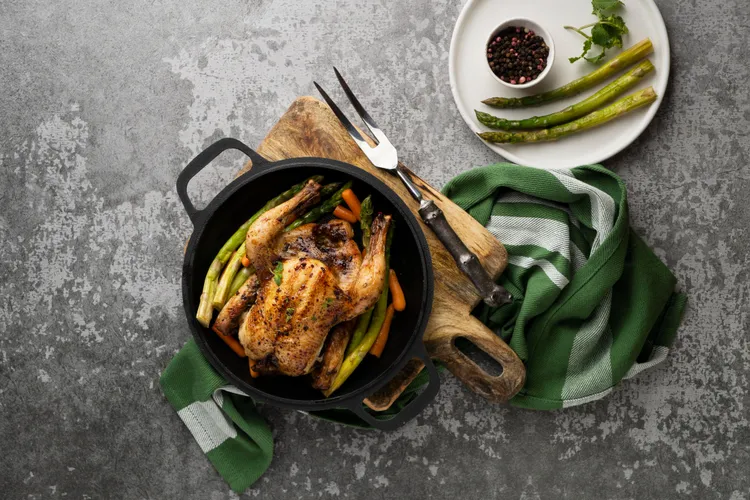
Roast chicken
-
Baked potatoes
-
Sheet pan dinners
Roasting is like giving your food a mini sauna session with hot, dry air. It browns the outside and softens the inside.
What Roasting Does Best
-
Caramelizes natural sugars → sweet, nutty, rich flavors
-
Creates crispy edges and tender interiors
-
Cooks larger pieces of food evenly
-
Requires minimal hands-on time (great for busy evenings!)
Roasting is the method that turns:
-
Carrots into candy-like bites
-
Brussels sprouts into crispy, addictive snacks
-
Chicken into golden, juicy comfort food
When to Use Roasting
Roast when you want:
-
Crispy outsides + soft insides
-
Hands-off cooking (set it and mostly forget it)
-
Big batches of food (great for meal prep)
Best foods to roast:
-
Vegetables: carrots, potatoes, sweet potatoes, cauliflower, broccoli, Brussels sprouts, onions, peppers, zucchini
-
Proteins: whole chicken, chicken thighs, salmon, pork loin, meatballs
-
Starches: potatoes, squash, root vegetables
Nutrition Perspective: Roasting
Roasting is one of the favorite methods nutritionally because:
-
You don’t need much oil to get great results
-
The food retains a lot of vitamins and minerals
-
The texture and flavor are so satisfying, people willingly eat more veggies
Tips for healthier roasting:
-
Use heart-healthy fats (olive oil, avocado oil)
-
Avoid burning - dark golden brown is great; all-black edges can be too much
-
Season with herbs and spices to reduce the need for heavy sauces later
What Is Braising?
Braising is a low-and-slow method that combines:
-
A bit of searing
-
With moist heat (usually in the oven or on the stovetop)
-
In a small amount of liquid (like broth, wine, or tomato sauce)
You typically:
-
Season and sear the food for flavor
-
Add liquid and aromatics
-
Cover and cook gently for a long time
What Braising Does Best
-
Turns tough cuts of meat into fall-apart tenderness
-
Infuses food with deep, layered flavors from the liquid and aromatics
-
Softens fibrous vegetables and beans
-
Builds comfort food like stews and pot roasts
Best foods for braising:
-
Beef chuck, short ribs, brisket
-
Pork shoulder, shank
-
Chicken thighs and legs
-
Lamb shanks
-
Cabbage, fennel, leeks, carrots, potatoes
-
Lentils and beans
When to Use Braising
Choose braising when you want:
-
Deep, cozy flavors
-
Fall-apart, spoon-tender texture
-
Meal prep friendly dishes that get better the next day
Think:
-
Beef stew
-
Coq au vin
-
Pulled pork
-
Braised cabbage
-
Chickpea and vegetable braises
Nutrition Perspective: Braising
From a nutrition standpoint, braising has big upsides:
-
Lower temperatures than roasting or searing = gentler on nutrients
-
Cooking in liquid helps retain water-soluble vitamins (some move into the sauce - so eat the sauce!)
-
Works beautifully with leaner, more affordable cuts and lots of vegetables
-
Creates satisfying meals that are protein- and fiber-rich, helpful for blood sugar balance and fullness
So… Which Method Makes Food Taste Better?
Here’s the honest answer:
The “best” method depends on what you’re cooking and what you want from the dish.
Let’s break it down by goal.
If You Want: Big, Bold, Savory Flavor
Searing wins.
-
Amazing for steaks, chops, scallops, tofu, and mushrooms
-
Gives you that “steakhouse” flavor and aroma
-
Perfect for quick weeknight meals when you don’t want to heat up the oven
For even better results, combine methods:
-
Sear first, roast or braise after
-
Example: Sear chicken thighs in a pan, then finish in the oven.
-
Example: Sear beef chunks, then braise in broth for stew.
-
If You Want: Crispy Edges, Soft Center, and Easy Cleanup
Roasting wins.
-
Ideal for vegetables
-
Perfect for whole chicken, salmon, and one-pan meals
-
No standing over the stove - less stress, more time to relax
Roasting makes food naturally sweet and deeply flavored without needing heavy sauces.
If You Want: Fall-Apart Tenderness and Cozy Comfort
Braising wins.
-
Best for tougher cuts of meat and fibrous veggies
-
Ideal for make-ahead meals and batch cooking
-
Great for colder weather and “bowl food”
Braising gives you dishes that feel like a hug in a bowl - deep flavor, warmth, and satisfaction.
Quick Comparison: Searing vs. Roasting vs. Braising
| Method | Heat Level | Moisture | Best For | Flavor Profile |
|---|---|---|---|---|
| Searing | High, direct heat | Dry | Steaks, chops, fish, tofu | Deep, browned, savory |
| Roasting | Medium–high, oven | Dry (some oil) | Veggies, whole chicken, sheet pans | Caramelized, crispy, sweet |
| Braising | Low, gentle, covered | Moist (liquid) | Tough meats, beans, dense veggies | Rich, deep, comforting |
How Seasoning Changes With Each Method
Heat + seasoning + timing = flavor.
Each method plays with this formula differently.
Searing & Seasoning
-
Season with salt + pepper before searing
-
Add aromatics (garlic, herbs) toward the end so they don’t burn
-
Use the browned bits in the pan (fond) to make a sauce or gravy
Roasting & Seasoning
-
Toss ingredients with oil, salt, spices before roasting
-
Add delicate herbs (parsley, dill, basil) after roasting
-
Finish with acid (lemon, vinegar) for brightness
Braising & Seasoning
-
Season and sear first
-
Add aromatics (onions, garlic, celery, carrots, herbs) into the braise
-
Adjust salt toward the end, once liquid has reduced
-
Finish with something fresh - herbs, lemon zest, or a spoon of yogurt
Which Method Is Healthier?
All three methods can be part of a healthy, balanced way of eating. It’s less about the method and more about:
-
The ingredients you use
-
The amount and type of fat
-
Whether you balance your plate with vegetables, whole grains, and quality protein
General guidance:
-
Searing: Great when you use moderate amounts of healthy fat and avoid charring.
-
Roasting: Excellent for vegetables and lean proteins; just don’t drown foods in oil.
-
Braising: Wonderful for nutrient retention and digestion, especially when you add lots of veggies and legumes.
From a nutritional lens, roasting and braising often win for overall balance and nutrient retention, while searing wins for flavor intensity - especially when combined with the other two.
Real-Life Examples: Which Method to Choose?
Here are some real-world scenarios.
Scenario 1: You Have Chicken Thighs and a Busy Evening
-
Want juicy, hands-off, easy cleanup? → Roast them.
-
Want restaurant-level flavor and a pan sauce? → Sear, then finish in the oven.
-
Want something comforting and saucy? → Braise them in broth or tomato sauce.
Scenario 2: You’re Trying to Eat More Vegetables
-
Roast a big tray of mixed vegetables → Roasting wins.
-
Add roasted veg to grain bowls, salads, or wraps all week.
Scenario 3: You Bought a Tough Cut of Beef on Sale
-
Don’t try to grill it like a steak.
-
Braise it slowly with broth, onions, and herbs until it’s tender and spoon-soft.
Scenario 4: You Want a Fast, Impressive Dinner
-
Sear salmon or steak in a hot pan → Searing wins.
-
Add a squeeze of lemon, side of roasted veggies, and you’re done.
There’s no single “best” way to cook food. There’s only the method that best matches your ingredients, your taste, and your moment.
-
Searing gives you bold, quick, browned flavor.
-
Roasting gives you caramelized, crispy, hands-free goodness.
-
Braising gives you tender, cozy, comforting meals that taste even better the next day.
When you understand these three methods, you stop feeling stuck to recipes and start cooking with confidence. You’ll know when to crank the heat, when to let the oven do the work, and when to let time and a bit of broth transform humble ingredients into something truly special.
Latest