Olive and sage batards
Olive and sage batards are savory loaves that highlight the earthy flavours of fresh sage, thyme, and briny olives. This recipe guides you through activating the yeast, mixing the ingredients, and baking for a delicious bread perfect for accompanying meals.
Cook time 25 min
Prep time 40 min
Ingredients:
1 tsp yeast2 tsp sugar
1 cup water
3 cups all-purpose white wheat flour
1 tsp salt
1 tbsp olive oil
1 tbsp sage
1 tbsp fresh thyme
1 cup olives
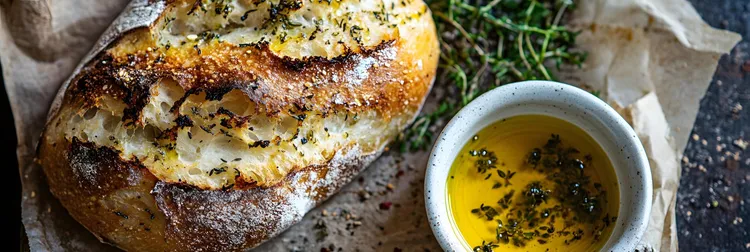
Olive and sage batards are a delightful and flavorful bread that combines the earthy taste of sage, the freshness of thyme, and the rich, briny flavor of olives. Perfect for serving with soups, salads, or simply enjoying on its own, this bread is a fantastic addition to any meal. Follow this recipe to create a savory and aromatic loaf that will surely impress your friends and family.
Instructions:
- In a small bowl, combine 1 tsp of yeast and 2 tsp of sugar with 1 cup of lukewarm water. Mix until the yeast and sugar dissolve.
- Let the mixture sit for about 5-10 minutes until it becomes frothy, indicating the yeast is active.
- In a large mixing bowl, combine 3 cups of all-purpose white wheat flour and 1 tsp of salt.
- Add the activated yeast mixture and 1 tbsp of olive oil to the flour and salt.
- Mix until the ingredients start to come together. You can use a wooden spoon or your hands.
- Add 1 tbsp of finely chopped sage, 1 tbsp of finely chopped thyme, and 1 cup of roughly chopped olives to the dough.
- Knead the dough on a lightly floured surface for about 8-10 minutes until it becomes smooth and elastic. If the dough is too sticky, you can add a bit more flour as needed.
- Place the kneaded dough into a lightly greased bowl. Cover it with a damp cloth or plastic wrap.
- Let the dough rise in a warm, draft-free area for about 1-2 hours, or until it has doubled in size.
- After the dough has risen, punch it down to release any air bubbles.
- Divide the dough into two equal pieces.
- Shape each piece into an elongated loaf, known as a batard. To do this, roll the dough into a rough rectangle, then fold it tightly like a jelly roll, pinching the seams closed.
- Place the shaped batards onto a lightly floured baking sheet or a sheet lined with parchment paper.
- Cover them with a damp cloth or lightly greased plastic wrap.
- Let them rise for about 30-45 minutes, or until they have roughly doubled in size.
- While the dough is rising, preheat your oven to 425°F (220°C).
- Just before baking, use a sharp knife or a razor blade to make several diagonal slashes on the top of each batard. This allows the bread to expand properly in the oven.
- Optionally, you can brush the tops with a bit of water for a crisper crust.
- Place the batards in the preheated oven and bake for 25-30 minutes, or until they are golden brown and sound hollow when tapped on the bottom.
- If desired, you can add a small pan of water to the bottom of the oven to create steam, which can help achieve a crispier crust.
- Once baked, remove the batards from the oven and let them cool on a wire rack.
- Allow them to cool slightly before slicing to let the interior finish cooking and to avoid squashing the bread.
With its unique combination of olives, sage, and thyme, this batard recipe offers a deliciously rustic and aromatic bread that can elevate any meal. By following the steps carefully and using these tips, you’ll be able to bake a loaf that is not only visually appealing but also bursting with flavor. Enjoy your homemade olive and sage batards fresh out of the oven, and savor the heartwarming compliments from your loved ones!
Olive and sage batards FAQ:
For this recipe, use a baking sheet or a baking stone large enough to hold two elongated loaves. Ensure the batards have space between them to allow for proper rising and baking.
Bake the Olive and Sage Batards for 25-30 minutes at 425°F (220°C), or until they are golden brown and sound hollow when tapped on the bottom.
Yes, you can substitute dried herbs for fresh ones, but use about one-third of the amount. For example, use 1 tsp of dried sage and 1 tsp of dried thyme instead of 1 tbsp each of fresh herbs.
Store leftover Olive and Sage Batards in an airtight container at room temperature for up to 2 days. For longer storage, wrap them in plastic wrap and freeze for up to 3 months.
If the dough feels too sticky while kneading, gradually add a little more flour, a tablespoon at a time, until the dough becomes smooth and elastic.
Cooking Tips:
- Make sure to activate the yeast properly by dissolving it in lukewarm water (about 100-110°F or 37-43°C) with a pinch of sugar. Let it sit for about 5-10 minutes until it becomes frothy.
- Knead the dough until it becomes smooth and elastic. This usually takes about 8-10 minutes by hand or 5-7 minutes using a stand mixer.
- Allow the dough to rest and rise in a warm, draft-free environment to ensure proper fermentation. Cover it with a damp cloth or plastic wrap to retain moisture.
- Fold in the sage, thyme, and olives gently towards the end of the kneading process to evenly distribute the ingredients without crushing the olives.
- Shape the dough into batards (oval-shaped loaves) by gently flattening the dough into a rectangle, folding the edges into the center, and rolling it up tightly. Place the shaped loaves on a baking sheet lined with parchment paper.
- Before baking, score the top of the loaves with a sharp knife or razor blade. This helps control the expansion of the bread and creates an attractive finished look.
- Bake the batards in a preheated oven at 425°F (220°C) for 20-25 minutes, or until they are golden brown and sound hollow when tapped on the bottom.
Nutrition Facts
4 ServingsCalories 440kcal
Protein 13g
Carbohydrates 80g
Fiber 6g
Sugar 2.81g
Fat 12g
More recipes
Little provencal tarts with olive oil pastry
Mediterranean-inspired tarts with tomato and basil filling.
21 Apr 2026Vegetable ratatouille
Classic vegetable ratatouille with zucchini, eggplant, and tomatoes.
21 Apr 2026Garlic shrimps with provencale mayonnaise
Succulent garlic shrimp served with herby Provençale mayonnaise.
21 Apr 2026