Sheet Pan Honey Mustard Salmon with Green Beans and Potatoes
A complete dinner on one tray in 25 minutes - and the glaze that makes salmon taste extraordinary
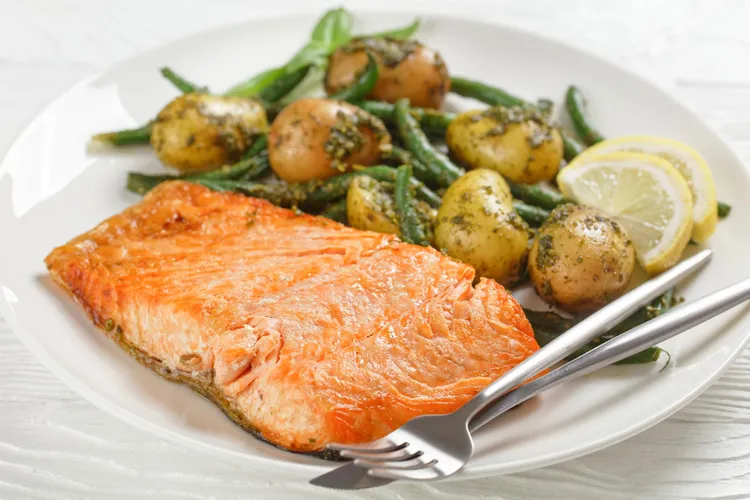
The 25-minute complete dinner is the holy grail of weeknight cooking. A protein, a starch, a vegetable, a sauce - everything on the table, from fridge to plate, in less time than it takes to order a takeaway. Most attempts at this compromise somewhere: the protein is fine but the vegetables are bland, or the vegetables are excellent but the protein is dry, or everything is cooked correctly but lacks the flavour that makes it worth the effort.
This recipe is the exception. Salmon fillets, new potatoes, and green beans on a single sheet pan - but the honey mustard glaze changes everything. It is the difference between cooked salmon and caramelised, slightly sticky, deeply flavoured salmon that is sweet and sharp and savoury all at once. It is the difference between a meal and a dinner worth remembering.
The timing trick - the potatoes go in first, the salmon goes in last - is the technical foundation. Everything else is the glaze.
Why Salmon Works So Well in Sheet Pan Dinners
Salmon is a natural candidate for sheet pan cooking for three reasons.
Its fat content protects it. Salmon is approximately 12-15% fat, distributed through the muscle tissue rather than concentrated in an external fat cap. This marbling means the flesh stays moist and self-basting during the 12-15 minutes of oven cooking, even without added fat. A lean white fish (cod, haddock) dries out under the same conditions; salmon does not.
It cooks fast. A 3cm-thick salmon fillet is fully cooked at 200°C in 12-15 minutes. This speed is what makes the 25-minute dinner possible - the slow-cooking vegetables (potatoes) go in first and have 10 minutes of oven time before the salmon joins them, and everything finishes simultaneously.
It accepts glazes beautifully. The fat in salmon means that sugary glazes (honey, maple syrup, miso) caramelise against the fish's surface without burning as quickly as they would on a lean protein. The honey mustard glaze in this recipe produces a lacquered, deeply coloured surface that makes the dish look as good as it tastes.
The Glaze: The One Element That Changes Everything
The honey mustard glaze is built on the tension between three flavour elements: the sweetness of honey (which caramelises in the oven), the sharp bite of dijon mustard (which cuts through the salmon's richness), and the salt and fat that ground both. Get the ratio right and it produces a surface that is simultaneously caramelised and tangy, sweet and savoury, with a slightly sticky texture that clings to the salmon and glistens under the oven's heat.
The ratio: 2 parts dijon mustard : 1 part honey : 1 part olive oil. Equal emphasis on the mustard's sharpness and the honey's sweetness, with the oil as the emulsifying medium. A squeeze of lemon at the end brightens the glaze immediately before serving.
The timing of application: Apply the glaze just before the salmon goes in the oven - not when prepping, not 10 minutes before. The glaze applied too far in advance allows the salt to draw moisture to the surface of the fish, partially dissolving the glaze before it has a chance to caramelise. Apply, transfer to the oven immediately.
Ingredients
Serves 4 | Active time: 10 minutes | Total time: 25 minutes
The Salmon
- 4 salmon fillets (approximately 150-180g each, skin-on), at room temperature
The Honey Mustard Glaze
- 2 tbsp dijon mustard - not wholegrain (which doesn't spread as smoothly), not American yellow mustard (which has a completely different flavour profile)
- 1 tbsp runny honey
- 1 tbsp olive oil
- 1 clove garlic, minced
- Juice of ½ lemon
- Salt and pepper
The Vegetables
- 400g new potatoes (or baby potatoes), halved
- 300g fine green beans, topped and tailed
- 2 tbsp olive oil
- Salt and pepper
- Optional: 1 tsp dried thyme or rosemary for the potatoes
To Finish
- Fresh lemon wedges
- Fresh dill or parsley, chopped
- Flaky sea salt
Method
Step 1: Parboil the potatoes (8 minutes)
Cook the halved new potatoes in boiling salted water for 8 minutes until just barely tender - a knife should meet slight resistance, not slide through freely. Drain and leave to steam-dry for 2 minutes. Rough up the cut surfaces slightly with the back of a fork - these rough edges brown better than smooth ones.
Why parboil? New potatoes roasted from raw at 200°C take 30-35 minutes. Salmon takes 12-15 minutes. Parboiling closes this gap so both finish simultaneously without a 20-minute head start for the potatoes, during which the oven would be running empty.
Step 2: Preheat the oven and sheet pan
Preheat to 200°C (fan). Place the sheet pan in the oven while it preheats - a hot pan produces immediate sizzle and better browning on the underside of the potatoes.
Step 3: Roast the potatoes (10 minutes head start)
Toss the parboiled potatoes with 2 tbsp olive oil, salt, pepper, and herbs if using. Spread on the preheated sheet pan cut-side down. Roast for 10 minutes while you prepare everything else.
Step 4: Make the glaze and prepare the salmon and beans
Combine dijon mustard, honey, olive oil, garlic, lemon juice, salt, and pepper in a small bowl. Whisk until smooth and emulsified. Taste - it should be sharp and sweet in roughly equal measure.
Pat the salmon fillets completely dry (surface moisture prevents browning and dilutes the glaze). Place on a plate and spoon the glaze over the top of each fillet, spreading to coat the entire upper surface. Season the underside with salt and pepper.
Toss the green beans with 1 tsp olive oil and a pinch of salt.
Step 5: Add salmon and beans to the pan
After the potatoes' 10-minute head start, remove the pan from the oven. Push the potatoes to one side of the pan to create space for the salmon.
Place the glazed salmon fillets skin-side down in the cleared space. Scatter the seasoned green beans around the salmon and potatoes - they will cook in the residual heat and need the full remaining cooking time.
Return to the oven for 12-15 minutes until:
- The glaze is caramelised and slightly sticky, with golden-brown edges
- The salmon is opaque at the edges and just slightly translucent at the very centre of the thickest part (it continues cooking as it rests)
- The potatoes are golden at the edges
- The green beans are tender with slight char
Step 6: Rest briefly and serve
Allow the salmon to rest for 2 minutes - the internal temperature continues to rise slightly and the flesh firms enough to move without breaking.
Squeeze fresh lemon generously over everything. Scatter fresh dill or parsley. Finish with a pinch of flaky sea salt. Serve directly from the pan.
Reading Salmon Doneness
Salmon doneness is the most misunderstood protein timing in home cooking. Most people overcook salmon by waiting until it is fully opaque throughout - at that point, it has been overcooked.
The correct doneness for most salmon:
- Opaque from the outside in, with a small zone of slightly translucent, darker flesh at the very centre of the thickest part
- The flesh separates easily into flakes when pressed but doesn't fall apart on its own
- A thermometer reads 55-60°C at the thickest point - this is medium, which is the ideal eating temperature for farmed salmon
Fully opaque throughout = overcooked. The texture becomes firmer and drier; the fat begins to render out visibly as white residue.
The exception: Wild salmon, which has a different fat distribution and is best cooked to a slightly higher internal temperature (63°C) for food safety reasons.
Three Flavour Variations
Miso Glaze (The Umami Version)
Replace the honey mustard glaze with:
- 2 tbsp white miso (from the fermentation collection's miso recipe or shop-bought)
- 1 tbsp mirin
- 1 tbsp soy sauce
- 1 tsp sesame oil
- ½ tsp finely grated ginger
Brush over the salmon. Roast as above. The miso caramelises into a deeply savoury, slightly sweet glaze that is one of the best things you can do to salmon. See Matcha Miso Soup for more miso applications.
Lemon and Herb (The Clean Version)
No glaze - instead, top each salmon fillet with a layer of breadcrumbs mixed with lemon zest, fresh dill, parsley, garlic, and olive oil. The breadcrumbs toast in the oven to a golden crust that provides texture and visual contrast against the pink salmon. Add 3-5 minutes to the cooking time.
Teriyaki Glaze (The Sweet Version)
Replace honey mustard with:
- 2 tbsp soy sauce
- 1 tbsp honey
- 1 tbsp mirin
- 1 tsp rice vinegar
- 1 tsp sesame oil
- ½ tsp grated ginger
Replace green beans with tenderstem broccoli and potatoes with rice (cooked separately). The teriyaki salmon over rice with charred broccoli is an Asian-inflected version that is completely different in character from the original.
Vegetable Swaps by Season
The potato-and-green-bean combination is the default, but the salmon timing works with any vegetable that cooks in 12-15 minutes. The vegetables just need to be parboiled or pre-roasted if they need longer.
| Season | Swap for green beans | Swap for potatoes |
|---|---|---|
| Spring | Asparagus spears | New potatoes, peas |
| Summer | Courgette, cherry tomatoes | New potatoes |
| Autumn | Tenderstem broccoli, kale | Sweet potato (parboiled) |
| Winter | Cavolo nero, leeks | Parsnips (parboiled) |
Pro Tips
- Skin-side down for the whole cooking time. The skin protects the flesh from the direct heat of the pan below. Salmon cooked skin-side up produces less evenly cooked flesh and a tendency to fall apart when removed from the pan.
- Pat the salmon completely dry before glazing. Moisture on the surface dilutes the glaze and prevents proper caramelisation. Kitchen paper towels, firm pressure, repeat on all surfaces.
- Don't flip the salmon. Unlike chicken or steak, salmon does not benefit from flipping - the skin insulates the bottom, the glaze caramelises on the top, and flipping risks breaking the fillet. Skin-side down throughout.
- The pan juices are useful. After the salmon is served, the pan will have a small amount of caramelised glaze and fish fat. This is an excellent base for a quick pan sauce - add 2 tbsp of warm water to the pan, stir to dissolve the caramelised glaze, add a squeeze of lemon, drizzle over the salmon.
Common Mistake: Overcooking the Salmon The most common error with sheet pan salmon is treating it like chicken - leaving it until it is completely, uniformly opaque throughout. Salmon at this point is overcooked; it will be drier, firmer, and less flavourful than salmon pulled at 55-60°C (slightly translucent at the thickest centre). Pull it early, rest it for 2 minutes, and trust that the carryover cooking will finish it perfectly.
FAQ
Q: Should I remove the skin before eating?
The skin is edible and, when properly roasted, slightly crispy - many people consider it the best part. It provides omega-3s and the char from the sheet pan adds flavour. If you prefer to remove it, it peels away easily from the cooked flesh. Serve it on the side for people who want it.
Q: Can I use frozen salmon?
Yes - thaw completely in the refrigerator overnight, then pat very thoroughly dry (frozen fish releases significantly more moisture during thawing than fresh). Apply the glaze and proceed as above. The result may be slightly less structured than fresh salmon but is perfectly good.
Q: How do I stop the green beans from drying out?
The beans should have a light coating of olive oil and be scattered loosely (not piled) on the pan. They cook primarily in the steam from the salmon and the ambient oven heat rather than from direct contact with the hot pan. If they still look dry or too charred, add them to the pan 5 minutes after the salmon rather than simultaneously.
Q: Can I use a different mustard?
Dijon is the correct choice - its sharpness and clean heat are specifically well-suited to salmon. Wholegrain mustard works but the seeds don't spread evenly. English mustard is too sharp and can overwhelm the honey balance. French's yellow mustard has the wrong flavour profile entirely.
🔗 Continue Cooking
- One-Pan Lemon Garlic Chicken Thighs with Roasted Vegetables
- Sheet Pan Chicken Fajitas: Better Than Any Takeaway
- Sheet Pan Dinner Masterclass: The Technique Behind Perfect Roasting
- One-Pot Lentil Soup: The Most Nourishing 30-Minute Dinner
- Matcha Miso Soup
- One-Pan & One-Pot Dinners: The Ultimate Guide
Latest