One-Pan Orzo with Spinach, Lemon, and Feta
Twenty minutes. One pan. The dinner that makes people think you spent twice as long as you did.
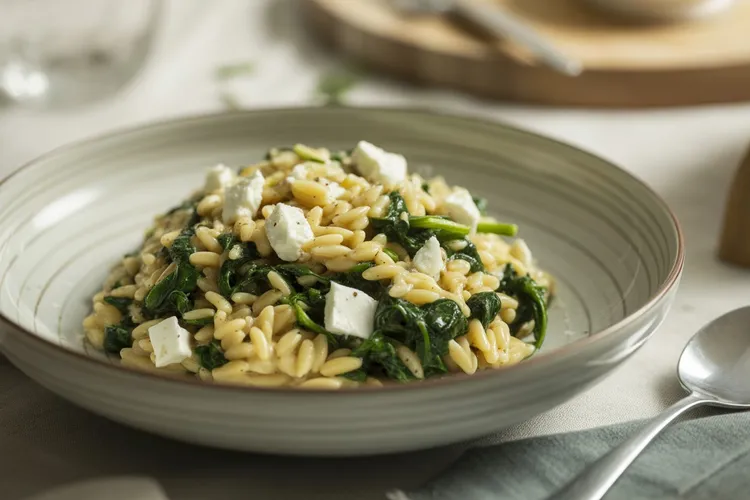
Orzo is one of the most underused ingredients in the home kitchen. It looks like rice, cooks like pasta, and absorbs flavour like neither - sitting somewhere between the two, with a satisfying chew and a neutral creaminess that makes it the ideal vehicle for bold flavours. And because it is small and cooks in 8-10 minutes, it is one of the fastest complete dinners available to anyone with a saucepan and 20 minutes.
This recipe is built on a technique that transforms orzo from a simple side dish into a dinner worth sitting down for: toasting the dry orzo in olive oil before adding the stock. The toasting step takes 3 minutes and produces a nuttiness in the finished dish that plain orzo - dumped directly into boiling water - simply doesn't have. Combined with the bright sourness of lemon, the salty creaminess of feta, and the wilted freshness of spinach, it produces something that tastes considerably more developed than its ingredient list or its 20-minute timeline suggests.
This is the weeknight dinner that impresses.
The Toasting Technique: Why It Matters
When dry orzo is added to hot olive oil and stirred for 2-3 minutes, two things happen. The surface starch toasts and caramelises slightly, producing nutty, slightly complex flavour compounds - the same Maillard chemistry that makes toasted bread taste better than untoasted bread. And the structure of the orzo firms slightly, which means it holds its shape during the subsequent cooking in stock rather than becoming soft and starchy.
The result: orzo that tastes nutty and complex rather than neutral and starchy, with a slightly firmer bite even after full cooking.
This technique is borrowed from rice cookery - specifically from pilaf, where rice is toasted in fat before stock is added, producing a dish with more depth and better texture than rice simply boiled in water. Applied to orzo, it produces the same transformation.
Ingredients
Serves 4 | Active time: 10 minutes | Total time: 20 minutes
The Orzo
- 300g dried orzo
- 2 tbsp extra virgin olive oil - for toasting the orzo
- 3 cloves garlic, thinly sliced
- 1 small shallot (or ½ small onion), finely diced
- 700ml hot vegetable or chicken stock - hot stock maintains the cooking temperature; cold stock disrupts the process
- Zest of 1 lemon + juice of ½ lemon (reserve the other half for finishing)
- ½ tsp chili flakes - optional, adds a gentle background warmth
- Salt to taste
The Finishing Ingredients
- 150g baby spinach - added at the very end; wilts in 2 minutes
- 120g feta cheese, crumbled - full-fat block feta crumbled by hand, not pre-crumbled (which is drier and less creamy)
- Small handful fresh dill or mint, roughly torn - dill has an affinity with feta that is almost pre-ordained
- Extra virgin olive oil for finishing
- Black pepper, freshly ground
- Flaky sea salt
Method
Step 1: Toast the orzo (3 minutes)
Heat 2 tbsp of olive oil in a wide, deep saucepan or sauté pan over medium heat. Add the shallot and cook for 2 minutes until softened. Add the garlic and cook for 1 minute until fragrant - do not allow it to colour.
Add the dry orzo and stir to coat in the oil. Cook, stirring frequently, for 2-3 minutes until the orzo turns from white to a very light golden colour and smells nutty. Watch carefully - orzo can go from golden to burnt in under a minute.
Add the chili flakes (if using) and lemon zest. Stir for 30 seconds - the lemon zest blooms in the hot oil, releasing its volatile oils.
Step 2: Add the stock and cook (10-12 minutes)
Pour the hot stock into the pan. It will sizzle. Add ½ tsp of salt. Stir once to distribute.
Bring to a simmer, then reduce to a gentle, steady simmer. Cook, stirring every 2 minutes, for 10-12 minutes until the orzo is al dente and most of the stock has been absorbed. The orzo should be tender with a slight bite - check it from 9 minutes onwards as brands vary.
The consistency you're looking for: At the end of cooking, the orzo should be creamy and fluid - not dry (which means the stock was absorbed too fast) and not watery (which means too much stock remains). It should flow slowly when the pan is tilted, similar to a very thick risotto. It will tighten further off the heat.
Add the juice of ½ lemon in the final minute of cooking.
Step 3: Add spinach (2 minutes)
Remove from heat. Add the baby spinach in two handfuls, stirring through each addition until wilted. The residual heat is sufficient - no additional cooking needed. The spinach turns vividly green and reduces dramatically in volume.
Taste for seasoning. Adjust salt, add more lemon if needed.
Step 4: Finish and serve
Crumble the feta over the orzo - generously, not as a garnish but as a structural component. Scatter the fresh dill or mint. Drizzle with your best olive oil. A few twists of black pepper and a pinch of flaky sea salt.
Serve immediately from the pan or in wide, warm bowls. The orzo continues to absorb stock off the heat - serve promptly or it will thicken from a creamy, pourable consistency to something closer to a solid.
Variations
With Roasted Cherry Tomatoes
Add 200g of cherry tomatoes to a small roasting tin, drizzle with olive oil and a pinch of salt, and roast at 200°C for 15 minutes while the orzo cooks. Spoon over the finished orzo in place of or alongside the feta. The burst tomatoes provide acidity and sweetness that complements the lemony orzo.
With Prawns
Add 250g of large raw prawns (peeled, deveined) in the final 4 minutes of orzo cooking, stirring to submerge them in the simmering stock. They cook through in 3-4 minutes. The prawn stock flavours the orzo as they cook; the finished dish is a complete protein-and-grain meal from one pan.
With Chicken
Sear 2 boneless chicken thighs (sliced into strips) in the pan before the shallot step - 3-4 minutes per side until golden, then set aside. Build the orzo in the same pan (the chicken flavour in the residual fat adds depth). Return the chicken strips to the pan for the final 3 minutes of orzo cooking to warm through.
Sun-Dried Tomato and Olive (Vegan)
Replace feta with 60g of sun-dried tomatoes (drained, roughly chopped) and 60g of Kalamata olives (pitted, halved). Replace chicken stock with vegetable stock. Add 2 tbsp of nutritional yeast for a savoury depth that replaces some of the feta's saltiness. The vegan version is bold and Mediterranean in character - one of the best variations in the collection.
Butternut Squash and Sage (Autumn)
Dice 300g of butternut squash into 1cm cubes, sauté in the pan for 8 minutes until golden before toasting the orzo. Toast the orzo around the squash. Proceed as above. Finish with crispy sage leaves (fried briefly in olive oil) instead of dill, and replace feta with crumbled goat's cheese. An excellent autumn variation that feels warming and substantial.
Serving Suggestions
Orzo is a complete dinner on its own - the feta provides protein, the stock provides flavour, and the spinach provides freshness. But it also works as part of a larger spread:
Alongside grilled proteins: The lemon-feta orzo is an excellent base for grilled salmon (the Sheet Pan Honey Mustard Salmon variations work beautifully here), grilled lamb chops, or chicken. Serve the orzo as the base, the protein on top.
As part of a Greek-inspired mezze: With labneh from the fermentation collection, olives, warm pitta, and a simple tomato-cucumber salad. The orzo alongside these elements is part of a cohesive spread rather than a standalone dinner.
For meal prep: The orzo reheats well with a splash of water and a brief stir over medium heat. The spinach wilts further on reheating and the feta softens into the orzo - the day-two version is different from but equally good as the fresh version.
Pro Tips
- Don't skip the toasting step. This 3-minute step is the difference between a good orzo and an excellent one. The nutty character it produces runs through every bite of the finished dish. It also firms the orzo slightly, improving the texture throughout the cooking time.
- Use hot stock. Adding cold stock to the hot toasted orzo drops the pan temperature, interrupts the simmering, and produces uneven cooking. Keep the stock in a small saucepan at a gentle simmer while you toast the orzo.
- Serve immediately. Orzo continues absorbing liquid off the heat. The perfect creamy consistency lasts for approximately 5 minutes - if you need to hold it, add a splash of hot stock to loosen, stir, and serve.
- Block feta, not pre-crumbled. Pre-crumbled feta is drier and more granular - it doesn't melt into the warm orzo in the same way that hand-crumbled block feta does. The block version creates creamier pockets of feta throughout the dish.
- Add lemon in two stages. Lemon zest goes in with the orzo (its oils bloom in the hot fat). Lemon juice goes in at the end of cooking (its brightness is preserved). Two-stage lemon use produces more complex, more present lemon character than adding all the lemon at the same point.
Common Mistake: Overcooking the Orzo Orzo moves from al dente to mushy in under 2 minutes. Check it from 9 minutes onwards and pull it from the heat when it still has a very slight bite - it continues to soften in the residual heat of the pan and as it absorbs the remaining stock. Orzo that looks slightly underdone when the heat goes off will be exactly right by the time it reaches the table.
FAQ
Q: Can I make this gluten-free?
Orzo is made from semolina wheat and is not gluten-free. A close substitute: short-grain rice or arborio rice (which produces a more risotto-like result) using the same technique. Alternatively, quinoa works with slight adjustments to liquid ratio and cooking time. The toasting step works with all three substitutes.
Q: The orzo is sticking to the bottom of the pan. What's wrong?
Either the heat is too high (producing rapid evaporation that leaves the pan dry before the orzo is cooked through) or the pan is too thin (creating hot spots where the orzo sticks). Reduce the heat to a gentle simmer and stir more frequently. A wide, heavy-based pan distributes heat more evenly and produces less sticking.
Q: How much feta is enough?
120g for four portions is a generous but not extravagant amount - each serving has approximately 30g of feta, which provides meaningful flavour and creaminess without overwhelming the lemon and herb character of the dish. If using feta as a garnish rather than a structural component, 80g is sufficient.
Q: Can I use frozen spinach?
Yes - defrost completely, then squeeze out as much moisture as possible before adding to the orzo. Frozen spinach releases significant liquid when heated, which would make the orzo watery if added still wet. Well-squeezed frozen spinach works almost as well as fresh.
🔗 Continue Cooking
Latest