Basil pesto
Basil pesto is a classic Italian sauce made with fresh basil, pine nuts, garlic, olive oil, and parmesan cheese, delivering a vibrant flavor to many dishes. This easy-to-make sauce is perfect for pasta, sandwiches, or as a dip.
Cook time 0 min
Prep time 10 min
Ingredients:
1.50 cups basil leaves1/2 cup pine nuts
2 garlic cloves
1/2 cup olive oil
3/4 cup grated parmesan cheese
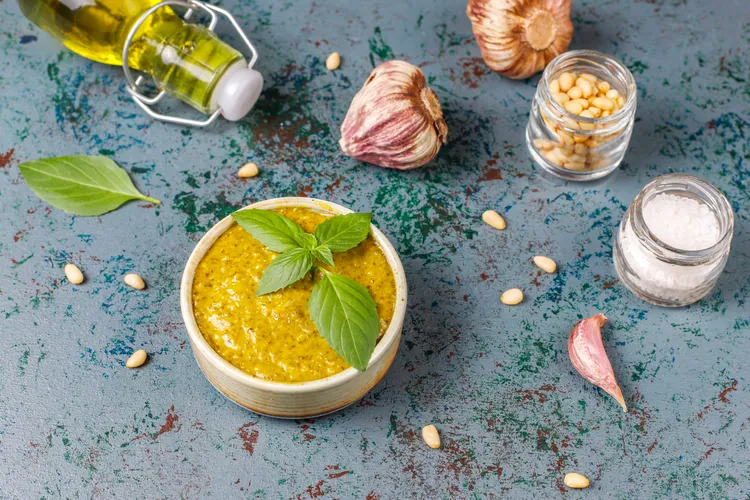
Basil pesto is a classic Italian sauce that brings a burst of fresh flavor to a variety of dishes. Made with fresh basil leaves, pine nuts, garlic, olive oil, and parmesan cheese, this vibrant green sauce is both easy to prepare and incredibly versatile. Whether you're looking to enhance your pasta, spread on sandwiches, or use as a flavorful dip, basil pesto is a delicious and healthy addition to your culinary repertoire.
Instructions:
- Gently rinse the basil leaves under cold water and pat them dry with a paper towel.
- Peel the garlic cloves and set them aside.
- Measure out the pine nuts, olive oil, and grated Parmesan cheese.
- In a food processor or blender, combine the basil leaves and garlic cloves. Pulse a few times to roughly chop the basil and garlic.
- Add the pine nuts to the mixture in the food processor. Pulse again until the mixture is coarsely blended.
- While the food processor is running, slowly pour in the olive oil. This helps to create a smooth and consistent pesto. You may need to stop and scrape down the sides of the bowl to ensure everything is well mixed.
- Add the grated Parmesan cheese to the mixture. Pulse a few more times until the cheese is well combined and the pesto reaches your desired consistency. Taste and adjust seasonings if necessary (though traditional pesto usually doesn't require extra salt).
- Transfer the pesto to a clean jar or airtight container. If you're not using it immediately, drizzle a small amount of olive oil on top to help preserve the vibrant green color and store it in the refrigerator.
- Basil pesto can be used in various dishes. It’s perfect for tossing with pasta, spreading on sandwiches, drizzling over grilled meats, or as a dip for fresh vegetables.
Making basil pesto at home is a simple and rewarding process that results in a fresh, flavorful sauce far superior to store-bought options. With just a handful of quality ingredients and a few minutes of preparation, you can create a versatile condiment that enhances a wide range of dishes. Enjoy your homemade basil pesto and experiment with different uses to discover your favorite way to savor this delightful sauce.
Basil pesto FAQ:
Basil pesto can be stored in the refrigerator for up to one week. For best results, keep it in an airtight container and drizzle a thin layer of olive oil on top to help preserve its vibrant color.
Yes, you can substitute pine nuts with walnuts, almonds, or cashews. Each nut will slightly alter the flavor and texture, but they will still work well in the pesto.
The pesto is done when the ingredients are well combined and have reached your desired consistency. It should be smooth but still have a bit of texture from the pine nuts. Taste and adjust if necessary.
Yes, basil pesto can be frozen for up to three months. Consider freezing it in ice cube trays for easy portioning. Once frozen, transfer the cubes to a freezer bag or airtight container.
If fresh basil is not available, you can use arugula or spinach as substitutes. However, this will change the flavor profile slightly, so keep that in mind when making the adjustment.
Cooking Tips:
- Wash and thoroughly dry the basil leaves before using to prevent excess moisture from affecting the texture of the pesto.
- Toast the pine nuts in a dry skillet over medium heat for a few minutes until they are golden and fragrant to bring out their nutty flavor.
- For a smoother pesto, blend the garlic, pine nuts, and basil leaves first before gradually adding the olive oil.
- If you prefer a chunkier texture, pulse the ingredients in short bursts and scrape down the sides of the food processor as needed.
- Add the grated parmesan cheese at the end and blend until just combined to preserve its texture and flavor.
- Adjust the consistency by adding a little more olive oil if the pesto is too thick or a little less if it's too thin.
- Season with salt and pepper to taste after blending to ensure the flavors are balanced.
- Store any leftover pesto in an airtight container in the refrigerator for up to a week, or freeze it in ice cube trays for longer shelf life.
Nutrition Facts
16 ServingsCalories 50kcal
Protein 1.84g
Carbohydrates 1.24g
Fiber 0.21g
Sugar 0.19g
Fat 12g
More recipes
Steak pizzaiola with capsicum and mushroom
Hearty Steak Pizzaiola with mushrooms and capsicum in pasta sauce.
21 Apr 2026Italian sausage and vegetable stew with tomato and green beans
A hearty Italian sausage and vegetable stew packed with flavor.
21 Apr 2026Fresh tomato, basil, onion and mozzarella salad with olive oil and vinegar dressing
A refreshing tomato, basil, and mozzarella salad with olive oil dressing.
21 Apr 2026Broccoli pesto whole-wheat pasta
A nutritious dish of whole-wheat pasta with broccoli and basil pesto.
21 Apr 2026Cranberry and almond biscotti
Crisp cranberry and almond biscotti perfect for coffee dipping.
21 Apr 2026Gnocchi with whole-grain wheat flour and olive oil
Wholesome gnocchi made with whole-grain wheat flour and olive oil.
21 Apr 2026