Tea & Food Pairings from Around the World
Tea is often treated as a quiet background drink, but around the world it plays a central role at the table. From savory meals to rich desserts, tea has been paired with food for centuries - intentionally, thoughtfully, and deliciously. This guide explores tea and food pairings from different cultures, showing how tea can enhance meals just as beautifully as wine or cocktails.
When people think about drink pairings, tea rarely gets the attention it deserves. Yet tea has something few beverages can offer: range. It can be light or bold, bitter or floral, earthy or smoky, caffeinated or calming. Across cultures, tea isn’t just something you sip - it’s something you eat with. Understanding tea and food pairing isn’t about rules or ceremonies; it’s about flavor balance, temperature, and tradition. Let’s travel the world, one cup at a time.
Why Tea Works So Well with Food
Tea pairs beautifully with food because it offers:
-
Natural acidity and bitterness
-
Tannins that cleanse the palate
-
Aromatic complexity
-
Zero alcohol and low sweetness
Unlike sugary drinks, tea refreshes between bites. Unlike heavy beverages, it doesn’t overwhelm subtle flavors.
The Basics of Tea & Food Pairing
Before diving into global pairings, here are a few universal principles.
Match Intensity, Not Color
Delicate foods pair best with light teas. Bold foods need stronger teas.
Use Bitterness as Balance
Tannic teas cut through fat and richness.
Temperature Matters
Hot tea softens richness; iced tea refreshes and cleanses.
Think Like a Local
Traditional pairings exist for a reason - they evolved together.
Japan: Green Tea & Umami-Rich Foods
Common Teas
-
Sencha
-
Genmaicha
-
Matcha
Foods They Pair With
-
Sushi and sashimi
-
Rice dishes
-
Grilled fish
-
Vegetables
Why It Works
Japanese green teas have grassy bitterness and umami notes that mirror the flavors of seafood and rice. Genmaicha’s toasted rice notes complement savory dishes beautifully.
Pairing tip: Avoid sweetened tea - bitterness is key here.
China: Tea as a Meal Companion
Common Teas
-
Oolong
-
Pu-erh
-
Jasmine tea
Foods They Pair With
-
Dim sum
-
Stir-fries
-
Braised meats
Why It Works
Oolong bridges the gap between green and black tea, making it versatile. Pu-erh’s earthy depth cuts through rich, fatty dishes, acting almost like a digestif.
Pairing tip: Stronger dishes benefit from aged or roasted teas.
India: Chai & Savory Snacks
Common Teas
-
Masala chai
-
Assam black tea
Foods They Pair With
-
Spiced snacks
-
Fried street food
-
Savory pastries
Why It Works
Spices in chai echo the spices in food, creating harmony rather than contrast. Milk softens bitterness and rounds out heat.
Pairing tip: Keep sugar moderate so chai doesn’t overpower food.
United Kingdom: Black Tea & Comfort Foods
Common Teas
-
English Breakfast
-
Earl Grey
Foods They Pair With
-
Toast and sandwiches
-
Savory pies
-
Baked goods
Why It Works
Robust black teas stand up to rich, hearty foods. Bergamot in Earl Grey adds brightness, cutting through butter and fat.
Pairing tip: Milk changes pairing dynamics - use it intentionally.
Morocco: Mint Tea & Bold Flavors
Common Tea
-
Green tea with fresh mint
Foods It Pairs With
-
Spiced meats
-
Couscous
-
Savory pastries
Why It Works
Mint refreshes the palate, while green tea bitterness balances spice and richness.
Pairing tip: Serve hot - even in warm weather - for full aromatic impact.
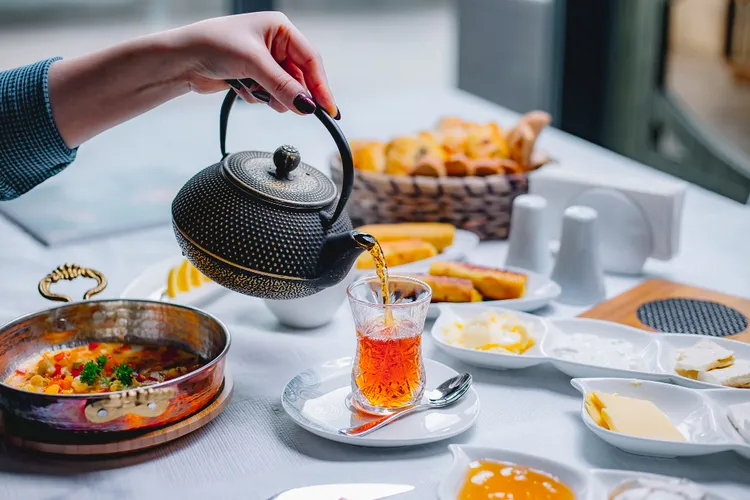
Turkey & the Middle East: Tea with Everything
Common Teas
-
Strong black tea
-
Herbal infusions
Foods They Pair With
-
Breakfast spreads
-
Grilled meats
-
Savory breads
Why It Works
Strong black tea acts as a neutral backbone, cleansing the palate between bites of rich or salty foods.
China & Taiwan: Oolong with Roasted Dishes
Common Teas
-
Roasted oolong
-
Milk oolong
Foods They Pair With
-
Roast meats
-
Mushrooms
-
Noodles
Why It Works
Oolong’s layered flavor mirrors roasted and umami-rich foods.
South America: Herbal Teas & Simple Meals
Common Teas
-
Yerba mate
-
Herbal infusions
Foods They Pair With
-
Grilled meats
-
Bread
-
Simple snacks
Why It Works
Earthy bitterness complements smoky, grilled flavors without sweetness.
Tea & Dessert Pairings Around the World
Tea shines with dessert - when done right.
Green Tea + Light Desserts
Balances sweetness and refreshes.
Black Tea + Chocolate
Bitterness mirrors cocoa depth.
Spiced Tea + Baked Goods
Echoes warmth and spice.
Avoid pairing sweet desserts with sweetened tea - contrast is better.
Hot vs Iced Tea at the Table
Hot Tea Works Best With:
-
Rich meals
-
Cold weather dishes
-
Slow dining
Iced Tea Works Best With:
-
Spicy food
-
Summer meals
-
Casual dining
Both can pair beautifully when properly balanced.
How to Build a Tea Pairing Menu at Home
You don’t need dozens of teas.
Start with:
-
One green tea
-
One black or oolong tea
-
One herbal option
Offer tea with the meal, not just after.
Common Tea Pairing Myths
Myth: Tea is only for breakfast
Truth: Many cultures drink tea all day.
Myth: Tea is too delicate for savory food
Truth: Many teas are bold and structured.
Myth: Tea is boring at the table
Truth: It’s one of the most versatile pairing beverages.
A Simple Tea Pairing Formula
Keep this in mind:
Light food → Green or floral tea
Rich food → Black or roasted tea
Spicy food → Herbal or mint tea
Dessert → Bitter or aromatic tea
Why Tea Pairing Deserves More Attention
Tea pairing isn’t about replacing wine or cocktails. It’s about expanding your options. Tea is inclusive, thoughtful, and deeply rooted in food culture across the world. When served intentionally, tea becomes part of the meal - not an afterthought.
Tea has been paired with food long before modern pairing rules existed. Cultures around the world figured out what works through tradition, taste, and time. By borrowing from these traditions, you can bring more balance, calm, and flavor to your table - one cup at a time.
Latest