The Beginner's Guide to Buying Matcha Online Safely
Red flags, green flags, and everything between - so you never waste money on bad powder again
Buying matcha online is more complicated than it should be.
The market has exploded in the last five years, and with it: a proliferation of products that use the word "matcha" loosely, labels that imply quality they don't deliver, prices that bear no relationship to what's actually in the tin, and marketing language so saturated with wellness buzzwords that it becomes genuinely difficult to evaluate what you're actually looking at.
We've bought a lot of matcha. Some of it has been extraordinary. Some of it has been a waste of money. Some of it has been the wrong thing entirely - culinary grade powder marketed at ceremonial prices, Chinese-grown powder marketed as Japanese, stale powder in beautiful packaging.
This guide is the distillation of all of that experience. By the end of it, you will know exactly what to look for, what every label element means, which red flags to walk away from immediately, and how to buy confidently at every price point - whether you're spending £10 or £80 on a tin.
📖 Essential context: This guide is about buying. To understand what you're buying - why grade and origin matter, what ceremonial vs. culinary actually means - read Matcha 101: Why Not All Green Powders Are Created Equal and Inside Japan's Matcha Belt: Uji, Nishio & Kagoshima first. Knowledge before purchase.
Part One: The Landscape
The Scale of the Problem
The global matcha market was valued at approximately $3.5 billion in 2024 and is projected to double by 2030. This growth has attracted producers, resellers, and brands who range from dedicated specialists with genuine relationships with Japanese farms to opportunists who've registered a brand name, found a cheap bulk supplier, and started selling product with professional photography and a compelling brand story.
Both types of seller look identical online. The difference is entirely in what's in the tin.
What "Matcha" Legally Means
In most Western markets: almost nothing. Unlike champagne or Parmigiano Reggiano - products with legally protected origin designations - "matcha" has no standardised legal definition in the US, UK, or EU that restricts its use. A product can be labelled "premium Japanese matcha" and contain low-grade Chinese-grown green tea powder, ground by industrial hammer mills rather than stone, that has never seen the inside of a shaded tea garden in its life.
This is not hypothetical. It happens regularly, at scale.
Japan does have a draft standard for matcha (JAS Standard for Matcha, proposed by the Ministry of Agriculture, Forestry and Fisheries), but enforcement in export markets is limited and consumer awareness is low.
The practical implication: The label is a starting point for evaluation, not a guarantee. You need to know what to look for beyond the label.
Part Two: The Green Flags - What Good Matcha Looks Like
1. Named Japanese Origin
The first and most important indicator of quality and authenticity is a specific, named Japanese origin. Not just "Japan" - anyone can print that on a label. A named origin means:
- The specific prefecture: Uji (Kyoto), Nishio (Aichi), Kagoshima, Shizuoka, or Yame (Fukuoka)
- Ideally, the specific farm or cooperative: "Otowa Matcha, Uji" or "Marukyu Koyamaen, Uji" - named farms indicate traceability and accountability
- The harvest and grade: Some premium sellers list the specific harvest (first flush / - 番茶), which is the highest quality annual harvest
A seller who knows exactly where their matcha comes from will tell you. A seller who doesn't know - or doesn't want you to know - won't.
For a detailed breakdown of what each Japanese origin produces and how they differ in character, see Inside Japan's Matcha Belt: Uji, Nishio & Kagoshima.
2. Color Description That Matches Reality
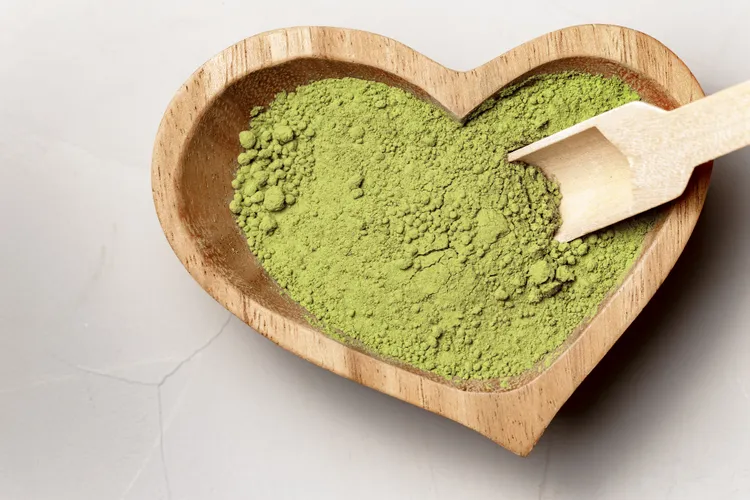
Good ceremonial grade matcha is vivid green - sometimes described as "emerald," "jade," or "bright leaf green." This color comes from:
- High chlorophyll content, produced by the shading process
- Low oxidation - fresh, recently harvested and processed powder
- Stone grinding at slow speed (which avoids heat damage to chlorophyll)
What the product photography should show: The actual color of the powder - not just the tin, not just a latte made from it, but the open tin with visible powder. Sellers who photograph only the packaging and never the powder are either working with unattractive powder or have limited confidence in what's inside.
If you can see the powder: It should be vivid green. If it looks olive, yellow-green, brown-tinged, or grey, it is either stale, low-grade, or not properly produced matcha.
3. Clear Grade Communication - With Honesty
Good sellers are clear about what grade they're selling and honest about what that grade means. Specifically:
"Ceremonial grade" should mean: shaded cultivation, hand-picked buds and young leaves, stone ground, no additives, intended for drinking whisked with water. It does not mean "luxury" or "best" in a general sense - ceremonial grade is the right choice for drinking as tea, and may or may not be the right choice for baking (usually not, because of cost).
"Culinary grade" should mean: still Japanese-grown, still stone or industrial ground, still pure tea - but from slightly older leaves, more robust in flavor, appropriate for baking, lattes, and cooking. Not inferior as a concept, just different in application.
Be suspicious of: Sellers who don't distinguish between grades at all, sellers who use "ceremonial grade" to describe every product regardless of price, and sellers who use made-up grade categories like "super premium ultra ceremonial" with no explanation of what that means.
4. Production Method Disclosure
A trustworthy seller will tell you how the matcha was ground. The two methods produce noticeably different products:
Stone grinding (石臼挽き / ishiusu-biki): Traditional granite stone mills rotate slowly (approximately 30-60 RPM), generating minimal heat and preserving volatile flavor compounds, chlorophyll, and delicate amino acids. One stone mill produces approximately 30-40g of matcha per hour. This is inherently expensive and inherently superior for drinking.
Industrial grinding (hammer or ball mills): Faster, cheaper, hotter. The heat generated by rapid grinding oxidises some of the flavor and color compounds that make high-grade matcha distinctive. Industrial grinding is standard for culinary grade and is appropriate for baking and cooking applications where the subtle distinctions are masked by other ingredients.
If a "ceremonial grade" matcha doesn't mention stone grinding anywhere on the product page, that is a yellow flag worth noting.
5. Packaging That Protects the Product
Matcha's enemies are light, oxygen, heat, and moisture. Good matcha packaging reflects this:
- Opaque tin or foil-sealed pouch: No UV exposure
- Nitrogen-flush or vacuum seal: Oxygen removed to prevent oxidation
- Small quantities: 20-50g tins are standard for ceremonial grade - not because the producer is being stingy, but because smaller quantities are finished before the powder significantly degrades. A 250g bag of "ceremonial grade" matcha should raise questions: either the price doesn't reflect true ceremonial grade production costs, or the quantity assumes a usage rate that will result in stale powder before the bag is finished.
- Clear best-before or harvest date: Premium matcha sellers include the harvest year or a best-before date. Matcha is best within 3-6 months of grinding; it is still usable but noticeably less vibrant within 12 months. A seller who provides no date information is either not tracking their inventory carefully or is selling older stock.
6. Price That Reflects Reality
This is uncomfortable but important: good matcha is not cheap, and anything priced as though it is should raise questions.
Understanding why good matcha costs what it does:
- Shading the tea plants for 3-4 weeks before harvest requires significant labor and material cost
- Hand-harvesting only the finest buds and young leaves (as opposed to machine harvesting the whole plant) is slow and expensive
- Stone grinding at 30-40g per hour means a single stone mill, running continuously, produces less than 300g of matcha per day
- The best growing regions in Japan - Uji especially - have high land costs and small production volumes
- Premium producers maintain meticulous quality control, including nitrogen flushing and cold storage of finished powder
Rough price guidance (per 30g, as of 2025):
| Grade | Approximate Price Range | Notes |
|---|---|---|
| Culinary | £5-£15 / $6-$18 | Wide range; avoid the very cheapest |
| Entry ceremonial | £15-£25 / $18-$30 | Good daily drinking matcha |
| Mid-grade ceremonial | £25-£45 / $30-$55 | Best value for quality |
| High-grade ceremonial | £45-£80 / $55-$100 | Single estate, first flush |
| Competition grade | £80+ / $100+ | For special occasions and gifting |
The important caveat: Expensive matcha is not automatically good matcha. But matcha priced significantly below these ranges for its claimed grade almost always indicates either a mislabeled grade or a lower quality product than the marketing implies.
Part Three: The Red Flags - Walk Away From These
🚩 "Japanese-Style" or "Japanese-Inspired"
This phrase almost always means the matcha was not grown in Japan. It may have been grown in China, Korea, or elsewhere, processed to resemble Japanese matcha, and labelled with language that implies Japanese origin without legally claiming it. The word "style" is doing a lot of work here - and not for your benefit.
🚩 No Origin Information At All
If a product page, tin, or brand website says nothing about where the tea was grown - only the country of the seller's registration or packing facility - that is a significant red flag. Legitimate Japanese matcha sellers are proud of their origin and will tell you clearly and specifically.
🚩 "Organic" as the Primary Quality Claim
Organic certification is a land management standard, not a flavor or quality standard. Organic matcha is not automatically better than conventionally farmed matcha, and the organic certification process in Japan works differently from Western organic standards. Sellers who lead with organic certification and say little about origin, grade, or production method are often using the organic claim to compensate for an otherwise undistinguished product.
This doesn't mean organic matcha is bad - some excellent matcha is also organically certified. It means that "organic" alone tells you almost nothing about quality.
🚩 "Ceremonial Grade" at Culinary Grade Prices
If a product is labelled ceremonial grade but priced at £8-£12 for 100g (an amount that would retail for £80-£120+ if genuinely ceremonial), one of three things is true: it is mislabelled, it is not Japanese-grown, or it is a below-average culinary grade product dressed up in ceremonial language. None of these are what you want.
The economics of genuine ceremonial grade production make the price floor non-negotiable. A product that claims to undercut that floor by 80% is not an exceptional deal - it is a different product with a misleading label.
🚩 Added Ingredients in "Pure" Matcha
Pure matcha has one ingredient: Camellia sinensis leaf, shaded, stone ground. Any product listing additional ingredients in the powder itself - sugars, flavoring, anti-caking agents, other tea powders - is not pure matcha. This seems obvious, but flavored matcha products often appear in search results alongside pure matcha, and the distinction isn't always clear in the labelling.
Check the ingredients list before purchasing, every time.
🚩 No Information About the Seller's Sourcing Relationships
The best matcha retailers have direct or well-documented relationships with specific Japanese farms or tea cooperatives. They know the farmers by name. They visit the farms. They can tell you the specific cultivar (Okumidori, Samidori, Yabukita), the harvest date, and why they source from that farm rather than another.
Sellers who have none of this information - who offer no sourcing story, no farm relationship, and no traceability - are almost certainly buying through intermediaries who are buying from commodity markets, with little oversight of what actually goes into the tin.
🚩 Excessively Vague Wellness Claims
"Detoxifies the body," "boosts metabolism," "heals the gut," "anti-aging superfood" - these claims are marketing language, not product information. The research on matcha's health benefits is genuine and interesting (see Matcha & Gut Health: What the Research Actually Says and L-Theanine: The Science Behind Matcha's Calm Energy for what the evidence actually shows). A seller whose entire product page is wellness claims and who says nothing concrete about origin, grade, or production is prioritising marketing over substance.
Part Four: Where to Buy
Direct from Japanese Producers and Their Authorised Retailers
The gold standard. Several Japanese matcha producers - Marukyu Koyamaen, Ippodo Tea, Aiya, and others - sell directly through their own websites or through carefully selected authorised retailers. Buying from these sources gives you the highest confidence in what you're getting.
What to look for: An official brand website with clear product pages, specific farm or region information, harvest dates, and a product range that includes different grades with honest descriptions of what each grade is suited for.
Specialist Tea Retailers
A well-regarded specialist tea retailer with a clear sourcing story and knowledgeable staff is often the most accessible route to good matcha, particularly if you want to ask questions before buying. In the UK: Postcard Teas, Fortnum & Mason's tea range, and various Japanese grocery specialists. In the US: Breakaway Matcha, Kettl, Do Matcha.
A specialist retailer who will answer specific questions about origin, harvest date, and production method is demonstrating exactly the kind of knowledge transparency you're looking for.
Online Marketplaces - With Caution
Amazon, eBay, and similar marketplaces host both excellent matcha sellers and very poor ones, often ranked by factors (price, reviews) that don't correlate with quality. If buying through a marketplace:
- Look beyond the star rating - read the detailed reviews for mentions of color, flavor, and bitterness
- Check the seller's own website if they have one
- Look for responses to questions about origin and sourcing in the Q&A section
- Be especially cautious of marketplace-exclusive brands with no searchable brand history or external reviews
Subscription Services
Several specialty matcha retailers now offer subscription boxes or regular shipments of single-origin teas, often with tasting notes and origin information. For matcha specifically, a subscription from a reputable retailer ensures you're always drinking fresh powder - the enemy of matcha quality is time, and a subscription that ships every 4-6 weeks keeps your tin current.
Part Five: How to Evaluate Before Buying - and After
Before Buying: Questions to Ask the Seller
If a seller doesn't provide enough information on their product page to answer these questions, email them before purchasing:
- Where exactly is this grown? Prefecture, region, farm or cooperative name
- What is the harvest date or best-before date?
- How was it ground? Stone ground or industrial?
- What cultivar is it? (Optional, but a good seller will know)
- What is the shading period? 3-4 weeks is standard for high-grade matcha
- What do you recommend this grade for? Drinking whisked with water, lattes, or baking?
A seller who can answer all of these fluently and specifically is selling with genuine knowledge. A seller who deflects, gives vague answers, or doesn't respond is telling you something important.
After Buying: How to Evaluate What You Received
Color: Open the tin and look at the powder before doing anything else. Vivid, saturated green - this is the first and most immediate indicator. If the powder is dull, yellow-tinged, or greyish, it is either stale or low-grade regardless of what the label says.
Aroma: Good matcha smells fresh, grassy, and slightly sweet - like a field after rain, or fresh cut spring leaves. It should not smell flat, dusty, woody, or fishy (a sign of low-grade or improperly processed leaf).
Taste (whisked with water): Make the matcha as it was intended - 1.5-2g whisked with 70-75°C water. No milk, no sweetener. This is the most honest evaluation you can make. It should taste complex: initial sweetness or umami, followed by earthy depth, with a clean, lingering finish. It should not be primarily or aggressively bitter.
For a structured tasting approach, see The Matcha Tasting Guide: Color, Aroma, Texture, Flavor and How to Host a Matcha Tasting Party for a formal comparative evaluation.
Part Six: The Practical Buying Guide by Use Case
For daily drinking in a latte: Mid-grade ceremonial - the quality is meaningfully better than culinary, the cost is manageable for daily use, and the flavor survives milk and mild sweetener. Spend £25-£40 per 30g. Budget for 2-3 tins per month if you drink one latte a day.
For whisked drinking (traditional bowl): High-grade ceremonial or first-flush single estate. This is where you will taste the difference most clearly - nothing to hide behind, nothing to moderate. Spend accordingly. This is also the matcha that shows most significantly at a tasting party.
For daily baking and cooking: Premium culinary grade from a Japanese origin. Not the absolute cheapest culinary grade - these often have off-flavors that baked goods can't mask - but a quality culinary grade at £10-£20 per 100g from a named Japanese origin. For our full baking collection, see 10 Best Matcha Baking Recipes.
For gifts: High-grade ceremonial in beautiful packaging from a named Japanese producer. At £45-£80 per 30g, this is the price range where the product, the packaging, and the experience all align. Pair with Matcha Shortbread or Matcha White Chocolate Truffles made from culinary grade for a complete gift.
For someone new to matcha: Mid-grade ceremonial. Entry-level is good enough to demonstrate what matcha is; high-grade ceremonial before someone has calibrated their palate is money spent on nuance they can't yet perceive. Start with mid-grade; upgrade when they start asking questions about where it came from.
Storing What You Buy
Buying good matcha and storing it incorrectly is almost as wasteful as buying poor matcha in the first place. The short version: air-tight tin, away from light, in a cool place, used within 3-4 weeks of opening.
The full guide, including refrigeration and freezer storage for bulk purchasing, is at How to Store Matcha: The Complete Guide.
FAQ
Q: Is all Chinese-grown matcha bad?
No - China produces a significant volume of matcha and some of it is good quality. The concern is not Chinese origin per se, but the frequency with which Chinese-grown matcha is mislabelled as Japanese, and the genuine quality differences that exist between most Chinese-grown and premium Japanese-grown matcha in terms of shading practice, cultivar selection, and stone grinding. If a product is honestly labelled as Chinese-grown matcha at an appropriate price, it can be a legitimate option, particularly for culinary use.
Q: Is more expensive matcha always better?
No - but matcha priced significantly below what genuine ceremonial grade costs to produce is almost never genuine ceremonial grade. Within the legitimate price ranges for each grade, more expensive doesn't automatically mean better. Specific farm, specific cultivar, and freshness matter more than price alone above a certain threshold.
Q: Can I trust matcha that's been certified organic?
Organic certification is meaningful as a land management standard but says nothing specific about flavor quality, origin, or grade. It is one data point. Trust it as confirmation that no prohibited chemicals were used. Don't treat it as a proxy for quality.
Q: What's the best starter matcha to buy for someone who's never tried it?
A mid-grade ceremonial from a named Japanese origin - Uji or Nishio preferred - at approximately £25-£35 per 30g. Something that honestly reflects what good matcha tastes like without requiring an expert palate to appreciate. Our specific recommendations are at The Best Matcha Powders of 2025, Ranked.
Q: Should I buy from a Japanese brand directly or from a Western specialty retailer?
Both can be excellent. A Japanese brand's direct website gives you maximum traceability and direct producer knowledge. A Western specialty retailer that has curated carefully and can answer questions in your language can be equally good and more accessible. The key indicator - for either source - is transparency about origin, harvest, and production method.
Q: How do I know if the matcha I've already bought is good or bad?
Open the tin. The color should be vivid green - not olive, yellow, or grey. Smell it: fresh, grassy, slightly sweet. Make a small whisked bowl with water only (no milk, no sweetener) and taste it: it should be complex, slightly umami, not primarily bitter. If any of these fail, you have substandard powder - and now you know exactly what to look for when you replace it. See Why Does My Matcha Taste Bitter? and Matcha Storage Guide for further diagnosis.
🔗 Essential Reading
- Matcha 101: Why Not All Green Powders Are Created Equal
- Inside Japan's Matcha Belt: Uji, Nishio & Kagoshima
- The Best Matcha Powders of 2025, Ranked
- Matcha Brand Comparison: We Tried 6 Side by Side
- How to Store Matcha: The Complete Guide
- Why Does My Matcha Taste Bitter?
- The Matcha Tasting Guide: Color, Aroma, Texture, Flavor
- How to Host a Matcha Tasting Party
- Matcha & Gut Health: What the Research Actually Says
- L-Theanine: The Science Behind Matcha's Calm Energy
- The Ultimate Matcha Guide
Latest