Why Chefs Always Add Mustard to Dressings and Sauces
Mustard sits in almost every fridge in the world - but most people only think of it as a condiment to spread on sandwiches. Professional cooks see it completely differently. To them, mustard is a structural ingredient: an emulsifier, a flavour bridge, a sauce stabiliser, and a depth-builder that works invisibly in dozens of dishes.
Next time you make a vinaigrette, try making it twice. Once without mustard - just oil, vinegar, salt, and pepper. Then again with a teaspoon of Dijon blended in first. Shake both and set them side by side for two minutes.
The one without mustard will have separated back into distinct layers of oil and vinegar. The one with mustard will still be emulsified - creamy, cohesive, holding together as a unified sauce. The mustard didn't add much in the way of visible flavour. It changed the entire physical structure of the dressing.
That structural role is what most home cooks miss - and what every professional cook uses daily.
Mustard contains mucilage - a gel-like substance from the ground mustard seed - and proteins that act as natural emulsifiers, helping oil and water-based liquids bond together and stay bonded. A teaspoon of Dijon in a vinaigrette holds it together far longer than one without. A tablespoon in a pan sauce prevents it from breaking. A smear in a marinade helps fat and acid distribute evenly into the meat.
Beyond emulsification, mustard adds depth, gentle heat, and a bridge between acid and fat that makes sauces taste rounder and more complete. It simultaneously improves texture, structure, and flavour - often invisibly.
Why This Works: The Science of Emulsification
Oil and water repel each other - basic immiscibility chemistry. When shaken together, mechanical force temporarily creates tiny droplets of one suspended in the other. Without a stabiliser, those droplets quickly coalesce back into separate layers.
An emulsifier is a molecule with a dual nature: one end attracted to water (hydrophilic), the other attracted to fat (hydrophobic). When present, it surrounds each oil droplet, forming a stable barrier that prevents re-joining. The oil stays suspended. The sauce stays together.
What Mustard Contains That Makes It Work
Mustard seeds contain two key emulsifying components. First: mucilage - a complex polysaccharide that swells when hydrated and creates a gel-like viscous environment that physically slows the movement of oil droplets and inhibits coalescence. Second: sinigrin and its breakdown products - sulphur-containing compounds with surface-active properties that further stabilise the emulsion.
Whole-grain mustard contains intact seed coatings with more mucilage. Dijon is finely ground and emulsifies most smoothly.
Mustard's Other Role: Flavour Bridging
Beyond structure, mustard acts as a flavour bridge between acid and fat. The pungency of mustard contains isothiocyanates - volatile compounds that interact with both acidic and fatty elements, moderating the sharpness of vinegar and softening the heaviness of oil simultaneously. This is why a vinaigrette with mustard tastes more balanced than one without, even when the proportions are identical.
"Mustard doesn't just hold a sauce together. It convinces oil and acid that they belong in the same dish - and then it quietly steps aside."
What Most People Get Wrong
| Myth | Fact |
|---|---|
| Mustard in a dressing makes everything taste of mustard. | A teaspoon of Dijon in a standard vinaigrette is below the threshold where most people detect mustard as a distinct flavour. What they taste is a rounder, more cohesive dressing. If it "tastes of mustard," too much was added - not a flaw in the technique. |
| Mustard only works in cold applications like dressings and dips. | Mustard works equally well in hot applications - pan sauces, braises, cream sauces, and marinades. In hot pan sauces, a teaspoon of Dijon whisked in at the end prevents breaking and adds body. |
| Wholegrain and Dijon are interchangeable. | Different mustards have meaningfully different emulsifying strength, heat levels, flavour profiles, and textures. The type matters for both function and taste. |
| You need special emulsifiers for a professional-quality pan sauce. | A teaspoon of Dijon whisked into a pan sauce just before serving provides enough emulsification to hold it together. Combined with cold butter, it produces a glossy, stable, restaurant-quality result at home. |
Mustard Types: Which to Use and When
Dijon Mustard - Best all-purpose emulsifier Smooth, sharp, relatively mild in flavour but strong in emulsifying power. The professional kitchen workhorse - used in vinaigrettes, pan sauces, marinades, and cream sauces. When a recipe says "mustard," this is almost always what it means.
Wholegrain Mustard - Texture + mild emulsification Partially crushed seeds that retain their coatings. More visible in a dish, milder and nuttier in flavour, with good but slightly less smooth emulsifying power than Dijon. Excellent in dressings where textural interest is welcome, potato salads, grain bowls, and alongside roasted meats.
English Mustard - Intense heat, use sparingly Very hot - far hotter than Dijon. Excellent in cheese sauces, devilled preparations, and as a background heat element in marinades. Half a teaspoon can do what a tablespoon of Dijon does.
American Yellow Mustard - Mild, sweet, low heat Significantly milder than Dijon or English. Still emulsifies - useful in barbecue sauces and slaws - but lacks the depth for most savoury cooking applications.
Substitution guide: 1 tsp Dijon = 1 tsp wholegrain = ½ tsp English mustard = 2 tsp American yellow mustard.
Where Mustard Works Best: The Complete Playbook
Essential Uses
- Vinaigrettes & Dressings - Add ½-1 tsp Dijon to the vinegar and seasoning first; whisk until combined, then add oil gradually. Holds the emulsion stable for 30+ minutes. Without it, dressing separates within minutes.
- Pan Sauces - Whisk ½-1 tsp Dijon into a hot pan sauce just before the final butter mount. Prevents breaking, adds body, and bridges the acidity of deglazed wine with butter's richness.
- Mayonnaise - A teaspoon of Dijon added at the start stabilises the emulsion further and adds depth beyond what egg yolk alone provides.
Highly Effective Uses
- Cream Sauces - Stirred in near the end of cooking, Dijon adds gentle sharpness that prevents cream from tasting flat. Use 1 tsp per 200ml cream. Pairs particularly well with chicken, pork, and mushroom cream sauces.
- Marinades - Helps acid and oil distribute evenly and adhere to the meat's surface. Also contributes enzymes that mildly tenderise proteins. 1 tbsp per marinade batch.
- Braising Liquids - Stabilises the sauce as it reduces and prevents fat from fully separating to the surface. Classic in pork, rabbit, and chicken braises. The base of the French classic lapin à la moutarde.
Surprising Uses
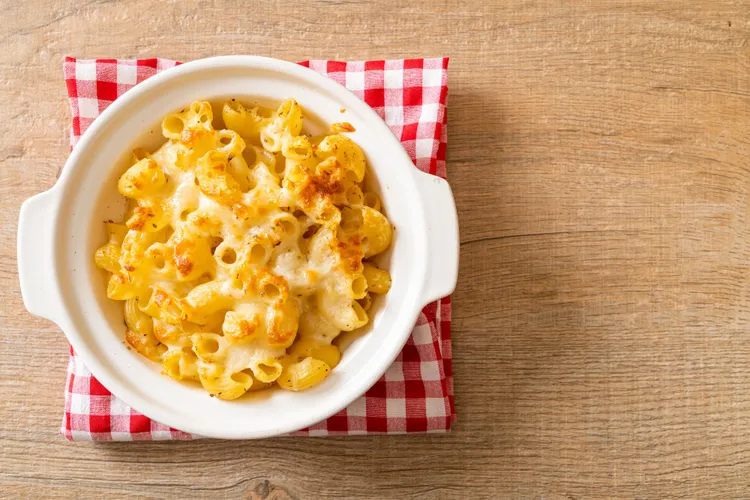
- Cheese Sauces - English mustard in a béchamel-based cheese sauce prevents the cheese from becoming stringy or separating. Essential in a proper macaroni cheese, cauliflower cheese, or Welsh Rarebit.
- Roast Meat Coating - Applied as a paste before roasting, mustard forms a flavourful crust, helps herbs and breadcrumbs adhere, and seals moisture. The heat of the oven mellows its pungency completely.
- Devilled Preparations - English mustard provides the backbone heat in devilled eggs, devilled kidneys, and devilled chicken. Paired with Worcestershire sauce and cayenne, it produces the characteristic fiery, savoury quality of the style.
Practical Cooking Tips: Using Mustard the Professional Way
Always add mustard before the oil in a dressing
Combine the acid, salt, and mustard first and whisk until homogenous. Then add oil in a slow, steady stream while whisking. The mustard is already distributed through the acid phase before the oil arrives - it can immediately begin coating oil droplets as they form. Adding oil and mustard simultaneously produces a weaker emulsion.
Use mustard as a marinade binder for coatings
When applying a herb crust, breadcrumb coating, or spice rub before roasting, brush the surface with a thin layer of Dijon first. The mustard acts as glue that holds the coating in place during cooking and forms its own flavourful layer between the meat and the crust.
A small amount goes a long way in hot sauces
In a hot application, half a teaspoon of Dijon per portion is typically enough for the emulsifying effect. More and the mustard flavour becomes identifiable. Add it off the heat or at the very end of cooking for the most controlled result.
Mustard and cheese: always pair them
Any dish involving melted cheese benefits from mustard. The mustard's isothiocyanates interact with sulphur compounds in cheese to produce more complex, rounded flavour, and its emulsifying properties help the cheese melt into a smooth sauce rather than becoming grainy or stringy. This is why a proper Welsh Rarebit, good cheese toastie, or proper macaroni cheese always includes mustard.
How Professional Kitchens Think About Mustard
In a professional kitchen, mustard lives in two places: on the condiment line for direct service, and at the saucier's station for structural use. These are completely different functions - professional cooks treat them as separate tools that happen to come from the same jar.
The most telling indicator of how professionals value mustard's structural role is the standard vinaigrette formula used in most European restaurant kitchens: three parts oil to one part acid, plus a teaspoon of Dijon and salt. The Dijon is non-negotiable - not for flavour, but because without it the dressing will have separated by the time it reaches the table.
One specific professional technique worth adopting at home: the mustard-based pan sauce finish. After searing a chicken breast, pork chop, or steak, deglaze with white wine or stock, reduce by half, then whisk in half a teaspoon of Dijon and a cold knob of butter simultaneously. The mustard and butter's milk proteins work together as a dual emulsifier, producing a glossy, stable, restaurant-quality sauce in under two minutes. No cream, no flour, no additional thickener needed.
Mustard has been used as a culinary and medicinal ingredient for over 5,000 years - ancient Sanskrit writings from around 3000 BCE reference its use, making it one of the oldest documented spices in human history. The Romans mixed mustard seeds with unfermented grape juice (called mustum) to make a paste - and it's from this Roman preparation, mustum ardens meaning "burning must," that the word "mustard" derives. The condiment that stabilises your vinaigrette has been doing the same chemical work in human kitchens for five millennia. It just took food science a while to explain why.
Here's What It All Comes Down To
Mustard is one of the most versatile and underused structural ingredients in the home kitchen. Its emulsifying power holds vinaigrettes, pan sauces, and cream sauces together. Its flavour-bridging chemistry makes acid and fat taste like they belong in the same dish. Its interaction with cheese proteins produces smooth, glossy results that other approaches can't reliably replicate.
The most important shift: stop treating mustard as a condiment and start treating it as an ingredient. A condiment goes on the side. An ingredient goes in the sauce - quietly, functionally, invisibly - and makes everything it touches work better.
A teaspoon in the vinaigrette. A half teaspoon in the pan sauce. A thin smear under the herb crust. That's all it takes.
In Short
- Mustard contains mucilage and surface-active compounds that act as natural emulsifiers, helping oil and water-based liquids bond together and stay bonded far longer than unsupported emulsions.
- A teaspoon of Dijon in a vinaigrette holds the emulsion stable for 30+ minutes - the same dressing without mustard separates within two to three minutes.
- Mustard acts as a flavour bridge between acid and fat, moderating the sharpness of vinegar and the heaviness of oil simultaneously - making sauces taste rounder and more complete.
- Dijon is the most versatile and strongest emulsifier for smooth sauces. Wholegrain adds texture and milder flavour. English mustard is roughly twice as hot as Dijon and must be used sparingly.
- In hot applications, add mustard off the heat or at the very end of cooking. Half a teaspoon per portion is typically sufficient for emulsification without detectable mustard flavour.
- Mustard and cheese always belong together - mustard's compounds help cheese melt smoothly rather than becoming grainy or stringy.
- Use mustard as a binder under herb crusts and breadcrumb coatings - it acts as adhesive that holds the coating in place and adds its own flavour layer.
- The word "mustard" derives from the Roman mustum ardens - "burning must" - making it one of the oldest continuously used culinary ingredients in documented history.
Latest