Why You Should Always Toast Nuts Before Using Them
Toasting nuts takes two minutes and is one of the highest return-on-effort steps in cooking - yet most home cooks skip it entirely or do it wrong. The difference between a raw walnut and a toasted one in the same dish isn't subtle. It's the difference between an ingredient you notice and one that transforms the dish.
Here's a simple experiment: taste a raw almond side by side with one you've toasted in a dry pan for three minutes. The raw almond tastes faintly bitter, mildly fatty, and slightly starchy. The toasted almond is nutty, fragrant, complex, and noticeably sweeter, with a crunch that feels entirely different in the mouth.
Same nut. Same day. Two minutes of heat. The flavour difference is not a matter of preference - it's a matter of chemistry. And once you understand what's actually happening to those oils and proteins under heat, you'll never add a raw nut to anything again without reaching for the pan first.
Toasting nuts triggers the Maillard reaction and caramelisation, transforming raw, mildly flavoured oils and starches into hundreds of new aromatic compounds - the ones responsible for that deep, nutty, roasted aroma that raw nuts completely lack. It also drives off moisture, concentrates flavour, and produces a crunch that holds up far better in salads, baked goods, and finished dishes.
The process takes 2-5 minutes in a dry pan or 8-12 minutes in an oven. The only risk is going too far - nuts go from perfectly toasted to burnt in under 60 seconds. Watching them is not optional.
The Chemistry of Toasting
Raw nuts contain three main components that transform dramatically under heat: proteins, natural sugars, and oils. Each reacts differently, and together they produce an entirely new flavour profile from the same ingredient.
The Maillard Reaction: Where the Nuttiness Comes From
The Maillard reaction occurs when amino acids (from the proteins in nuts) react with reducing sugars at temperatures above approximately 140°C / 285°F, producing hundreds of new flavour compounds - pyrazines, furans, and other aromatics collectively responsible for the deep, roasted, complex flavour of toasted nuts.
Raw nuts contain almost none of these compounds. They form only under heat, and they're irreversible - once created, they don't disappear. This is why a toasted nut added to a cold salad dressing still contributes its toasted character after cooling completely.
Natural Sugars: The Caramelisation Layer
Nuts contain small amounts of natural sugars that begin caramelising at around 160°C / 320°F under dry heat, adding a secondary layer of sweet, slightly bitter complexity on top of the Maillard compounds. This is why toasted nuts often taste subtly sweeter despite no sweetener being added.
Oils: Volatilisation and Flavour Release
Nuts are 50-70% fat by weight. These fats contain volatile aromatic compounds largely locked inside the nut's cellular structure when raw. Heat breaks down the cell walls and volatilises these compounds - making them airborne and aromatic. That fragrant warmth when you toast pine nuts or almonds is those volatile compounds being released. The same compounds are what your nose and tongue register as "nuttiness."
"Toasting doesn't improve a nut. It completes it - unlocking compounds that were always there but needed heat to exist."
What Most People Get Wrong
| Myth | Fact |
|---|---|
| You can toast nuts in advance and they'll stay just as good for days. | Toasted nuts are at their peak immediately after toasting. The volatile aromatic compounds begin dissipating as the nuts cool and sit. For best results, toast close to when you'll use them. Stored airtight, they're good for 1-2 days - but not as good as fresh. |
| Darker means more flavour - any level of browning is fine. | Nuts have a narrow window between perfectly toasted and burnt. The high oil content means heat continues transferring even after removal from the heat source. Always transfer immediately to a cold surface the moment they're done. |
| Toasting doesn't matter for baked goods since the oven will toast them anyway. | The interior of a moist batter rarely reaches the temperatures needed for the Maillard reaction in nuts (140°C+). Pre-toasting ensures the flavour compounds are already present. The difference in a banana bread or brownie with pre-toasted vs. raw walnuts is substantial. |
| All nuts toast at the same speed - one rule for all. | Toast time varies significantly by nut size and oil content. Pine nuts toast in 2 minutes; whole cashews need 6-8. Always toast each variety separately. |
How to Toast Nuts: Two Methods
The Pan Method (Fastest, Best Control)
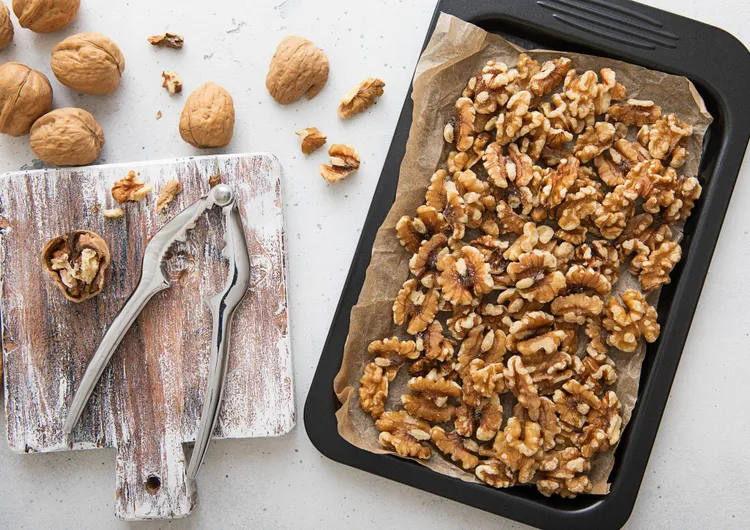
Place nuts in a single layer in a dry, heavy-bottomed pan - no oil needed. Set the heat to medium. Stir or toss every 30-45 seconds. Remove from heat the moment they smell deeply nutty and have taken on an even golden colour. Immediately tip onto a cold plate - not a warm one, which continues the cooking. Takes 2-5 minutes depending on the nut.
Best for: small quantities, single varieties, when you need maximum control.
The Oven Method (Hands-Off, Best for Large Batches)
Spread nuts in a single layer on a baking sheet. Preheat oven to 160-180°C / 325-350°F. Check and toss every 4-5 minutes. Total time: 8-15 minutes. Remove when golden and fragrant and immediately tip off the hot baking sheet onto a cold surface.
Best for: larger quantities, when you're multitasking - but the final few minutes still require attention.
The Smell Test: How to Know When They're Done The most reliable indicator is your nose, not your eyes. When the aroma shifts from faintly raw and fatty to deeply warm and nutty - almost like a different ingredient - they are done. This aromatic peak happens about 30 seconds before visible darkening becomes obvious. Trust smell over sight, and remove immediately when the smell is right.
Toasting Times by Nut: Quick Reference
| Nut | Pan Time | Oven Time | Watch For |
|---|---|---|---|
| Pine nuts | 2-3 min | 5-7 min | Fast-burning; pull at first sign of gold |
| Sesame seeds | 2-3 min | 5-8 min | Listen for popping; golden, not brown |
| Flaked almonds | 2-4 min | 6-8 min | Pull when edges turn golden; thin and fast |
| Walnuts & pecans | 4-5 min | 8-10 min | Deepened colour, warm earthy aroma |
| Whole almonds & hazelnuts | 5-7 min | 10-12 min | Even golden; rub hazelnuts in a towel to remove skin |
| Cashews & macadamias | 5-8 min | 10-14 min | Warm golden; buttery aroma for macadamias |
| Whole peanuts | 6-8 min | 12-15 min | Medium-golden for mild; deeper gold for intensity |
| Pumpkin seeds | 3-5 min | 8-10 min | Listen for popping; season immediately while hot |
| Coconut flakes | 2-3 min | 5-8 min | Very fast; golden edges, not brown |
Where to Use Toasted Nuts: The Full Playbook
Salads and grain bowls
The most common application and the one where the difference is most immediately obvious. Raw walnuts on a salad taste papery and slightly bitter; toasted walnuts on the same salad are one of the best textures and flavours in savoury cooking. Toasted nuts also hold up to dressing better than raw - reduced moisture content means they don't go soft as quickly.
Pasta and risotto
Toasted pine nuts in pasta al pesto are not optional - they're structural. Toasted walnuts through a pasta with blue cheese and radicchio. Toasted hazelnuts over a risotto with butternut squash and sage. In all of these, the nut provides textural contrast, aromatic depth, and fatty richness. The Maillard compounds in the toasted nut actively enhance the savoury flavours of the dish around it.
Baked goods
Banana bread, brownies, carrot cake, muffins, and cookies - all standard recipes call for nuts, and virtually none specify pre-toasting. Pre-toasting produces dramatically better results in every case. A brownie with raw walnuts is good. With toasted walnuts, it's something people ask about.
Sauces and dressings
Toasted almonds blended into romesco. Toasted pine nuts in pesto. In sauces where nuts are blended, toasting concentrates the flavour before it's dispersed - the result is more intense than the same sauce made with raw nuts.
As a finishing element
Scattered over soups, hummus, ice cream, or yoghurt with honey: toasted nuts bring aroma, texture, and visual appeal simultaneously. A bowl of soup with toasted hazelnuts and a drizzle of hazelnut oil is a restaurant move that takes three minutes.
Practical Tips: Getting It Right Every Time
Never toast different nuts together
Pine nuts and whole almonds require different times and temperatures. Toast each variety separately - the extra pan wash is worth it.
Season immediately while hot
If making spiced or salted nuts, season as soon as they come off the heat. The residual heat and warm oils act as a binder - spices and salt adhere and integrate rather than falling off. Seasoning cold toasted nuts results in loose spice at the bottom of the bowl.
Store smart if toasting ahead
Cool completely before storing - trapped steam from warm nuts creates moisture that softens them. Store airtight at room temperature for up to two days. For longer storage, refrigerate and re-toast briefly in a dry pan for 60 seconds before using to restore dissipated aromatic compounds.
Why Professional Kitchens Never Skip This Step
In a professional kitchen, raw nuts are treated as an ingredient in a pre-finished state - like meat that hasn't been seared yet. They are rarely added to a finished dish without toasting first.
Beyond flavour, professional cooks value toasted nuts for their consistency. A raw nut's flavour is variable - affected by age, storage, and moisture content. A properly toasted nut has had those variables burned away and replaced with Maillard compounds that are predictable and intense. The cook knows exactly what the toasted nut will contribute.
One professional technique worth adopting: keep a jar of mixed toasted nuts on the kitchen counter. Toast a batch of almonds, hazelnuts, walnuts, and pine nuts at the start of the week and keep them in a jar ready to scatter over anything that needs texture and depth. Used within two days they're excellent. Beyond that, a brief re-toast restores them entirely.
The distinctive aroma of toasted hazelnuts and coffee comes from the same family of chemical compounds - pyrazines and furans produced by the Maillard reaction. This is why toasted hazelnuts and coffee pair so naturally: their aromatic profiles overlap significantly. The same logic explains why toasted sesame oil works so well as a finishing element in Asian cooking - its Maillard compounds share aromatic overlap with soy sauce and miso, creating a flavour synergy that raw sesame oil entirely lacks. Toasting doesn't just improve nuts. It connects them to an entire family of flavours they couldn't access before.
Here's what it all comes down to
Toasting nuts is one of the highest-impact, lowest-effort steps in cooking. Two to eight minutes in a dry pan transforms a background ingredient into an active flavour contributor - creating aromatic compounds that didn't exist before, intensifying sweetness, building crunch, and connecting the nut's flavour to everything around it.
The only mistake is going too far. Watch them. Use your nose. Transfer immediately. Season while hot.
After doing this once with the side-by-side comparison - toasted versus raw in the same dish - you'll never go back. The difference is that clear, and the effort is that small.
Key Learnings
- Toasting triggers the Maillard reaction and caramelisation, creating hundreds of new aromatic compounds - pyrazines, furans - entirely absent in raw nuts.
- Heat also volatilises the nuts' natural oils, releasing aromatic compounds locked in raw cellular structure and producing the characteristic nutty fragrance raw nuts lack.
- Toasted nuts taste noticeably sweeter, more complex, and more intense - not because anything was added, but because heat transformed what was already there.
- The pan method (dry pan, medium heat, 2-5 minutes) gives the most control. The oven method (160-180°C, 8-15 minutes) is better for large batches.
- Use your nose: the moment the aroma shifts from raw and fatty to warm and nutty, they're done. Smell is 30 seconds ahead of visible browning.
- Always transfer immediately to a cold surface - nuts continue cooking on a hot pan and can go from perfect to burnt in under a minute.
- Different nuts require different times. Never toast varieties together - toast each separately to avoid uneven results.
- Season while hot if adding spices or salt - the warm oils act as a binder and residual heat integrates the seasoning into the nut's surface.