Tamagoyaki
Tamagoyaki is a Japanese rolled omelet made with eggs and a touch of sweetness from sugar, sake, and soy sauce. This dish features a delicate, fluffy texture and is often enjoyed in bento boxes or as a breakfast item.
Cook time 15 min
Prep time 5 min
Ingredients:
4 eggs2 tsp sugar
1 tsp sake
1 tsp soy sauce
1/4 tsp salt
1 short spray cooking spray oil
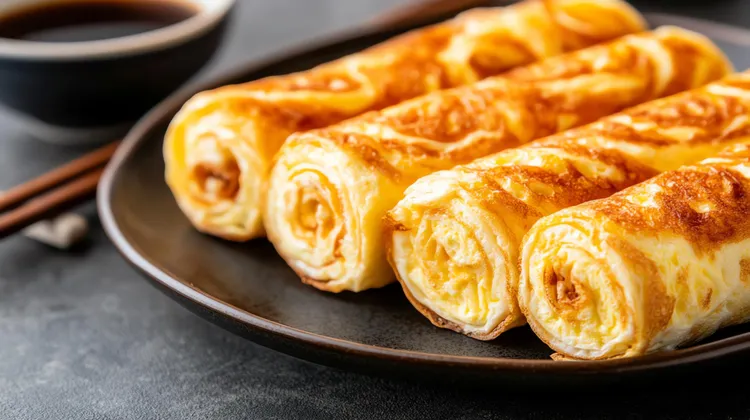
Tamagoyaki, a Japanese rolled omelet, is a delightful dish often enjoyed in bento boxes or as part of a traditional Japanese breakfast. Its slightly sweet and savory flavor, combined with a delicate, fluffy texture, makes it a favorite for many. This recipe will guide you through the process of making this simple yet exquisite dish at home.
Instructions:
- In a bowl, crack the 4 eggs.
- Add 2 tsp of sugar, 1 tsp of sake, 1 tsp of soy sauce, and 1/4 tsp of salt.
- Whisk the ingredients together until well combined and the sugar and salt are dissolved.
- Place your tamagoyaki pan or small non-stick frying pan over medium-low heat.
- Once the pan is warm, lightly spray it with cooking spray oil to coat the surface.
- Pour a small amount of the egg mixture into the pan, just enough to cover the bottom.
- Tilt and rotate the pan to spread the egg mixture evenly.
- Allow the egg to cook until it is mostly set but still slightly runny on top.
- Using a spatula and chopsticks, gently lift one edge of the omelette and begin rolling it towards the opposite end of the pan.
- Once the first layer is rolled, push it to one side of the pan.
- Lightly re-grease the empty part of the pan with another short spray of oil if needed.
- Pour another thin layer of the egg mixture into the pan, lifting the rolled omelette to allow the new layer to flow underneath it.
- Cook until it is mostly set but still slightly runny on top.
- Roll the new layer of egg around the previous roll, starting from the edge where the previous roll ended, pushing it back to the opposite side of the pan once rolled.
- Repeat steps 5 and 6 until all the egg mixture is used up, continuing to form layers and rolling them into one cohesive roll.
- Once the final layer is rolled and cooked, gently press on the roll with a spatula to ensure it is cohesive and cooks through without overbrowning.
- Remove the rolled omelette from the pan and place it on a cutting board.
- Let it cool slightly, then slice it into 1-inch pieces.
- Serve tamagoyaki warm or at room temperature. Enjoy on its own or as part of a bento box!
Tamagoyaki may require a bit of practice, but the effort is well worth it. This versatile dish can be enjoyed on its own, atop sushi rice, or as a flavorful addition to your meals. With these tips and a bit of patience, you'll be able to create a delicious and beautifully rolled tamagoyaki that will impress family and friends alike.
Tamagoyaki FAQ:
Cooking each layer of tamagoyaki typically takes about 1 to 2 minutes on medium-low heat. Ensure the eggs are mostly set but still slightly runny before rolling.
Tamagoyaki is done when the final roll is cohesive and firm without being overbrowned. A gentle press with a spatula can help ensure it cooks through evenly.
Yes, you can store leftover tamagoyaki in an airtight container in the refrigerator for up to 3 days. Reheat in a non-stick pan or microwave before serving.
You can substitute sake with rice vinegar or dry white wine if necessary. However, note that the flavor might differ slightly from the original recipe.
A rectangular tamagoyaki pan is traditional for this dish, but a small non-stick frying pan works well too. Ensure it's heated on medium-low to prevent burning.
Cooking Tips:
- Use a square or rectangular tamagoyaki pan for the best results.
- Cook over medium-low heat to avoid burning and ensure even cooking.
- Use a rubber spatula to roll the omelet tightly and evenly.
- Strain the egg mixture through a sieve for a smoother texture.
- Practice patience; it may take a few tries to perfect the rolling technique.
Nutrition Facts
1 ServingsCalories 370kcal
Protein 27g
Carbohydrates 11g
Fiber 0.05g
Sugar 9g
Fat 22g
More recipes
Okonomiyaki (japanese pancakes)
Deliciously savoury Japanese pancakes with pork and veggies.
21 Apr 2026Karaage chicken (fried chicken)
Crispy Japanese fried chicken marinated in soy and ginger.
21 Apr 2026Vegetable miso soup with tofu and broccoli
Nutritious vegetable miso soup with tofu and broccoli, easy to prepare.
21 Apr 2026Japanese-style condensed milk bread
Deliciously soft Japanese-style condensed milk bread for all occasions.
21 Apr 2026