Nutmeg Used to Be Worth More Than Gold - And It Changed the World
The small, wrinkled seed in your spice drawer once triggered genocides, reshaped world maps, and made a handful of merchants among the wealthiest people in human history. It's also one of the most useful and underused flavour tools in the kitchen. Here's both sides of the story.
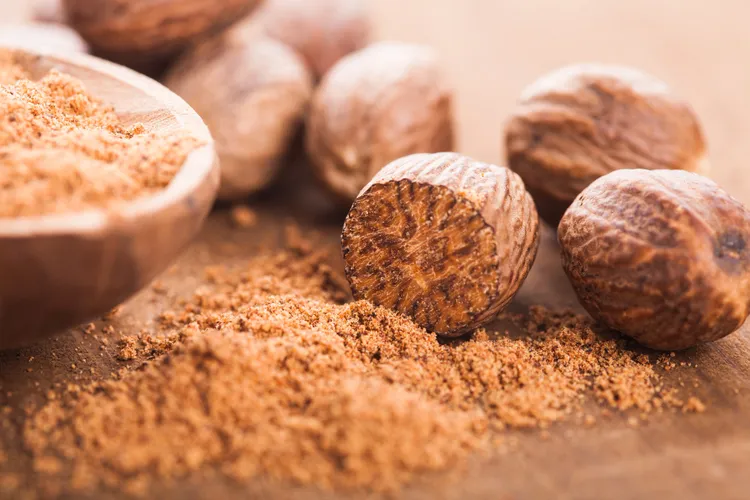
Pick up a whole nutmeg and look at it. It weighs almost nothing. It's unremarkable - brown, hard, slightly fragrant if you hold it close. Now consider that in 16th-century Europe, a single pound of this seed was worth roughly three to four times its weight in gold. Sailors would die for it. Empires would be built around it. An entire island's population would be massacred to control it.
Understanding why nutmeg commanded that price - and why it eventually became the modest, overlooked kitchen staple it is today - is one of the most revealing stories in the history of food, trade, and human nature. It also happens to contain some of the most practically useful cooking advice you'll ever encounter about a spice most people are dramatically underusing.
Nutmeg was once the most valuable commodity on earth because it grew only on the Banda Islands in what is now Indonesia - a chain of islands so remote that Europeans spent over a century trying to find them. The Dutch East India Company eventually seized control, massacred most of the island's population, and created a monopoly so complete that nutmeg's price held for decades.
In the kitchen, nutmeg remains remarkable: a small amount adds warm, woody, slightly sweet depth to both savoury and sweet dishes. The key word is small. Used well, it's one of the most transformative spices in the pantry. Used carelessly, it overwhelms everything near it.
Why Nutmeg Drove the World Mad: A Brief History
Spices in medieval and Renaissance Europe weren't just flavourings - they were medicine, status symbols, preservatives, and currency. A household that served food fragrant with exotic spice was announcing its wealth and power as clearly as any jewel or coat of arms. Of all the spices, nutmeg was among the most coveted.
It had a singular problem: it grew in exactly one place on earth. The Banda Islands - a tiny volcanic archipelago in the eastern Indonesian archipelago, now called the Maluku Islands - were the only source of both nutmeg and mace. Arab traders had dominated the routes for centuries, keeping the source secret and the price astronomical.
The Island That Changed Everything
When Portuguese explorer Francisco Serrão reached the Banda Islands in 1512, he became the first European to find the source. The knowledge triggered a century of competition, violence, and maritime empire-building. The Dutch ultimately won through a campaign of extraordinary brutality.
In 1621, the Dutch East India Company (the VOC) launched a military assault on the Banda Islands. The indigenous Bandanese population of approximately 15,000 people was reduced through massacre, enslavement, and starvation to an estimated 1,000 within a few years. The Dutch then repopulated the islands with colonists and enslaved labourers to tend the nutmeg groves - creating a monopoly over the world's entire supply.
"For over a century, every gram of nutmeg in the world passed through Dutch hands. The price they set was the only price that existed."
The Island That Was Traded for Manhattan
In 1667, the Dutch and English signed the Treaty of Breda. In the settlement, England gave up its claim to the island of Run - a tiny nutmeg-producing island in the Banda archipelago - in exchange for the Dutch relinquishing their claim to a distant, swampy territory on the American east coast. That territory was New Amsterdam. The English renamed it New York.
At the time, most observers considered the Dutch to have got the better deal. Nutmeg was worth more than the island of Manhattan.
What Most People Get Wrong About Nutmeg
| Myth | Fact |
|---|---|
| Nutmeg is only for baking and sweet dishes. | Nutmeg is essential in savoury European cooking - béchamel, spinach dishes, meat fillings, creamy pasta sauces, potato dishes. Most people have eaten it in savoury contexts without realising it. |
| Pre-ground nutmeg is just as good as freshly grated. | Nutmeg's essential oils degrade rapidly once ground. Pre-ground nutmeg is a fraction of the flavour intensity of freshly grated. A whole nutmeg and a microplane cost almost nothing and transform the spice entirely. |
| Nutmeg and mace are the same thing. | Both come from the same fruit, but are separate spices. Mace is the red lacy aril around the nutmeg seed - similar but more delicate and floral in character. |
| A generous amount of nutmeg makes a dish richer. | Too much turns medicinal, bitter, and overpowering. In large quantities it is actually toxic. A grating - not a spoonful - is the correct measure for virtually every dish. |
Why This Happened: What Nutmeg Actually Contains
Nutmeg's extraordinary flavour comes from a complex mixture of volatile compounds including myristicin, elemicin, and eugenol - the same compound that gives cloves their distinctive character. These compounds are highly fragrant, fat-soluble, and unstable once exposed to air, which is exactly why freshly grated nutmeg is so dramatically superior to pre-ground.
The compound myristicin is also a mild psychoactive substance in large doses. In the Middle Ages, nutmeg was prescribed for everything from the plague to digestive complaints. Both uses were probably optimistic.
Why a Small Amount Does So Much
Nutmeg's flavour compounds are powerful enough that they work in concentrations far too small to taste as "nutmeg." Used correctly, the spice doesn't announce itself. Instead it adds a warm, woody background note that makes cream-based sauces taste rounder, egg dishes taste more complex, and potato preparations taste more interesting. You don't taste nutmeg. You taste a better version of everything else in the dish.
How to Use Nutmeg Properly
Always buy whole nutmeg and grate it fresh
This is the single most impactful change you can make to how you use nutmeg. A whole nutmeg lasts for years. A microplane grater produces fine, fluffy powder in seconds. The difference in aroma and flavour compared to pre-ground is not subtle - it's the difference between a spice and a shadow of one.
The rule: less than you think, more than you'd imagine
For a béchamel serving four - three to four gratings, about a sixteenth of a teaspoon - is enough. For mashed potato, five or six gratings. For a cake batter, a quarter teaspoon freshly grated. If you can identify nutmeg as a distinct flavour in a savoury preparation, you've probably used too much.
The Classic Savoury Pairings You Should Know Nutmeg belongs in: béchamel and cream sauces, spinach preparations, ricotta fillings for pasta, mashed potato, egg-based dishes and quiches, and braised or ground meat. In Italian cooking especially, a pinch of nutmeg in pasta fillings is so fundamental it's nearly invisible in recipes - it's assumed to be there.
Add it at the end, not the beginning
Because nutmeg's aromatic compounds are volatile, prolonged heat drives them off quickly. Add nutmeg toward the end of cooking - just before serving for a hot dish, or just before the final bake for a gratin. Nutmeg added at the start of a long-cooked dish fades to almost nothing by the time it reaches the table.
Use it in sweet preparations with more confidence
In sweet dishes - custards, rice puddings, apple pies, spiced cakes, eggnog - nutmeg can be used slightly more generously than in savoury ones. The sweetness of the other ingredients balances nutmeg's intensity. Freshly grated nutmeg in a custard is one of the small pleasures of cooking that costs almost nothing to achieve.
Where nutmeg shines - a quick reference
- Béchamel & cream sauces - a few gratings off the heat; rounds and deepens without announcing itself
- Spinach dishes - one of the oldest and most essential pairings in European cooking
- Pasta fillings - ricotta, meat, or vegetable; standard in Italian kitchens
- Mashed potato - added with butter and cream for warmth and complexity
- Custards & puddings - classic in egg custard, rice pudding, and bread pudding
- Spiced baking - apple pie, pumpkin pie, carrot cake; nutmeg provides the warm middle note between cinnamon and clove
The Invisible Spice Technique
In professional kitchens, nutmeg occupies a specific category: the spices whose job is to be undetectable. Like white pepper in a cream sauce or a bay leaf in a braise, nutmeg in a béchamel is doing its work correctly when no one notices it's there - only when they'd notice its absence.
A chef who adds nutmeg to spinach isn't making the spinach taste of nutmeg. They're making the spinach taste more completely of spinach - the same amplification principle that umami performs in stocks. The spice is enhancing and rounding, not flavouring.
The test professional cooks use: make the dish with and without the nutmeg, side by side. The difference won't be "oh, there's nutmeg." It will be "this one tastes better and I can't quite say why." That is exactly the right result.
The Dutch monopoly on nutmeg was eventually broken not by war or politics, but by a Frenchman named Pierre Poivre - whose name translates, almost too perfectly, as "Peter Pepper." In the 1770s, he successfully smuggled nutmeg seedlings out of the Banda Islands and transplanted them to Mauritius and other French colonies, ending two centuries of Dutch control. The nutmeg now grows across the tropics. The Banda Islands massacre became a historical footnote. And a seed once worth more than gold now costs pennies.
Nutmeg is one of the most historically significant commodities in human history and one of the most quietly powerful ingredients in the kitchen. Both facts are true simultaneously, and neither is widely appreciated.
The practical takeaway is simple: buy whole nutmeg, own a microplane, and use it in far more dishes than you currently do - especially savoury ones. Learn the classic pairings. Add it late, add it sparingly, and never add enough that it announces itself.
The spice that once moved the world is still worth your attention. It just costs a little less now.
In a Nutshell
- Nutmeg once grew exclusively on the Banda Islands of Indonesia - its geographic monopoly made it one of the most valuable commodities in the world for over two centuries.
- The Dutch East India Company massacred the indigenous Bandanese population to seize control of the nutmeg trade, creating history's most ruthless spice monopoly.
- In 1667, England traded its claim to the nutmeg island of Run to the Dutch in exchange for New Amsterdam - which became New York.
- Pre-ground nutmeg is a pale substitute for freshly grated. Buy whole nutmeg and a microplane - the flavour difference is dramatic.
- Nutmeg and mace are separate spices from the same fruit: nutmeg is the seed, mace is the red lacy aril surrounding it.
- In savoury cooking, nutmeg works as an invisible enhancer - in béchamel, spinach, pasta fillings, mashed potato, and egg dishes, it deepens flavour without being detectable.
- Add nutmeg toward the end of cooking - its volatile aromatic compounds dissipate quickly under sustained heat.
- The Dutch monopoly was broken in the 1770s when Pierre Poivre smuggled seedlings to French colonies, ending two centuries of control and making nutmeg the affordable pantry staple it is today.
Latest