The Best Roast Potatoes: Crispy Outside, Fluffy Inside
The variety that matters, the par-boil that creates the crispy surface, the fat debate settled, and the make-ahead method that removes roast potatoes from the Christmas Day stress list entirely
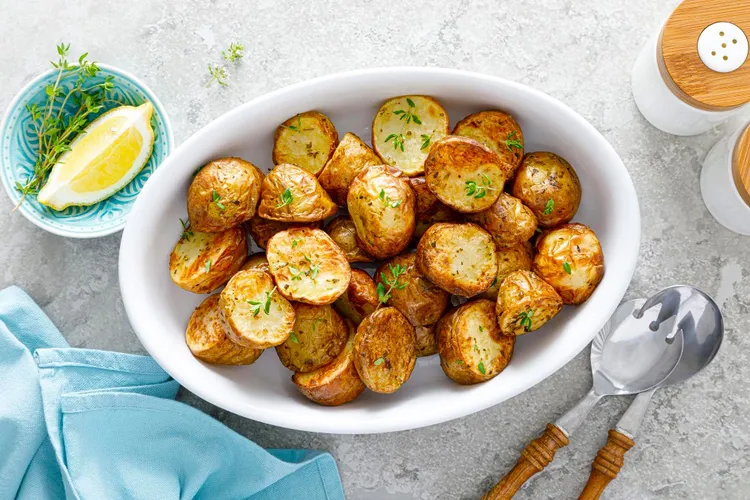
The perfect roast potato has a specific, non-negotiable character: a shatteringly crispy exterior and a completely fluffy, almost cloud-like interior. These two qualities are not in tension - they are produced by the same technique, applied correctly. The exterior crisps because the surface is rough (from shaking after par-boiling), dry (from steaming after draining), and exposed to very hot fat (from a preheated roasting tin). The interior is fluffy because a floury potato variety has been used, and because the par-boiling has cooked the starch through before the roasting begins.
What makes roast potatoes fail is almost always one of three things: the wrong potato variety (waxy potatoes don't produce a fluffy interior), insufficient roughening of the surface (smooth surface = less crispiness), or fat that wasn't hot enough when the potatoes went in.
The Variety: Why It Matters More Than Anything Else
Potatoes are classified by their starch content and cell structure - floury potatoes (high starch, cells that separate when cooked) versus waxy potatoes (lower starch, cells that stay cohesive). For roast potatoes, floury varieties are essential.
Best varieties:
- Maris Piper - the gold standard. High starch, fluffy interior, produces the best roast potato of any British variety. The default choice.
- King Edward - also excellent, slightly less widely available, marginally more flavourful.
- Desiree - a pink-skinned, slightly less floury option; good but not quite Maris Piper.
- Vivaldi - the slightly waxy exception that still produces good results due to its high dry matter content.
Avoid: New potatoes, Jersey Royals, Charlotte, Nicola, or any variety described as "waxy" or "salad" potato. These produce roast potatoes with no fluffy interior and limited crisping.
The Fat: The Debate Settled
The fat determines the flavour of the exterior. The temperature at which the fat is maintained in the oven determines the crispiness.
Goose fat: The traditional choice and, in terms of flavour, the gold standard. Produces a rich, savoury exterior with a specific depth that vegetable oil cannot replicate. Expensive but used in small quantities per serving.
Duck fat: Almost identical result to goose fat at a slightly lower price. Interchangeable.
Beef dripping: A traditional British alternative - the rendered fat from beef roasting. Similar depth of flavour to goose fat but specifically beefy. Excellent with beef-based meals.
Lard: Neutral flavour, very high smoke point, produces an extremely crispy exterior. Less fashionable than goose fat but highly effective.
Vegetable or sunflower oil: Works well and produces genuinely good results. Less flavour than animal fats. The best option for vegetarian or vegan roast potatoes.
Olive oil: Acceptable, though the smoke point is lower than other options and the flavour can be slightly bitter at high oven temperatures.
The temperature requirement: Whatever fat is used, it must be in the roasting tin and preheated in the oven until shimmering and close to its smoke point before the potatoes are added. Cold fat produces fat-absorbing, greasy potatoes rather than crispy ones.
Ingredients
Serves 6–8 as a side | Make-ahead: par-boil and freeze up to 2 weeks ahead
- 1.5kg Maris Piper potatoes (or King Edward)
- 4 tbsp goose fat, duck fat, beef dripping, or sunflower oil
- 1 tsp fine sea salt (for the par-boiling water)
- Flaky sea salt and fresh thyme (for serving)
The Method
Step 1: Peel and cut
Peel the potatoes. Cut large potatoes into quarters; medium potatoes into halves; small potatoes left whole. The goal is even-sized pieces - if sizes vary, smaller pieces will burn before larger ones are cooked through. Aim for roughly golf-ball-sized pieces.
Rinse briefly under cold water to remove surface starch.
Step 2: Par-boil
Place the potato pieces in a large saucepan. Cover with cold salted water. Bring to a boil over medium-high heat. Boil for 10-12 minutes until the edges of the potatoes are beginning to break down slightly when pressed with a fork - the internal flesh should still have some resistance, but the exterior surfaces should be showing the first signs of becoming fluffy and breaking apart.
The edges are the key indicator. You're looking for the point just before the potato would begin to fall apart - where the exterior starch has fully gelatinised and is becoming fluffy, but the centre still has structure. This usually happens at 10-12 minutes depending on the size.
Drain carefully in a colander.
Step 3: Steam dry
Return the drained potatoes to the empty saucepan over very low heat for 1-2 minutes. This steam-drying step removes surface moisture, which is the enemy of crispiness. You will see steam rising from the potatoes.
Step 4: Roughen the surfaces
Place the lid on the saucepan. Shake vigorously for 5-6 seconds. The potatoes will bash against the walls of the saucepan, and their surfaces will become rough, uneven, and slightly fluffy-looking - almost like they're wearing a furry coat.
This roughening is the most critical technique step. The rough, ragged surface provides dramatically more surface area for the hot fat to contact and crisp - producing the crunch-per-bite that a smooth-surfaced potato never achieves.
Step 5: Freeze (make-ahead option) or cool
For immediate roasting: Allow the roughened potatoes to cool slightly before adding to the hot fat.
For make-ahead (recommended for Christmas and large dinners): Spread the roughened, par-boiled potatoes on a large baking tray in a single layer. Freeze until solid (approximately 2 hours). Transfer to a sealed freezer bag. Keep frozen for up to 2 weeks.
Why frozen potatoes roast better: The freezing and thawing process breaks down more of the potato's cell walls, releasing more starch to the surface. Frozen potatoes placed directly into very hot fat crisp faster and more completely than fresh par-boiled ones. This is not a compromise - it is an improvement.
Step 6: Preheat the fat
Place the fat in a large roasting tin. Place the tin in the oven at 220°C (fan) for 10-12 minutes until the fat is shimmering, rippling, and nearly smoking.
The fat must be at maximum heat. This is the step most home cooks under-do. The immediate sizzle when a potato is added to the fat is the reaction that begins the crisping process - the potato's surface water converts to steam instantly, creating the initial textural separation between the crispy exterior and the floury interior.
Step 7: Add the potatoes
Remove the roasting tin from the oven. Working quickly, add the potato pieces to the hot fat - one at a time, in a single layer, not overlapping. The fat will spit and sizzle aggressively - stand back and add them from a reasonable distance.
Tilt the tin to coat each potato in fat. Return to the oven immediately.
Step 8: Roast
From par-boiled, not frozen: Roast at 220°C for 40-50 minutes, turning twice (at 15 minutes and 30 minutes), until deeply golden on all sides.
From frozen: Roast at 220°C for 50-60 minutes, turning twice, until deeply golden. The potatoes go in frozen - do not thaw.
The deep golden standard: Roast potatoes are done when they are a deep, amber-gold on the turning surfaces, with a visible crust rather than just colour. Pale gold is under-done; they will be soft. Deep gold is correctly done - the crust is set.
Step 9: Season and serve
Drain briefly on kitchen paper to remove excess fat. Season immediately with flaky sea salt and fresh thyme. Serve within 15 minutes of coming out of the oven - roast potatoes do not improve with keeping.
The Christmas Day Strategy
The make-ahead frozen method transforms roast potatoes from a day-of stress into a solved problem:
2 weeks before Christmas: Par-boil, roughen, cool, freeze. Bag. Store.
Christmas Day, T-55 minutes: Remove frozen potatoes from the freezer. Preheat the fat in the roasting tin at 220°C for 10 minutes.
T-45 minutes: Add frozen potatoes to hot fat. Return to oven.
T-15 minutes: Turn potatoes for the second time.
T-0: Potatoes out of the oven. Season. Serve.
The turkey will have rested during this window (the 40-55 minutes from carving time perfectly overlaps with the potato roasting time), and everything arrives at the table at the same moment.
Variations
Garlic and rosemary roast potatoes: Add 4 unpeeled garlic cloves and 3 sprigs of rosemary to the roasting tin in the final 15 minutes of cooking. The garlic softens and becomes sweet; the rosemary crisps and perfumes the potatoes.
Parmesan roast potatoes: Grate 50g of Parmesan directly over the potatoes in the final 5 minutes of cooking. The cheese melts and sets into a crispy layer on the surface.
Hasselback potatoes (for elegance): Leave potatoes whole and make thin parallel slices to 80% of the depth (leaving the base intact). The slices fan open during roasting, producing dramatically more surface area and a visually striking presentation.
Smashed potatoes (for maximum crunch): Boil small potatoes whole until tender. Drain. Smash each potato flat with the back of a glass or a potato masher. Drizzle generously with oil. Roast at 220°C for 30-35 minutes until the edges are shatteringly crispy.
Pro Tips
- Don't skip the shaking step. The rough surface is the entire source of the crispy exterior. A smooth, unshaken potato surface produces competent roast potatoes. A roughened, shaken surface produces outstanding ones.
- Par-boil from cold water. Starting in cold water produces even cooking from the outside in - putting potatoes in already-boiling water can overcook the exterior before the centre is at the correct stage.
- The fat must be hot enough to spit. If you add a potato to the fat and it sits quietly without sizzling, the fat is not hot enough. Return to the oven for 5 more minutes and try again.
- Single layer in the tin - never overlapping. Overlapping potatoes steam each other rather than roasting individually. Use two roasting tins if necessary.
The Most Common Roast Potato Failure: Insufficient Roughening The step most home cooks do minimally (a brief shake of the colander) rather than aggressively (a sustained, vigorous shaking of a lidded saucepan until the surface of each potato looks almost furry with broken starch). The rough surface is the mechanism behind every crispy roast potato you have eaten in a restaurant or a skilled home cook's kitchen. Do it aggressively.
🔗 Complete the Roast Dinner
Latest