Christmas Dinner: The Complete Plan, Timeline and Recipes
The two-week preparation calendar, the three-hour day-of schedule, and the specific strategies that transform the most stressful cook of the year into something you enjoy
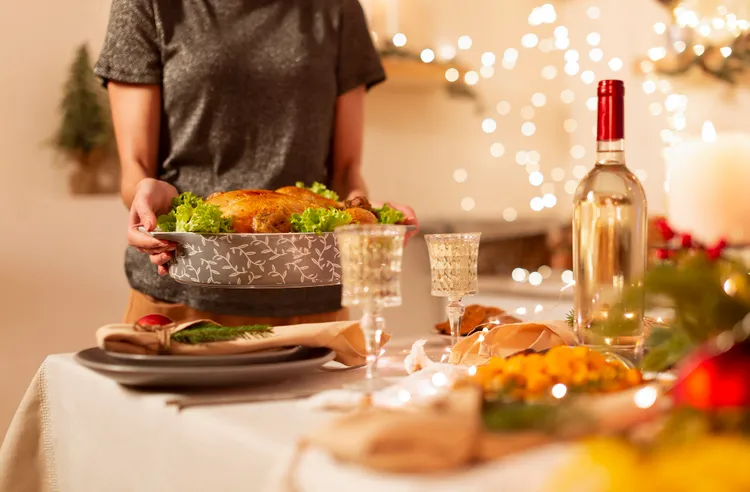
Christmas dinner is not difficult cooking. The turkey is a large piece of protein requiring straightforward roasting technique. The sides are all familiar preparations. The gravy is a pan sauce - a technique covered in full in How to Make a Pan Sauce. What makes Christmas dinner challenging is the coordination: eight dishes, one oven, multiple hob rings, and the pressure of an audience who have been anticipating this meal for months.
The solution is planning - specifically, redistributing the cooking work across the two weeks before Christmas so that Christmas Day itself involves reheating and finishing rather than preparing from scratch. Every component of a great Christmas dinner can be partially or fully prepared in advance. Christmas pudding improves over weeks. Red cabbage braise improves over days. Roast potatoes can be parboiled and frozen, then finished in hot fat on the day. The turkey gravy base can be made the day before from the giblets and neck.
A properly planned Christmas dinner requires approximately 90 minutes of active cooking on Christmas Day itself. Everything else is timing and temperature management.
The Two-Week Preparation Calendar
3-4 Weeks Before Christmas
Make the Christmas pudding (if making your own rather than buying). Christmas pudding is traditionally made on Stir-up Sunday, the last Sunday before Advent, but any point in November or early December works. The pudding steams for 5-6 hours, then is stored until Christmas Day. See Christmas Pudding, Mince Pies and Festive Baking.
Make the mincemeat (if making your own for mince pies). Homemade mincemeat improves over weeks as the flavours mellow.
2 Weeks Before Christmas
Make and freeze the mince pie pastry cases. Roll, line the tin, blind bake. Cool. Freeze. On the day of serving, fill with mincemeat and bake 15 minutes from frozen.
Order the turkey if buying from a butcher. Specify the weight (allow 500g per person for a bone-in whole bird) and the collection date (24-48 hours before Christmas).
1 Week Before Christmas
Make and freeze the stuffing balls. Full recipe below. Frozen stuffing balls go directly from freezer to oven - 30 minutes at 190°C from frozen.
Braise the red cabbage. See recipe below. The braised cabbage keeps 4-5 days refrigerated and improves over this time. Reheat gently in a covered pan on Christmas Day.
Make and freeze pigs in blankets. Roll sausages in streaky bacon. Freeze on a tray, then bag. Cook directly from frozen (35-40 minutes at 190°C).
Buy all dry goods - dried fruit, nuts, chocolate, spices. Fresh produce is bought closer to the day.
4-5 Days Before Christmas
Make the cranberry sauce. 300g cranberries + 100g sugar + zest and juice of 1 orange + 100ml water. Simmer 10 minutes until berries burst. Cool. Refrigerate up to 2 weeks.
Par-boil and freeze the roast potatoes. See full technique below. Par-boiled potatoes, fluffed, cooled, and frozen produce crispier roast potatoes than potatoes roasted from raw.
2 Days Before Christmas
Dry-brine the turkey. Rub 2-3 tsp of fine sea salt per kg of turkey all over the skin (including under the breast skin). Place uncovered on a rack in the refrigerator. The dry brine draws moisture to the surface, which is then reabsorbed along with the salt, seasoning the meat from within and drying the skin for maximum crisping. See How to Roast a Perfect Turkey.
Make the turkey stock from the giblets and neck. Simmer with onion, carrot, celery, bay, peppercorns for 2 hours. Strain. Refrigerate. This becomes the base of the gravy on Christmas Day.
Christmas Eve
Make the gravy base. In the turkey's roasting tin (or a large saucepan): sauté a quartered onion and carrot in butter. Add flour, cook 2 minutes. Add the turkey stock and simmer until slightly thickened. Season. Refrigerate. On Christmas Day, this base is reheated and enriched with the turkey pan drippings.
Set the table.
Take the turkey from the refrigerator 1 hour before bed and leave at room temperature overnight - this produces more even cooking the following day. (Food safety note: this is appropriate in a cool kitchen - below 18°C. If the kitchen is warm, remove from the refrigerator 2 hours before cooking instead.)
Prepare all vegetable garnishes that need pre-cooking - peel and halve Brussels sprouts, peel carrots and parsnips, prep the cauliflower for the cheese sauce.
Christmas Day: The Three-Hour Schedule
For a turkey of 5-6kg, serving 8-10 people, with a 2pm dinner time. Adjust start times proportionally for different turkey sizes (approximately 20 minutes per 500g at 190°C, plus 30-40 minutes resting).
| Time | Action |
|---|---|
| T-3:30 | Remove turkey from refrigerator. Preheat oven to 220°C |
| T-3:00 | Turkey in oven at 220°C for 30 minutes (initial high heat crisps skin) |
| T-2:30 | Reduce to 190°C. Continue roasting. Start timing |
| T-1:30 | Check turkey temperature. Begin preparing active sides |
| T-1:00 | Turkey out if temperature correct (74°C at thigh). Tent with foil and resting towels. Increase oven to 220°C |
| T-0:55 | Roast potatoes in the hot oven (from frozen - 45 minutes) |
| T-0:55 | Stuffing balls and pigs in blankets in oven |
| T-0:30 | Make the cauliflower cheese. Into oven when potatoes come out |
| T-0:20 | Reheat red cabbage (covered, low heat) |
| T-0:15 | Honey glaze carrots and parsnips - into oven or hob |
| T-0:10 | Make turkey gravy using pan drippings + prepared base |
| T-0:05 | Steam Brussels sprouts (5 minutes maximum - still green and slightly firm) |
| T-0:00 | Carve turkey. Plate and serve |
The 40-minute turkey rest is not optional. A rested turkey stays hotter for longer than an unrested one - the muscle fibres relax and reabsorb juice, and the thermal mass retains heat through the rest period. A 5kg turkey removed from the oven at T-1:00 and properly insulated (foil + kitchen towels draped over) will still be at 65-70°C when carved at T-0:00.
The Eight Essential Sides
1. Perfect Roast Potatoes
Make-ahead window: Par-boil up to 2 weeks ahead and freeze.
The technique that produces the crispiest roast potato:
Choose a floury variety - Maris Piper, King Edward, Desiree. Peel and cut into large, equal-sized pieces (quartered for large potatoes, halved for medium).
Par-boil: Cover with cold salted water. Bring to a boil. Simmer for 10-12 minutes - until the edges are beginning to break down and look slightly fluffy when a knife is inserted. This "fluffing" of the exterior is the most important step. Drain carefully. Return to the empty saucepan over low heat for 1 minute to steam dry.
Roughen the surfaces: Place the lid on the saucepan. Shake vigorously - the potato pieces will bash against the saucepan and develop rough, ragged surfaces. These rough surfaces produce the maximum surface area for crisping.
Freeze at this point (spread on a tray, freeze solid, then bag) or proceed directly to roasting.
Roasting: Heat a large roasting tin with fat (goose fat, duck fat, beef dripping, or refined oil) in a 220°C oven until shimmering and just smoking. Add the potatoes carefully - they should sizzle immediately. Turn to coat. Roast for 45-55 minutes (from frozen - allow 50-60 minutes), turning twice, until deeply golden on all sides.
Season with flaky salt and fresh thyme immediately from the oven.
2. Honey-Glazed Carrots and Parsnips
Make-ahead window: Peel and cut up to 2 days ahead. Cook on the day.
Peel and cut 500g carrots and 500g parsnips into even batons (3-4cm). Blanch in boiling salted water for 3 minutes. Drain.
On Christmas Day: Melt 30g butter with 2 tbsp honey and 1 tsp thyme leaves in a wide frying pan over medium heat. Add the blanched vegetables. Toss to coat. Cook over medium heat, turning occasionally, for 8-10 minutes until caramelised and golden. Season with salt and pepper. Scatter fresh thyme.
3. Braised Red Cabbage
Make-ahead window: Cook up to 5 days ahead. Refrigerate. Reheat gently.
Heat 2 tbsp butter in a large saucepan. Add 1 large onion (diced) - cook 5 minutes. Add 1 medium red cabbage (finely shredded), 2 eating apples (peeled, cored, diced), 3 tbsp red wine vinegar, 2 tbsp soft brown sugar, 1 tsp ground cinnamon, ½ tsp ground cloves, 150ml red wine or water, salt. Stir well. Cover. Cook over low heat for 45 minutes until very soft and deeply coloured. Adjust seasoning - it should be sweet-sour. Cool, refrigerate.
Reheat covered over low heat with a splash of water on Christmas Day.
4. Brussels Sprouts with Bacon and Chestnuts
Make-ahead window: Halve sprouts up to 2 days ahead. Cook on the day - 8 minutes maximum.
The sprout's reputation as a despised vegetable comes almost entirely from overcooking - boiled too long until grey, sulphurous, and soft. Correctly cooked (still green, still with slight resistance), Brussels sprouts are excellent.
Fry 150g lardons or diced smoked bacon until crispy in a wide pan. Remove and set aside. In the same pan, sauté 600g halved Brussels sprouts over high heat for 5-6 minutes until golden on the cut side. Add 200g cooked chestnuts (vacuum-packed is fine). Return the bacon. Season generously.
5. Stuffing Balls
Make-ahead window: Make and freeze up to 2 weeks ahead.
Soften 2 diced onions and 4 sticks diced celery in 50g butter (8 minutes). Add 2 crushed garlic cloves, 1 tsp dried thyme, 1 tsp dried sage, salt and pepper. Cook 2 minutes. Remove from heat. Cool completely. Combine with 400g good-quality sausage meat, 100g fresh breadcrumbs, 1 egg, and 2 tbsp chopped fresh parsley. Mix thoroughly. Form into golf-ball-sized balls (approximately 18). Freeze on a lined tray until solid, then bag.
Cook from frozen at 190°C for 35-40 minutes until golden and cooked through.
6. Cauliflower Cheese
Make-ahead window: Make the sauce up to 2 days ahead. Assemble on the day.
Make a béchamel sauce (see How to Make a Roux): 40g butter + 40g flour + 600ml whole milk. Season with salt, white pepper, a little mustard. Stir in 150g grated mature Cheddar and 50g Parmesan off the heat.
Par-boil a large cauliflower (broken into florets) for 5 minutes. Drain well. Arrange in a baking dish. Pour cheese sauce over. Top with a handful of grated Cheddar and breadcrumbs. Bake at 190°C for 25-30 minutes until golden and bubbling.
7. Pigs in Blankets
Make-ahead window: Assemble and freeze up to 2 weeks ahead.
Wrap each cocktail sausage (or chipolata) in a half-rasher of streaky bacon. Freeze on a tray until solid, then bag.
Cook from frozen at 190°C for 35-40 minutes until the bacon is crispy and the sausages are cooked through. These are, for many people, the most looked-forward-to element of the whole dinner - make double.
8. Christmas Gravy
Make-ahead window: Prepare the base up to 24 hours ahead.
The day before: Make turkey stock from the giblets and neck (see above). Make the gravy base: melt 30g butter in a saucepan. Add 2 tbsp flour. Cook 2 minutes. Add the stock gradually, whisking. Simmer 10 minutes until slightly thickened. Season. Refrigerate.
On Christmas Day: After the turkey has rested and been carved, pour off most of the fat from the roasting tin. Place the tin on the hob over medium heat. The fond (the dark, sticky residue) is maximum flavour - deglaze with 100ml red wine, scraping the base. Add the prepared gravy base. Simmer 5 minutes. Strain through a fine sieve into a warm jug. Taste and season.
Pro Tips
- Own more than one oven thermometer. Most domestic ovens run 10-20°C hotter or cooler than the dial suggests. An oven thermometer reveals the actual temperature and allows accurate calibration. For Christmas dinner, this is worth knowing.
- The turkey resting insulation. Wrap the rested, foil-tented turkey in two old bath towels. This level of insulation keeps a 5kg turkey at serving temperature for 45-60 minutes - essentially all the time needed to finish the sides.
- Warm serving plates. Cold plates are the most common reason Christmas dinner is lukewarm within 3 minutes of serving. Run the plates through the dishwasher (no detergent, hot cycle) or warm in the oven at 60°C for 15 minutes.
- Delegate the gravy. The gravy - the only element made to order at Christmas dinner - requires the most attention in the final 10 minutes. Assign it to the most competent person in the kitchen who is not the person carving the turkey.
🔗 The Christmas Collection
Latest