How to Roast a Perfect Turkey: The Foolproof Method
Three methods - whole bird, dry-brined; spatchcocked for speed; herb-butter basted - and the science that makes each one work
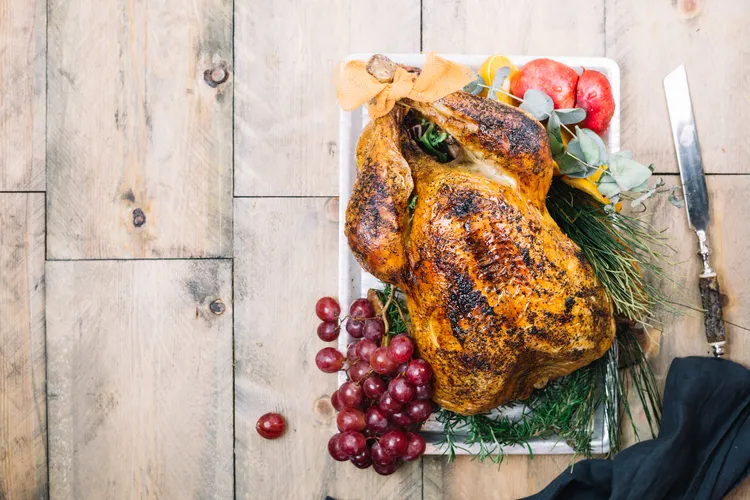
The turkey is the most anxiety-producing protein in most home cooks' annual repertoire. It is the largest animal most people ever cook. It is cooked once a year, which means almost no accumulated experience. And it carries the pressure of an occasion - Christmas or Thanksgiving - where failure is highly visible.
The anxiety is disproportionate to the difficulty. A turkey is a large piece of protein that requires careful temperature management and adequate resting. The technique is not fundamentally different from roasting a large chicken - it is the scale and the stakes that make it feel intimidating. Understanding the specific technique that ensures a juicy breast (dry brining, butter under the skin, correct internal temperature, proper resting) removes the anxiety by replacing it with specific, actionable knowledge.
This guide covers three approaches: the classic whole-bird method (with dry brining for maximum juiciness), the spatchcock method (for cooks who want to halve the cooking time), and the herb-butter roast (the most flavourful version of the whole-bird approach). All three produce an excellent turkey; each suits a different circumstance.
The Fundamental Challenge: Breast vs. Thigh
The turkey's structural problem: the breast and the thigh cook at different rates. The breast is lean, dries out quickly, and is done at 74°C. The thigh is darker, higher in fat and connective tissue, and benefits from higher temperatures (80°C+) for the collagen to break down.
In a conventionally roasted whole bird, by the time the thigh reaches 80°C, the breast has typically overshot to 82–85°C and is dry. This is why conventionally roasted turkey is so often disappointing: the breast is sacrificed for the thigh.
The three methods below each address this problem differently:
- Dry brining seasons the breast deeply and protects it slightly from moisture loss
- Spatchcocking flattens the bird so breast and thigh reach temperature more simultaneously
- Herb butter under the breast skin creates a protective fat layer that bastes the breast from within
Choosing the Turkey
Size calculation: Allow 500-600g per person for a bone-in whole turkey, accounting for bone weight and providing leftovers. A 5kg turkey serves 8-10 people.
Fresh vs. frozen: Fresh turkeys from a butcher, ordered 2-3 weeks ahead, are recommended - they have more flavour and more control over sourcing. Frozen turkeys must be completely defrosted before cooking (48-72 hours in the refrigerator for a 5-6kg turkey). Never roast a partially frozen turkey - the interior will not reach a safe temperature before the exterior overcooks.
Free-range vs. standard: The difference in flavour between a properly reared free-range turkey and a standard intensively reared one is significant and immediately apparent. For the occasion where the turkey is the centrepiece, the quality upgrade is worth the additional cost.
Method 1: Classic Dry-Brined Whole Roast Turkey
The best all-round method. Two days of dry brining produces dramatically better results than a same-day cook.
The Dry Brine (2 days before)
Dry brining - rubbing salt directly onto the turkey and leaving it uncovered in the refrigerator - is the most impactful single technique improvement available. Here is what it does:
Day 1: Salt draws moisture from the turkey via osmosis. The surface appears moist.
Day 2: The drawn moisture, now concentrated with salt and dissolved proteins, is reabsorbed into the meat. The salt penetrates the muscle fibres, seasoning from within.
After 48 hours uncovered in the refrigerator: The skin is completely dry and almost papery - precisely the condition that produces maximum skin crispiness in the oven.
The brine mixture: For a 5-6kg turkey:
- 3 tbsp fine sea salt
- 2 tsp black pepper
- 2 tsp dried thyme
- 2 tsp dried sage
- 1 tsp garlic powder
Mix together. Rub generously under the breast skin (slide fingers gently between skin and breast flesh, separating without tearing), inside the cavity, and all over the exterior skin. Place on a rack over a baking tray. Refrigerate uncovered for 48-72 hours.
Roasting
Remove from the refrigerator 2 hours before roasting (cold turkey from the refrigerator cooks less evenly).
Preheat oven to 220°C (fan).
Optional aromatics in the cavity: half a lemon, a whole head of garlic (halved), a few sprigs of thyme and rosemary. These aromatise the interior of the bird and contribute to the pan drippings.
Rub the exterior skin with 50g of softened butter (or brush with oil for a crispier skin - butter contains milk solids which can brown before the turkey is done).
Place the turkey breast-side up on a rack in a large roasting tin.
Initial high heat (30 minutes at 220°C): Starts the Maillard reaction on the skin immediately, developing colour before the temperature drops.
Reduce to 190°C (160°C fan): Continue roasting for approximately 20 minutes per kg at this temperature.
Temperature testing: Insert an instant-read thermometer into the thickest part of the thigh, away from the bone. When it reads 74°C, the turkey is done. Check in multiple places.
Resting: Remove from the oven. Tent loosely with foil. Wrap with two bath towels or a thick blanket. Rest for a minimum of 40 minutes - up to 90 minutes for a very large bird without significant temperature loss.
Turkey Roasting Times
| Turkey Weight | Initial High Heat | Continued Roasting (190°C) | Total Approximate Time |
|---|---|---|---|
| 3-4kg | 30 min | 1h 00-1h 20m | 1h 30-1h 50m |
| 4-5kg | 30 min | 1h 20-1h 40m | 1h 50-2h 10m |
| 5-6kg | 30 min | 1h 40-2h 00m | 2h 10-2h 30m |
| 6-7kg | 30 min | 2h 00-2h 20m | 2h 30-2h 50m |
| 7-9kg | 30 min | 2h 20-3h 00m | 2h 50-3h 30m |
All times are approximate. Temperature (74°C at the thigh) is the definitive doneness test.
Method 2: Spatchcocked Turkey
The fastest method - halves the cooking time and produces more even cooking.
Spatchcocking (removing the backbone and flattening the bird) allows the breast and thigh to cook at approximately the same rate, since the entire bird is exposed to the oven's direct heat rather than the thigh being sheltered under the breast.
The technique: Using poultry shears or very sturdy kitchen scissors, cut along one side of the backbone from the tail to the neck opening. Repeat on the other side of the backbone. Remove the backbone entirely (save it for stock). Flip the bird breast-side up. Press firmly down on the breastbone - you will hear it crack. The bird should now lie flat.
Dry-brine as above for 24-48 hours, or season immediately before roasting.
Roasting: Place flat on a large roasting rack. Roast at 200°C (fan) for 15 minutes per kg until the thigh reaches 74°C. A 5kg spatchcocked turkey takes approximately 75-80 minutes compared to 2-2.5 hours whole.
The trade-off: The spatchcocked turkey is less visually dramatic for table presentation - it cannot be carved at the table in the same way. Cut into breasts and legs in the kitchen before serving.
Method 3: Herb-Butter Roast Turkey
The most flavourful version - compound butter under the skin protects the breast and produces extraordinary drippings.
The herb butter:
- 200g unsalted butter, at room temperature
- 4 cloves garlic, minced
- Zest of 1 lemon
- 2 tbsp fresh thyme leaves
- 2 tbsp fresh rosemary, finely chopped
- 2 tbsp fresh sage, finely chopped
- 1 tsp fine sea salt
- 1 tsp black pepper
Beat all together until smooth.
Separate the breast skin from the flesh with your fingers, working all the way along both breasts. Push two-thirds of the herb butter under the skin, distributing it evenly over both breasts. Rub the remaining butter over the exterior skin.
Dry-brine (or salt and pepper) as above. The herb butter can be applied up to 24 hours ahead.
Roast using the same temperatures and times as Method 1.
The drippings: The herb butter melts into the pan, creating drippings of extraordinary flavour. These form the basis of the best turkey gravy you have made.
Carving
Allow the full resting period before carving. Carving a turkey that has not rested fully releases juices that the muscle fibres haven't had time to reabsorb.
The sequence:
- Remove the legs: press one leg outward, exposing the joint. Insert the knife at the joint between thigh and body. Cut through the joint (not bone). Separate leg from thigh at the knee joint.
- Remove the breasts: run the knife along one side of the breastbone, following the curve of the ribcage, peeling the breast off in one piece. Slice across the grain.
- The oysters: before carving, turn the carcass over and locate the two small round pieces of meat embedded in the backbone (one on each side). Scoop out with a spoon - these are the most flavourful pieces of the bird.
The Gravy
After resting, transfer the turkey to the carving board. Pour the drippings from the roasting tin through a sieve into a jug. Skim off the excess fat (or use a fat separator).
Place the roasting tin over medium heat on the hob. Add 2 tbsp flour and stir into the remaining fat in the tin. Cook 2 minutes. Add 200ml white wine or turkey stock, scraping all the fond from the base. Add the reserved turkey stock and any prepared gravy base from the day before. Simmer until thickened. Season.
Pro Tips
- The dry brine is non-negotiable for the best result. A turkey cooked the same day it is taken from the refrigerator is dramatically less juicy than a 48-hour dry-brined turkey. The difference is immediately apparent in both the texture and the flavour.
- Use an instant-read thermometer. The pop-up timers that come with commercial turkeys activate at approximately 82°C - 8°C above the 74°C at which a turkey is safely cooked and at the point where the breast is already beginning to dry. Use a thermometer.
- The towel wrap during resting. Foil alone retains heat adequately. Foil plus two thick towels maintains the temperature so effectively that a 5kg turkey rested this way is still at serving temperature 1 hour after coming out of the oven.
- Let the breast skin dry completely. Wet or moist skin produces steamed skin rather than crispy skin regardless of oven temperature. The 48-hour dry brine in the refrigerator (uncovered) produces skin of ideal dryness.
Never Cook a Frozen or Partially Frozen Turkey A partially frozen turkey cooks extremely unevenly - the exterior overcooks while the interior is still at temperatures that allow bacterial growth. Defrost completely in the refrigerator: 24 hours per 2kg. A 5kg turkey needs 60 hours minimum. Plan accordingly.
FAQ
Q: Do I need to baste the turkey?
Basting (spooning hot drippings over the surface of the turkey repeatedly during cooking) produces very little measurable improvement in moisture or browning. Each time the oven door is opened, the oven temperature drops and the cooking time extends. The herb-butter method provides far better internal basting without the oven door opening. Skip basting.
Q: Should I cover the turkey during roasting?
No. Covering with foil produces steam, which prevents the skin from crisping. The skin stays better uncovered throughout roasting. If the skin is browning too quickly, tent very loosely for the middle portion of cooking - but the initial high heat and subsequent lower heat usually manage the browning well without covering.
🔗 Complete the Christmas Dinner
Latest