Why Burgers Fall Apart - And Exactly How to Fix It
A burger that crumbles in the pan isn't bad meat and it isn't bad luck - it's a structural failure with a clear scientific cause. Understanding what holds a patty together, and what destroys that structure before the burger even hits the plate, is the difference between a meal and a mess. Here's exactly what's going wrong and how to fix it.
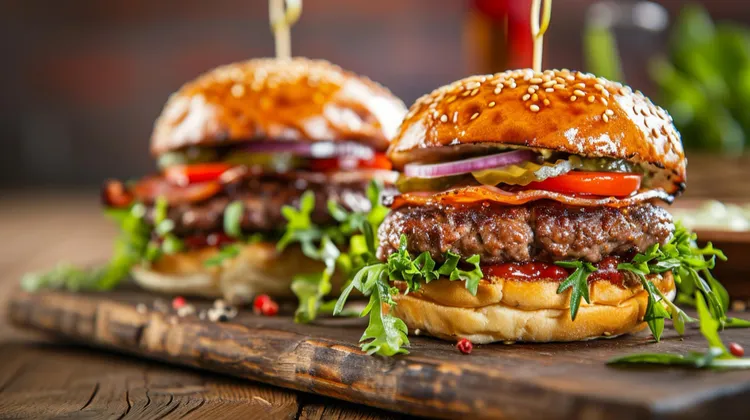
You've shaped the patty carefully, preheated the pan, maybe even chilled the meat first. Then you try to flip it and it splits cleanly in two - or crumbles into a pile of browned beef that looks more like bolognese than a burger. Nothing is more demoralising at the grill.
The problem is almost never the meat itself. It's the structure - or rather, the absence of it. A burger patty is a compressed matrix of proteins, fat, and moisture that needs specific conditions to hold together. Disrupt any of those conditions and the whole thing falls apart. Understanding which condition you're disrupting is how you fix it permanently.
Burgers fall apart for five main reasons: the meat was overworked and the protein structure was destroyed; the fat content was too low to bind; the patty was too warm when it hit the pan; it was flipped too early before a crust could form; or it was over-seasoned with salt before shaping, which breaks down proteins prematurely.
The good news: all five causes have simple, reliable fixes that require no special equipment, no binders, and no compromise on flavour.
Why This Happens: The Burger Structure
A raw burger patty holds together through a combination of three forces: myosin bonds between meat proteins, the mechanical entanglement of ground meat fibres, and fat acting as a lubricant and cohesive agent between particles. When all three are intact and in balance, the patty holds its shape through handling and the first minutes of cooking until heat sets the exterior proteins permanently.
The moment any of these forces is disrupted - by over-handling, wrong temperature, wrong fat ratio, or premature salt - the structure weakens. The heat of the pan then finishes the job, and the patty collapses.
What Heat Does to a Burger
In the first 60-90 seconds of contact with a hot surface, the exterior proteins of a burger denature and contract, forming a rigid crust. This crust is not just flavour - it's structural support. It's what allows you to flip the burger without it disintegrating. A patty that is moved, pressed, or flipped before this crust has formed has no structural integrity and tears along whatever internal weakness exists.
This is why the instruction "don't touch it" in the first minute of cooking is not stylistic preference. It's physics.
"The crust isn't just flavour - it's the skeleton. Flip too early and there's nothing holding the burger together."
The Five Culprits: What's Actually Causing Your Burger to Fall Apart
1. Overworking the Meat When you knead, squeeze, or press ground beef repeatedly, you break down the myosin proteins into a paste-like consistency that loses its natural structural cohesion. The patty feels dense and compact - but it will crumble under heat because the interlocking fibre structure has been destroyed. Handle ground beef as little as possible. Shape the patty with one or two gentle presses, not five minutes of moulding.
2. Fat Content Too Low Lean mince - anything below 15–20% fat - lacks the intramuscular fat that acts as both binder and lubricant. During cooking, fat melts and redistributes through the patty, keeping particles together. Without it, the proteins contract and tighten, moisture evaporates fast, and the patty dries out and cracks. The ideal fat content is 20-25%. An 80/20 blend is the industry standard for good reason.
3. Salting Too Early Salt draws moisture out of meat through osmosis and, more critically, begins dissolving myosin proteins - the same proteins that provide structural cohesion. Season the outside of a shaped patty just before it hits the pan, never before forming. The difference in texture is significant and measurable.
4. Wrong Temperature at Cooking Meat that is too warm when it hits the pan begins releasing fat and moisture immediately, before any crust can form to contain it. The optimal approach is cold patties - straight from the fridge - on a very hot cooking surface. The extreme temperature difference creates a fast, decisive crust before the interior has time to lose its structure.
5. Flipping Too Early (or Too Often) A burger releases naturally from a well-seasoned pan or grill when the crust has formed. If you have to force the flip, the crust isn't ready. Forcing an early flip tears the patty along its weakest internal plane. One flip, at the right moment, is the professional standard. Multiple flips aren't wrong, but premature flips always are.
What Most People Get Wrong
| Myth | Fact |
|---|---|
| You need egg, breadcrumbs, or a binder to hold a burger together. | A well-made beef burger needs no binder. Egg and breadcrumbs are for meatballs and meatloaf. Pure ground beef with adequate fat and minimal handling holds perfectly without them. |
| Pressing the patty flat in the pan helps it cook evenly. | Pressing squeezes out the fat and moisture that keep the burger juicy and cohesive. It destroys internal structure and makes the burger more likely to fall apart. |
| Lean mince holds together more firmly because it's less greasy. | Lean mince produces dry, crumbly burgers. Fat is a structural component. Below 15% fat, the patty has almost nothing holding it together after moisture cooks off. |
| Mixing herbs, garlic, and onion into the patty adds flavour without affecting structure. | Adding ingredients inside a patty introduces moisture pockets, disrupts the protein matrix, and requires more mixing, which overworks the meat. Season the outside. Keep the inside pure beef. |
Practical Cooking Tips: Building a Burger That Holds
Choose the right mince - and don't mess with it
Start with beef mince at 20-25% fat. Chuck is the classic choice: right fat ratio, good flavour, right texture. Avoid pre-formed supermarket patties where possible - often overworked during manufacturing. Handle it as little as possible from the moment it's ground.
Shape cold, cook cold
Work with mince straight from the fridge. Divide into portions of roughly 150-180g and shape each one with the minimum touches needed. Press the centre slightly thinner than the edges to compensate for doming. Return shaped patties to the fridge on a tray until the pan is ready. Cold patties on a screaming-hot surface create the fastest crust.
Salt last, not first
Season the exterior of the patty with salt and pepper immediately before placing in the pan. Not five minutes before. Not while shaping. Immediately before. This is the single quickest fix for burgers that crumble, and it costs nothing.
Use the right heat and the right pan
Cast iron or heavy stainless steel, preheated until very hot - the point where a drop of water skitters and evaporates immediately. A thin pan at moderate heat will steam rather than sear, never building the structural crust the patty needs.
The Flip Test: How to Know When It's Ready Press very gently on the edge of the patty with a spatula after 2-3 minutes. If it resists and feels firm, attempt the flip with a smooth, decisive motion. If the spatula slides under cleanly and the patty releases without sticking, it's ready. If you meet resistance and the surface tears, wait another 30–60 seconds. The burger will always tell you when it's ready to flip.
Make a thumb indent before cooking
Press a shallow dimple - about 1cm deep - into the centre of each patty before cooking. As the burger cooks, proteins contract and the patty wants to dome upwards. The dimple compensates, producing a flat, even patty with better pan contact - and a more structurally stable burger throughout.
Diagnosing Your Specific Problem
| Symptom | Likely Cause | Fix |
|---|---|---|
| Falls apart on flip | Flipped too early; no crust formed yet | Wait until patty releases cleanly without force; use the flip test |
| Crumbles while shaping | Fat content too low, or mince too dry | Switch to 20-25% fat mince; don't freeze-thaw before use |
| Dense and rubbery texture | Meat was overworked during shaping | Handle mince minimally; shape in two or three presses maximum |
| Dry and crumbly after cooking | Lean mince, over-cooked, or pressed during cooking | Use higher fat mince; cook to medium; never press with spatula |
| Splits around the edge | Salt added before shaping, or mixed-in ingredients disrupting structure | Salt only the exterior immediately before cooking; keep interior pure |
| Puffs up into a ball | No thumb indent; proteins contracting unevenly | Press a 1cm dimple into the centre before cooking |
Why Restaurant Burgers Hold Together So Well
Restaurant burgers hold together for reasons that have nothing to do with secret ingredients and everything to do with process control. The meat is ground fresh, handled minimally, portioned consistently, kept cold, and cooked on surfaces at temperatures most home cooks would consider dangerously hot.
There is one additional technique high-end burger restaurants use that almost no home cook replicates: the smash. Placing a ball of cold, loosely packed mince on an extremely hot flat surface and pressing it flat immediately with a heavy spatula works because the thin patty sears almost instantaneously across its entire surface. There's no window for structural failure because the crust forms everywhere at once, in under 60 seconds. The lacey, crispy edges are a structural feature, not just an aesthetic one.
For home cooks not working the smash style, the lesson is the same: the faster and more completely the crust forms, the more structurally sound the burger. Everything else - fat content, handling, temperature - is in service of that single goal.
Burgers fall apart because of structural failures that happen before the patty ever hits the pan. The fix isn't a different recipe, a special binder, or a new technique - it's understanding and respecting the conditions that allow proteins and fat to hold a patty together long enough for heat to do the rest.
Use the right fat ratio. Handle the meat as little as possible. Salt at the last second. Keep everything cold until the moment of cooking. Use a very hot surface. And wait - actually wait - until the burger is ready to flip.
Do those things consistently and the burger that crumbles becomes the burger that holds together perfectly, every time, without a single added ingredient.
What to Remember
- Burgers fall apart due to structural failures: overworked meat, low fat content, early salting, wrong temperature, or flipping too soon.
- The exterior crust formed in the first 60-90 seconds of cooking is structural - flip before it forms and the patty has nothing holding it together.
- Use 20-25% fat mince. Fat is a structural component, not just flavour. Lean mince produces dry, crumbly patties.
- Never salt or season the inside of a patty before shaping - salt breaks down myosin proteins and weakens structural cohesion. Season the outside immediately before cooking.
- Handle the mince as little as possible. Two or three firm presses to shape; no kneading, no moulding, no squeezing.
- Cook cold patties on a very hot surface - the temperature contrast creates the fastest, most decisive crust.
- Press a shallow dimple into the centre of each patty before cooking to prevent doming and maintain even pan contact.
- Never press a burger with a spatula while it cooks - it squeezes out fat and moisture, accelerates drying, and destroys internal structure.
Latest