Why Does Bread Become Hard When It Goes Stale?
Bread going stale has nothing to do with drying out - and almost everything to do with a molecular structural change happening inside the starch, with or without moisture loss. Understanding the real science of staling immediately changes how you store bread, how you slow the process, and how you reverse it - and it explains why your refrigerator is one of the worst places you can keep a loaf.
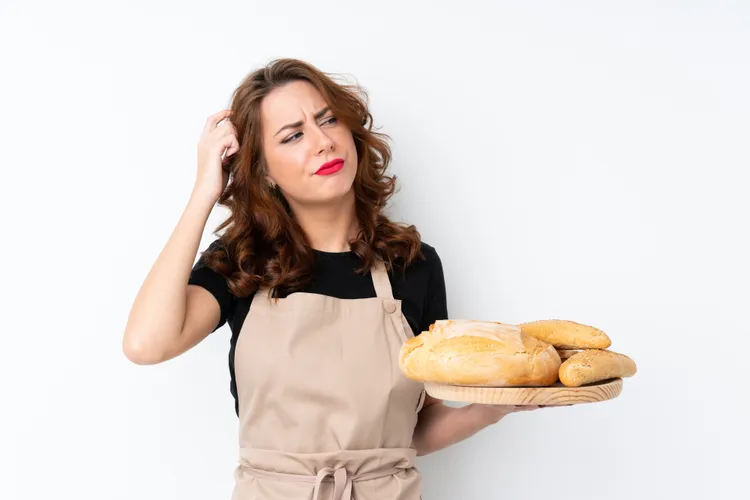
Staling Isn't What You Think It Is
Here's something almost nobody knows: a loaf of bread can go completely stale in a sealed, airtight bag without losing a single gram of moisture to the outside air.
Stale bread feels dry. It feels like the moisture has escaped. Every instinct says staleness is a drying-out problem. But the science tells a different story - and understanding it changes everything about how you handle bread in your kitchen.
Why Does Bread Go Hard?
Bread hardens as it stales primarily because of a process called starch retrogradation - not because it dries out. The starch molecules inside bread, which were softened and made flexible during baking, gradually reorganize into a tighter, more rigid crystalline structure as the bread cools and ages. This structural change makes the bread firm and crumbly even when the total moisture content of the loaf hasn't changed significantly.
The good news: because staling is a structural change rather than permanent moisture loss, it is partially reversible with heat - which is why rewarming stale bread actually works.
Why This Happens: The Science of Starch Retrogradation
What Happens to Starch During Baking
Flour is mostly starch - long-chain carbohydrate molecules arranged in a tightly packed crystalline structure in raw flour. When you mix flour with water and apply heat during baking, two things happen to those starch granules:
First, they absorb water and gelatinize - they swell, burst open, and the starch chains disperse into the surrounding dough in a disordered, fluid, flexible arrangement. This is what creates the soft, pillowy, open interior crumb of freshly baked bread.
Second, the heat sets the gluten protein structure around those swollen starch molecules, creating the framework that holds the bread's shape.
When the bread comes out of the oven and cools, the starch is in that soft, gelatinized, disordered state. This is fresh bread - soft, springy, pleasurable to eat.
What Happens to Starch During Staling
As the bread sits at room temperature, the starch molecules don't stay disordered. They begin slowly realigning and bonding back into an organized crystalline structure - a process called retrogradation. The starch chains recrystallize around whatever water molecules are available, forming tight, rigid structures that make the crumb firm, crumbly, and progressively harder.
This isn't gradual dehydration. The water is still there - it's just been incorporated into the rigid starch crystal structure rather than remaining mobile between starch chains. The bread has effectively changed phase at the molecular level.
Why Temperature Controls the Speed of Retrogradation
Here's the critical detail: starch retrogradation happens fastest at temperatures just above freezing - between roughly 35°F and 40°F (2°C-4°C). This is, of course, almost exactly the temperature of a standard refrigerator.
At room temperature (around 65°F-70°F / 18°C-21°C), retrogradation happens, but more slowly. At freezing temperatures (below 32°F / 0°C), the process essentially stops - starch molecules can't reorganize when everything is frozen solid. At high temperatures (above 140°F / 60°C), retrogradation reverses - the recrystallized starch melts back into its soft, disordered state.
This is why:
- The fridge is the worst place to store bread - refrigerator temperatures are the sweet spot for maximum retrogradation speed. Refrigerated bread goes stale roughly six times faster than bread stored at room temperature.
- The freezer is ideal for preservation - the process stops entirely, and bread frozen within a day of baking retains its fresh quality almost completely.
- Warming stale bread in the oven actually works - heat above 140°F reverses retrogradation temporarily, softening the starch back toward its gelatinized state.
What Most People Get Wrong About Stale Bread
Mistake 1: Storing bread in the refrigerator. This is the single most common bread storage mistake, and it's backed by perfectly logical reasoning - the fridge preserves food, so it should preserve bread. But refrigerator temperatures (35°F-40°F) are precisely the range where starch retrogradation is fastest. Refrigerated bread doesn't last longer; it goes stale dramatically faster. The only exception is in very humid climates where mold is a serious concern - in which case, the freezer is still a better choice than the fridge.
Mistake 2: Assuming stale bread is dry bread. Stale bread often contains nearly as much moisture as fresh bread - the water is just structurally trapped. This is why reviving stale bread with a quick splash of water and time in a hot oven works: you're adding surface moisture and applying enough heat to reverse retrogradation, not rehydrating a dried-out product.
Mistake 3: Storing bread cut-side out. Once a loaf is cut, the exposed crumb surface loses surface moisture rapidly through evaporation - which accelerates the surface staling even if the interior is fine. Always store a cut loaf with the cut side face-down on a board or pressed against another flat surface, or wrap just the cut end.
Mistake 4: Wrapping bread in plastic while still warm. Warm bread trapped in plastic creates steam that condenses, creating a moist environment that dramatically accelerates mold growth. Let bread cool completely - at least one hour for a standard loaf - before wrapping or placing in a sealed bag.
Mistake 5: Throwing away stale bread. Stale bread is a genuinely useful kitchen ingredient when you understand what it is. Its firmer, drier structure makes it superior to fresh bread for breadcrumbs, croutons, panzanella, bread pudding, French toast, ribollita, and pappa al pomodoro. Many classic dishes were specifically developed to use bread at this stage.
Storing and Reviving Bread
The Best Storage Method by Timeframe
Same day: Leave unwrapped cut-side down at room temperature. A breadbox or bread bag (fabric or paper) slows surface moisture loss without creating the mold-friendly humid environment of a sealed plastic bag.
2-4 days: Wrap in a clean kitchen towel or paper bag at room temperature. Avoid airtight plastic bags for artisan breads with a crust - trapped humidity softens the crust without meaningfully slowing internal staling. For soft sandwich loaves, a sealed bag is fine since there's no crust to protect.
Beyond 4 days: Freeze. Slice before freezing for convenience - frozen slices can go directly from freezer to toaster. Frozen bread retains quality for up to three months.
How to Revive Stale Bread
Method 1 - The oven method (best results): Run the loaf briefly under a tap or splash with water to lightly dampen the surface. Place in a 350°F (175°C) oven for 10-15 minutes. The surface moisture creates steam inside the loaf as it heats, and the heat above 140°F reverses retrogradation in the crumb. The result is remarkably close to fresh-baked texture - for about 20-30 minutes before it stales again as it cools.
Method 2 - The microwave method (quick fix): Wrap the bread loosely in a damp paper towel and microwave for 10-15 seconds. This works for individual slices or rolls. The result is soft but not crusty, and it re-stales almost immediately - eat it right away.
Method 3 - Toast it: For very stale bread, toasting doesn't reverse retrogradation - it applies heat that browns the surface and softens the interior slightly, bypassing the staling problem rather than solving it. Works well for any level of staleness.
Extending Fresh Bread's Life From the Start
- Fat in the recipe slows staling. Enriched breads (brioche, milk bread, sandwich loaves with butter or oil) stale slower than lean artisan loaves because fat interferes with retrogradation by coating starch chains. This is why supermarket sandwich bread stays soft for a week - added fat, emulsifiers, and sometimes small amounts of enzyme additives all slow the staling process.
- Sugar slows staling for similar reasons - it competes with starch for available water molecules, slowing the reorganization process.
- Sourdough stales slower than commercial yeast bread. The organic acids produced during sourdough fermentation (particularly acetic and lactic acid) interact with starch and gluten in ways that genuinely slow retrogradation - one of several reasons artisan sourdough has better keeping quality than mass-produced bread.
How Bakers Use Staling Science Deliberately
Professional bakers and pastry chefs don't just tolerate stale bread - they deliberately engineer different staling stages for different applications.
Day-old bread is the professional standard for bread pudding and French toast - not because fresh bread is unavailable, but because staled bread absorbs custard without collapsing into mush. The firmer, partially retrograded crumb structure soaks up liquid evenly and holds its shape during cooking. Fresh bread turns to wet paste.
Two-day-old sourdough is preferred for panzanella (Italian bread salad) - the firmer texture stands up to tomatoes and dressing without disintegrating immediately.
Completely stale bread (four or more days old) is dried completely in a low oven and ground for breadcrumbs that are superior to store-bought - more complex in flavor, more consistent in texture, and free of additives.
The professional mindset isn't "bread is good fresh and wasted when stale." It's "bread is a different ingredient at different stages, and every stage has a use."
Staling Inspired One of the Greatest Discoveries in Food Science
The scientific understanding of starch retrogradation developed largely through research into bread staleness - and that research eventually led directly to the science behind modified food starches that are now used in everything from instant sauces to frozen meals to cosmetics.
The humble stale loaf, studied by food scientists trying to make industrial bread last longer on supermarket shelves, unlocked an entire field of food polymer science that shaped the modern processed food industry.
Every time you eat a sauce thickened with a stabilizing starch or a yogurt with a smooth, consistent texture, you're benefiting from science that started with someone studying why bread gets hard.
Staling Is Chemistry, Not Failure
Stale bread is one of the most misunderstood things in the kitchen - widely seen as a failure of storage or freshness, when in reality it's a predictable, partially reversible, and entirely useful chemical process.
Store bread at room temperature or in the freezer - never the fridge. Revive it with water and heat when it stales. Use it deliberately at different stages for different dishes. And understand that the hard loaf at the back of the counter isn't wasted food - it's a different ingredient waiting for the right recipe.
What You Learn
- Bread goes stale primarily due to starch retrogradation, not moisture loss. Starch molecules reorganize from a soft, disordered state into a rigid crystalline structure as bread ages.
- Stale bread is not necessarily dry bread. The water is still there - it's structurally trapped in recrystallized starch, not evaporated.
- Starch retrogradation happens fastest at refrigerator temperatures (35°F-40°F). The fridge makes bread stale up to six times faster than room temperature storage.
- Freezing stops retrogradation entirely. Bread frozen within a day of baking retains its fresh quality almost completely for up to three months.
- Retrogradation is partially reversible with heat above 140°F (60°C). Dampening and oven-warming stale bread revives its texture because heat re-melts the recrystallized starch back toward its soft, gelatinized state.
- Fat, sugar, and sourdough fermentation all slow staling by interfering with the retrogradation process - which is why enriched breads and sourdough have better keeping quality than lean commercial loaves.
- Day-old bread is superior for bread pudding and French toast because the partially staled crumb absorbs custard without collapsing.
- Never wrap warm bread in plastic - the trapped steam creates conditions for rapid mold growth.
- Store cut bread cut-side down to minimize surface moisture loss from the exposed crumb.
- Stale bread research led directly to the science of modified food starches - one of the foundational discoveries of modern food science, all from studying a hard loaf.
Latest