Why Eggs Are the Most Versatile Ingredient in Cooking
No single ingredient does more different jobs in cooking than an egg. It is simultaneously a foam agent, an emulsifier, a binder, a thickener, and a coagulant - sometimes performing multiple roles in the same dish, at the same time. Understanding how eggs do each of these things is one of the most practically useful pieces of food science a cook can have.
Consider what the egg does in just a few dishes: it thickens a custard without making it grainy, lifts a soufflé without collapsing under its own weight, holds a mayonnaise together that would otherwise separate into oil and vinegar, gives a meatball structure that keeps it from falling apart, and sets a quiche into a sliceable solid. Each of these outcomes uses a different property of the egg - a different chemical mechanism - and none of them could be replicated by any other single ingredient.
The egg is not just versatile in the culinary sense of "it goes with lots of things." It is versatile in the scientific sense: it contains multiple functional components that behave differently under different conditions, making it simultaneously the best foam agent, the best natural emulsifier, the best protein binder, the best gentle thickener, and one of the best heat-setting coagulants available to a cook. All from one oval package.
Eggs do five distinct functional jobs in cooking: they foam (whites trap air to create volume), emulsify (yolk lecithin bonds oil and water), bind (whole egg proteins hold loose ingredients together), thicken (gradual protein coagulation thickens sauces and custards), and coagulate (proteins set permanently under heat to create structure). Each function comes from a different component of the egg - primarily the white proteins for foam and coagulation, and the yolk's lecithin for emulsification - and each can be used independently or in combination.
Why This Works: Inside the Egg
Before exploring what eggs do, it's worth understanding what they contain - because the egg's extraordinary versatility comes directly from the interaction between its specific components.
The White: Mostly Protein and Water
Egg white is approximately 90% water and 10% protein. The proteins are predominantly albumins - particularly ovalbumin, ovomucin, and ovotransferrin. These proteins have a remarkable range of behaviours under different conditions: they unfold and trap air when beaten, they denature and set permanently under heat, and they coagulate at lower temperatures than yolk proteins, making them easier to control precisely.
The Yolk: Fat, Protein, and the Critical Emulsifier
Egg yolk is a dense emulsion containing approximately 50% water, 30% fat, and 16% protein. Its most functionally significant component is lecithin - a phospholipid molecule with one end attracted to water and one end attracted to fat. Lecithin is one of the most powerful natural emulsifiers known, and the yolk's high lecithin content is what makes egg-based emulsions (mayonnaise, hollandaise, aioli) so stable compared to emulsions without it.
The yolk's proteins also coagulate under heat, but at higher temperatures than white proteins - typically 65-70°C / 150-160°F for the yolk versus 60-65°C / 140-150°F for the white. This temperature differential is the basis of techniques like soft-boiled eggs, where the white sets while the yolk remains liquid.
The Five Functions: How Eggs Work in Every Application
Function 1: Foam - Trapping Air for Volume and Lightness
When egg whites are beaten, the mechanical action denatures the albumin proteins, causing them to unfold and form a network of interconnected protein strands. Air bubbles become trapped within this network and stabilised by the protein films surrounding them. The result is a foam - a stable, light structure that can hold significant volume.
This foam is what makes meringues, soufflés, mousse, angel food cake, and chiffon cake possible. The stability of the foam depends on several factors:
- Fat is the enemy of egg white foam. Even a trace of yolk in the whites - or a greasy bowl - will prevent the proteins from forming a stable network. Fat molecules interfere with the protein-to-protein bonds that hold the foam structure together. This is why the slightest contamination of egg white with yolk collapses the foam.
- Acid helps. A small amount of cream of tartar or lemon juice stabilises the foam by lowering pH, which helps the proteins bond more effectively. Many meringue recipes include it for this reason.
- Sugar stabilises when added progressively. Sugar dissolved into the foam during beating strengthens the protein network and produces the glossy, stable meringue structure. Added too early, it inhibits foam formation. Added too late, it doesn't integrate properly.
- Temperature matters. Room-temperature whites foam more readily than cold whites because the proteins are more mobile. Cold whites can be beaten to a foam, but it takes longer and the volume is slightly lower.
Function 2: Emulsification - Holding Oil and Water Together
Left to themselves, oil and water separate. The oil molecules cluster together to avoid the water; the water molecules cluster to avoid the oil. Add egg yolk and the lecithin molecules in the yolk orient themselves at the oil-water interface - one end dissolved in the oil, the other in the water - physically preventing the two phases from separating.
This is the mechanism behind every stable oil-and-water emulsion in cooking:
- Mayonnaise: oil emulsified into vinegar or lemon juice by yolk lecithin
- Hollandaise: clarified butter emulsified into a reduction by yolk
- Aioli: olive oil emulsified into garlic and acid by yolk
- Caesar dressing: oil emulsified into lemon juice with yolk and anchovy
- Beurre blanc enriched with yolk: butter emulsified into acid reduction
The remarkable thing about lecithin-based emulsions is their stability. A properly made mayonnaise with adequate yolk will hold at room temperature for hours without breaking. The same oil and vinegar without the yolk separates within seconds.
One key technical point: the order of addition matters. In mayonnaise, oil must be added to the yolk slowly, in a thin stream, while the mixture is being actively worked. This gives the lecithin molecules time to coat each new oil droplet as it's introduced. Add oil too quickly and the droplets are too large for the available lecithin to stabilise, and the emulsion breaks.
Function 3: Binding - Holding Loose Mixtures Together
When eggs are added to a mixture of loose ingredients - mince, breadcrumbs, vegetables, grains - and the mixture is subsequently heated, the egg proteins coagulate and form a network that holds everything together as a cohesive mass.
This is what keeps meatballs spherical rather than crumbling, what holds a fishcake together under the spatula, what binds a fritter through frying, and what gives a veggie burger enough structure to be handled and cooked without disintegrating.
The binding action works because egg proteins, when heated, form cross-linked networks that physically entrap the surrounding ingredients. The more egg relative to the mixture, the stronger the bind - but too much egg produces a rubbery, eggy texture. The right proportion produces a mixture that holds together cleanly without dominating the flavour.
For dishes that need binding, whole egg is typically used - the white proteins provide the structural network, while the yolk's fat contributes to a less-dry, richer texture in the finished product.
Function 4: Thickening - Gentle Coagulation in Liquids
When egg is beaten into a liquid and that liquid is heated slowly and gently, the egg proteins coagulate gradually - thickening the liquid from within without scrambling into solid pieces. This is the mechanism behind custards, crème brûlée, crème anglaise, lemon curd, and curd-based sauces.
The key to successful egg-thickened sauces is temperature control. Egg proteins begin coagulating at around 60°C / 140°F. They complete coagulation and set solid at around 75-85°C / 165-185°F. The window between "beginning to thicken" and "scrambling into solid curds" is approximately 10°C / 18°F - narrow enough that direct high heat produces scrambled eggs in your sauce rather than a smooth custard.
Professional techniques for staying in this window:
- Tempering: gradually adding hot liquid to the egg mixture to slowly raise its temperature before returning to the heat, preventing thermal shock
- Bain-marie (double boiler): cooking over simmering water rather than direct heat, limiting the maximum temperature the custard can reach
- Constant stirring: preventing any one area of the mixture from overheating relative to the rest
- Sugar: sugar raises the coagulation temperature slightly, providing a wider working window - which is why sweet custards are easier to make than savoury egg-thickened sauces
Function 5: Coagulation - Setting Structure with Heat
When an egg is heated above its coagulation temperature, the proteins denature permanently and form a solid, irreversible network. This is the most fundamental cooking transformation the egg undergoes, and it underpins every application where a solid set is the goal: hard-boiled eggs, fried eggs, baked goods that need structure, quiche, frittata, and set custards.
The temperature at which different parts of the egg coagulate determines the range of textures achievable:
- White begins setting at ~60°C / 140°F
- White is fully set at ~65°C / 150°F
- Yolk begins setting at ~65°C / 150°F
- Yolk is fully set at ~70°C / 160°F
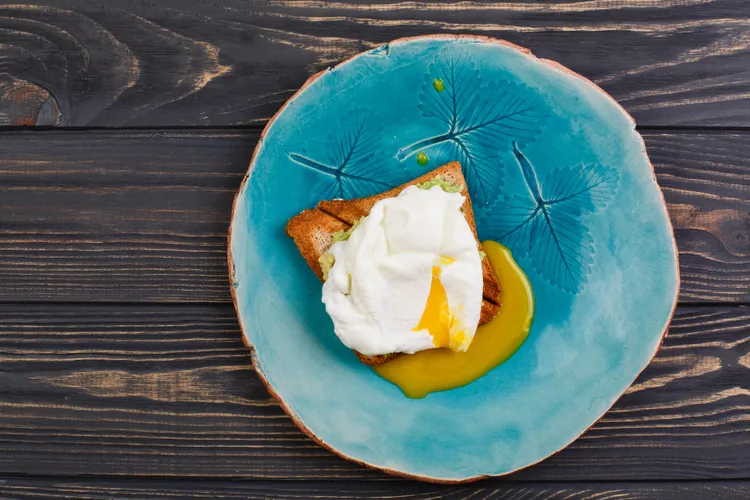
This explains why a perfectly soft-boiled egg is achievable: by controlling temperature and time precisely, you can have a white that is fully set and a yolk that remains liquid - because the two components coagulate at different temperatures.
"The egg is not one ingredient. It is five functional tools in one shell - and most recipes are only using one or two of them at a time."
What Most People Get Wrong
| Myth | Fact |
|---|---|
| Fresh eggs are always better than older eggs for all applications. | Fresh eggs are better for poaching (the white holds together more compactly) and frying. But older eggs peel more easily when hard-boiled because the air cell inside enlarges with age, separating the membrane from the shell. The "best before" date matters less than matching egg age to the application. |
| You need a lot of egg to bind a mixture effectively. | One egg binds approximately 200-250g of mixture ingredients for most applications. Too much egg makes the texture rubbery and produces an eggy flavour. Less is more - enough to hold, not enough to dominate. |
| If your custard scrambles, it's ruined. | Mildly scrambled custard can often be rescued by immediately removing from heat and blending - the blender breaks up the just-forming curds into a smooth texture. Severely scrambled custard is genuinely difficult to rescue. Prevention (tempering, double boiler, constant stirring) is more reliable than rescue. |
| Egg whites must be completely at room temperature before whipping. | Room temperature helps, but cold whites will still foam - it just takes longer and produces marginally less volume. For most home applications, the difference is minor. The more critical requirement is a completely fat-free bowl and beaters. |
| The colour of the yolk indicates nutritional quality. | Yolk colour is determined primarily by the hen's diet - specifically the carotenoid content of what she eats. Pale yolks come from grain-fed hens; deep orange yolks from hens eating grass, insects, and marigold-rich feed. Deeper colour correlates with more carotenoids but doesn't necessarily indicate superior protein, fat, or overall nutritional content. |
Using Each Egg Function Deliberately
For foam: fat-free environment is non-negotiable
Any fat in the bowl or on the beaters - including the smallest trace of yolk - will inhibit or collapse the foam. Wipe the bowl and beaters with a cut lemon or white vinegar before starting, and separate eggs while cold (the membrane is less likely to break, reducing yolk contamination risk).
For emulsification: start slowly and work at room temperature
Room-temperature yolks emulsify more readily than cold ones. Add oil in a thin, steady stream at first - the initial stages of emulsion formation are the most fragile. Once the emulsion is established (the mixture looks thick and creamy), oil can be added faster. Rushing the oil at the beginning is the single most common cause of broken mayonnaise.
For binding: use whole egg, not just white
Whole egg produces a more cohesive bind with a richer, less dry texture than egg white alone. The yolk's fat lubricates the protein network rather than creating a tight, rubbery grip. For most binding applications - meatballs, fishcakes, fritters - one whole egg per 200-250g of mixture is the starting guide.
For thickening: temper, never pour cold into hot
Always temper eggs before adding them to a hot liquid. Whisk the egg mixture in a bowl, then ladle a small amount of the hot liquid into the eggs while whisking constantly. This gradually raises the egg's temperature before it enters the main liquid, preventing the thermal shock that causes immediate scrambling.
For coagulation: low and slow for best texture
Eggs coagulated slowly at low temperature produce a more tender, less rubbery texture than eggs cooked hard and fast. Scrambled eggs made over gentle heat with constant stirring are silkier than those cooked over high heat. Baked egg dishes (quiche, frittata, baked custard) cooked at 160°C / 325°F are more tender than those cooked at 200°C / 400°F.
How Professional Kitchens Think About Egg Functions
In a professional kitchen, cooks are trained to think of eggs not as "eggs" but as a toolkit. When a pastry chef adds egg to a cake batter, they're considering what proportion of whole egg versus yolk versus white achieves the right balance of lift, richness, and structure for that specific application. When a saucier adds egg yolk to a sauce, they're using it as a thickener and emulsifier simultaneously.
The professional mental model: every egg you add to a dish is making a functional decision. Adding a whole egg to a meatball uses it as a binder. Adding a yolk to a sauce uses it as an emulsifier and thickener. Beating whites for a soufflé uses the foam function. Tempering eggs into a custard uses the coagulation function slowly. These are different tools - the fact that they come from the same ingredient is the extraordinary part.
One specific technique that separates professional custards from home custards: straining. After making crème anglaise or any poured custard, professional cooks always pass it through a fine sieve before serving or using it. This removes any small coagulated protein pieces (bits of scrambled egg that formed but aren't visible to the eye) and produces a silky, completely smooth custard. The few seconds it takes to strain makes a noticeable textural difference.
The egg white foam used in meringues and soufflés is, structurally speaking, almost identical to the foam in a great espresso crema - in both cases, a liquid film of denatured protein surrounds and stabilises air bubbles. The same protein physics that makes a soufflé rise makes espresso crema hold. This structural similarity extends further: the foam in a well-poured beer, the structure of whipped cream, and the aeration in a mousse all rely on the same principle - proteins or fats orienting at the air-liquid interface to create and stabilise a foam structure. The egg is the original and most controllable version of a mechanism that appears throughout cooking and beverage science.
Here's What It All Comes Down To
An egg is not one ingredient - it is five functional tools in one shell: a foam agent, an emulsifier, a binder, a thickener, and a coagulant. Each function comes from specific components of the egg working under specific conditions, and each can be deployed independently or in combination depending on what the dish requires.
Understanding these functions doesn't just explain why recipes work - it explains why they fail, how to fix them when they do, and how to make deliberate decisions rather than following instructions without understanding why. A cook who knows what the egg is doing in every dish is a cook who can troubleshoot broken mayonnaise, rescue a scrambled custard, and build a stable soufflé with confidence.
The egg is the most useful ingredient in cooking. Not because it's delicious on its own - though it is - but because it is doing five distinct scientific jobs that no other single ingredient can replicate.
Key Takeaways
- Eggs perform five distinct functional roles in cooking: foam (whites trap air), emulsification (yolk lecithin bonds oil and water), binding (whole egg proteins hold loose mixtures together), thickening (gradual coagulation in liquids), and coagulation (proteins set permanently under heat).
- Egg white is 90% water and 10% protein - the proteins foam when beaten, coagulate at 60-65°C, and are destroyed by any contact with fat.
- Egg yolk contains lecithin - one of the most powerful natural emulsifiers known - which is what makes mayonnaise, hollandaise, and aioli stable.
- Fat is the enemy of egg white foam: even a trace of yolk or grease prevents the protein network from forming. Always use a fat-free bowl and beaters.
- The white begins setting at ~60°C and the yolk at ~65°C - this temperature differential is what makes soft-boiled and sous vide eggs possible.
- Egg-thickened custards require tempering (gradually raising the egg's temperature with hot liquid before combining) to prevent scrambling - the window between thickening and curdling is approximately 10°C.
- For emulsification, add oil slowly at the start - this is when the emulsion is most fragile. Once established, oil can be added more quickly.
- Always strain finished custards through a fine sieve - this removes microscopic coagulated protein pieces and produces a noticeably silkier texture.
- The protein foam mechanics of a beaten egg white are structurally identical to espresso crema, whipped cream, and beer foam - the same physical principle operating across cooking and beverage science.