Why Mushrooms Taste Meaty?
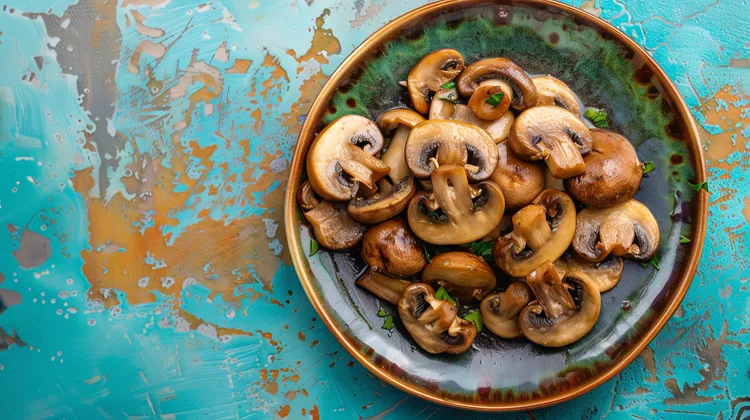
Mushrooms are the only plant-kingdom ingredient that genuinely satisfies meat cravings - and it's not just in your head. They contain the same flavor compounds that make meat taste rich and savory, plus a physical structure that mimics the chew of cooked protein. Understanding why mushrooms taste meaty makes you dramatically better at cooking them.
The Ingredient That Fools Your Brain Into Thinking It's Eating Meat
Mushrooms are not meat. They're fungi - not plants, not animals, something else entirely. And yet they're the one ingredient that consistently satisfies meat cravings, anchors vegetarian dishes, and makes a bowl of pasta feel genuinely substantial without a single gram of animal protein.
That's not a coincidence. Mushrooms contain specific compounds that trigger the exact same taste receptors as meat. Combine that with a texture that behaves like cooked protein, and you have one of the most remarkable flavor mimics in the entire food world.
Why Do Mushrooms Taste Like Meat?
Mushrooms taste meaty because they are naturally high in glutamates - the same compounds that give meat its rich, savory, satisfying flavor. This flavor quality is called umami, and mushrooms are one of the most concentrated plant-kingdom sources of it.
On top of that, mushrooms have a fibrous, dense cell structure made of a compound called chitin (the same material in insect exoskeletons) that holds up to heat and gives them a chewy, substantial bite - texturally similar to cooked muscle fiber.
It's the combination of umami flavor and meaty texture that makes mushrooms uniquely effective at standing in for meat.
Why This Happens: The Science of Umami and Chitin
What Is Umami and Why Do Mushrooms Have It?
Umami is the fifth basic taste - alongside sweet, salty, sour, and bitter - and it's best described as a deep, savory richness that makes food feel satisfying and full. It's triggered primarily by glutamic acid (glutamate) and certain nucleotides, particularly guanylate and inosinate.
Meat is high in umami because animal muscle tissue is packed with glutamates and nucleotides that are released during cooking and aging.
Mushrooms - particularly dried, cooked, or aged mushrooms - are extraordinarily high in the same compounds. Dried shiitake mushrooms contain some of the highest concentrations of guanylate of any food on earth. Fresh mushrooms are already notably high in free glutamates. Cook or dry them, and those levels intensify dramatically.
When your taste receptors detect glutamate and guanylate together, the umami signal they send to your brain is synergistic - it's not just additive, the two compounds together create a flavor signal far stronger than either alone. This is why a dish with both mushrooms and meat (or mushrooms and Parmesan, or mushrooms and soy sauce) tastes so much richer than the sum of its parts.
Why Does Mushroom Texture Feel Like Meat?
Most vegetables collapse when cooked because their cells are made of cellulose - a relatively soft material that breaks down quickly under heat. Mushrooms are different. Their cell walls are made of chitin, a tough, fibrous compound that is far more heat-resistant than cellulose.
When you cook a mushroom, the chitin structure doesn't dissolve - it contracts and firms up as the water inside the cells evaporates. The result is a dense, chewy, slightly fibrous texture that registers to your brain in a way that's physically similar to biting into cooked meat.
This is also why texture is such an important part of why portobello mushrooms work so well as burger replacements - it's not just flavor, it's the physical resistance when you bite into it.
What Most People Get Wrong About Cooking Mushrooms
Mistake 1: Cooking mushrooms in too much liquid. The biggest mistake home cooks make is overcrowding the pan and steaming mushrooms instead of searing them. When mushrooms are packed together, they trap steam. Instead of browning, they stew in their own released water and turn soft, pale, and bland. The meaty flavor never develops. Give mushrooms space - or cook them in batches.
Mistake 2: Adding salt too early. Salt draws moisture out of food through osmosis. Add it to mushrooms at the start of cooking and they immediately release water, which prevents browning and produces the same steaming problem as overcrowding. Add salt only once they're nearly done and golden.
Mistake 3: Using low heat. Mushrooms need real heat to develop their meaty, savory flavor. The Maillard reaction - the browning process responsible for deep, complex flavors - only activates at high temperatures. Medium-low heat produces pale, rubbery mushrooms. High heat produces golden, savory, satisfying ones.
Mistake 4: Skipping dried mushrooms. Many home cooks default exclusively to fresh mushrooms and never use dried. Dried mushrooms have dramatically more concentrated umami - particularly dried shiitake, porcini, and morel. Even a small amount of dried mushroom, or the water used to rehydrate them, adds a depth of savory flavor that fresh mushrooms alone can't match.
Mistake 5: Washing mushrooms under running water. Mushrooms are highly porous and absorb water readily. Rinsing them under the tap loads them with moisture that steams out during cooking and prevents browning. Instead, wipe them clean with a dry or barely damp cloth. If they're very dirty, a quick rinse followed by thorough drying on a clean towel works fine - just don't let them sit wet.
Practical Cooking Tips: Getting Maximum Meaty Flavor from Mushrooms
How to Cook Mushrooms for Maximum Savory Flavor
- Use a wide, heavy pan - cast iron or stainless steel works best. More surface area means less steaming and more direct contact with the heat.
- Heat the pan before adding oil. A hot pan helps mushrooms start searing immediately rather than sitting in cool fat and absorbing it.
- Don't stir constantly. Let mushrooms sit undisturbed for 2-3 minutes per side so a proper sear develops. The browned crust is where the deepest savory flavor lives.
- Deglaze with something umami-rich. A small splash of soy sauce, Worcestershire, or even the soaking water from dried mushrooms added in the last minute of cooking layers more savory depth onto already well-cooked mushrooms.
The Dried Mushroom Multiplier
Rehydrate a small handful of dried porcini or shiitake in hot water for 20 minutes. Use both the mushrooms (chopped and added to the dish) and the soaking liquid (strained through a coffee filter to remove grit, then added to sauces, braises, or risottos) for a dramatic umami boost. This mushroom stock is arguably the most underused ingredient in home cooking.
Matching Mushrooms to Dishes
Different mushrooms have different umami intensities and textures - choosing the right one matters.
- Button and cremini: Mild umami, versatile texture. Best for dishes where mushroom flavor should support rather than lead.
- Portobello: Dense, meaty texture, moderate umami. Best for grilling and roasting as a meat replacement.
- Shiitake: High umami, slightly chewy, distinctive earthy flavor. Excellent for stir-fries, soups, and pasta.
- Porcini (dried): Extremely high umami, intense earthy depth. Small amounts transform braises, risottos, and sauces.
- Oyster and king trumpet: Delicate to moderate umami, soft to meaty texture. Best with gentle cooking methods.
Chef Insight: The Umami Stack
Restaurant chefs deliberately build "umami stacks" - layering multiple umami-rich ingredients together to create depth that no single ingredient could achieve alone. The synergistic effect of glutamate + guanylate (or glutamate + inosinate from meat) means each layer multiplies the effect of the others rather than just adding to them.
A practical home version of this technique: when sautéing mushrooms for a pasta or grain dish, finish the pan with a small amount of soy sauce, a grating of Parmesan, and a squeeze of tomato paste. Each ingredient is high in glutamates. Together, they create a savory depth that tastes far more complex and "meaty" than any of them would produce individually.
This is why vegetarian dishes built around mushrooms often taste more satisfying when they also include Parmesan, miso, soy, sun-dried tomatoes, or aged cheese - you're stacking umami compounds to hit the same satiety notes as meat.
Mushrooms Are More Closely Related to Animals Than Plants
Here's the fact that tends to make people pause: mushrooms are fungi, and fungi are genetically more closely related to animals than to plants. Both animals and fungi share a common ancestor that plants branched away from earlier in evolutionary history. Both animals and fungi are also made (in part) of chitin - the same structural compound in mushroom cell walls and insect exoskeletons.
So when you bite into a mushroom and think "this almost tastes like meat" - you're not entirely wrong. You're eating something from the kingdom closest to your own. The flavor overlap is, in a sense, built into the biology.
Cook Mushrooms Like the Meaty Ingredient They Are
Mushrooms are not a substitute for meat - they're a genuinely distinct ingredient that happens to share the flavor chemistry and textural qualities that make meat satisfying. When you cook them correctly (hot pan, no crowding, salt added late, high heat maintained), they deliver real umami depth and a chewy, substantial bite that stands up in any dish.
The key insight is this: mushroom flavor is not automatic. It has to be developed through proper technique. Steamed or poorly cooked mushrooms taste flat and rubbery. Well-seared mushrooms with layered umami additions taste like one of the most satisfying things you can put on a plate.
The science is on your side. Give it the heat it needs.
What to Remember
- Mushrooms taste meaty because they're high in glutamates and guanylate - the same umami compounds that make meat taste savory and satisfying.
- Umami is synergistic. Pairing mushrooms with other glutamate-rich ingredients (Parmesan, soy sauce, miso, tomato) multiplies the savory effect rather than just adding to it.
- Mushroom cell walls are made of chitin, not cellulose - this is why they hold their structure under heat and produce a chewy, meaty texture.
- The biggest cooking mistake is steaming instead of searing. Overcrowded pans trap moisture and prevent the browning that creates deep savory flavor.
- Add salt late - early salting draws out water and prevents browning.
- Use high heat and resist stirring to develop a golden sear, which is where the deepest flavor lives.
- Dried mushrooms (especially porcini and shiitake) have dramatically more umami than fresh - use them and their soaking liquid for maximum depth.
- Mushrooms are more closely related to animals than plants, sharing chitin as a structural compound - the meaty quality is literally in their biology.
- The umami stack technique (layering soy sauce, Parmesan, tomato paste with mushrooms) is a restaurant method any home cook can use to build deeply savory vegetarian dishes.
Latest