Crusty italian bread
This crusty Italian bread features a crispy exterior and soft, fluffy interior, making it perfect for soups and pastas. Follow this simple recipe to create an authentic loaf at home.
Cook time 20 min
Prep time 15 min
Ingredients:
3 cups all-purpose white wheat flour1 cup water
1 tsp yeast
1 tbsp sugar
1 tsp salt
1 tbsp olive oil
1 tbsp milk (1% fat)
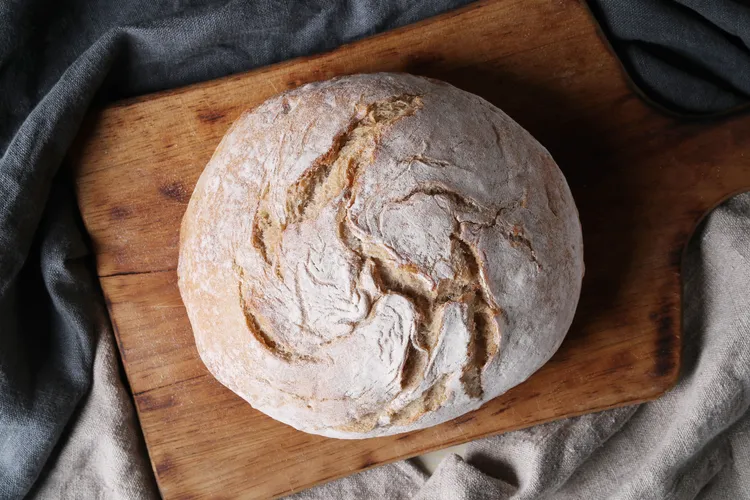
{'text': "Crusty Italian bread is a delicious and versatile staple that pairs perfectly with a variety of dishes. Its crispy crust and soft, fluffy interior make it a favorite for dipping into soups, pairing with pasta, or simply enjoying on its own with a drizzle of olive oil. In this recipe, we'll guide you through the steps to create this delightful bread right in your own kitchen."}
Instructions:
- In a small bowl, combine 1 cup of water (250g) that is lukewarm (around 100°F or 38°C) with 1 tsp yeast (5g) and 1 tbsp sugar (16g). Stir gently and let the mixture sit for about 5-10 minutes until it becomes frothy. This indicates that the yeast is active.
- In a large mixing bowl, add 3 cups of all-purpose white wheat flour (380g) and 1 tsp salt (5g). Mix well.
- Create a well in the center of the flour mixture and pour in the frothy yeast mixture.
- Add 1 tbsp olive oil (14g) and 1 tbsp milk (16g) to the bowl.
- Using a wooden spoon or your hands, mix the ingredients until they start to come together into a shaggy dough.
- Turn the dough out onto a lightly floured surface and knead it for about 10-12 minutes. The dough should become smooth and elastic.
- Form the dough into a ball and place it in a lightly oiled bowl. Cover the bowl with a clean kitchen towel or plastic wrap.
- Let the dough rise in a warm, draft-free area for about 1-2 hours, or until it has doubled in size.
- Once the dough has risen, punch it down to release the air.
- Turn the dough out onto a lightly floured surface again, and shape it into a loaf or a round boule shape, depending on your preference.
- Place the shaped dough onto a parchment-lined baking sheet or into a lightly oiled proofing basket if you’re using one. Cover it with a clean kitchen towel and let it rise again for about 30-45 minutes, or until it has puffed up noticeably.
- Preheat your oven to 425°F (220°C). If you have a baking stone, place it in the oven to heat up; alternatively, you can use a baking sheet.
- Before placing the dough in the oven, you can make a few slashes on the top with a sharp knife or a bread lame to allow steam to escape and give the bread a rustic look.
- Optionally, you can brush the top of the loaf with a little water or additional milk to help create a crisp crust.
- Place the dough in the preheated oven and bake for about 25-30 minutes, or until the bread has a golden-brown crust and sounds hollow when tapped on the bottom.
- If you have an instant-read thermometer, the internal temperature of the bread should be around 200°F (93°C).
- Remove the bread from the oven and transfer it to a wire rack to cool completely before slicing. This allows the interior to finish cooking and set properly.
{'text': "With its golden crust and airy crumb, your homemade crusty Italian bread will be a hit with family and friends. Whether you're serving it with a hearty meal or enjoying it as a snack, this bread delivers on flavor and texture. Enjoy the satisfaction of baking this classic bread and savor every bite."}
Crusty italian bread FAQ:
Bake the bread for about 25-30 minutes at 425°F (220°C). It should have a golden-brown crust and sound hollow when tapped on the bottom.
The bread is done when it has a golden-brown crust and an internal temperature of around 200°F (93°C). If you don't have a thermometer, it should sound hollow when tapped on the bottom.
To store the bread, place it in a paper bag or wrap it in a clean kitchen towel to maintain its crust. Avoid plastic bags as they can make the crust soggy. The bread is best consumed within 2-3 days.
Yes, you can substitute whole wheat flour for all-purpose flour, but keep in mind that the texture may be denser and the baking time might need slight adjustments.
If your dough doesn't rise, it may be due to inactive yeast or incorrect water temperature. Ensure the water is lukewarm (around 100°F or 38°C) and that your yeast is fresh. If the dough still doesn't rise, it might not be salvageable.
Cooking Tips:
- Ensure that the water you use is lukewarm (about 110°F or 45°C) to help activate the yeast effectively.
- For a crispier crust, place a shallow pan of water on the bottom rack of the oven while baking the bread. The steam will help create a beautiful crust.
- Allow the dough to rise in a warm, draft-free area. You can preheat your oven to the lowest setting for a few minutes, turn it off, and then let the dough rise inside.
- If you don't have a stand mixer, you can knead the dough by hand for 10-15 minutes until it's smooth and elastic.
- Let the bread cool completely on a wire rack before slicing to ensure the best texture and flavor.
Nutrition Facts
8 ServingsCalories 180kcal
Protein 6g
Carbohydrates 36g
Fiber 1.57g
Sugar 2.09g
Fat 2.56g
More recipes
Garlic basil chicken with creamy tomato sauce over pasta
Hearty garlic basil chicken in creamy tomato sauce over pasta.
21 Apr 2026Tuscan mashed chickpeas with parmesan and parsley
Creamy Tuscan mashed chickpeas with parmesan and parsley.
21 Apr 2026Bacon carbonara with poached egg
Savour creamy bacon carbonara topped with a poached egg.
21 Apr 2026Whole-wheat pasta with fresh tomato basil sauce and parmesan cheese
Delicious whole-wheat pasta with fresh tomato basil sauce.
21 Apr 2026Double ginger biscotti
Enjoy crispy double ginger biscotti with a hint of white chocolate.
21 Apr 2026