Fresh pasta with basil pesto
Fresh pasta with basil pesto features homemade pasta paired with a vibrant pesto made from basil, pine nuts, and Parmesan. This dish combines rich flavors and fresh ingredients, making it perfect for any occasion.
Cook time 5 min
Prep time 90 min
Ingredients:
3 cups all-purpose white wheat flour1 tsp salt
4 eggs
1/3 cup grated parmesan cheese
1 cup basil leaves
1/3 cup pine nuts
2 garlic cloves
1/4 cup olive oil
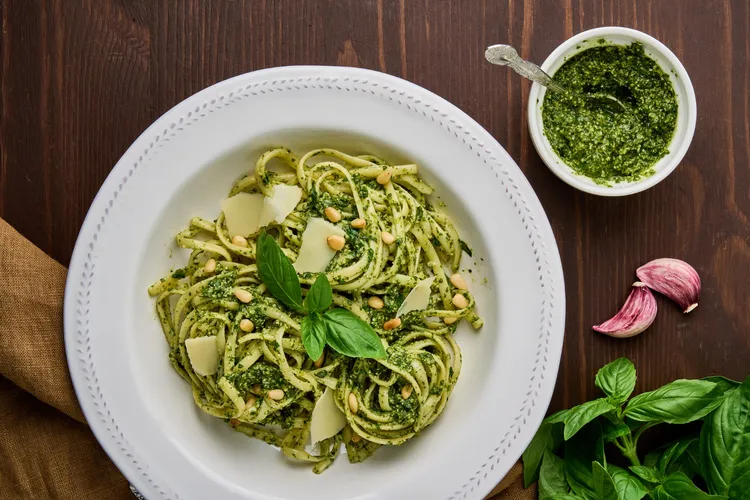
Fresh pasta with basil pesto is a delightful and aromatic dish that combines the rich flavors of homemade pasta and vibrant, herbaceous basil pesto. This recipe will guide you through the process of making fresh pasta from scratch and preparing a deliciously fresh pesto sauce to accompany it. Perfect for a fancy dinner or a comforting meal at home, you’ll love the freshness and flavor in every bite.
Instructions:
- On a clean work surface, create a mound with the all-purpose flour and make a well in the center.
- Crack the eggs into the well and add the salt.
- Using a fork, gently beat the eggs and begin to incorporate the flour from the edges of the well.
- Continue folding the flour into the egg mixture until a dough starts to form.
- Once the dough has come together, start kneading it with your hands.
- Knead for about 10 minutes until the dough is smooth and elastic.
- If the dough is too sticky, add a small amount of flour. If it’s too dry, add a few drops of water.
- Wrap the dough in plastic wrap and let it rest at room temperature for at least 30 minutes. This helps to relax the gluten and makes it easier to roll out.
- In a small skillet over medium heat, toast the pine nuts until they are golden brown and fragrant, about 3-4 minutes. Stir frequently to prevent burning. Remove from heat and let cool.
- In a food processor, combine the basil leaves, toasted pine nuts, garlic cloves, and grated Parmesan cheese.
- Pulse until the mixture is well combined and finely chopped.
- With the food processor running, slowly drizzle in the olive oil until the pesto is smooth and creamy.
- Season with salt and pepper to taste. Set aside.
- Divide the rested dough into four pieces. Working with one piece at a time (keep the others wrapped to prevent drying out), flatten it slightly with your palm.
- Using a pasta machine or rolling pin, roll each piece out into thin sheets. Start with the widest setting and gradually decrease the thickness until you reach your desired thinness.
- Once the dough is rolled out, cut it into the desired shape (e.g., fettuccine, tagliatelle).
- Dust the cut pasta lightly with flour to prevent sticking.
- Bring a large pot of salted water to a boil.
- Add the fresh pasta and cook for 2-3 minutes, or until it floats to the surface and is al dente.
- Drain the pasta and reserve a cup of pasta water.
- In a large bowl, toss the cooked pasta with the basil pesto.
- If the sauce is too thick, add reserved pasta water a little at a time until you reach the desired consistency.
- Serve the fresh pasta with basil pesto immediately, garnished with additional Parmesan cheese and fresh basil leaves if desired.
Congratulations! You've successfully made fresh pasta with basil pesto from scratch. The tender, homemade pasta combined with the fragrant and flavorful pesto sauce makes for a truly memorable meal that will impress your family and friends. Enjoy your culinary creation with a sprinkle of extra parmesan cheese, a drizzle of olive oil, or a side salad to complete the dish.
Fresh pasta with basil pesto FAQ:
Fresh pasta typically cooks for 2-3 minutes. It's ready when it floats to the surface and is al dente.
Yes, leftover basil pesto can be stored in an airtight container in the refrigerator for up to one week. You can also freeze it for up to 3 months.
If you need a substitute for pine nuts, you can use walnuts or sunflower seeds. Adjust the quantities based on your taste preference.
If your pasta dough is too sticky, gradually add a small amount of flour while kneading until it reaches a smooth, elastic consistency.
Fresh pasta is done when it floats to the surface of the boiling water and has a firm bite, or al dente, when tasted.
Cooking Tips:
- If you don't have a pasta machine, you can use a rolling pin to roll the dough as thin as possible and then cut it into your desired pasta shape.
- Reserve some of the pasta cooking water; the starch in it will help the pesto cling better to the pasta.
- For a nuttier flavor, lightly toast the pine nuts before blending them into the pesto.
- If you have leftover pesto, store it in an airtight container in the refrigerator for up to a week, or freeze it for longer storage.
- To prevent the pesto from turning brown, cover it with a thin layer of olive oil before storing.
Nutrition Facts
4 ServingsCalories 530kcal
Protein 22g
Carbohydrates 70g
Fiber 3.37g
Sugar 0.85g
Fat 33g
More recipes
Whole-wheat pasta with fresh tomato basil sauce and parmesan cheese
Delicious whole-wheat pasta with fresh tomato basil sauce.
21 Apr 2026Cherry tomato and basil spaghetti
Quick and fresh cherry tomato and basil spaghetti dinner.
21 Apr 2026Spaghetti with lentil bolognese
A hearty vegetarian spaghetti with lentil bolognese sauce.
21 Apr 2026Spaghetti and shrimp parcels
Delightful pasta and shrimp parcels baked with garlic and chili.
21 Apr 2026Garlic and herb white spaghetti
Enjoy a light and flavorful garlic and herb white spaghetti.
21 Apr 2026