Slow-roast tomatoes
Slow-roast tomatoes transform fresh tomatoes into a sweet, caramelized delight using garlic, vinegar, and olive oil. Perfect as a topping or side dish, this method enhances their natural flavors over a gentle cooking process.
Cook time 60 min
Prep time 10 min
Ingredients:
4 tomatoes2 garlic cloves
2 tsp brown sugar
1 tbsp vinegar
1 tbsp olive oil
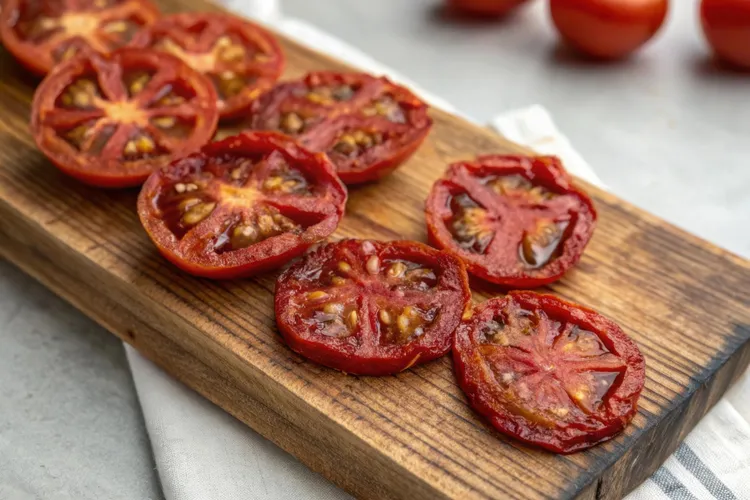
Slow-roasting tomatoes is a simple yet incredibly flavorful technique that can elevate the taste of any dish. This recipe uses a few basic ingredients to bring out the natural sweetness and rich flavor of tomatoes. Whether used as a topping, side dish, or ingredient in another recipe, these slow-roasted tomatoes are sure to impress.
Instructions:
Preheat your oven to 275°F (135°C). This low temperature is key to gently roasting the tomatoes and bringing out their natural sweetness.
- Wash the tomatoes thoroughly.
- Cut each tomato in half lengthwise.
- Place the tomato halves cut side up on a baking sheet lined with parchment paper for easier cleanup.
- Peel and finely chop the garlic cloves.
- Sprinkle the chopped garlic evenly over the tomatoes.
- Drizzle the tomatoes with olive oil, ensuring each tomato half gets a bit of oil.
- Sprinkle the brown sugar over the tomatoes. This will help caramelize the edges and enhance the tomatoes' natural sweetness.
- Finally, drizzle the vinegar over the tomatoes for a touch of acidity that balances the flavors.
- Place the baking sheet in the preheated oven.
- Slow-roast the tomatoes for approximately 2-3 hours. The exact time may vary depending on the size and ripeness of your tomatoes. They should be shrunken and slightly caramelized around the edges but still juicy in the middle.
- Check occasionally to ensure they are caramelizing, not burning.
- Once roasted to your satisfaction, remove the tomatoes from the oven and let them cool slightly.
- Serve immediately as a side dish, on top of salads, or as part of a pasta dish. They can also be stored in an airtight container in the refrigerator for up to a week.
These slow-roasted tomatoes are a versatile and delicious addition to many meals. With just a handful of ingredients and some patience, you can create a deeply flavorful and naturally sweet component that enhances any dish. Enjoy the simplicity and depth of flavor that slow-roasting brings to your kitchen.
Slow-roast tomatoes FAQ:
The ideal baking time for slow-roasting tomatoes is approximately 2-3 hours at 275°F (135°C). The exact time can vary based on the size and ripeness of the tomatoes.
Slow-roasted tomatoes are done when they are shrunken, slightly caramelized around the edges, but still juicy in the middle. Check them periodically to ensure they are caramelizing without burning.
Yes, you can use different types of tomatoes for this recipe. However, the flavor and texture may vary; for best results, choose ripe, juicy varieties like Roma or vine-ripened tomatoes.
Store leftover slow-roasted tomatoes in an airtight container in the refrigerator for up to a week. To maintain their flavor and moisture, consider drizzling them with a little olive oil before sealing.
You can substitute brown sugar with an equal amount of honey or maple syrup for sweetness. Alternatively, use granulated sugar, though it won't have the same depth of flavor.
Cooking Tips:
- Choose ripe yet firm tomatoes for the best results. Overripe tomatoes can become too mushy during the roasting process.
- Cut the tomatoes in half lengthwise to ensure more even cooking and better caramelization.
- Lining your baking sheet with parchment paper can make cleanup easier and prevent tomatoes from sticking.
- Slow-roasting at a low temperature helps to concentrate the flavors while keeping the tomatoes tender.
- Feel free to experiment with additional herbs like thyme, rosemary, or oregano to add more depth to the dish.
- Leftover roasted tomatoes can be stored in the fridge for up to a week and can be added to salads, pastas, or sandwiches.
Nutrition Facts
6 ServingsCalories 22kcal
Protein 0.83g
Carbohydrates 4.66g
Fiber 1.07g
Sugar 3.27g
Fat 2.43g
More recipes
Basil-lemon chicken with garlic and red pepper
Quick and flavorful basil-lemon chicken with garlic and red pepper.
21 Apr 2026Orange and pomegranate salad
A refreshing salad of oranges, pomegranates, and hazelnuts.
21 Apr 2026Roasted garlic mashed potatoes
Creamy roasted garlic mashed potatoes, perfect for any meal.
21 Apr 2026Grilled asparagus with tomato and feta
Enjoy grilled asparagus topped with fresh tomatoes and feta cheese.
21 Apr 2026Rosemary chicken with ratatouille
A wholesome rosemary chicken served with vibrant ratatouille.
21 Apr 2026