Thai stir-fried pork with eggplant
Thai stir-fried pork with eggplant features tender pork fillets cooked with aromatic garlic, ginger, and spicy chili peppers, in a savory oyster sauce blend. This quick stir-fry brings vibrant Thai flavors to your plate, ensuring a satisfying meal.
Cook time 15 min
Prep time 20 min
Ingredients:
2 tbsp oyster sauce1 tbsp soy sauce
1 tsp sugar
1/3 cup peanut oil
2 pork fillets
2 garlic cloves
1 tbsp ginger root
2 red hot chili peppers
1/2 eggplant
1/2 cup water
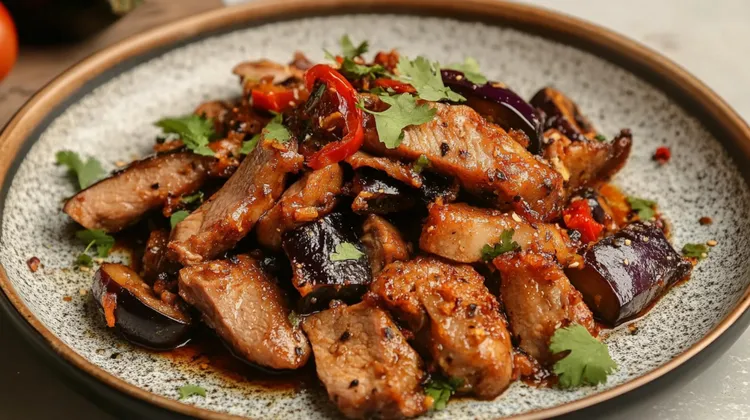
Thai stir-fried pork with eggplant is a delicious and flavorful dish that combines tender pork fillets with the unique taste of eggplant, chili peppers, and a savory sauce made from oyster sauce and soy sauce. This recipe brings the vibrant and aromatic flavors of Thai cuisine to your table, perfect for a quick and satisfying meal.
Instructions:
- Slice the pork fillets into thin strips.
- Mince the garlic cloves.
- Peel and finely chop the ginger root.
- Thinly slice the red hot chili peppers.
- Cut the eggplant into bite-sized cubes.
- In a small bowl, combine the oyster sauce, soy sauce, and sugar. Stir until the sugar dissolves and set the mixture aside.
- In a large wok or skillet, heat the peanut oil over medium-high heat.
- Add the minced garlic, chopped ginger, and sliced chili peppers to the hot oil. Stir-fry for about 1 minute, or until fragrant.
- Add the sliced pork to the wok or skillet. Stir-fry for 3-4 minutes, or until the pork is lightly browned and cooked through.
- Add the cubed eggplant to the wok. Stir to combine and coat the eggplant with the other ingredients. Stir-fry for another 3-5 minutes, or until the eggplant starts to soften.
- Pour the prepared sauce mixture over the pork and eggplant. Stir well to ensure everything is evenly coated.
- Pour in the 1/2 cup of water. Stir to combine. Allow the mixture to come to a simmer. Reduce the heat to medium and continue to cook for another 5-7 minutes, or until the eggplant is tender and the sauce has thickened slightly.
- Taste and adjust the seasoning if necessary, adding more soy sauce or sugar as desired.
- Serve immediately over steamed rice or noodles. Enjoy your Thai Stir-Fried Pork with Eggplant!
With its bold flavors and quick preparation, this Thai stir-fried pork with eggplant is sure to become a favorite in your recipe collection. Serve it over steamed rice for a complete meal that highlights the essence of Thai cooking.
Thai stir-fried pork with eggplant FAQ:
Cook the pork for about 3-4 minutes until lightly browned and cooked through. After adding the eggplant, stir-fry for another 3-5 minutes until it starts to soften. Finally, simmer for 5-7 minutes to ensure the eggplant is tender.
Store leftovers in an airtight container in the refrigerator for up to 3 days. To reheat, simply use a skillet over medium heat or microwave until heated through.
Yes, you can substitute peanut oil with vegetable oil, canola oil, or sesame oil for a different flavor. However, note that using alternative oils may slightly change the taste of the dish.
If your eggplant tastes bitter, you can slice it, salt it, and let it sit for 30 minutes before cooking. Rinse and pat it dry to remove excess salt and bitterness.
Yes, to make the dish spicier, you can add more red hot chili peppers or include a dash of chili flakes or Sriracha sauce to the stir-fry. Adjust to your heat preference.
Cooking Tips:
- Preparation: Ensure all ingredients are prepped and ready before you begin cooking, as stir-frying is a fast process.
- Cooking temperature: Use high heat to quickly sear the pork and vegetables, preserving their texture and flavor.
- Oil choices: Peanut oil is recommended for its high smoke point and added flavor, but you can substitute it with any other high-heat cooking oil if necessary.
- Balancing flavors: Taste the sauce mixture before adding it to the pan. You can adjust the saltiness with soy sauce or the sweetness with a bit more sugar.
- Vegetable alternatives: Feel free to experiment with other vegetables such as bell peppers, zucchini, or mushrooms to suit your taste and preferences.
Nutrition Facts
4 ServingsCalories 320kcal
Protein 22g
Carbohydrates 8g
Fiber 2.16g
Sugar 4.39g
Fat 22g
More recipes
Low-carb zucchini bacon egg nests
Delicious low-carb zucchini bacon egg nests for a healthy breakfast.
21 Apr 2026Roasted salmon with cucumber dill yogurt sauce
Roasted salmon topped with cool cucumber dill yogurt sauce.
21 Apr 2026Sweet potato, garlic and quinoa mash
A creamy sweet potato, garlic, and quinoa mash dish.
21 Apr 2026Meatballs with chunky chilli sauce
Spicy meatballs in a tangy chili sauce with cherry tomatoes.
21 Apr 2026Smoked salmon and egg tortilla
Quick and nutritious smoked salmon and egg tortilla ideal for any meal.
21 Apr 2026