Butter vs Oil for Cooking: When to Use Each and Why It Matters
Most home cooks treat butter and oil as interchangeable - a swap made without much thought. But they behave completely differently under heat, fail at different temperatures, and contribute entirely different things to a finished dish. Knowing which to reach for, and when, is one of the most practical skills in the kitchen.
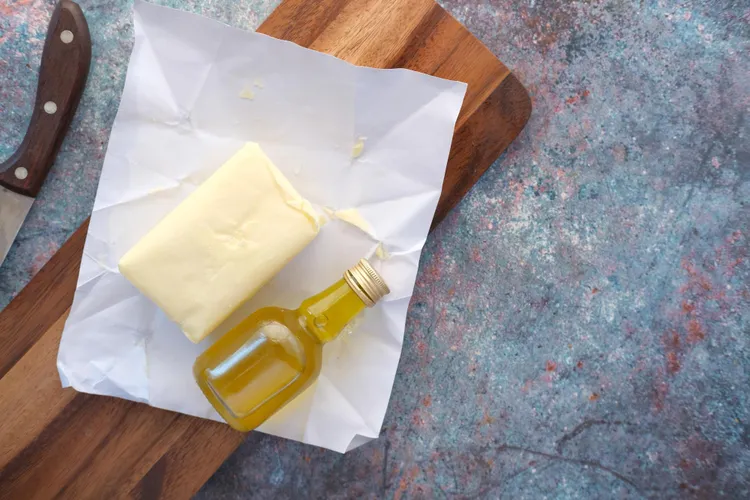
Here's a question that exposes a real gap in most home cooks' knowledge: why does butter burn so quickly in a hot pan, while olive oil seems far more forgiving? And why do restaurant steaks often finish with butter even though the pan was searing-hot just moments before?
The answers lie in chemistry - specifically in the difference between what butter and oil are actually made of, and what heat does to each of them. Once you understand this, every decision about which fat to use becomes obvious rather than guesswork.
Butter and oil are not interchangeable. Butter contains water and milk solids that burn at relatively low temperatures (around 150-175°C / 300-350°F), making it unsuitable for high-heat cooking but exceptional for flavour, basting, and finishing. Oil is pure fat with a higher smoke point, making it the right choice for searing, frying, and roasting. The professional trick is to use both - oil for the heat, butter for the flavour.
Why This Happens: What Butter and Oil Are Made Of
Understanding fat starts with composition. Cooking oil is almost entirely pure fat - typically 99-100% triglycerides with essentially no water. This makes it thermally stable and capable of reaching high temperatures before it starts to degrade.
Butter is a more complex substance. It contains roughly 80% fat, 16-18% water, and 2-4% milk solids - proteins and sugars that were part of the original cream. These milk solids are the source of butter's extraordinary flavour, but they're also its weakness. When butter is heated, the water evaporates first (causing the familiar sputtering), and then the milk solids begin to brown and, eventually, burn. This happens at a much lower temperature than oil would ever struggle with.
What the Smoke Point Actually Means
The smoke point of a fat is the temperature at which it begins to visibly smoke and chemically break down, producing bitter-tasting compounds and, in sustained cases, harmful free radicals. Exceeding the smoke point doesn't just damage flavour - it means your fat has become a liability in the pan.
| Fat | Smoke Point | Best For |
|---|---|---|
| Whole butter | ~150-175°C (300-350°F) | Gentle sautéing, finishing, basting, sauces |
| Clarified butter / Ghee | ~230-250°C (450-485°F) | High-heat searing, frying, Indian cooking |
| Extra virgin olive oil | ~190-210°C (375-410°F) | Medium-heat sautéing, dressings, finishing |
| Light / refined olive oil | ~240°C (465°F) | High-heat cooking, frying |
| Vegetable / sunflower oil | ~225-230°C (440-450°F) | Frying, roasting, high-heat searing |
| Avocado oil | ~270°C (520°F) | Very high-heat cooking, grilling |
Why Butter Tastes So Much Better Than Oil
The same milk solids that make butter vulnerable to heat are also what make it taste extraordinary. When butter is heated gently, those milk solids undergo a Maillard reaction - the same browning chemistry responsible for the crust on bread or the sear on a steak. The result is beurre noisette, or brown butter: a nutty, caramel-rich flavour that no oil can replicate. Butter also contains diacetyl, a compound that gives it that unmistakably rich, creamy aroma. Oil simply doesn't have these flavour compounds.
"Oil gives you heat. Butter gives you flavour. The best cooking often uses both - in the right order."
What Most People Get Wrong
| Myth | Fact |
|---|---|
| You can substitute butter for oil in any recipe without consequence. | Substituting butter for oil changes both flavour and heat behaviour. In high-heat applications, butter will burn before oil even begins to smoke. |
| Adding butter to a hot oil pan raises the smoke point of the butter. | Oil does not protect butter's milk solids from burning. If the pan is above butter's smoke point, the milk solids will still burn regardless of the oil present. |
| Olive oil is always the healthiest and best choice for cooking. | Extra virgin olive oil's beneficial polyphenols degrade significantly at high temperatures. For very high-heat cooking, a neutral oil or avocado oil is more appropriate. |
| Butter is only for baking and desserts. | Butter is one of the most powerful finishing ingredients in savoury cooking. A knob of cold butter swirled into a pan sauce at the end - monter au beurre - adds richness and gloss that nothing else replicates. |
Practical Cooking Tips: When to Use Each
Use oil for high heat, butter for flavour
For any cooking above medium-high heat - searing meat, stir-frying vegetables, deep frying - start with oil. It can handle the temperature. If you want butter's flavour in the same dish, add it toward the end of cooking, when the pan is cooler and the butter can brown gently without burning.
Use the oil-then-butter technique for pan-cooked proteins
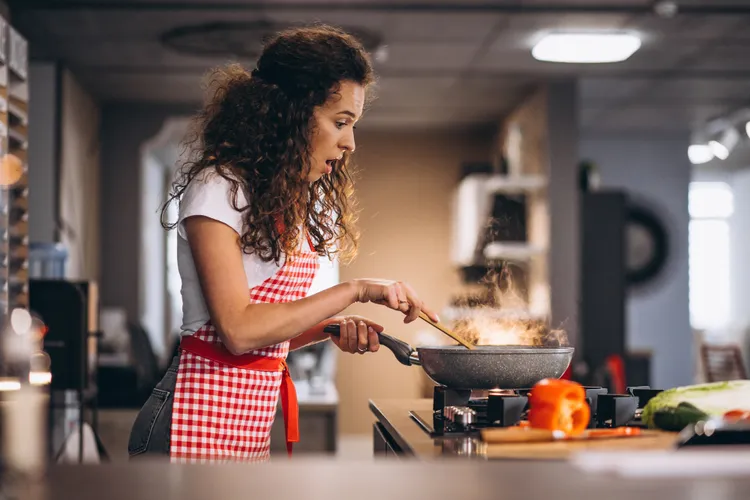
This is one of the most transferable professional techniques for home cooks. Heat your pan with a neutral oil until very hot. Sear the protein - steak, chicken breast, fish fillet - in the oil. Reduce the heat slightly, then add butter and begin basting. The oil handled the initial high heat; the butter now adds flavour and colour during the finish. This is how restaurant steaks are made.
Use clarified butter when you want butter's flavour at high heat
Clarified butter - butter with the water and milk solids removed, leaving only pure butterfat - has a smoke point close to refined oils. It gives you butter's rich flavour without the burning risk. Making it at home is straightforward: melt butter slowly, skim the foam, and pour off the clear yellow fat, leaving the white solids behind.
Brown Butter: The Five-Minute Upgrade Melt butter in a light-coloured pan over medium heat, swirling occasionally. After 3-5 minutes the milk solids will turn golden brown and the butter will smell intensely nutty. Remove from heat immediately. Drizzle over roasted vegetables, pasta, fish, or use as a finishing sauce base. This is one of the most valuable techniques in cooking and requires almost no skill.
Reserve extra virgin olive oil for where it counts
The polyphenols and flavour compounds in good extra virgin olive oil are largely destroyed by high heat. Save the expensive bottle for dressings, drizzling over finished dishes, dipping bread, or gentle sautéing at medium heat. For anything above 200°C / 400°F, use a refined or neutral oil - it performs better and costs less.
Use butter to finish sauces and soups
A tablespoon of cold butter whisked into a warm pan sauce, risotto, or soup just before serving adds a glossy, velvety quality that transforms the texture. This technique is called monter au beurre in French kitchens and is used across virtually every sauce in classical cooking. The butter must be cold when it goes in - warm butter breaks rather than emulsifies.
How Professional Kitchens Think About Fat
In a restaurant kitchen, fat selection is intentional and specific to each application. A chef chooses a fat based on three questions: What temperature will this reach? What flavour do I want the fat to contribute? And will the fat be present in the finished dish, or just a cooking medium?
When fat is a cooking medium only - for searing, frying, or roasting - flavour matters less and stability matters more. Neutral oils win here. When fat is present in the final dish - in a sauce, as a finish, or in the cooking juices served alongside the protein - flavour matters enormously. Butter wins here, almost every time.
The most common professional technique that home cooks underuse: finishing with cold butter. Nearly every sauce in a professional kitchen ends with butter being whisked or swirled in at the last moment. It adds body, rounds out sharp edges, and gives the sauce a professional-looking sheen that no other ingredient produces as efficiently.
The French consume more butter per capita than almost any other nation - yet historically have had lower rates of heart disease than many countries with lower butter consumption. This paradox, known as the "French Paradox," has puzzled nutrition researchers for decades and is partly attributed to fermented dairy products, wine, and overall dietary patterns. Whatever the explanation, it has done nothing to reduce butter's status in French cuisine.
Butter and oil solve different problems in the kitchen. Oil is a stable, reliable medium for high-heat cooking. Butter is an irreplaceable source of flavour, richness, and texture - but only when used within its temperature limits.
The best approach is rarely one or the other. It's knowing when each shines, and using both deliberately. Oil in the pan first, butter toward the end. Clarified butter when you need both high heat and butter's flavour simultaneously. Cold butter to finish a sauce. Good olive oil over a finished dish, never in a screaming-hot pan.
Most of the best food ever cooked has used these two fats in combination. There's a reason for that.
Quick Recap
- Butter contains water and milk solids that burn at around 150-175°C (300-350°F) - far lower than most cooking oils.
- Oil is nearly pure fat with a higher smoke point, making it the right choice for searing, frying, and roasting at high heat.
- Butter's milk solids are what give it its extraordinary flavour - the same compounds that make it burn are what make it taste great.
- The oil-then-butter technique - sear in oil, finish with butter - is the professional method for pan-cooked proteins like steak and fish.
- Clarified butter (ghee) removes the milk solids, raising the smoke point to near that of refined oils while retaining butter's rich flavour.
- Extra virgin olive oil's beneficial compounds degrade at high heat - save it for dressings, finishing, and medium-heat cooking.
- Cold butter whisked into a warm sauce at the end (monter au beurre) adds gloss, body, and richness that nothing else replicates.
- Brown butter is one of the easiest high-impact techniques in cooking - five minutes, one pan, transformative results.
Latest