Does Microwaving Destroy Nutrients?
The microwave has a reputation problem it doesn't deserve. For decades, home cooks have avoided it out of fear that it "zaps" the nutrition right out of food. The real science tells a very different story - and understanding it will change how you think about cooking.
The Surprising Truth Most Cooks Don't Know
Here's a fact that will challenge everything you've heard: microwaving is actually one of the best cooking methods for preserving nutrients in vegetables.
Not boiling. Not steaming. Not roasting. Microwaving.
The reason has nothing to do with the microwave being magical. It comes down to time, temperature, and water - the three forces that quietly destroy nutrients in your food every time you cook.
Does Microwaving Destroy Nutrients?
Microwaving does not significantly destroy nutrients - and in many cases, it preserves more nutrients than boiling or long stovetop cooking. The biggest factors in nutrient loss are heat exposure time and the amount of water used during cooking. Because microwaves cook quickly and typically require little or no added water, they often cause less nutrient degradation than traditional methods.
Why This Happens
How Nutrients Are Lost During Cooking
Before blaming the microwave, it helps to understand how nutrients are actually lost. There are three main culprits:
Heat breaks down heat-sensitive vitamins, especially vitamin C and B vitamins (like folate and thiamine). The longer food is exposed to heat, the more these vitamins degrade.
Water leaches water-soluble vitamins directly out of food. When you boil broccoli, the vitamin C and B vitamins dissolve into the cooking water - which most people then pour down the drain.
Time is the multiplier. The longer food cooks by any method, the more nutrients are lost. A quick two-minute microwave is simply less destructive than a twenty-minute simmer.
What Microwaves Actually Do to Food
Microwaves work by emitting electromagnetic radiation at a specific frequency that causes water molecules inside food to vibrate rapidly. That vibration generates heat - from the inside out. No radiation stays in the food. No chemical changes occur beyond what any other heat source would cause.
Because microwaves cook fast and usually require no added water, they sidestep two of the three main nutrient-loss mechanisms almost entirely.
What the Research Shows
A study published in the Journal of the Science of Food and Agriculture found that broccoli cooked in the microwave with a small amount of water retained significantly more of its glucosinolates (powerful antioxidant compounds) than broccoli that was boiled. Other research has consistently shown that microwaving preserves vitamin C better than boiling and comparably to steaming - sometimes better, depending on cook time.
The key variable in almost every study is not the cooking method itself - it's how long the food is heated and how much water is involved.
What Most People Get Wrong
- "Microwaves use radiation, so they must be harmful." Microwave radiation is non-ionizing, meaning it doesn't carry enough energy to damage DNA or alter food at a molecular level beyond normal cooking. It's the same basic category of radiation as radio waves - not X-rays or gamma rays.
- "Boiling is safer and healthier." Boiling is actually one of the worst methods for preserving water-soluble vitamins. Studies consistently show that boiling vegetables can destroy 40-60% of their vitamin C content, largely because it leaches into the water.
- "If you can't see or smell a difference, nothing changed." Nutrient loss is invisible. Food can look perfectly vibrant and still have lost significant vitamins through prolonged heat exposure - regardless of cooking method.
- "Steaming is always better than microwaving." Steaming is excellent, but it's not categorically superior. Microwaving with minimal water is nutritionally comparable to steaming, and sometimes faster and more practical.
- "Microwaving changes the chemical structure of food." All cooking changes the chemical structure of food - that's literally what cooking is. Microwaving causes the same types of changes (denaturation of proteins, softening of cell walls, breakdown of starches) as any other heat method. It doesn't create new harmful compounds unique to microwaving.
How to Microwave for Maximum Nutrition
Use as Little Water as Possible
This is the single most important tip. When microwaving vegetables, add only a tablespoon or two of water - just enough to create steam. The less water in contact with your food, the fewer water-soluble vitamins leach out.
Better yet, use a microwave-safe container with a loose lid or microwave-safe cover. The trapped steam does the cooking, and the vitamins stay in the food where they belong.
Keep Cook Times Short
The microwave's biggest nutritional advantage is speed. Don't undo it by overcooking. Most vegetables need just 2-4 minutes on high power. Start with less time and check - you can always add 30 seconds, but you can't uncook soggy broccoli.
Cut Food Into Uniform Pieces
Uneven pieces cook unevenly. Smaller or thinner pieces will overcook while larger ones are still underdone. Uniform cuts mean everything finishes at the same time, minimizing total heat exposure.
Don't Microwave in Plastic Containers (Use the Right Vessel)
Use glass or ceramic containers labeled microwave-safe. Certain plastics - especially older containers or those not labeled for microwave use - can leach chemicals into food when heated. This isn't about nutrients; it's about food safety. When in doubt, transfer food to a glass bowl.
Cover Your Food
A loose cover traps steam and speeds up cooking, which means less total heat time. It also keeps food moist, which reduces the chance of hot spots and uneven cooking.
Nutrient Retention by Cooking Method: A Quick Comparison
| Cooking Method | Water Used | Cook Time | Vitamin C Retention |
|---|---|---|---|
| Boiling | High | Long | Low (40-60% lost) |
| Steaming | Low | Medium | High |
| Microwaving | Very low | Short | High to Very High |
| Roasting | None | Long | Medium |
| Stir-frying | None | Short | Medium to High |
Note: Retention varies significantly by vegetable, cut size, and exact cooking time. These are general ranges based on published research.
Why Professional Kitchens Respect the Microwave
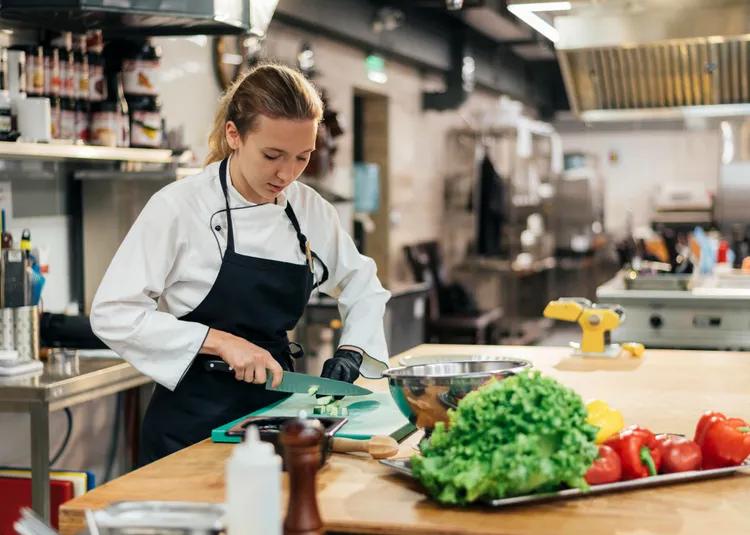
Despite its low-prestige reputation, the microwave earns real respect in professional kitchens - just not for reheating leftovers. Chefs use it for precision tasks: melting chocolate without a double boiler, softening butter to exact temperatures, blanching small amounts of herbs or vegetables quickly before plating, and reheating sauces without scorching them.
The professional lesson for home cooks is this: the microwave excels at short, controlled heat applications. The mistake most people make is using it as a lazy shortcut with no attention to time or technique. Treat it like any other cooking tool - control the time, control the power level, and it rewards you with fast, nutritious results.
One underused technique: microwave vegetables on 70–80% power instead of full blast. Lower power levels heat food more evenly, reduce hot spots, and give you more control - especially useful for denser vegetables like carrots or sweet potatoes.
Microwaves Were Invented by Accident
The microwave oven was invented in 1945 entirely by accident. Percy Spencer, an engineer at Raytheon, was testing a military radar component called a magnetron when he noticed the chocolate bar in his pocket had melted. Curious, he experimented with popcorn kernels next - and history was made.
The first commercial microwave ovens, introduced in 1947, were nearly 6 feet tall and weighed over 750 pounds. They cost the equivalent of roughly $56,000 in today's money. The countertop microwave familiar to modern kitchens didn't arrive until the late 1960s.
So the next time someone calls the microwave "unnatural," remind them it was discovered by a melted candy bar.
The idea that microwaves destroy nutrients is one of the most persistent myths in home cooking - and one of the most wrong. Microwaving is fast, uses little water, and causes less nutrient degradation than boiling for most vegetables. The real enemies of nutritional value are prolonged heat exposure and water-based cooking. Use a microwave-safe covered dish, add minimal water, keep cook times short, and the microwave is one of the most nutritionally efficient tools in your kitchen.
The best cooking method for nutrition is always the one that uses the least heat for the least amount of time. Often, that's the microwave.
Quick Recap
- Microwaving does not significantly destroy nutrients - it often preserves more than boiling
- The main causes of nutrient loss are heat, water, and cooking time - not the microwave itself
- Boiling is one of the worst methods for water-soluble vitamins like vitamin C and B vitamins
- Microwaving compares favorably to steaming in most nutrient-retention studies
- Use as little water as possible when microwaving vegetables - a tablespoon or two is enough
- Cover food while microwaving to trap steam and reduce cook time
- Use glass or ceramic containers, not plastic, for safe microwaving
- Try 70-80% power for more even, controlled cooking of dense vegetables
- Short cook times are the microwave's biggest nutritional advantage - don't overcook
- Microwave radiation is non-ionizing and does not alter food in any harmful way unique to microwaving
Latest