French Chocolate Mousse: The Classic 4-Ingredient Version
Dark chocolate, eggs, butter, sugar - the technique that produces the lightest, most intensely chocolatey mousse without a drop of cream
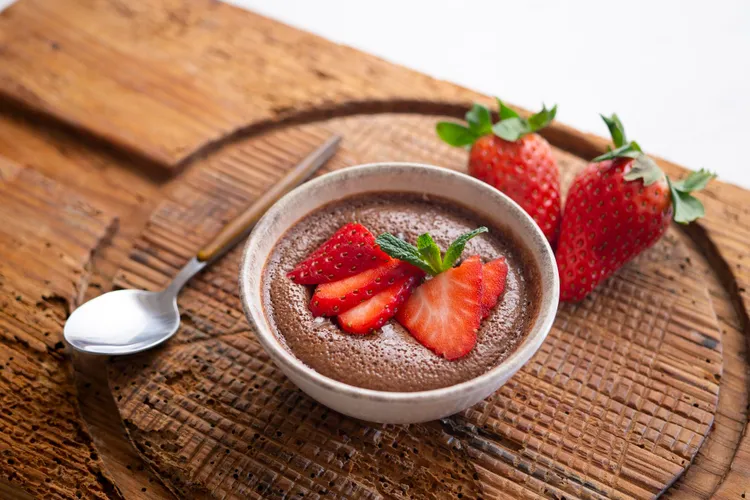
There are two fundamentally different approaches to chocolate mousse. The first uses whipped cream as its base - lighter to make, more forgiving, popular in restaurants because it can be piped and refrigerated without risk. The second, the French classic, uses beaten egg whites - no cream at all. The egg white version is lighter in texture, more intensely chocolatey (cream dilutes the flavour; egg whites do not), and requires more attention to technique.
The classic French version is the one in this recipe. It has four ingredients - dark chocolate, eggs, butter, and a small amount of sugar - and its success depends entirely on two things: the temperature of the chocolate when the yolks are folded in, and the technique of the fold. Both are simple to get right when understood. Both are easy to get wrong when hurried.
The Science
Why egg whites make a better mousse than cream: Cream provides richness but also fat, which coats the palate and can make a mousse feel heavy. Egg whites beaten to stiff peaks trap air as foam - the foam is incorporated into the chocolate, producing a mousse that is light on the tongue while remaining intensely flavoured. The chocolate flavour, undiluted by cream, comes through cleanly.
The fold and why it matters: Beaten egg whites are a fragile foam - air trapped by protein networks that can collapse if stirred aggressively. The fold (large, slow strokes from the bottom of the bowl, cutting through the mixture, turning and repeating) preserves the air pockets. Stirring destroys them, producing a dense, heavy mixture rather than a light mousse. The speed of folding, and the size of the spoon used, affect the final texture.
The chocolate temperature: Melted chocolate that is too hot scrambles the egg yolks the moment they are added. Chocolate that has cooled too much seizes when the yolks are mixed in, producing a grainy, stiff mass. The target is chocolate at body temperature - warm to the touch but not hot, approximately 35-40°C. This range incorporates the yolks smoothly without cooking them.
Ingredients
Serves 6 | Active time: 25 minutes | Chilling: 2 hours minimum
- 200g dark chocolate (70%), finely chopped - quality matters here; use the best dark chocolate available
- 4 large eggs, separated, at room temperature
- 30g unsalted butter, cut into small cubes
- 2 tbsp caster sugar - a small amount; the mousse should be bittersweet rather than sweet
- Pinch of fine salt - essential; amplifies the chocolate flavour
- Optional: 1 tbsp dark rum, brandy, or espresso - adds depth without dominating
Method
Step 1: Melt the chocolate and butter
Place the chopped chocolate and butter in a heatproof bowl set over a pan of barely simmering water - the bowl must not touch the water. Stir gently as the chocolate and butter melt together into a smooth, glossy mixture.
Remove from the heat. Allow to cool to 35-40°C - warm to the touch but not hot. Test by placing a small drop on the inside of your wrist: it should feel very slightly warm, not hot.
Why butter? The butter adds a small amount of fat and gloss to the chocolate, making it smoother and more spreadable, and helping it fold into the egg mixture without seizing.
Step 2: Separate the eggs and whisk the yolks
Separate the 4 eggs - yolks in one bowl, whites in another large, scrupulously clean bowl. Room-temperature eggs separate more easily than cold eggs.
Clean bowl for the whites: Any trace of fat in the bowl or on the whisk - including egg yolk - prevents the whites from whipping to stiff peaks. The bowl must be completely clean and dry.
Add the rum or espresso to the yolks if using.
Step 3: Incorporate the yolks into the chocolate
Once the chocolate has cooled to the correct temperature, add the egg yolks all at once. Stir quickly and firmly with a spatula until the mixture is completely uniform and smooth. The chocolate will thicken noticeably as the yolks are incorporated.
If the mixture seizes or becomes grainy: the chocolate was too cool. Briefly return the bowl to the bain-marie for 20 seconds, stirring, to re-melt slightly.
Step 4: Whip the egg whites
Using a hand mixer or stand mixer with a clean whisk attachment, whip the egg whites with the pinch of salt on medium speed until foamy. Add the caster sugar. Increase speed to high and beat to stiff peaks - the whites stand upright when the whisk is lifted, firm and glossy.
Stiff vs. soft peaks: Stiff peaks are peaks that hold their shape completely when the whisk is lifted. Soft peaks curl at their tips. For chocolate mousse, stiff peaks produce a mousse with enough body to hold its shape in the glasses. Soft peaks produce a mousse that remains liquid.
Do not overbeat: Overbeaten whites become dry and grainy - they lose their smooth glossiness and cannot be folded without breaking. Stop at stiff, glossy peaks.
Step 5: Fold the whites into the chocolate
This is the most critical step.
First, add one-third of the egg whites to the chocolate mixture. Stir this first addition in fairly vigorously - the goal here is to lighten the chocolate mixture and make it easier to fold in the remaining whites without deflating them. This first addition is deliberately sacrificed.
Add the remaining two-thirds of the egg whites in one addition. Now fold - use a large metal spoon or flexible spatula. Cut down through the centre of the mixture to the bottom of the bowl, sweep along the bottom, and fold up and over. Rotate the bowl a quarter-turn and repeat.
Count the strokes: Most cooks need 15-20 fold strokes to combine the mousse fully. At 15 strokes, stop and assess: are there visible white streaks? If so, continue. Is the mixture uniform but still light and airy? Stop here. Some barely-visible white streaks are preferable to an over-folded, deflated mousse.
The correctly folded mousse should be noticeably lighter than the chocolate base - if it looks almost the same density as before the whites were added, the whites were under-beaten or the fold was too aggressive.
Step 6: Set and chill
Pour or spoon the mousse into 6 serving glasses, ramekins, or bowls. Cover each with cling film.
Refrigerate for a minimum of 2 hours - the mousse firms as the chocolate fat crystallises. Overnight is preferable: the texture becomes slightly denser and the flavour deepens.
Serving
Serve cold, directly from the refrigerator.
The toppings that work:
- A small mound of lightly whipped cream - the richness complements the bittersweet mousse
- A few raspberries - the acidity cuts the richness and the colour is dramatic against the dark mousse
- A scattering of flaky sea salt - the salt amplifies the chocolate flavour and adds textural interest
- Chocolate shavings - made by running a vegetable peeler along a cold bar of chocolate
- A dusting of cocoa powder - simple and effective
Variations
Milk Chocolate Mousse
Replace the 70% dark chocolate with 55% milk chocolate. Reduce the caster sugar to 1 tbsp. The milk chocolate version is sweeter and less intense - preferred for those who find the dark version too bitter. The technique is identical.
White Chocolate Mousse
White chocolate behaves differently - it contains no cocoa solids and has a higher sugar and fat content. Use 220g of good white chocolate (Valrhona Ivoire or Callebaut) and add 1 tbsp of crème fraîche or soured cream to balance the sweetness. The technique is otherwise the same.
Spiked Chocolate Mousse
Add 2 tbsp of Cognac, dark rum, or whisky to the yolk mixture. The alcohol adds specific flavour complexity and very slightly adjusts the texture (alcohol inhibits some of the fat crystallisation, keeping the mousse slightly softer).
Orange Chocolate Mousse
Add the finely grated zest of 1 large orange to the melted chocolate before adding the yolks. The combination of dark chocolate and orange zest is one of the great classical pairings.
Make-Ahead
The mousse keeps in the refrigerator for up to 48 hours - it is an ideal make-ahead dinner party dessert. Beyond 48 hours the texture can become slightly dense and the egg white foam begins to deflate slowly.
For a dinner party: Make the mousse the evening before. Remove from the refrigerator 10 minutes before serving. Add toppings at the last moment.
Pro Tips
- Temperature of the chocolate. The single most important variable. Too hot: scrambled yolks. Too cool: seized chocolate. Aim for 35-40°C - test on the wrist. If uncertain, err cooler rather than hotter.
- The sacrificial first third. Adding one-third of the whites aggressively first is not a mistake - it is a deliberate technique to loosen the chocolate. The lightened chocolate is then ready to receive the remaining whites with minimal folding.
- Metal spoon over rubber spatula. A large metal spoon cuts through the mousse cleanly without dragging. A rubber spatula can smear and over-work the mixture. Either works - the metal spoon is more precise.
- Quality of chocolate. With four ingredients, the chocolate is the flavour. 70% dark chocolate from Valrhona, Callebaut, or Green & Blacks produces a measurably better mousse than supermarket own-brand cooking chocolate. This is one of the few preparations where the quality of a single ingredient has a large and immediate impact.
The Overfolding Problem The most common mousse failure is overfolding - continuing to fold until every trace of white is eliminated, by which point the foam is largely deflated. A correctly folded mousse has a uniform light texture and possibly a few tiny white streaks - these are preferable to the dense, heavy result of an over-folded mousse. Stop folding before you think the mousse is fully combined. The residual movement of the spatula will incorporate the last streaks.
FAQ
Q: Is it safe to eat raw egg whites?
Raw egg whites carry a small risk of Salmonella. For immunocompromised individuals, pregnant women, or young children, use pasteurised eggs (available in most supermarkets) or the cream-based version below. For healthy adults, the risk from high-quality, refrigerated eggs is very low.
Q: Can I make a cream-based version?
Yes - replace the egg whites with 300ml of double cream whipped to soft peaks. The result is richer, heavier, and more stable (doesn't need to be eaten within 48 hours), but less intense in chocolate flavour. Fold the whipped cream into the chocolate-yolk mixture exactly as you would the egg whites.
Q: My mousse is dense and heavy. What went wrong?
Either the egg whites were under-beaten (soft rather than stiff peaks), the chocolate was too cool when the whites were folded in (the chocolate seized around the whites rather than blending), or the mousse was over-folded. All three produce a denser result. Try again with stiff peaks and 35-40°C chocolate.
🔗 More Chocolate Desserts
Latest