Chocolate Lava Cakes: The Make-Ahead Dinner Party Dessert
The science of the flowing centre, the make-ahead method that removes all day-of stress, and the 12-minute bake that produces theatre at the table
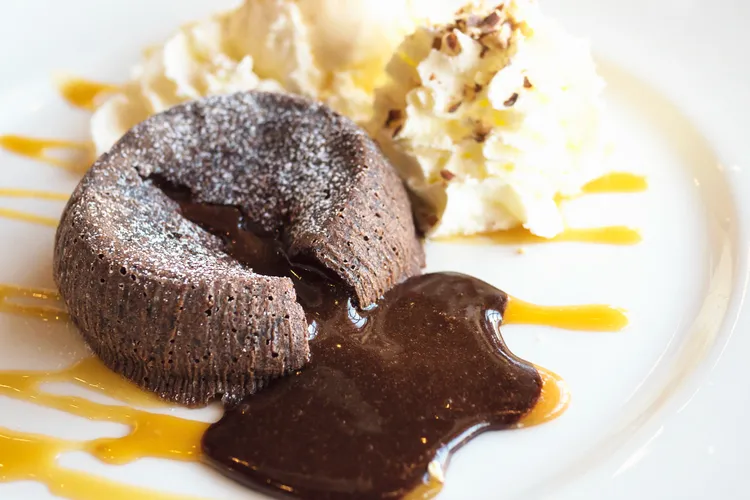
Chocolate lava cakes have been on restaurant dessert menus since the 1980s when Jean-Georges Vongerichten accidentally underbaked a chocolate cake and discovered that the result - a set exterior with a flowing liquid centre - was more extraordinary than anything he had planned. Nearly four decades later, they remain one of the most consistently impressive desserts a home cook can produce for a dinner party.
The reason they work so well for entertaining: the batter can be prepared the night before, portioned into buttered ramekins, and refrigerated. At serving time, the ramekins go directly from the refrigerator to a preheated oven. Twelve minutes later, they are plated directly at the table in a single uninterrupted movement. The entire day-of commitment is 15 minutes.
The reason they occasionally fail: a 30-second difference in baking time determines whether the centre flows or sets completely. Understanding the mechanism - not just the timing - makes the result predictable.
Why the Centre Stays Liquid
The lava cake is a regular chocolate cake batter baked in a very hot oven for a very short time. The exterior of the small, concentrated cake sets rapidly in the high heat, forming a cooked wall of cake. The centre remains at a lower temperature - not long enough in the oven to coagulate the egg proteins - and stays liquid.
The variables that control this:
- Oven temperature: Higher is better - a very hot oven (200-210°C) sets the exterior quickly while the centre stays cool. A lower oven gives more time for heat to penetrate to the centre, reducing the liquid window.
- Ramekin size: The same batter in different ramekin sizes produces different results. A larger ramekin requires more time for the exterior to set, giving the centre more time to heat through. A smaller ramekin sets faster. This recipe is calibrated for standard 150ml dariole moulds or ramekins.
- Starting temperature: Batter at room temperature has a warm centre when it enters the oven. Batter from the refrigerator (cold) starts the baking with a colder centre - requiring slightly more time for the exterior to set, and giving the centre more time to remain liquid. This is the mechanism that makes the make-ahead method more reliable, not less.
- Timing: Even at 200°C, the window between "flowing centre" and "set throughout" is approximately 60-90 seconds. The exact time for your oven must be found on the first attempt.
Ingredients
Makes 6 | Active time: 20 minutes | Baking time: 10-13 minutes from cold
- 200g dark chocolate (70%), finely chopped
- 200g unsalted butter, cut into cubes, plus extra for greasing
- 4 large eggs + 4 large egg yolks - the extra yolks add richness and help the exterior set while the centre stays liquid
- 120g caster sugar
- 80g plain flour - just enough to give the exterior structure; too much and the centre sets too quickly
- 1 tsp vanilla extract
- Pinch of fine salt
- Cocoa powder for dusting the ramekins
Method
Step 1: Prepare the ramekins
Butter 6 × 150ml ramekins or dariole moulds generously - every surface, including the rim. Dust with cocoa powder: spoon a little cocoa into each ramekin, rotate to coat all surfaces, then tap out the excess. This dusting prevents sticking and adds a thin cocoa shell to the exterior.
Place the prepared ramekins on a baking tray and refrigerate while making the batter.
Step 2: Melt chocolate and butter
Place the chocolate and butter in a heatproof bowl over barely simmering water (bain-marie). Stir gently as they melt together into a smooth, glossy mixture. Remove from heat and allow to cool slightly - approximately 5 minutes.
Step 3: Make the batter
In a large bowl, whisk the 4 whole eggs, 4 egg yolks, caster sugar, vanilla, and salt together until the mixture is pale, slightly thickened, and falls in thick ribbons from the whisk - approximately 3-4 minutes of vigorous whisking.
Pour the slightly cooled chocolate mixture into the egg mixture in a slow, steady stream, whisking continuously. The chocolate should be warm but not hot - if it's too hot, it will scramble the egg proteins at the edges.
Sift the flour over the top. Fold gently with a spatula until just incorporated - no lumps, no streaks of flour, but do not over-mix.
Step 4: Fill and refrigerate
Remove the prepared ramekins from the refrigerator. Divide the batter equally among them - fill to approximately 1cm below the rim. The batter puffs slightly during baking.
Cover each ramekin with cling film. Refrigerate for at least 1 hour, or overnight (up to 24 hours). The cold ramekins are what make the make-ahead method reliable - the cold batter centre has further to travel thermally before setting.
Step 5: Finding your oven time (essential)
On the first occasion you make this recipe, bake a test ramekin. Every oven behaves differently, and the 60–90 second window between a flowing centre and a set one means individual oven calibration is necessary.
Preheat the oven to 200°C (fan) or 210°C (conventional).
Bake one cold ramekin for 10 minutes. Remove, run a thin knife around the edge, immediately invert onto a plate. If the centre flows freely: your oven is correct at 10 minutes. If the centre is set: reduce to 9 minutes next time. If the exterior is underset: increase to 11 minutes.
The range: Most domestic ovens produce a flowing centre at 10-13 minutes from cold at 200°C fan. The specific time for your oven is established on the first attempt and reliable thereafter.
Step 6: Bake and serve
Preheat the oven to 200°C (fan) at least 20 minutes before serving. The oven must be at full temperature - a partially preheated oven produces uneven, unreliable results.
Place the cold ramekins on the baking tray. Bake for your established time.
To unmould: Remove from the oven. Immediately run a thin palette knife or table knife around the inner edge of each ramekin - a single, careful pass. Place a serving plate face-down over the ramekin. In one confident motion, invert the plate and ramekin together. After 3 seconds, lift the ramekin - the lava cake should release cleanly.
Serve immediately. The flowing centre continues to set from residual heat. A lava cake that sat on the plate for 3 minutes while being photographed will have a significantly less flowing centre than one eaten within 60 seconds of unmoulding.
Serving
The classic: Vanilla ice cream placed immediately next to the warm lava cake, where it melts into the chocolate sauce.
Alternatives: Crème fraîche (the acidity cuts the richness), whipped cream, or raspberry sorbet for a sharp fruit contrast.
Garnish: A small dusting of icing sugar or cocoa powder for the photograph before cutting. The visual of the dark, round cake against the white plate, with the first incision revealing the flowing chocolate inside, is the entire theatrical event.
Variations
Salted Caramel Centre
Place a frozen cube of salted caramel (1 tsp salted caramel sauce, frozen solid in an ice cube tray) in the centre of each ramekin before adding the final spoonful of batter. The caramel melts during baking and joins the chocolate in the flowing centre.
Raspberry Centre
Place 3–4 fresh raspberries in the centre of each ramekin, surrounded by batter. The raspberry juice mixes with the chocolate at the centre.
White Chocolate Version
Use 200g of white chocolate in place of dark. The batter is sweeter - reduce the sugar to 80g. The flowing centre is more subtle visually but dramatically rich in flavour.
Make-Ahead Timeline for a Dinner Party
The evening before:
- Butter and cocoa-dust the ramekins
- Make the batter
- Fill the ramekins
- Cover and refrigerate
Day of the dinner party:
- Remove ramekins from refrigerator (keep cold - don't let them warm up)
- Preheat oven 20 minutes before guests are seated for dessert
At dessert time:
- Bake 10-13 minutes (your established time)
- Unmould directly onto plates
- Place ice cream or cream alongside
- Serve immediately
Total day-of active time: 15 minutes
Pro Tips
- Calibrate your oven time on the first attempt. This is non-negotiable. Every oven is different. The first test ramekin is the investment that makes every subsequent batch reliable.
- Cold batter is your friend. Unlike most baking, the make-ahead refrigerator rest actively improves the result - the cold batter centre is further from setting when the hot oven hits the exterior.
- Unmould confidently. A hesitant, slow inversion often leaves the lava cake stuck in the ramekin. One firm, decisive movement in a single second is more successful than a cautious one.
- Have everything ready before baking. Plates warmed, ice cream pre-scooped, spoons placed. The window from oven to table is short. Anything that requires preparation after the cakes come out reduces the flowing centre.
The Over-Baking Risk The difference between a lava cake and a small chocolate cake is approximately 90 seconds of baking time. If the oven time is even slightly too long, the centre sets and the entire effect is lost. The test ramekin is the insurance. Once your oven's specific time is established, the result is reproducible. Without this calibration, the result is uncertain every time.
FAQ
Q: Can I make the batter further in advance than 24 hours?
The batter is most stable within 24 hours of making. Beyond this, the flour begins to hydrate more fully from the eggs, slightly changing the texture of the set exterior. 24 hours is the practical make-ahead limit.
Q: What if I don't have ramekins?
Dariole moulds (tall, narrow) work and produce a more dramatic shape. Muffin tins lined with parchment discs work at a push - the result is less elegant but the baking principle is the same. Adjust the time (muffin tin depth is shallower, so the time may reduce by 1-2 minutes).
Q: My centre was completely set. How do I fix it?
Reduce the baking time by 90 seconds next time. Or reduce the oven temperature by 10°C. Cold batter from the refrigerator gives the most generous window - if the batter was at room temperature, it has less distance to travel thermally before the centre sets.
🔗 More Chocolate Desserts
Latest